Mom's Best Recipes
Recipe

French Fries

Crispy on the outside, fluffy in the middle, and perfectly salted with easy options for frying or baking.

Author By Matt Campbell
4.8
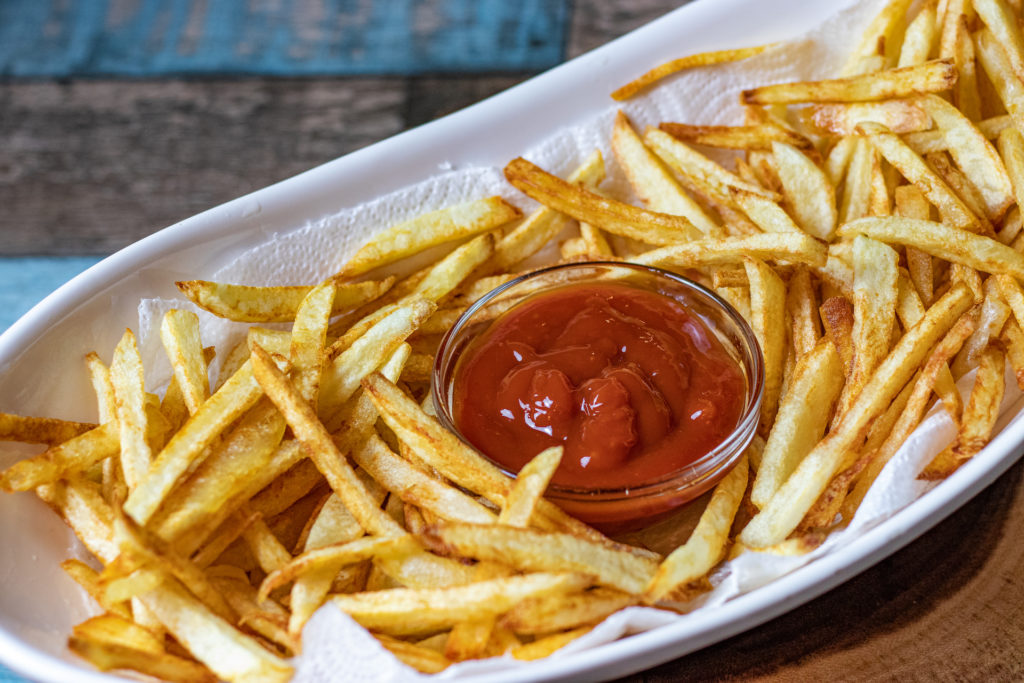
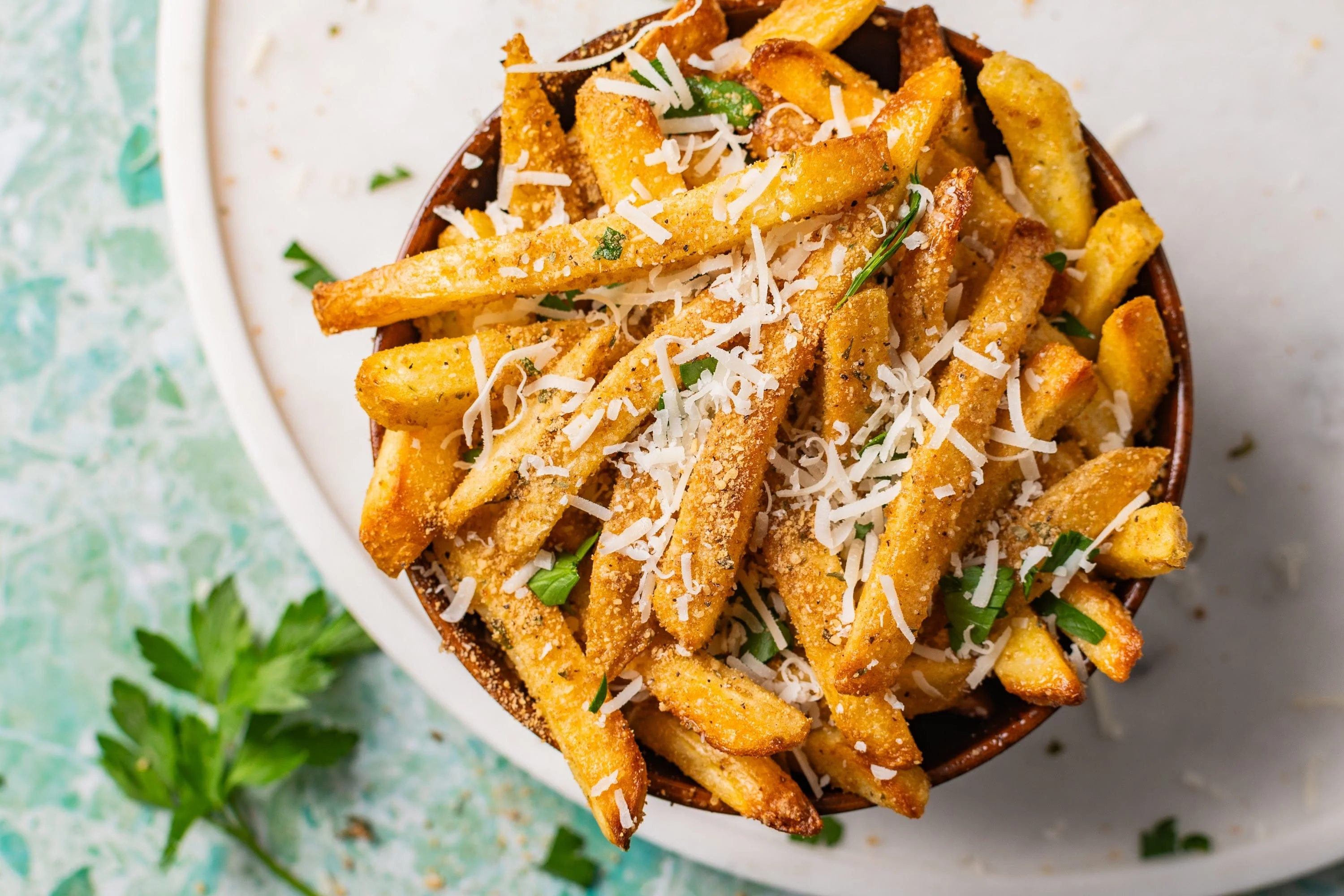
A large platter of golden homemade French fries with crisp edges and a small bowl of ketchup on a simple wooden table setting

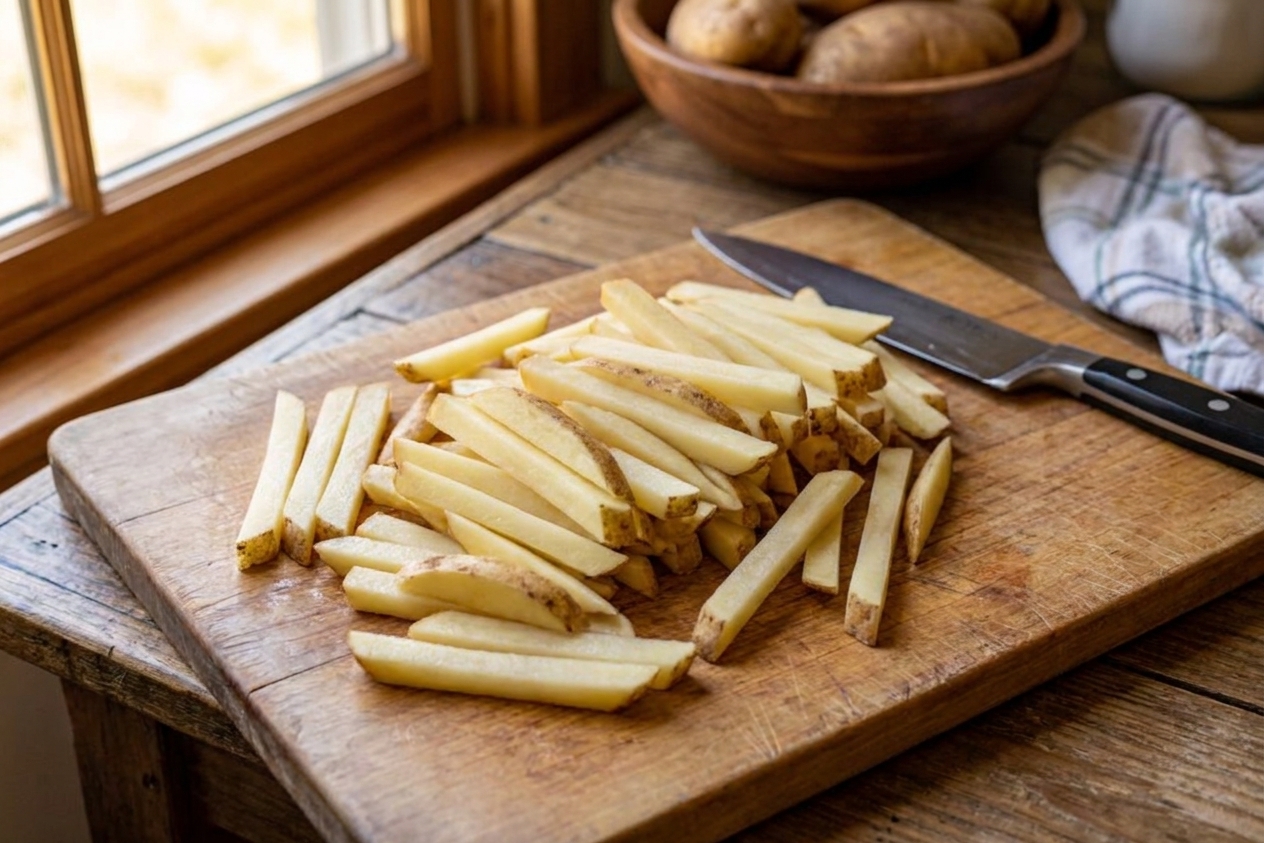
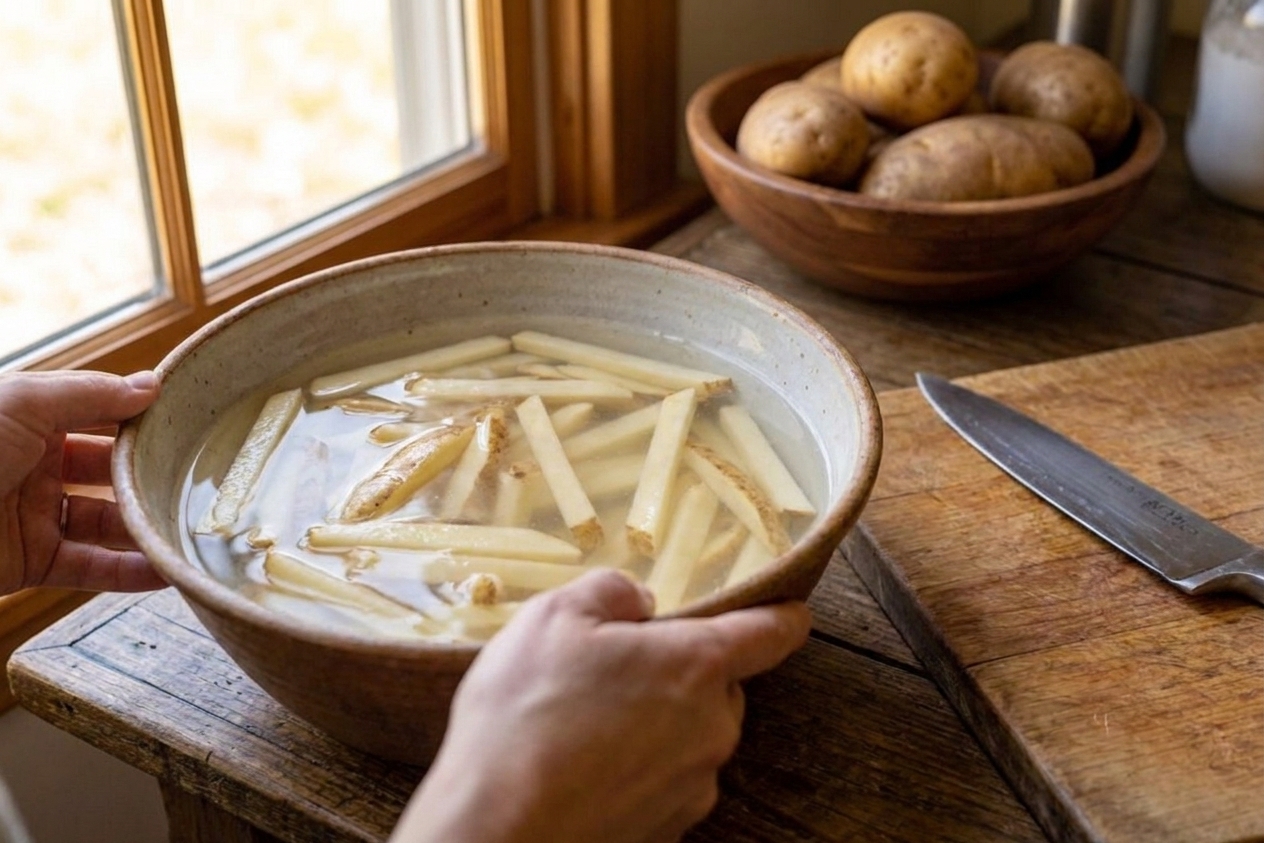
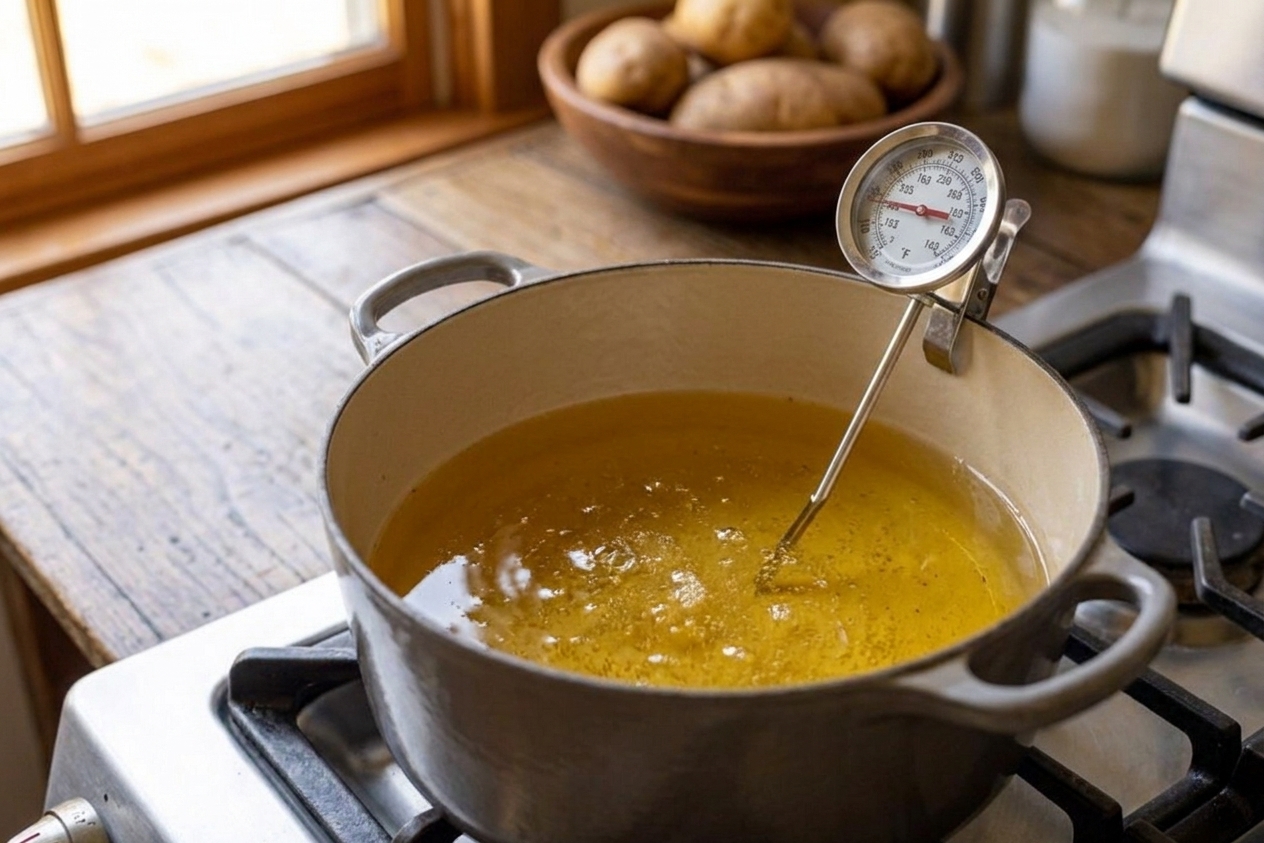
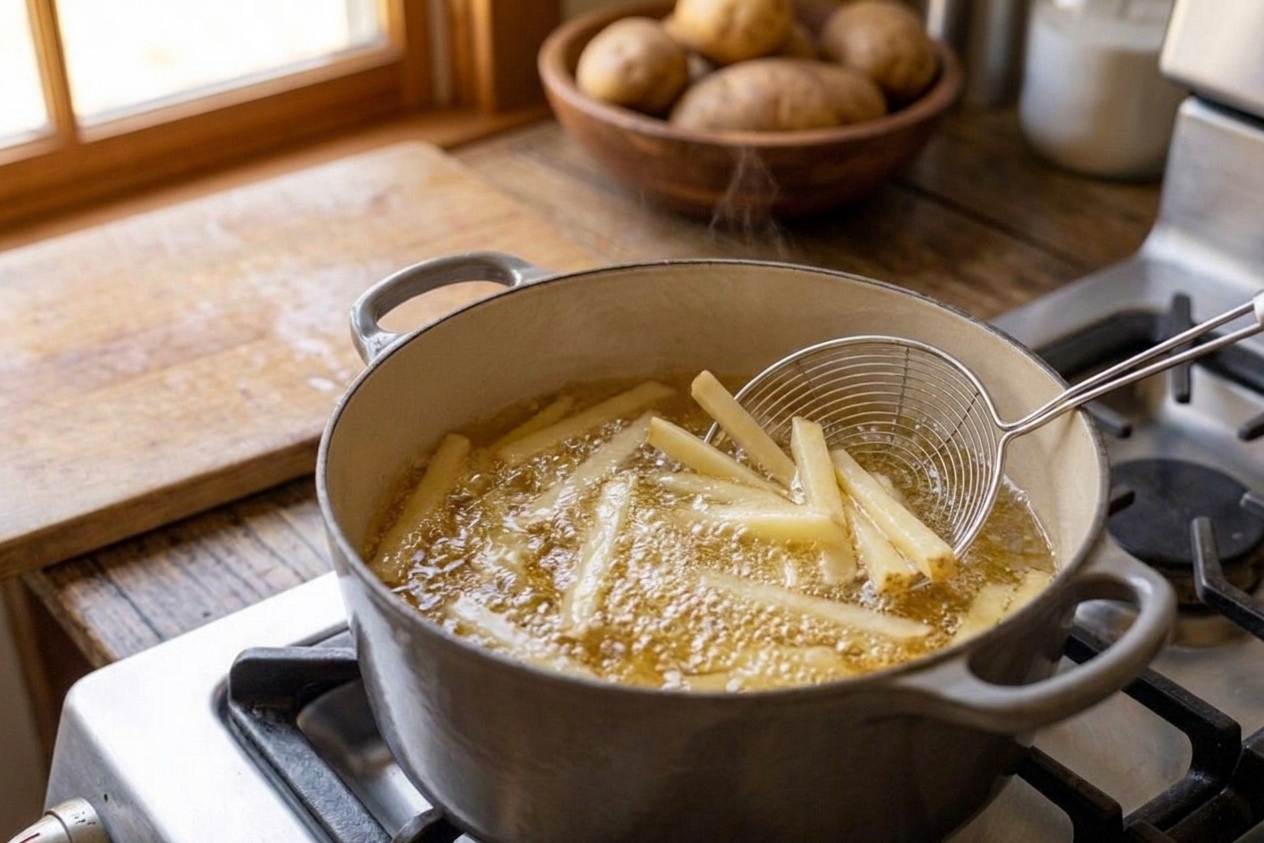
French fries at home can be shockingly good. Like, cancel-the-drive-thru good. The secret is not fancy equipment or a secret handshake. It is two simple moves: soak the potatoes to ditch extra starch, then cook them in two stages so the inside turns fluffy before the outside gets deeply crisp.

This is my go-to method for classic fries with that cozy potato center and crisp, browned edges. I also included an oven option for nights when you want fries without babysitting a pot of oil.
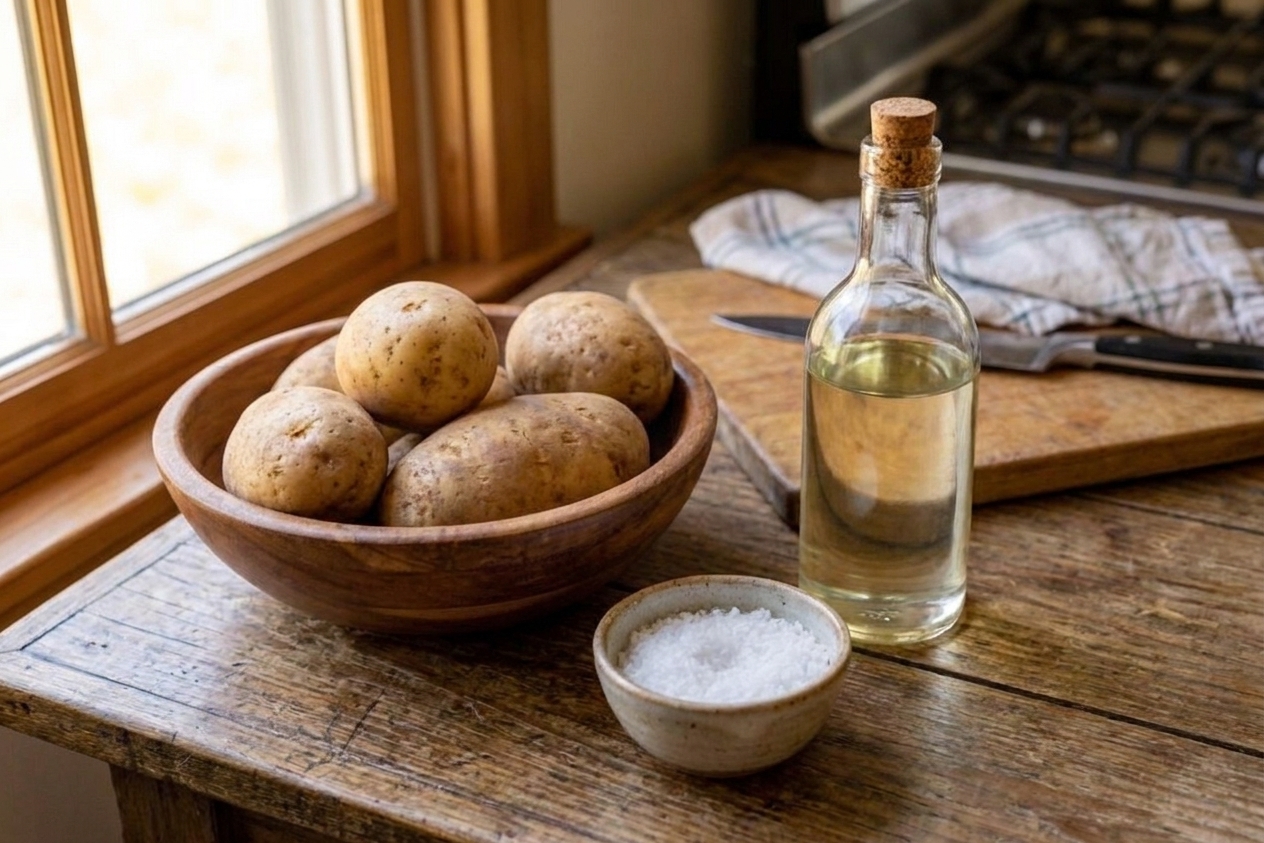
Russet potatoes, a bowl of salt, and a small bottle of neutral oil arranged on a kitchen counter

Why It Works

  • Crisp that lasts: The soak removes surface starch so the fries crisp up without sticking and turning gummy.
  • Fluffy interiors: The first cook gently softens the potato so the second cook can focus on browning and crisping.
  • Even browning: Drying the potatoes well reduces splatter and helps the fries crisp instead of steaming.
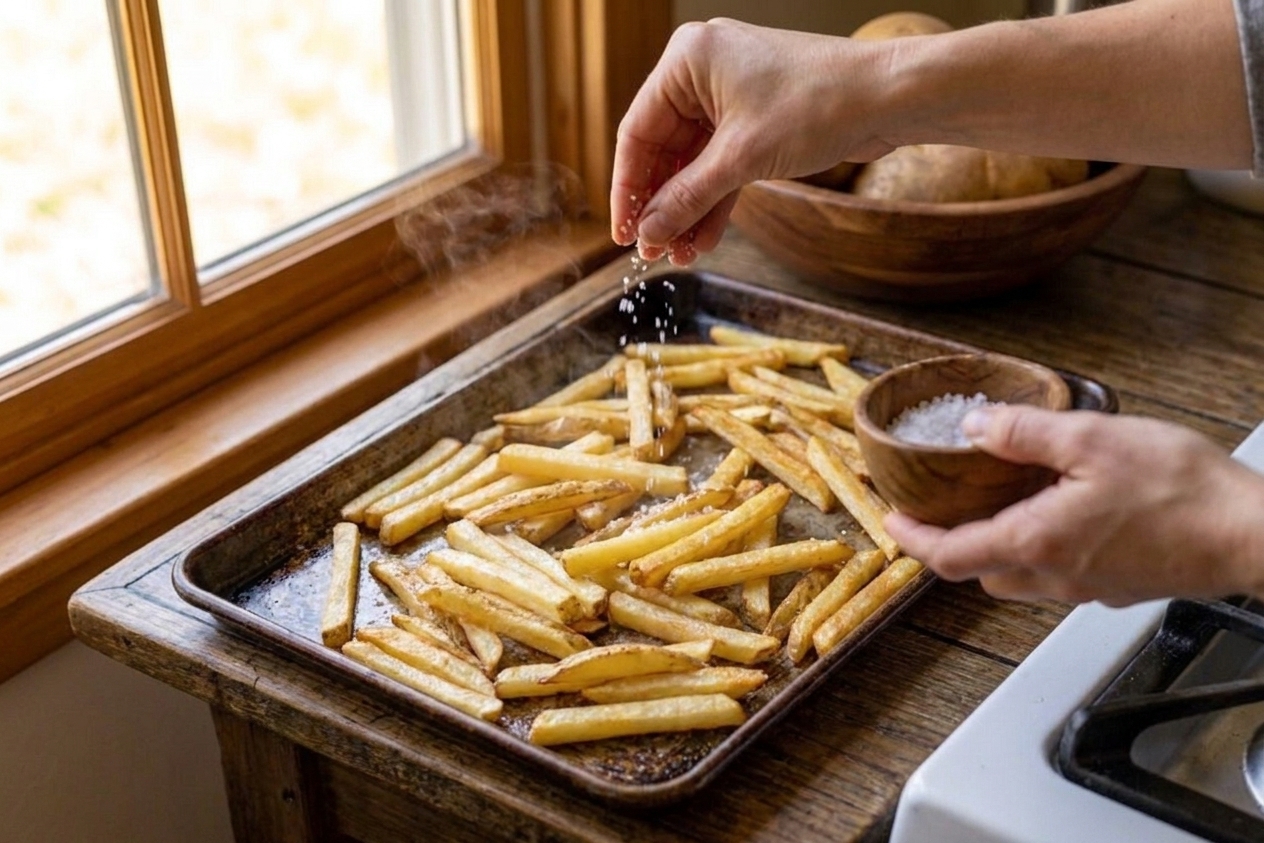
  • Big flavor, simple seasoning: Salt right after cooking, then add extras while the fries are still hot so everything sticks.

Pairs Well With

Storage Tips

Fries are best fresh, but leftovers can still be worth it if you reheat them the right way.

Refrigerate

  • Cool fries completely, then store in an airtight container lined with a paper towel.
  • Keep refrigerated for up to 3 days, though they are best within 1 to 2 days for the crispiest reheat.

Reheat (best methods)

  • Oven: Spread on a sheet pan and bake at 425°F for 8 to 12 minutes, flipping once.
  • Air fryer: Heat at 380°F for 4 to 7 minutes, shaking halfway.
  • Skillet: Re-crisp in a thin layer of oil over medium heat, tossing often.

Freezing

You can freeze cooked fries, but texture varies. Freeze in a single layer on a sheet pan until firm, then bag and freeze up to 2 months. Reheat from frozen at 425°F until hot and crisp, about 12 to 18 minutes.

Common Questions

What potatoes are best for French fries?

Russet potatoes are the classic choice. They are starchy, which gives you that fluffy interior and crisp exterior. Yukon Golds work too, but they tend to be creamier and slightly less crisp.

Do I really have to soak the potatoes?

You do not have to, but you will taste the difference. Soaking pulls off excess surface starch so the fries crisp better and stick together less. Even 20 minutes helps.

Why do my fries turn soggy?

  • Oil temperature was too low, often from overcrowding the pot.
  • Potatoes were not dried well after soaking, so they steamed instead of crisping.
  • Fries were salted too early and then sat in a steamy pile. Salt after cooking, then spread them out briefly.

What oil should I use?

Use a neutral oil with a high smoke point, like canola, vegetable, peanut, or avocado oil. Save olive oil for dipping or finishing if you want that flavor.

Can I make these ahead for a crowd?

Yes. Do the first fry, cool the fries completely, then refrigerate them on a rack uncovered or loosely covered up to 24 hours. (Uncovered dries them nicely; loosely covered helps avoid fridge smells.) Do the second fry right before serving.

My fries journey started the way a lot of kitchen lessons do. I got confident, cranked the heat, crowded the pot, and ended up with pale, floppy potato sticks that looked like they needed a nap. Once I learned the soak-and-double-cook rhythm, everything clicked. Now fries are my favorite kind of kitchen chaos: a little sizzling, a little snacking, and that final moment where you hit them with salt and suddenly everyone in the house appears like it was planned.