Mom's Best Recipes
Recipe

Fresh Artichoke Recipe

Tender steamed artichokes with a bright lemon butter dipping sauce that tastes fancy but cooks like a weeknight win.

Author By Matt Campbell
4.8
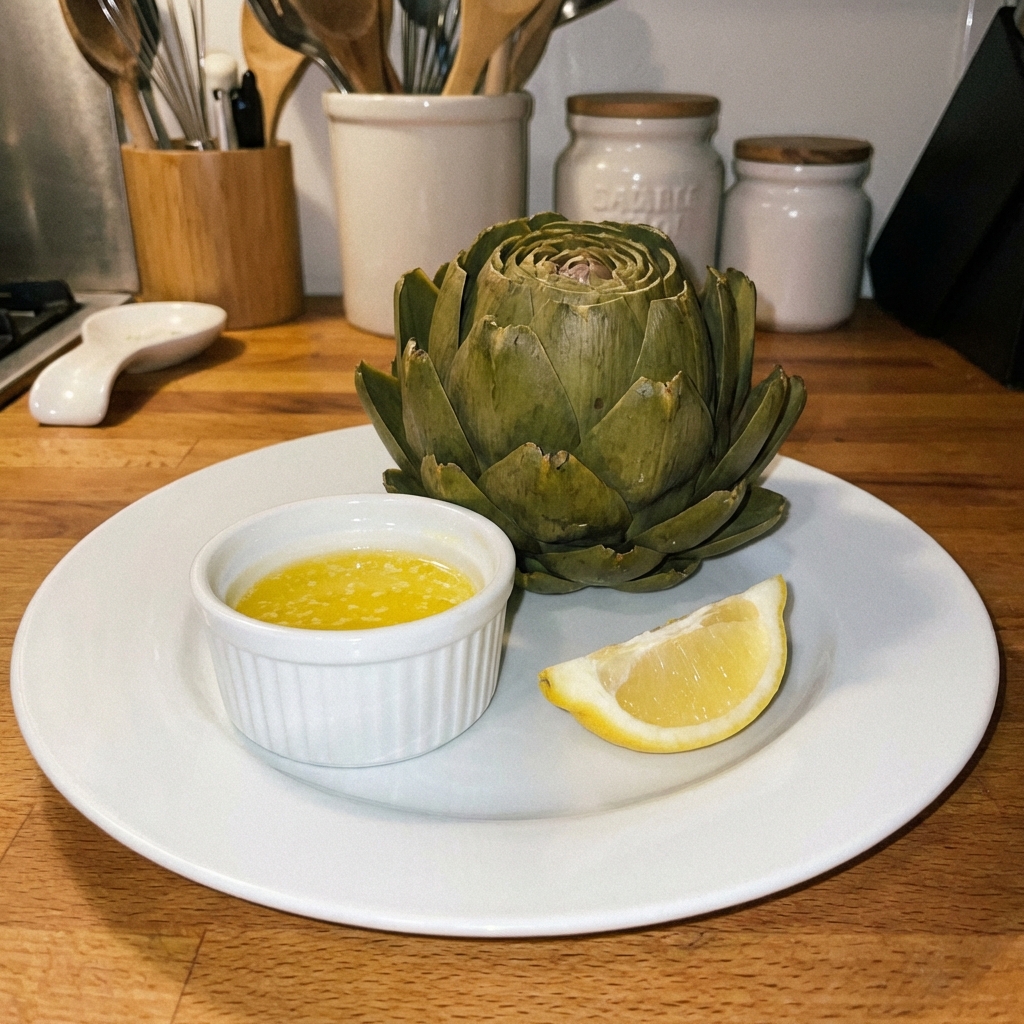
A whole steamed artichoke on a plate with a small bowl of lemon butter dipping sauce and a lemon wedge

Fresh artichokes have a reputation for being fussy. In reality, they’re just a vegetable with a lot of personality and a few leafy opinions. Once you know the quick trim, the rest is basically: steam, dip, repeat.

This sweet and simple version leans into what makes artichokes so good in the first place: that slightly nutty, almost sweet heart and the fun of pulling leaves one by one. We keep the ingredients accessible and the flavor loud where it counts, with lemon, butter, garlic, and a pinch of salt that makes you pause mid-bite and go, “Okay, wow.”
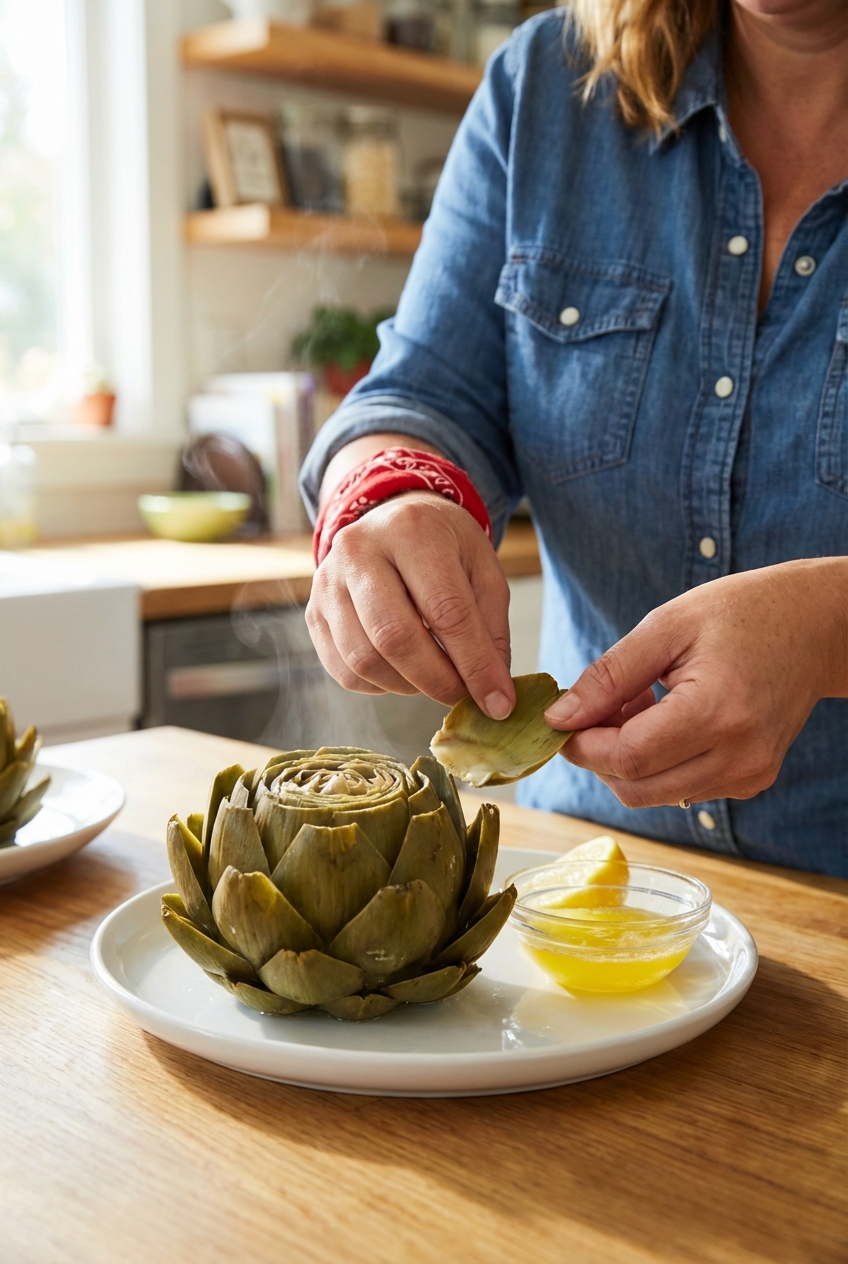
Hands pulling a leaf from a steamed artichoke at a kitchen table

Why It Works

What you’ll get

  • Perfectly tender leaves that scrape clean with your teeth, not chewy and stringy.
  • A sweet, creamy center once you hit the heart, with no bitterness.
  • Bright lemon butter sauce that’s equal parts cozy and zippy, plus a simple way to adjust it if it breaks.
  • Clear trimming steps so you don’t feel like you need an artichoke degree.

Why steaming works

Steaming keeps the flavor clean and the texture silky. Boiling works, but it can waterlog the leaves and dilute that naturally sweet artichoke taste. Steaming is the low-drama path to tender leaves and a rich, sweet heart.

Pairs Well With

Storage Tips

How to store

  • Cooked artichokes: Cool completely, then refrigerate in an airtight container for up to 3 days. I like to store them whole so the leaves don’t dry out.
  • Lemon butter sauce: Refrigerate up to 5 days, but it’s best within 3 to 4 days. Give it a quick sniff and taste check before serving.

Best way to reheat

  • Steam reheat: Put leftover artichokes back in a steamer for 5 to 8 minutes until warm.
  • Microwave: Wrap in a damp paper towel and heat in 30-second bursts. Not glamorous, but effective.

Leftover idea

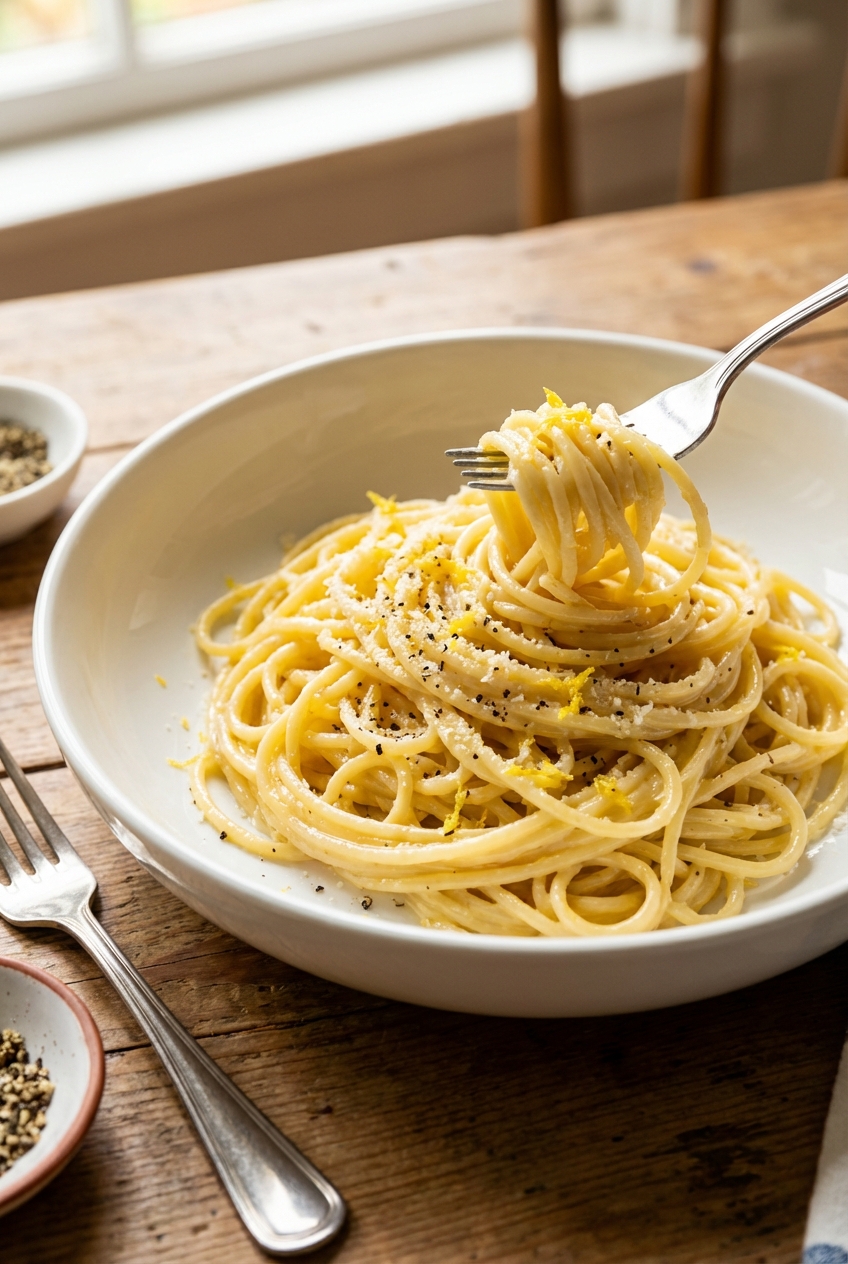
Chop the heart and tender inner leaves, then toss with pasta, a squeeze of lemon, parmesan, and a little of the warmed lemon butter. Instant “I meant to do this” dinner.

Common Questions

How do I pick a good fresh artichoke?

Look for artichokes that feel heavy for their size, with tight leaves and minimal browning. A little squeak when you squeeze them is a good sign of freshness.

Do I have to cut the artichokes right away after trimming?

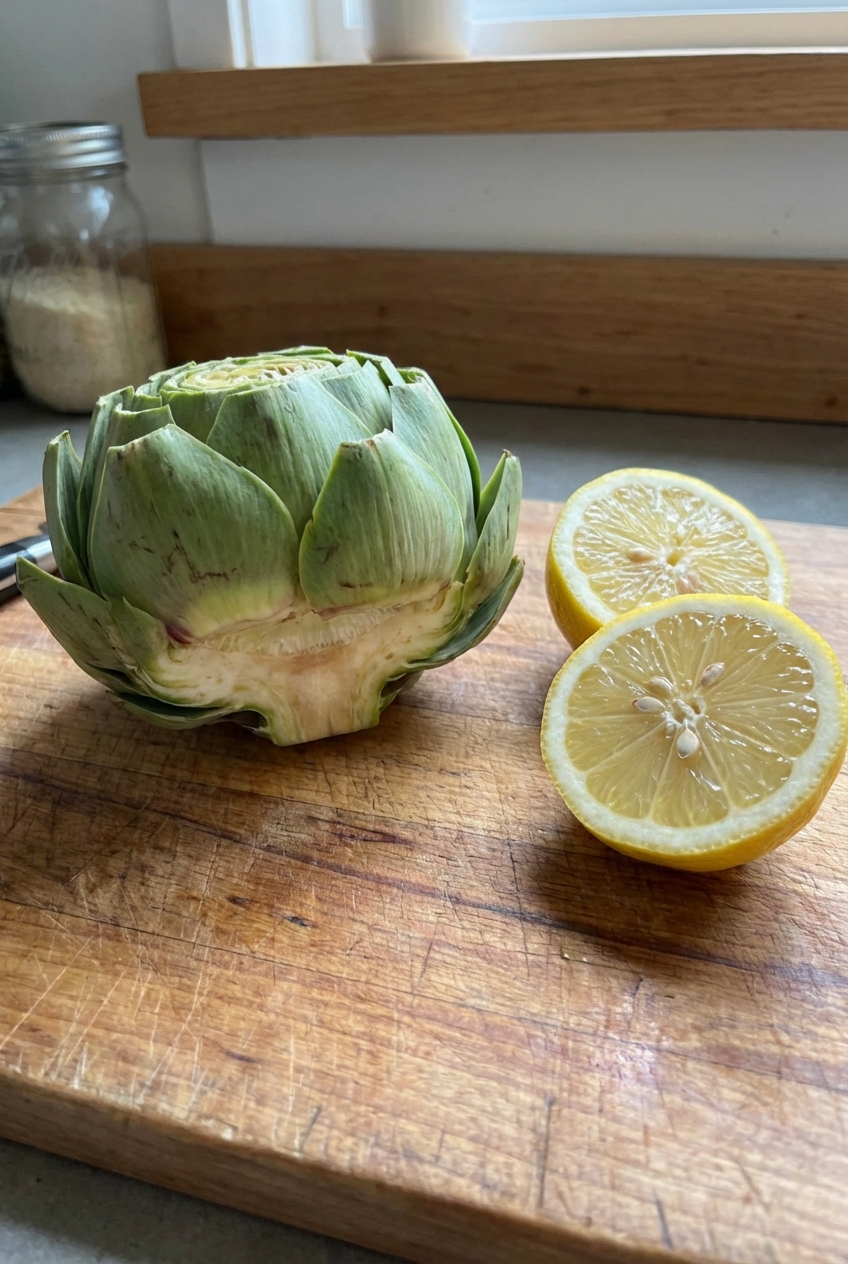
Pretty much, yes. Artichokes oxidize fast. If you need a few minutes, rub cut surfaces with lemon and park them in a bowl of cold water with lemon slices.

How do I know when it’s done steaming?

Go by doneness first, time second. A leaf should pull off easily, and the tip of a knife should slide into the base with little resistance. As a general guide, most medium artichokes take 30 to 40 minutes, and larger ones can take 45 to 55 minutes.

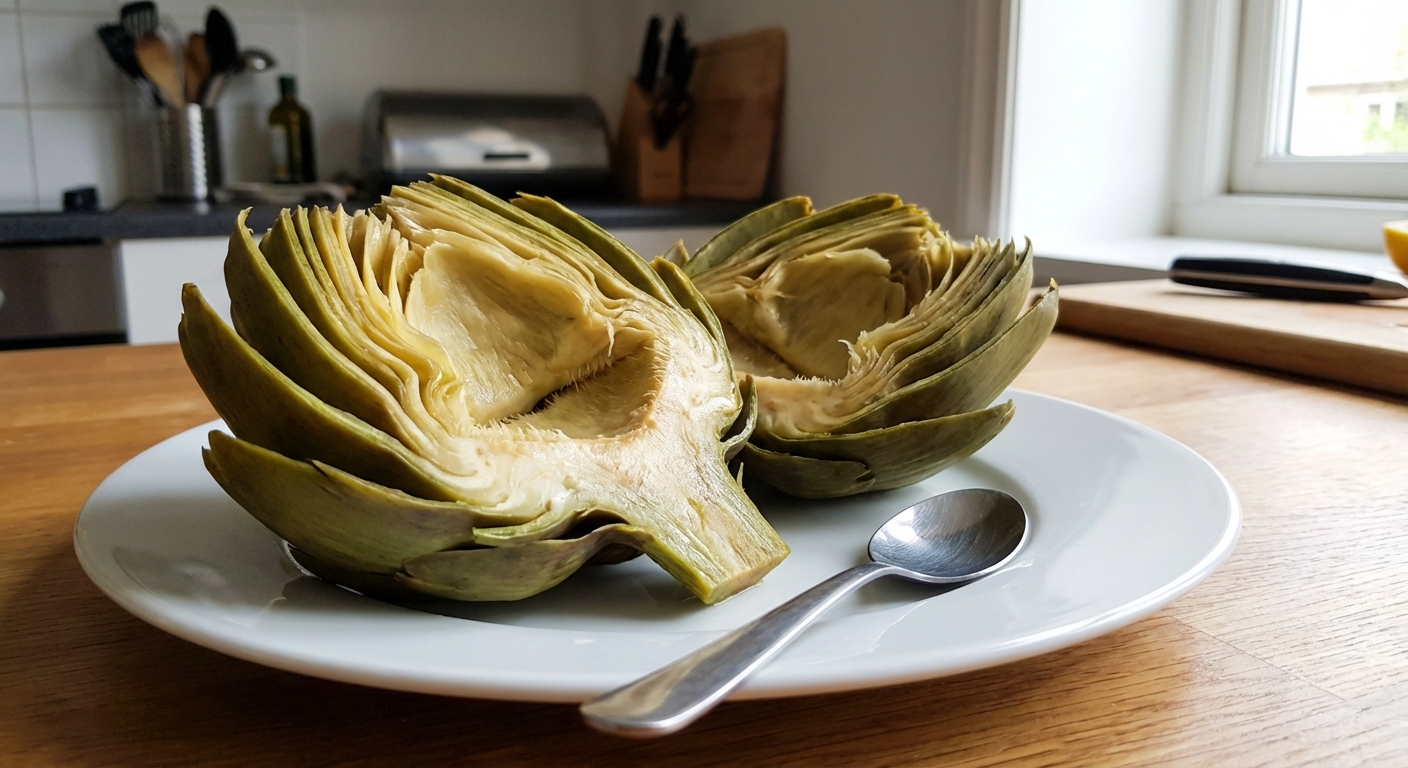
What’s the fuzzy part inside, and do I eat it?

That’s the choke. It’s not edible. Scoop it out with a spoon once the artichoke is cooked and the inner leaves are removed.

My butter sauce looks greasy or separated. Can I fix it?

Yep. Take it fully off the heat, then whisk in warm water a few drops at a time until it comes back together. If it’s really broken, add another teaspoon or so slowly, whisking constantly so you don’t thin it out too much.

The first time I cooked a fresh artichoke, I treated it like a biology lab. I trimmed too much, overthought everything, and still ended up with something that tasted amazing dipped in butter. That was my lightbulb moment: artichokes aren’t about perfection, they’re about the vibe. You steam them, you sit down, you slow down for five minutes, and suddenly dinner feels like an event. Now it’s one of my favorite “friend in the kitchen” foods because the process is half the fun and the reward is sweet, simple, and a little bit fancy.