Mom's Best Recipes
Recipe

Fresh Pesto Recipe

A 10 minute basil pesto that tastes like summer: punchy garlic, toasted nuts, real Parmesan, and plenty of olive oil for that glossy, cling-to-everything finish.

Author By Matt Campbell
4.9 (287)
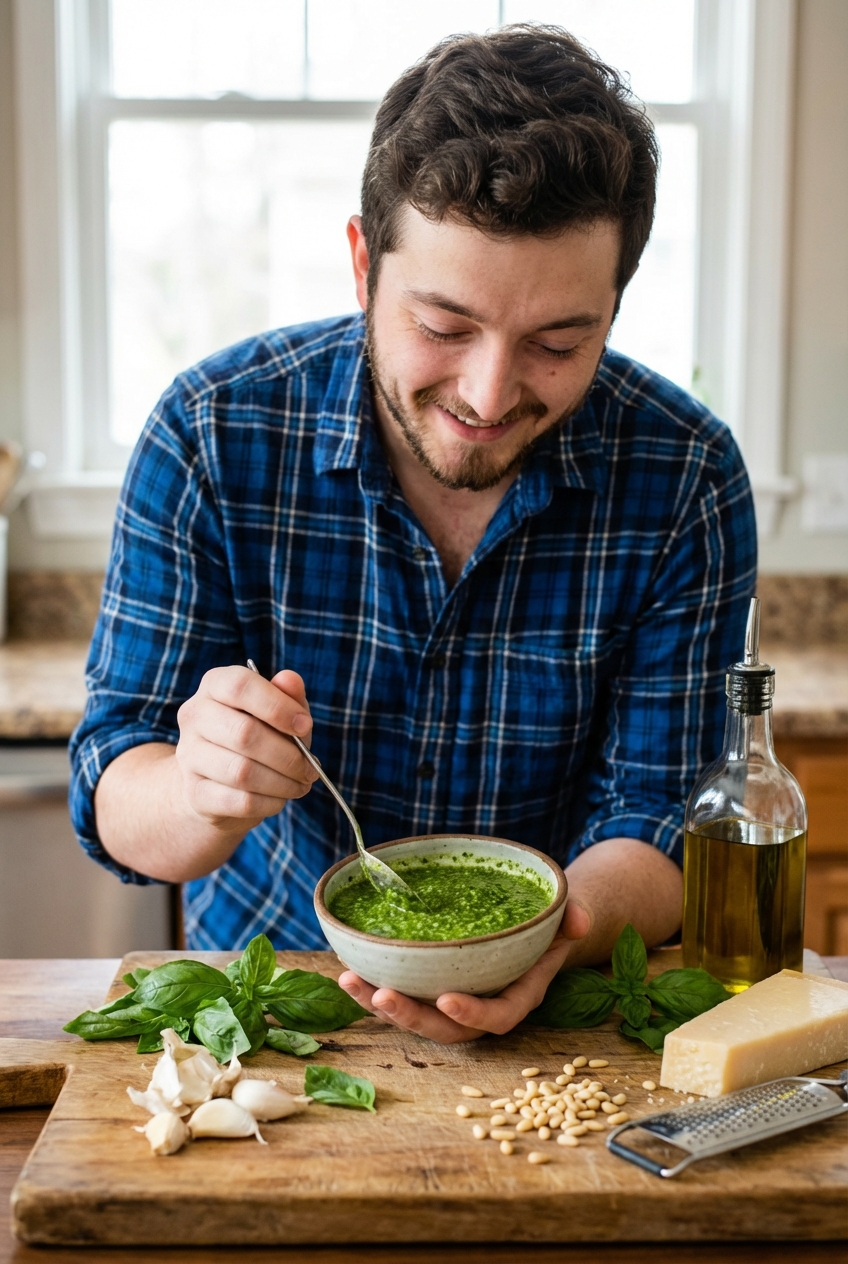
A small bowl of bright green basil pesto with a spoon resting in it on a wooden cutting board, surrounded by fresh basil leaves, garlic cloves, pine nuts, Parmesan, and a bottle of olive oil in natural window light

Pesto is one of those sauces that makes you feel like you have your life together, even if dinner is just pasta and vibes. It is fresh, loud, herby, and it can rescue everything from a bland chicken breast to a sad weeknight sandwich.

This fresh pesto recipe keeps it classic but not fussy. We toast the nuts for deeper flavor, we add the olive oil slowly so it stays silky, and we keep the ingredients easy to find. You will get a bright green sauce with real basil flavor, a salty Parmesan backbone, and just enough garlic to make you pause mid-bite and go, “Okay, wow.”
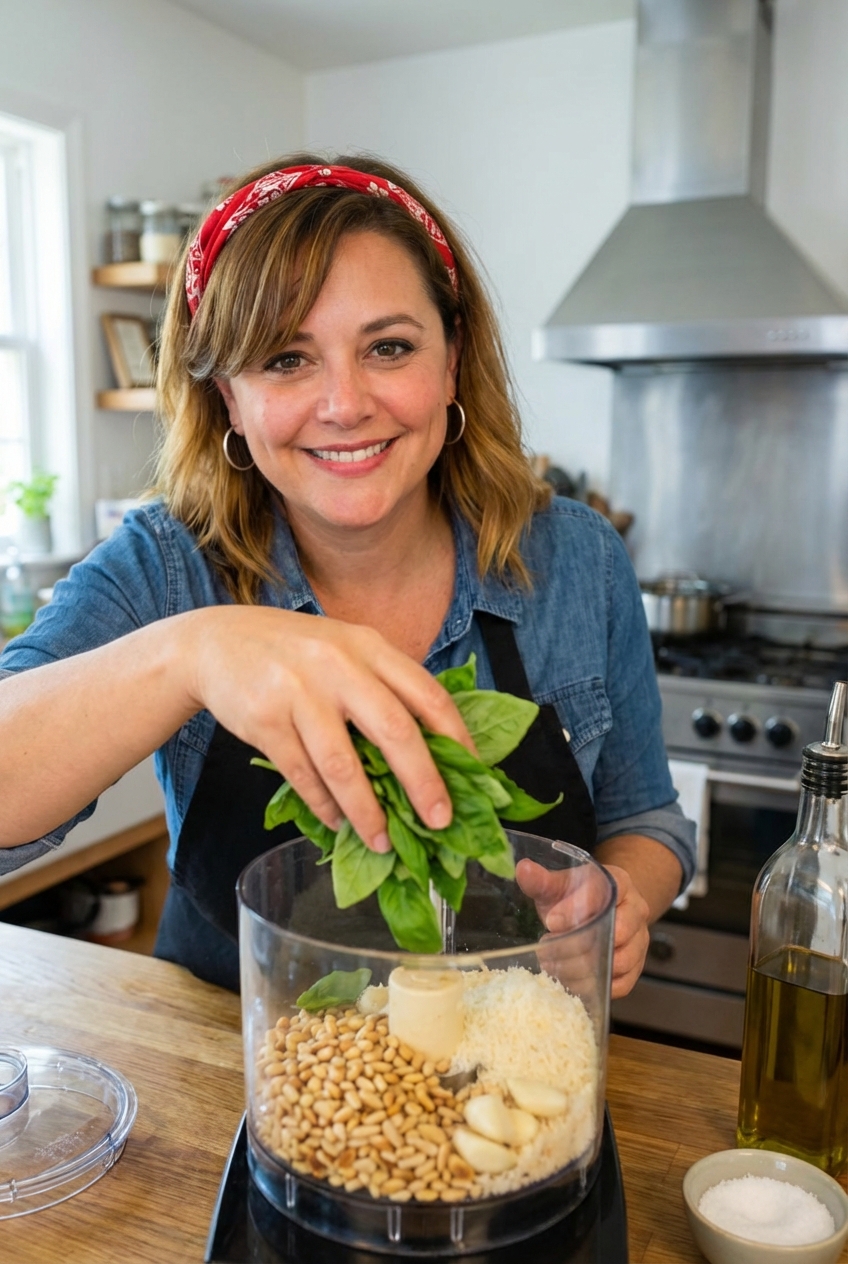
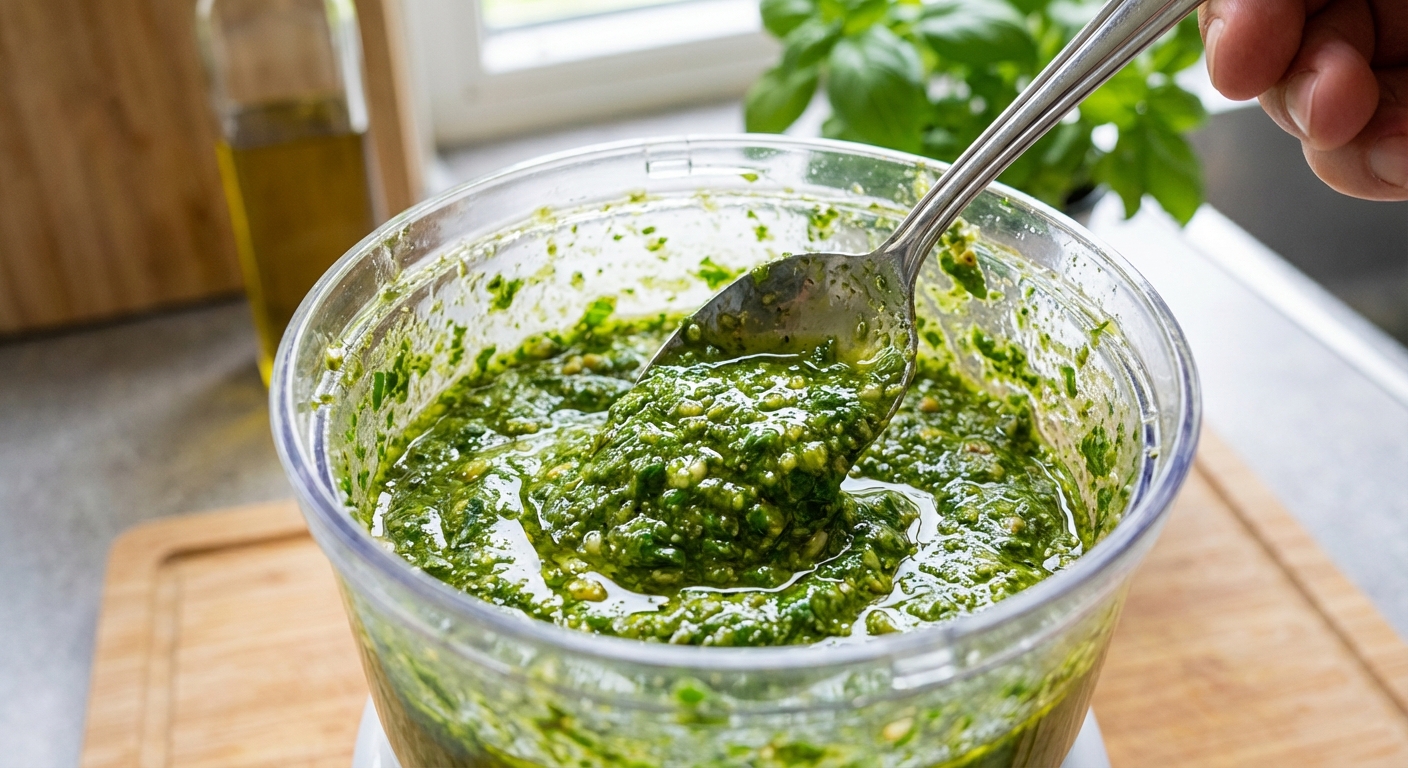
Fresh basil leaves being added into a food processor bowl with toasted pine nuts, grated Parmesan, and garlic on a kitchen counter

Why It Works

  • Bright, not bitter: Using fresh basil, toasting the nuts, and blending in short bursts keeps the flavor clean.
  • Silky texture: Drizzling the olive oil in slowly helps the pesto emulsify so it clings to pasta instead of sliding off.
  • Balanced seasoning: Parmesan adds salt and umami, lemon wakes everything up, and a tiny pinch of salt makes the basil pop.
  • Flexible: Pine nuts are classic, but walnuts, almonds, or pistachios work great and cost less.

Pairs Well With

Storage Tips

Refrigerator: Store pesto in a small jar or airtight container for 4 to 5 days. For best color, smooth the top flat and pour a thin layer of olive oil over it before sealing. After you scoop some out, smooth the top again and refresh that oil layer so less air hits the pesto.

Freezer (best for long-term): Freeze in an ice cube tray, then pop the cubes into a freezer bag. It keeps for 3 to 6 months (best flavor within 3). One cube is a great starting point for a single bowl of pasta, soups, or a quick sauce base. Add another if you want it extra saucy.

Thawing: Thaw overnight in the fridge or warm a cube gently in a pan over low heat until just loosened. Avoid sizzling it. If it looks thick, loosen with olive oil or a spoonful of warm water.

Important: The top can darken from oxidation. Stir it in. If you see mold, notice fizzing, or it smells rancid or “off,” toss it.

Common Questions

How do I keep pesto bright green?

Two easy moves: store it with a thin layer of olive oil on top, and add a little lemon juice. Also, do not over-blend. Short pulses help prevent the basil from heating up and turning dull.

Can I make pesto without pine nuts?

Absolutely. Walnuts are the most common swap. Almonds and pistachios are also great. Toast whatever nut you use for better flavor.

Do I have to use a food processor?

No. A blender works, but you may need to stop and scrape more often and add a touch more oil. A mortar and pestle is the classic method and gives a chunkier, super aromatic pesto if you are feeling ambitious.

Can I make it dairy-free?

Yes. Replace the Parmesan with 2 to 3 tablespoons nutritional yeast plus an extra pinch of salt. The flavor will be different but still tasty and very usable.

Why is my pesto bitter?

Common culprits are older basil, very aggressive garlic, or over-processing. Use fresh basil, toast the nuts, and blend in short bursts. If it is slightly bitter, add a bit more cheese, a squeeze of lemon, an extra drizzle of olive oil, or a spoonful more nuts to round it out. Dairy-free? Try the olive oil and nuts route, plus a pinch of salt.

Should I heat pesto?

Not directly. Heat can dull the fresh basil flavor. Instead, toss pesto with hot pasta off the heat, using pasta water to help it coat. For pizza, dollop pesto on after baking or in the last minute.

The first time I made pesto at home, I treated it like a fancy restaurant sauce. I overthought everything, blended it forever, and ended up with something that tasted a little tired. Later I learned pesto is better when you stop trying to control it. Pulse, taste, adjust, and let it be a little imperfect. Now it is my go-to “I need dinner to feel like a win” move. If I have basil and pasta, we are back in business.