Mom's Best Recipes
Recipe

Fresh Chimichurri Recipe

Bright, herby, and garlicky chimichurri you can pull together fast. Spoon it on steak, chicken, roasted veggies, or warm bread for instant flavor.

Author By Matt Campbell
4.9
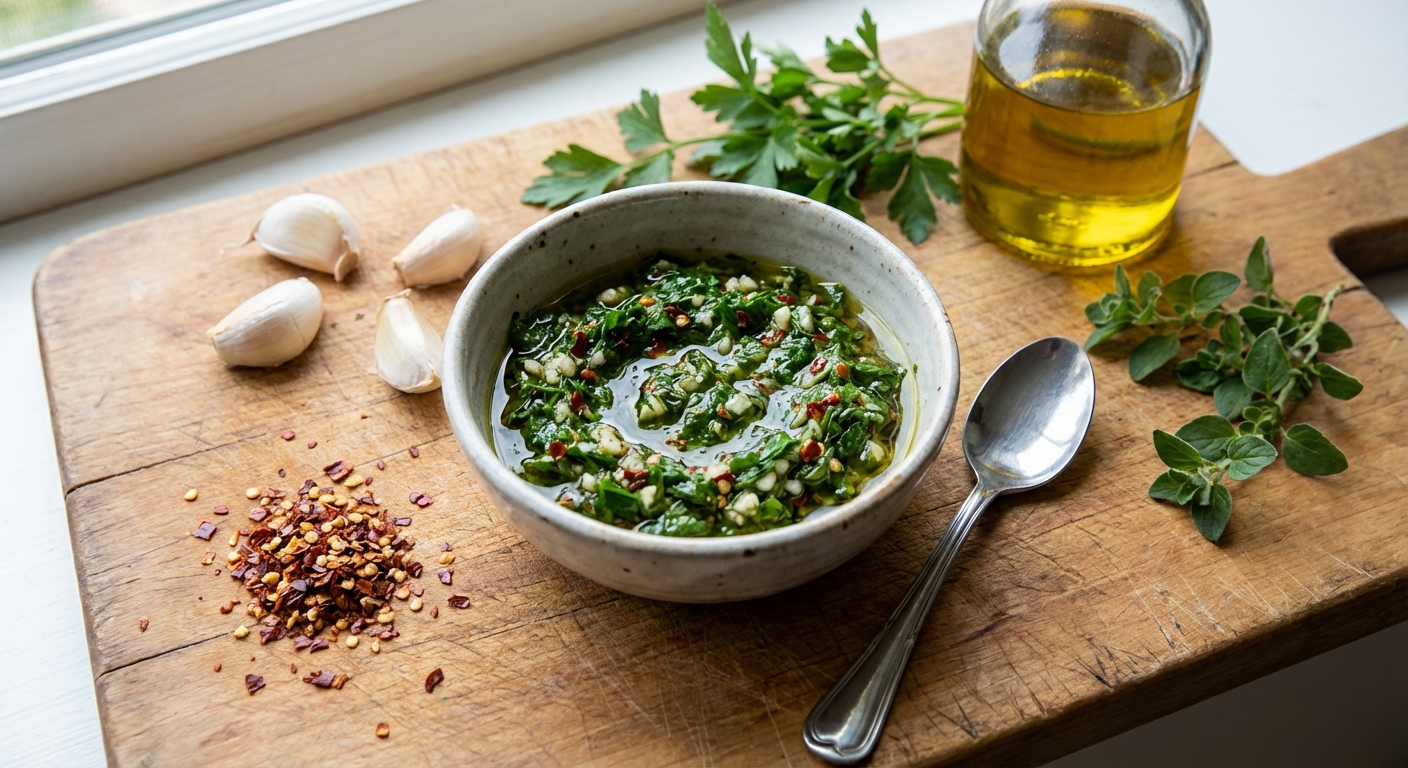
A small bowl of fresh chimichurri sauce with parsley and oregano, surrounded by garlic, red pepper flakes, olive oil, and a spoon on a wooden cutting board

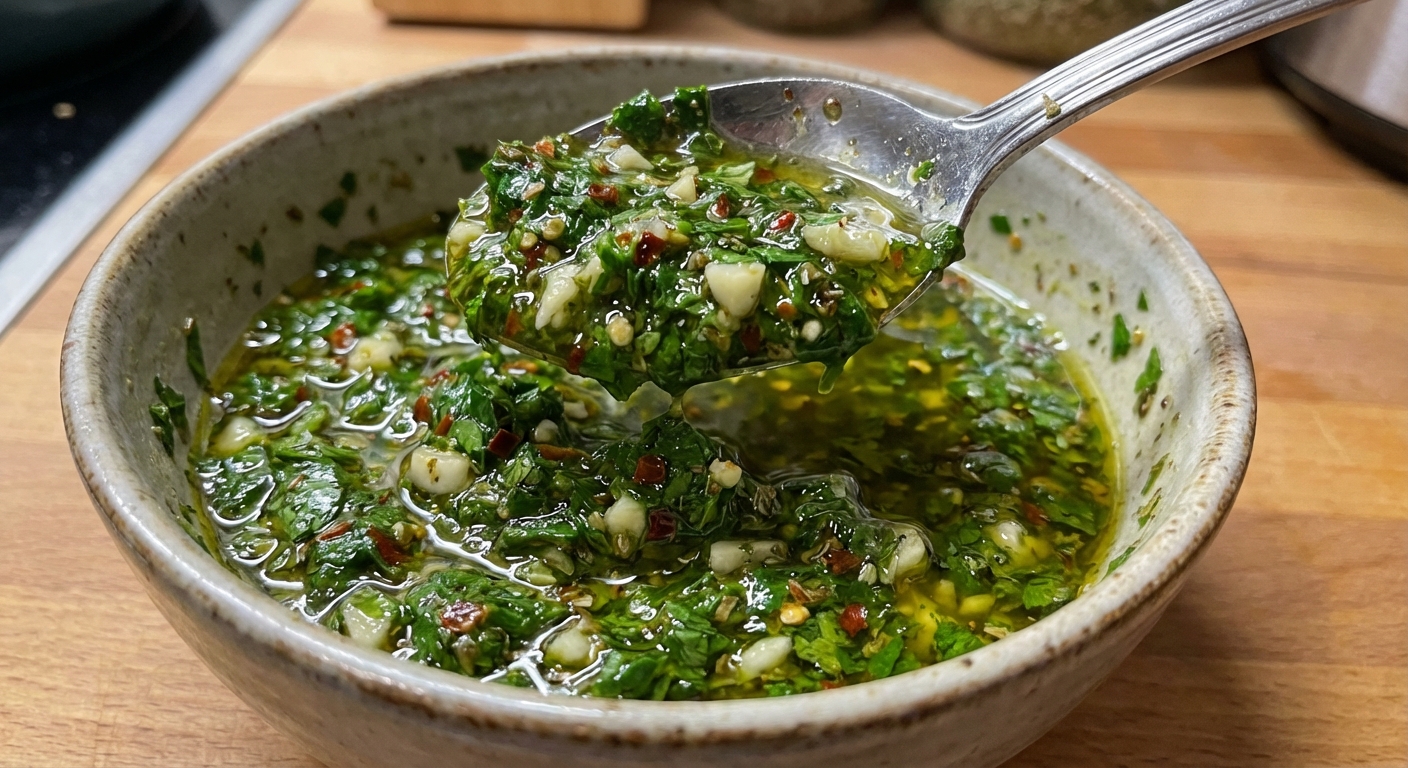
Chimichurri is the sauce I make when dinner feels a little too beige. It is punchy and green, with garlic that shows up on time, vinegar that wakes everything up, and enough olive oil to make it feel silky instead of sharp.

This is a fresh chimichurri in the Argentine and Uruguayan style: mostly parsley, a little dried oregano, garlic, red pepper, and a simple oil and vinegar base. It is not fussy. It is not precious. It is the kind of sauce you can whip up while your protein rests, then spoon over everything like you meant to do that all along.
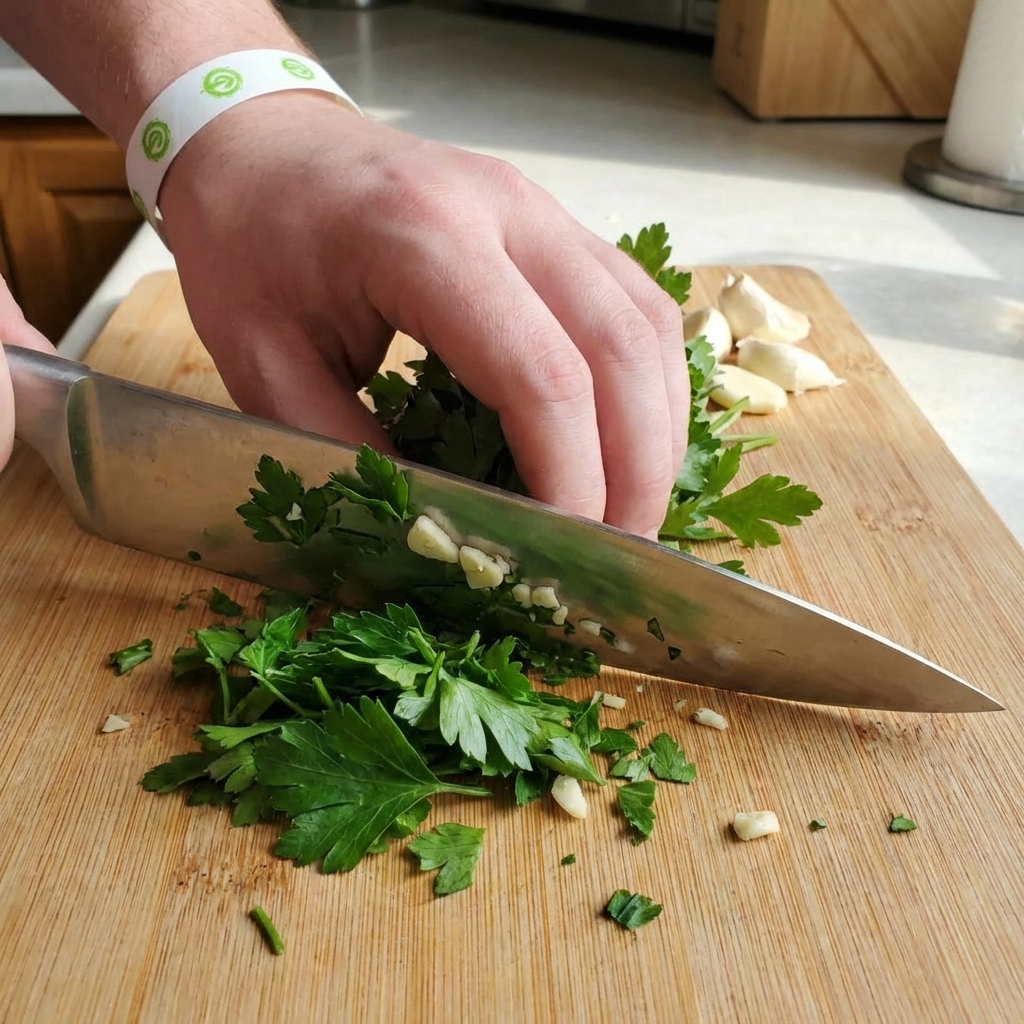
A hand chopping flat-leaf parsley and garlic on a cutting board with a chef's knife

Why It Works

  • Bright and balanced: Red wine vinegar keeps it lively, while olive oil smooths out the edges.
  • Big flavor fast: Raw garlic, oregano, and chili flakes do the heavy lifting with minimal effort.
  • Texture you can control: Hand-chopped for rustic and spoonable, or pulse-blended for a slightly smoother sauce.
  • Better after a short rest: 10 to 20 minutes gives the herbs time to mingle with the oil and vinegar.

Pairs Well With

Storage Tips

Refrigerator: Store in an airtight container for best quality for 3 to 5 days. The herbs may darken a bit over time, and the fresh flavor softens. It still tastes great.

Olive oil cap trick: To help keep it greener longer, press the chimichurri flat in the container and pour a thin layer of olive oil over the top before sealing.

Freezer: Freeze in an ice cube tray, then transfer cubes to a freezer bag for best quality for up to 3 months. Thaw in the fridge and stir well. Texture softens, but it is awesome on roasted meats and veggies.

Before serving: Cold oil thickens. Let it sit at room temperature 10 minutes, then stir. Taste and add a pinch of salt or a splash of vinegar if it needs a refresh.

Common Questions

Can I make chimichurri in a blender or food processor?

Yes. Pulse in short bursts so it stays spoonable, not pureed. If it turns into green salad dressing, it will still be tasty, just less traditional.

Why is my chimichurri bitter?

Usually it is from over-blending (herbs get bruised) or using very bitter olive oil. Hand-chop, or pulse gently. You can also soften bitterness with a tiny pinch of sugar or a bit more olive oil.

Can I use cilantro instead of parsley?

You can. It becomes more of a chimichurri-inspired green sauce. A good ratio is half parsley, half cilantro, especially if you are cilantro-curious but not fully committed.

Is chimichurri spicy?

It can be, but it does not have to be. Start with 1/4 teaspoon red pepper flakes for mild, and go up from there.

What vinegar is best?

Red wine vinegar is classic. Apple cider vinegar works in a pinch. Balsamic is usually too sweet and muddy here.

Can I use fresh oregano instead of dried?

Yes. Fresh oregano is punchy and a little grassy. Use about 1 tablespoon finely chopped fresh oregano in place of the 1 teaspoon dried. I use dried here because it is classic in chimichurri, easy, and it brings a deeper, savory herbal note that holds up well in the oil and vinegar.

I started making chimichurri for the same reason I started buying good flaky salt: I wanted simple food to taste like I tried harder than I did. The first time I made it, I spooned it onto chicken that was honestly just fine. Suddenly it tasted like a plan.

Now it is my go-to move when I am cooking for people. You put a bowl of bright green sauce on the table and everyone leans in like, oh, we are doing this right. The best part is it takes less time than preheating the grill, and it makes basically everything on the plate feel more alive.