Mom's Best Recipes
Recipe

Easy Juicy Pork Chops

Juicy, tender pork chops with crisp edges and a bright pan sauce you can make in one skillet. Fast enough for weeknights, flavorful enough to feel like you tried.

Author By Matt Campbell
4.8
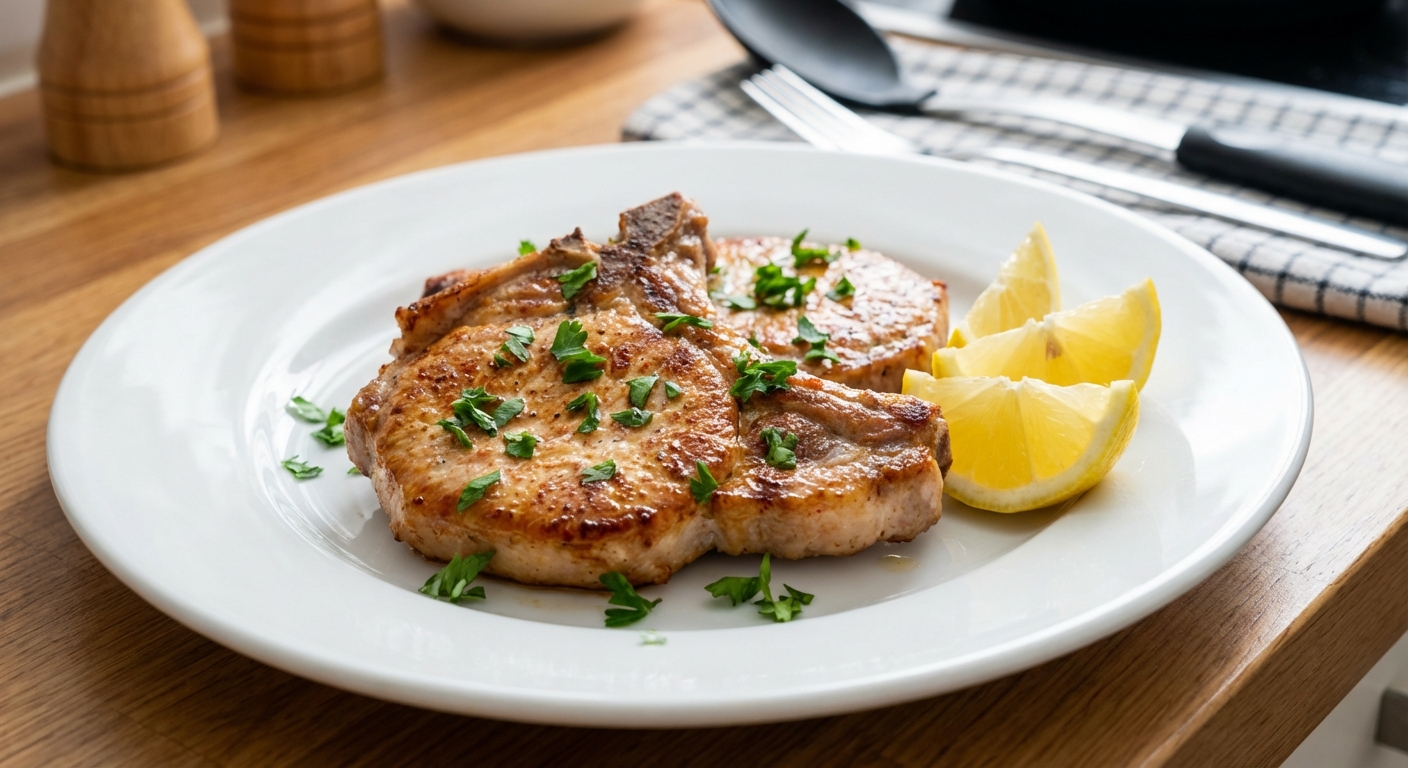
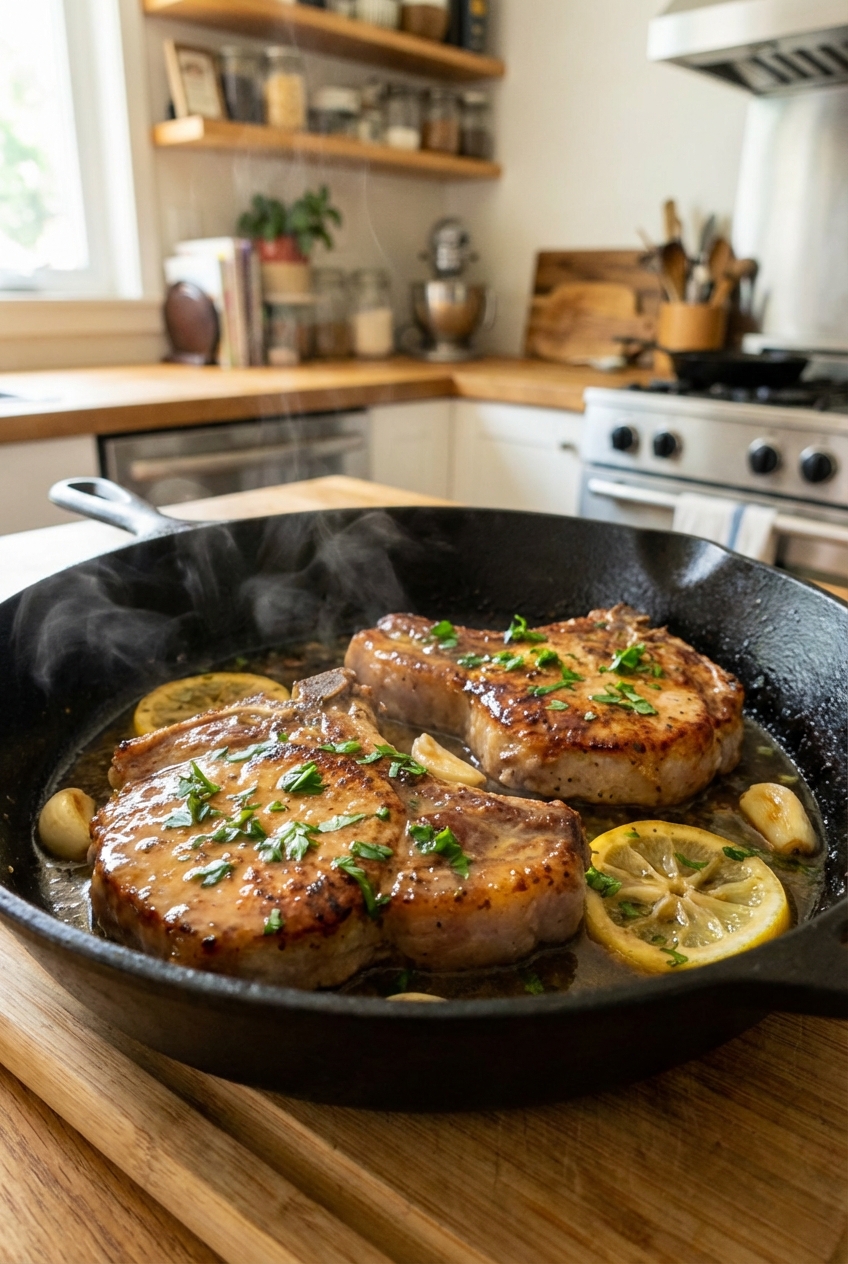
Juicy pan-seared pork chops in a skillet with a glossy lemon-garlic pan sauce and fresh parsley

Pork chops get a bad reputation for being dry, tough, and kind of sad. I blame two things: cooking them too long and not giving them a little help in the flavor department. This recipe fixes both with a quick brine, a hot sear for crisp edges, and a simple lemony pan sauce that tastes like you actually planned dinner.

The goal here is tender with a pleasant chew in the best way. Think: juicy bite, gentle tug, browned crust. It is the pork chop version of a cozy hoodie that still looks good.

Two seared pork chops resting on a plate with lemon wedges and chopped parsley

Why It Works

  • Juicy and tender, not dry: A short brine seasons the meat more evenly and helps it hold onto moisture.
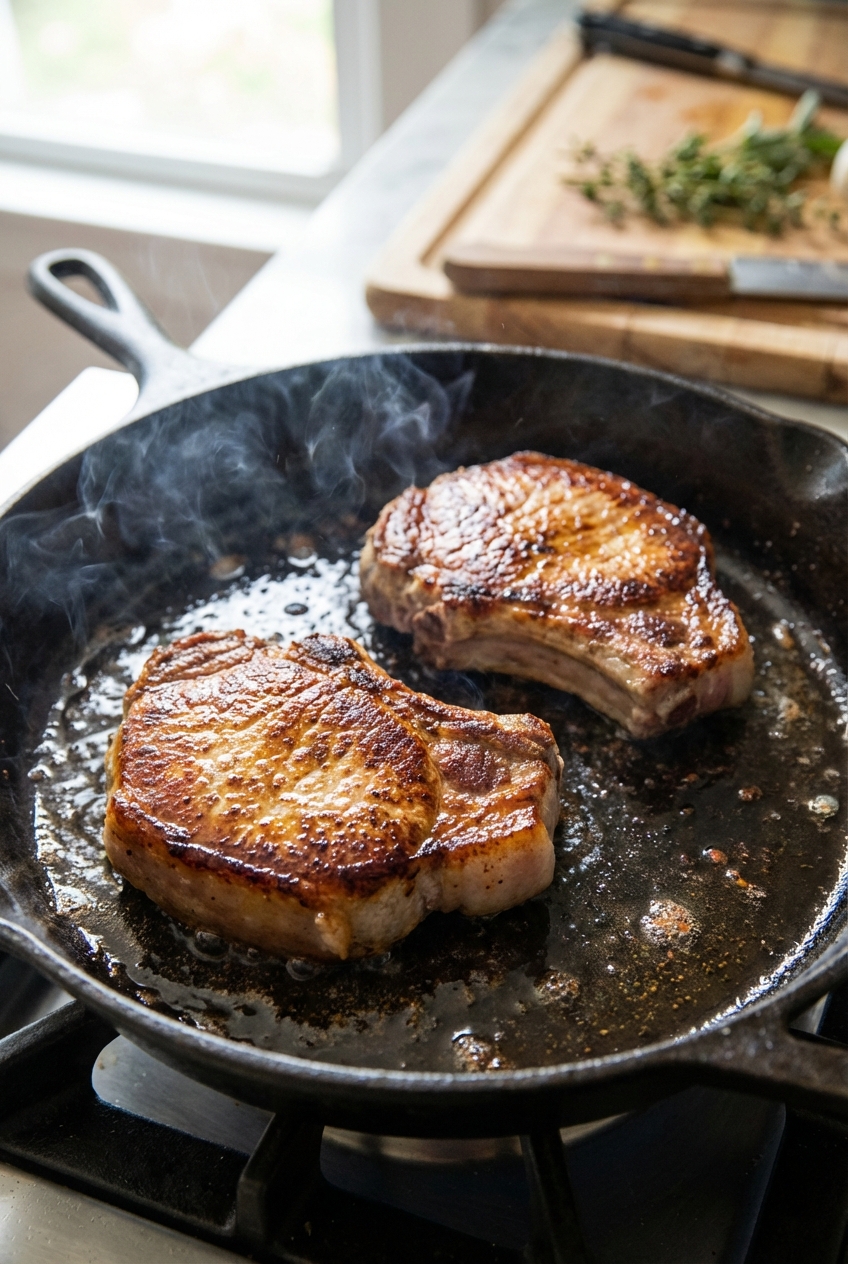
  • Crisp edges, golden crust: High heat plus a dry surface equals that satisfying browning.
  • Bright, fast pan sauce: Lemon, garlic, and a splash of broth pick up all the browned bits in the skillet.
  • One pan energy: Cook the chops, make the sauce, done. Minimal dishes, maximum reward.

Pairs Well With

Storage Tips

Refrigerate: Store pork chops and sauce in an airtight container for up to 3 days.

Reheat gently: Warm in a covered skillet over low heat with a splash of broth or water until just heated through. Microwaving is fine, but do it at 50 percent power in short bursts so the chop stays tender.

Freeze: You can freeze the cooked chops for up to 2 months. Freeze with a little sauce if possible to protect the meat. Thaw overnight in the fridge before reheating.

Leftover idea: Slice and tuck into a sandwich with mayo, mustard, and something crunchy like pickles or shredded lettuce. The sauce makes a sneaky good spread too.

Common Questions

What does “tender with a pleasant chew” mean for pork chops?

It means the meat is juicy and tender with just a little bite. Not rubbery and not dry. The quick brine and stopping the cook at the right temperature are the big wins.

What internal temperature should pork chops be?

For best results and to align with USDA guidance for whole cuts, cook to 145°F in the thickest part and rest at least 3 minutes.

If you prefer an even juicier finish, you can pull the chops at 140°F and rest until they reach 145°F (carryover heat usually gets you there).

Can I skip the brine?

You can, but it really helps with seasoning and texture, especially for lean loin chops. If you skip it, season generously with salt at least 15 minutes before cooking and let the chops sit uncovered in the fridge if you have time. That helps dry the surface for better browning.

Boneless or bone-in?

Either works. Boneless cooks a little faster and is more weeknight-friendly. Bone-in can stay juicy and looks impressive, but it may take a few extra minutes. Either way, let the thermometer be the boss.

Why didn’t my chops brown well?

Usually one of these: the pan was not hot enough, the chops were wet, or the pan was crowded. Pat dry, heat the skillet until shimmering, and give each chop space. If your skillet feels tight, cook in batches.

Do I need to rinse off the brine?

Nope. Just remove the chops and pat them very dry. Dry surface equals better crust.

Can I make this dairy-free?

Yes. Swap the butter in the sauce for olive oil or a dairy-free butter. You will still get a glossy, bright finish.

I started making pork chops like this after one too many “Why is it so dry?” dinners that somehow still took an hour. The quick brine was the turning point. It is low effort, big payoff, and it makes pork taste like you meant it. Now this is my go-to when I want something cozy and classic, but I also want a sauce with enough zip to wake everything up.