How do I pick avocados for guacamole?
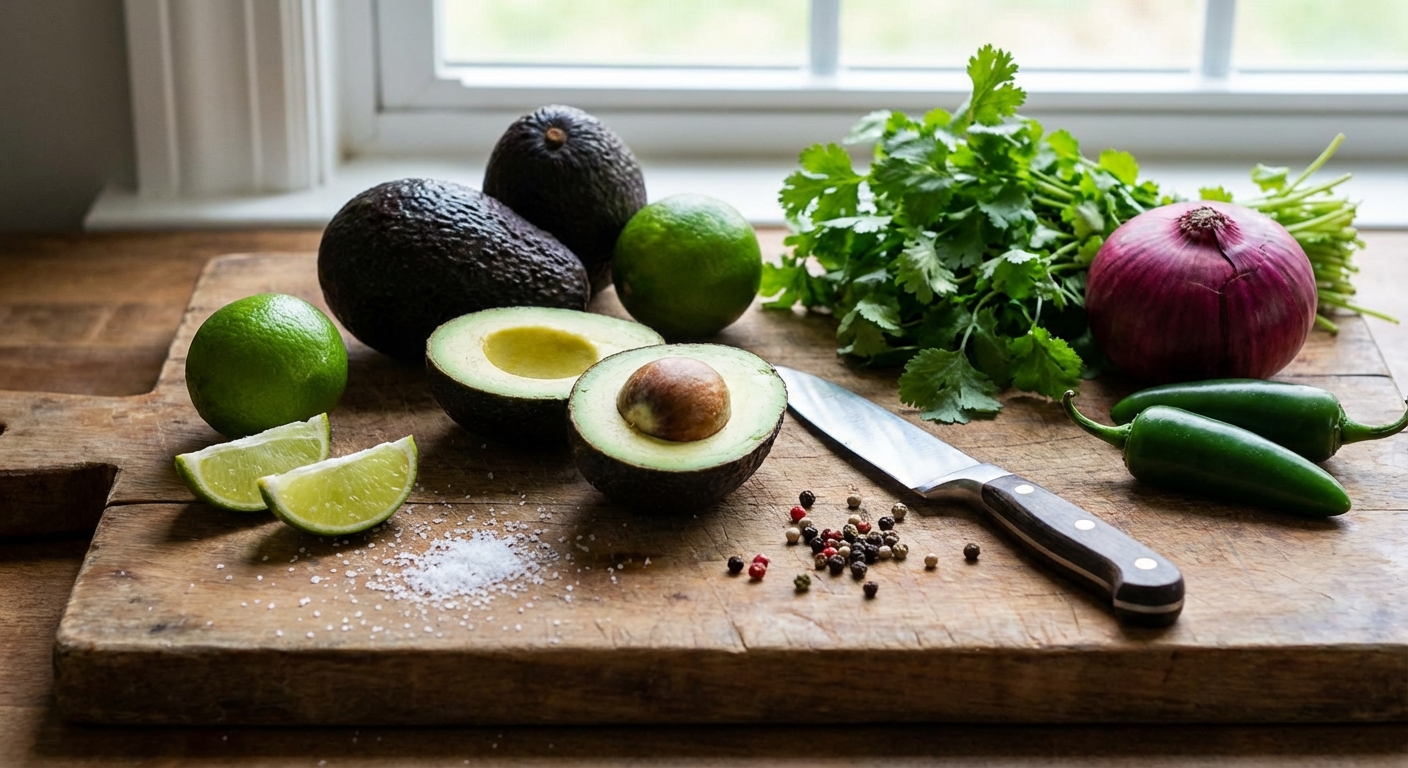
Look for avocados that give slightly when you press gently with your palm, not your fingertips. If they feel hard as a rock, they are not ready. If they feel mushy or have dents, they are probably bruised inside. Bonus clue: pop off the little stem cap. If it is green underneath, it is often a good sign. If it is brown, it may be overripe, bruised, or just further along. Not foolproof, but helpful.
Why does my guacamole turn brown?
Oxidation. Air hits the avocado and it darkens. Lime juice slows it down, but the best move is limiting air contact. Press plastic wrap directly onto the surface, or use the thin-water-layer trick in the storage section. That trick helps prevent browning by blocking oxygen. It does not reverse browning once it has happened.
Should I use a mortar and pestle?
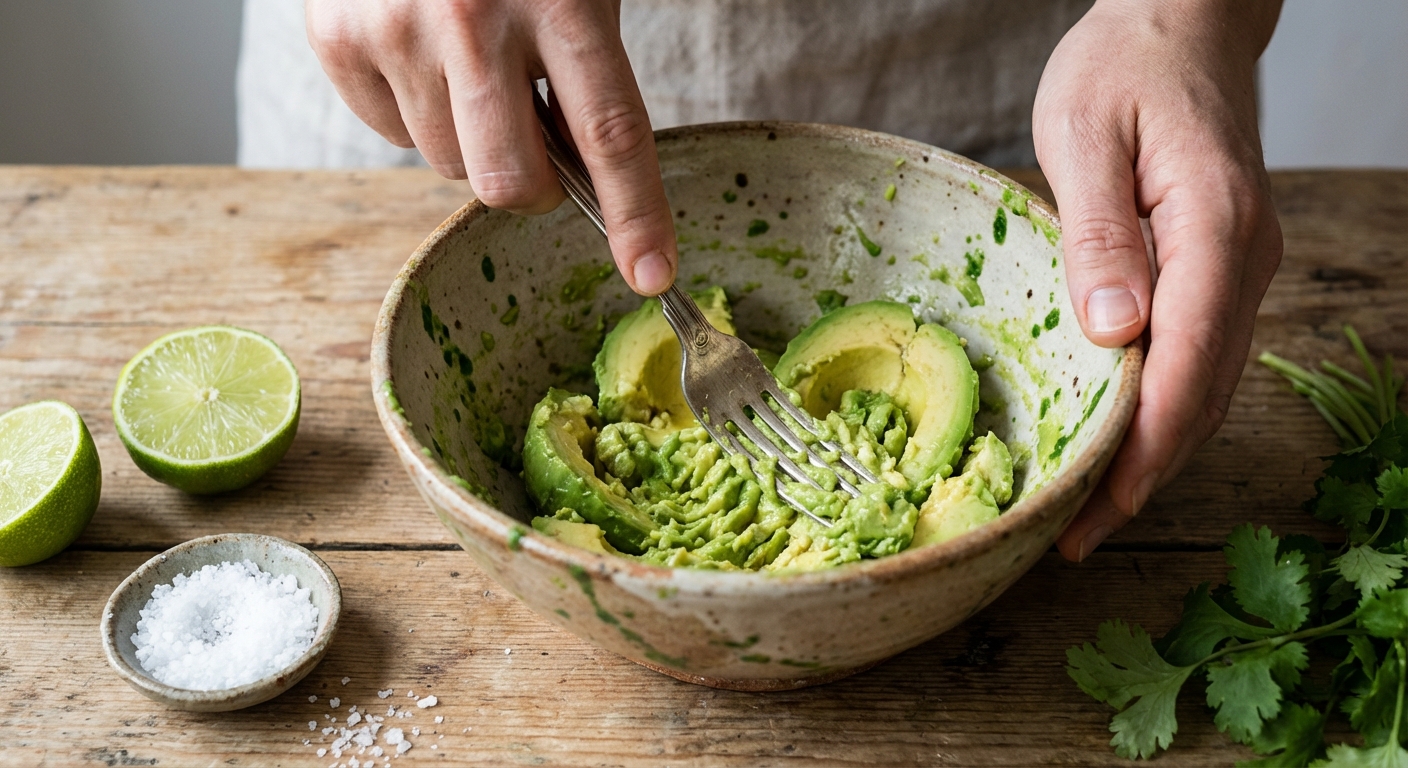
You can, and it is excellent, especially for mashing cilantro, jalapeño, and onion into a paste first. But a bowl and fork works on real weeknights. The goal is delicious, not a countertop museum exhibit.
Can I make guacamole without cilantro?
Yes. Swap in chopped scallions, parsley, or just skip herbs entirely and lean on extra lime and a pinch of cumin.
What if my guacamole tastes flat?
It needs one of three things: more salt, more lime, or more heat. Add in tiny increments and taste after each. A good rhythm is 1/8 teaspoon salt at a time and a small squeeze of lime at a time. Also, if you skipped resting it for 5 minutes, that can make it taste less cohesive.
Is tomato traditional?
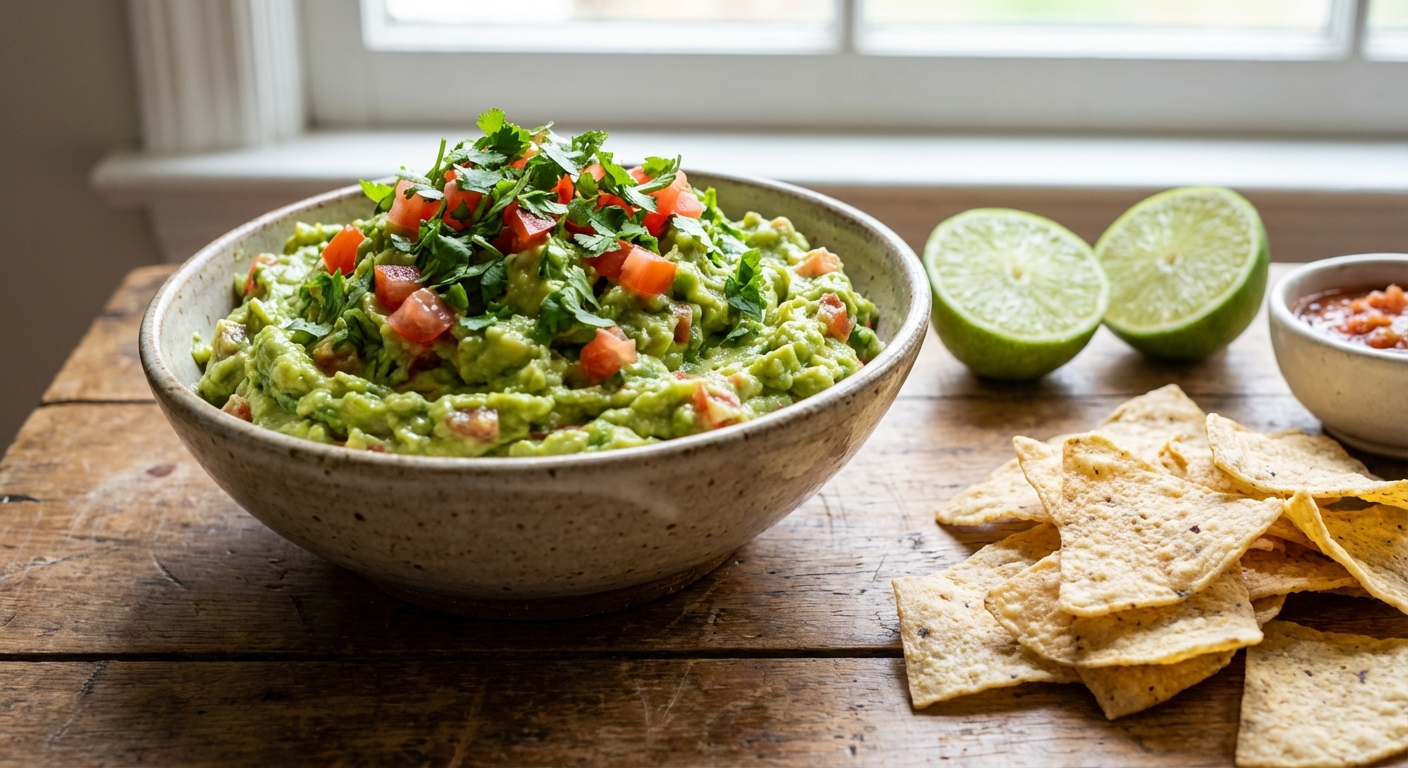
Depends who you ask and where they are from. It is common in many kitchens and totally optional. I like a little tomato for freshness, but I keep it seeded so it does not water everything down.