Common Questions
How many oysters should I plan per person?
As an appetizer, plan 4 to 6 oysters per person. If your friends treat oysters like chips and dip, bump it to 8 to 12.
Do I need a special oyster knife?
Yes, please. An oyster knife is short and sturdy, which is exactly what you want when you are applying pressure near your hand. A paring knife is a bad idea in a tiny, slippery package.
What oysters should I buy?
Buy from a reputable fishmonger, keep them cold on the way home, and choose shells that feel heavy for their size (that means more tasty liquor). Avoid any oyster with a cracked shell. The oyster should be tightly closed, or it should close when tapped. If it stays open, it is likely dead. Do not eat it.
What is the easiest way to shuck oysters at home?
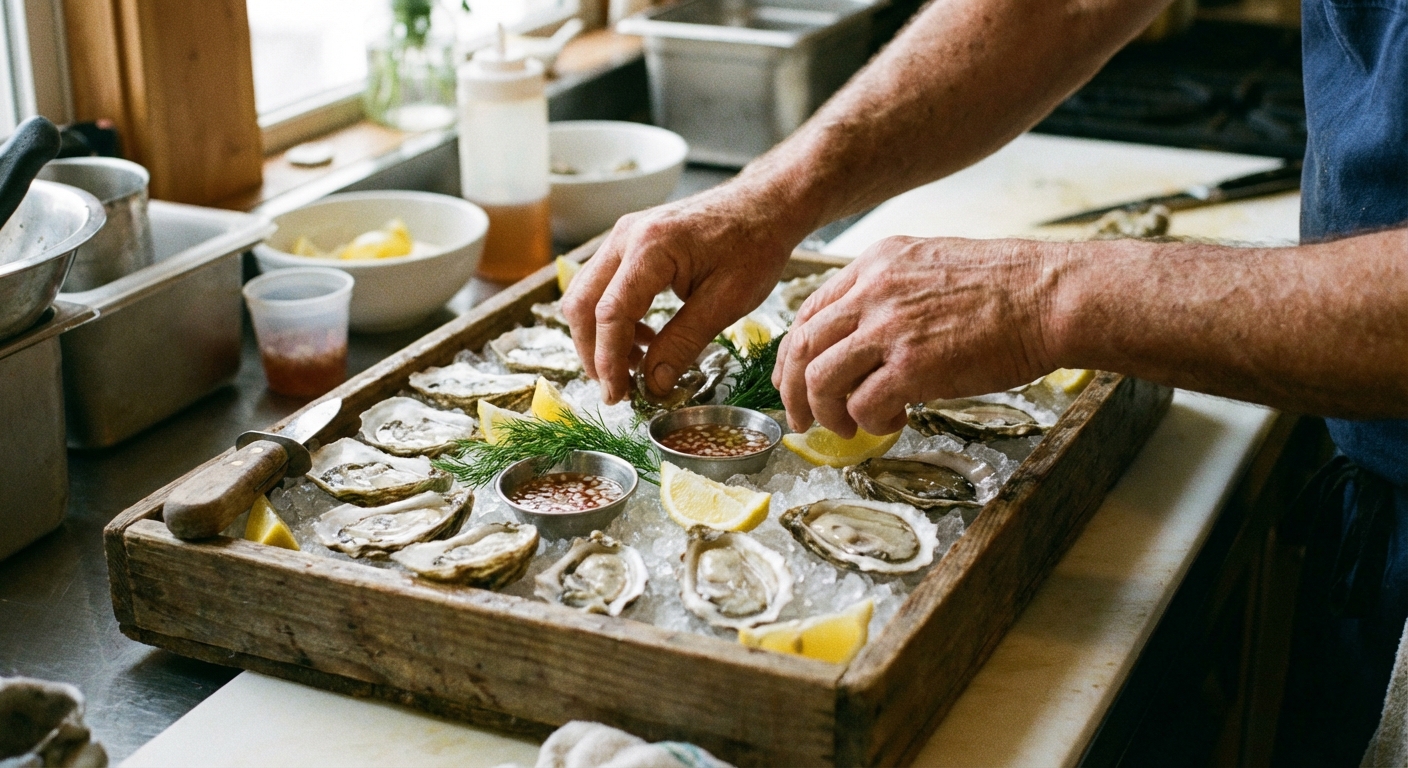
Chill the oysters well, use a folded towel or cut-resistant glove, and work on a stable surface. Insert the knife at the hinge, twist to pop, then slide along the top shell to cut the muscle. Keep the oyster level so you do not dump the liquor you paid for. Keep your fingers above the blade path, and always angle the knife away from your hand.
Can I rinse oysters after shucking?
Try not to. Rinsing can wash away flavor and change texture. If there is a little shell grit, pick it out with the tip of your knife. If you must rinse, do it quickly with very cold water and drain well, but consider it last resort.
What vinegar is best for mignonette?
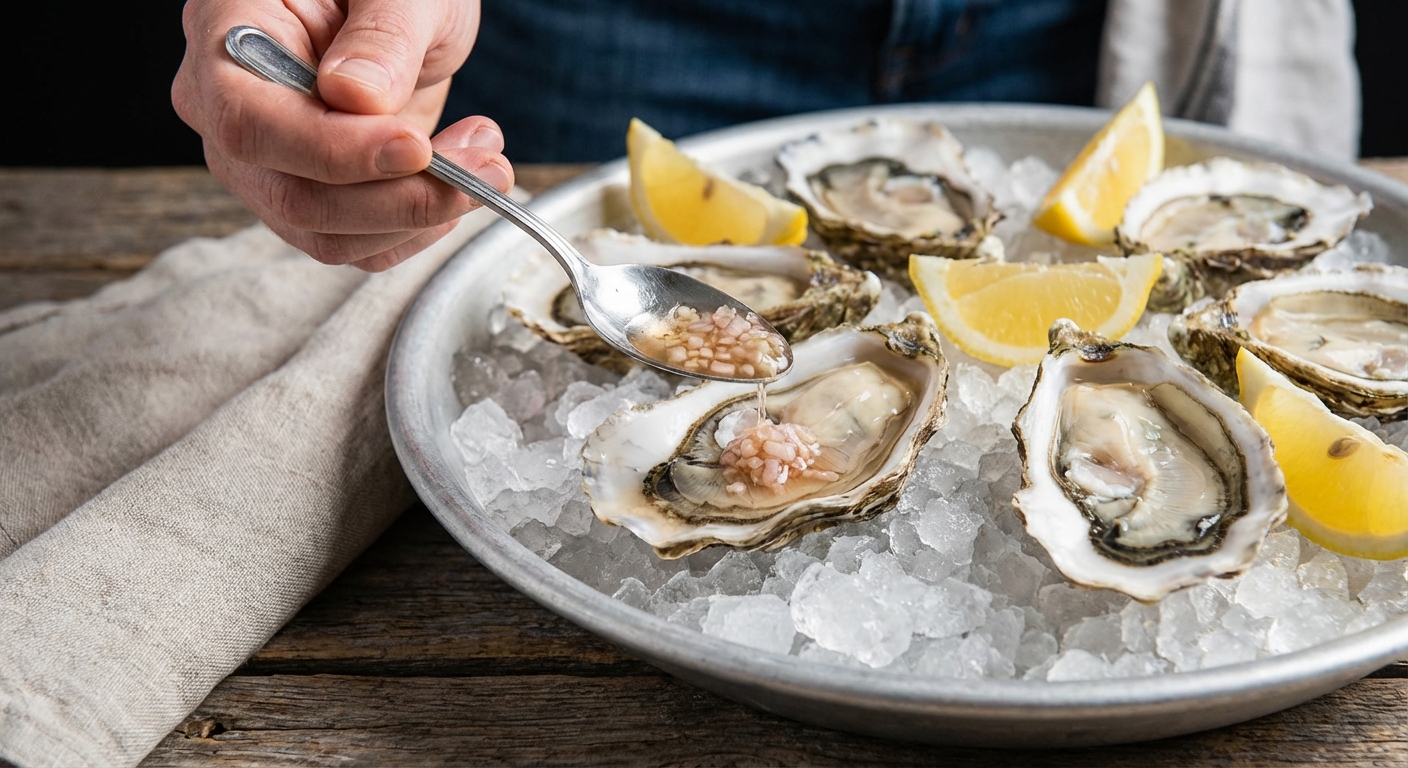
Classic is red wine vinegar. Champagne vinegar is softer and a little fancy. Sherry vinegar is deeper and richer. Use what you have, just keep it bright.
Are raw oysters safe?
Raw shellfish carries risk, including Vibrio. People who are pregnant, immunocompromised, or have liver disease (or other high-risk conditions) should choose cooked oysters instead. For everyone else, buy from a reputable source, keep oysters at 40°F or below (4°C), avoid cross-contamination, and eat them promptly.
Allergy note
Oysters are shellfish, a common allergen. Serve and label accordingly if you are feeding a group.