Common Questions
Do I need a food processor?
No. A blender works great. You may need to stop and scrape a couple times. Start on low, use a tamper if you have one, and if it refuses to move, add 1 to 2 tablespoons of pasta water (or plain water) just to get things going. If you are going old-school with a mortar and pestle, I respect you deeply and also hope your forearms are warmed up.
Why does my pesto taste bitter?
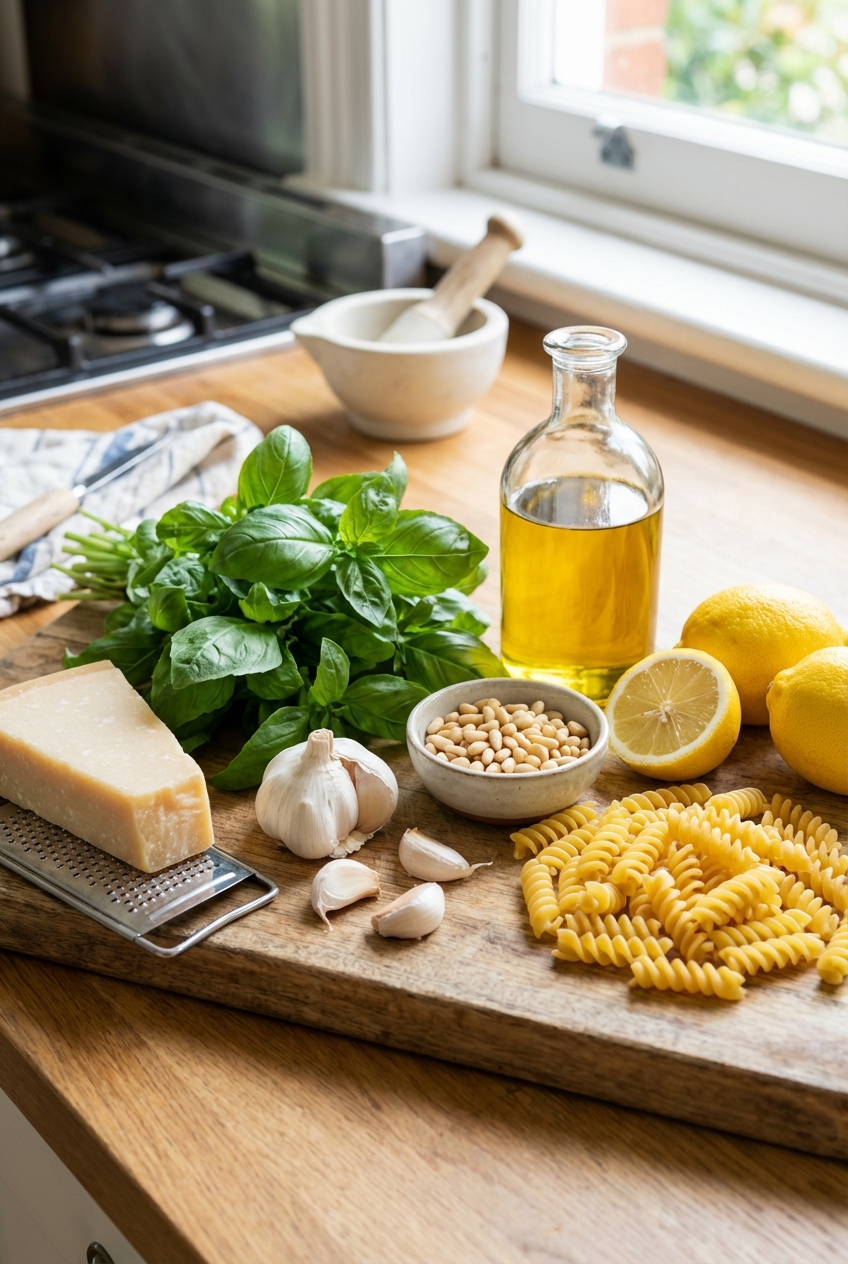
Usually it is one of these: the basil got bruised and over-processed, the garlic is extra sharp, the cheese is very aged, or the olive oil is a bit bitter or old. Pulse in short bursts, use fresh basil, and balance with a squeeze of lemon and a pinch of salt.
Can I make it nut-free?
Yes. Swap pine nuts for sunflower seeds or simply leave the nuts out and add a little extra Parmesan for body.
What pasta shape is best?
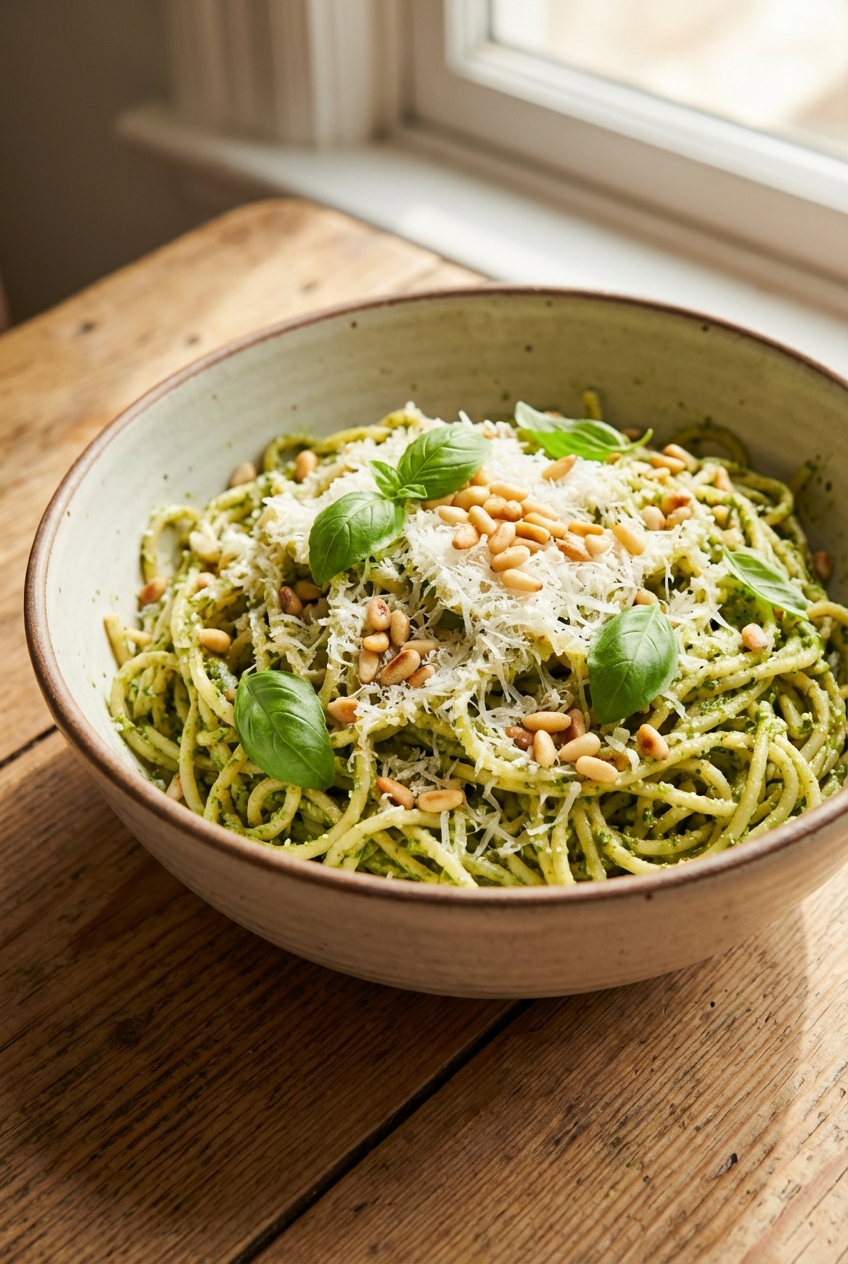
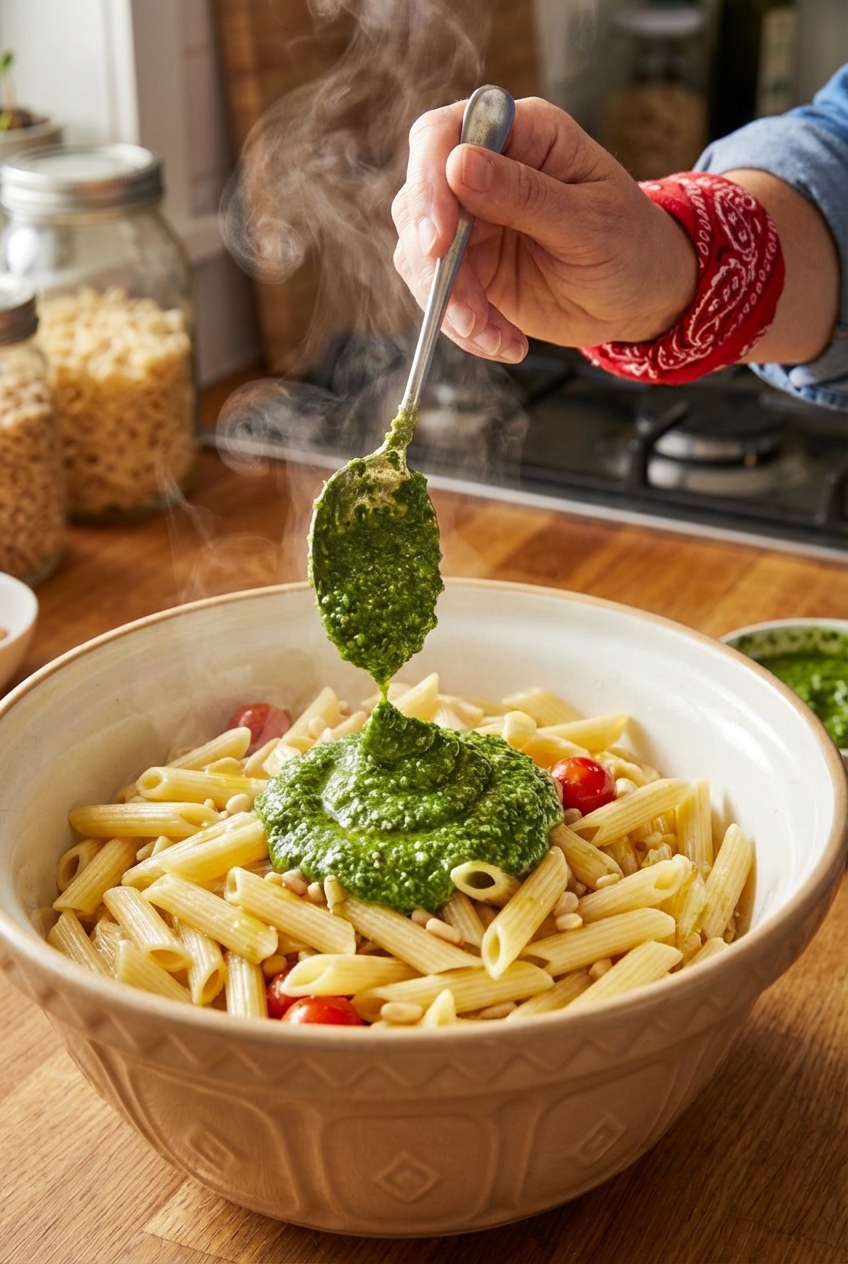
Anything with ridges or twists holds pesto well: fusilli, rotini, gemelli, farfalle. Spaghetti works too, it just gets a little more slippery.
How do I keep pesto bright green?
Use fresh basil, do not over-blend, and add the pesto off the heat so the basil does not cook. If you want an extra boost, you can blanch basil for 5 to 10 seconds, then shock in ice water and dry well before blending.
My pesto feels too thick or too thin. Help?
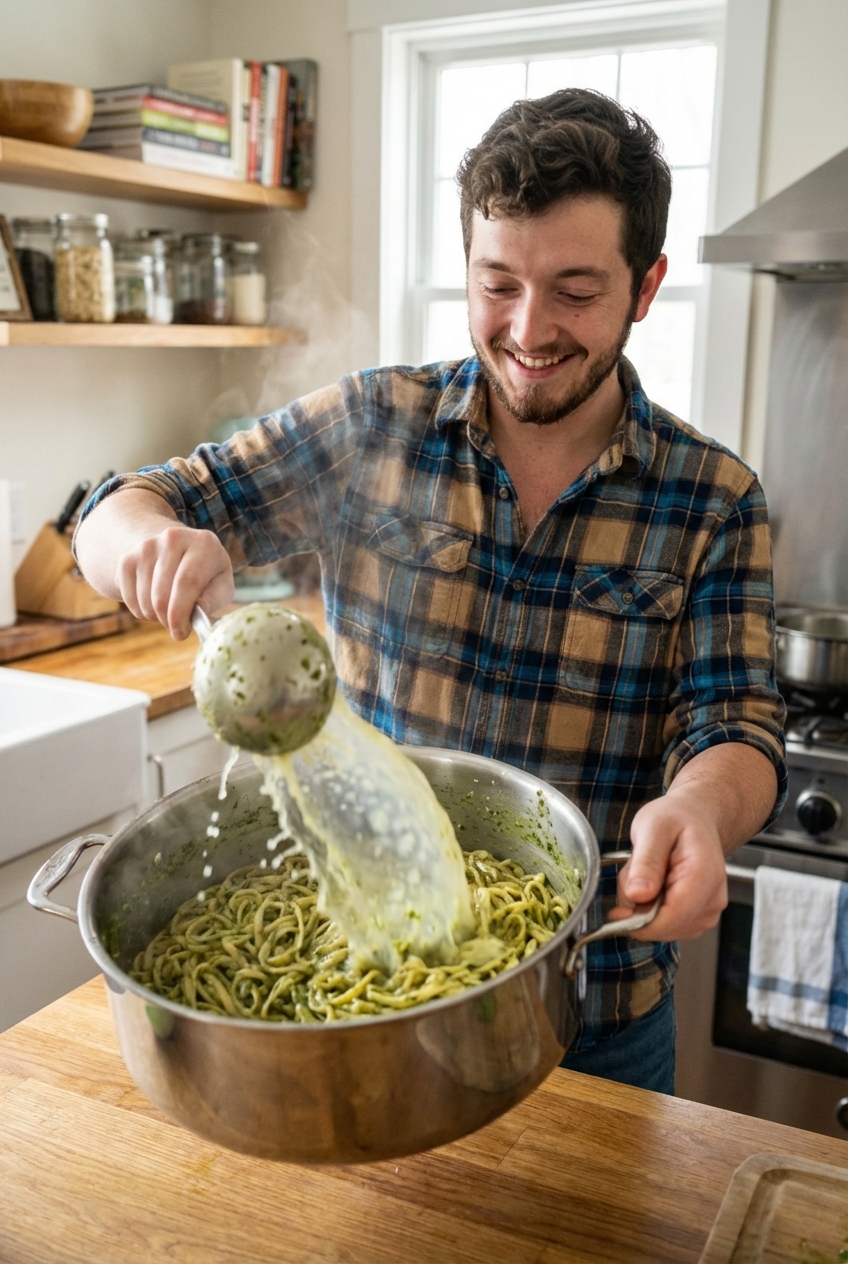
Too thick: loosen with reserved pasta water, a tablespoon at a time, until it turns glossy and coats the noodles. Too thin: add a little more Parmesan or nuts to bring it back.
Any easy add-ins?
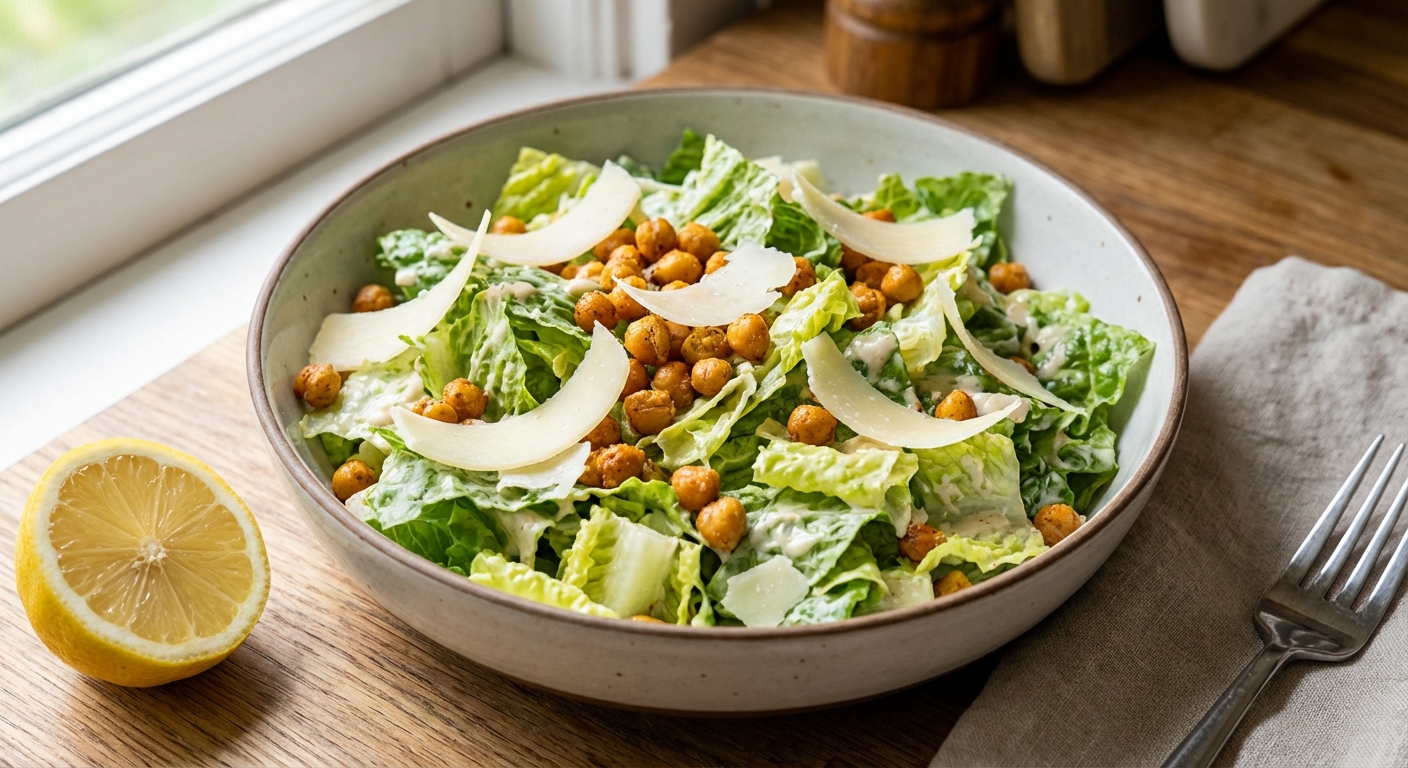
Yes. Toss in peas for the last 2 minutes of pasta cooking, or add blanched green beans. For protein, top with sliced rotisserie chicken, quickly seared shrimp, or crispy chickpeas. Pesto is a team player.
Can I make it vegan?
You can, with a different vibe. Swap Parmesan for vegan Parmesan or nutritional yeast, and use a little extra nuts (or seeds) for body. Taste and adjust, because the salt level will change.