Mom's Best Recipes
Recipe

Sweet and Simple Pot Roast

Fork-tender chuck roast, carrots and onions, and a glossy, lightly sweet gravy that tastes like Sunday dinner without the fuss.

Author By Matt Campbell
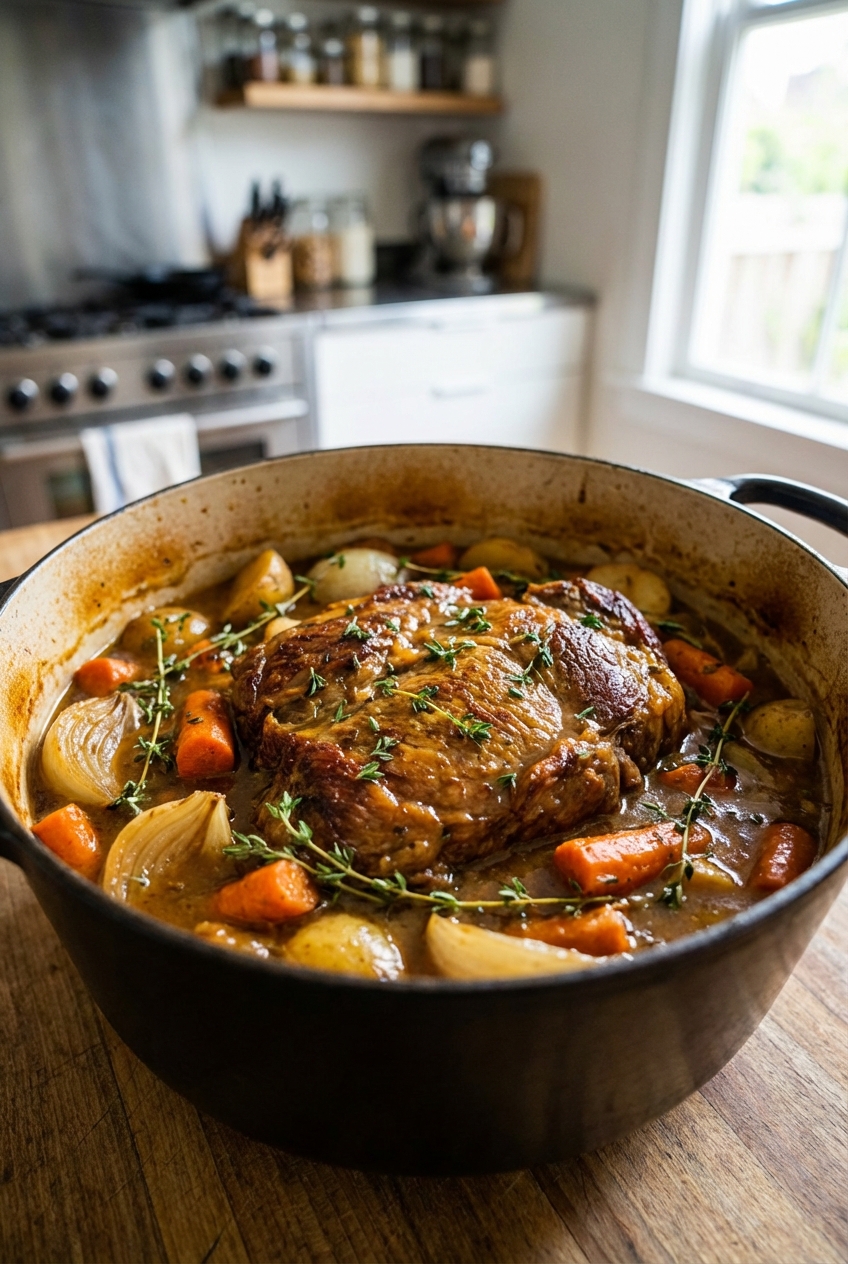
A golden-brown pot roast in a Dutch oven with carrots, onions, and thick gravy, with fresh thyme scattered on top

Pot roast is the culinary equivalent of putting on sweatpants and lighting a candle. It is cozy, dependable, and quietly impressive when you lift the lid and that beef is basically asking to be shredded.

This is my fresh best pot roast, meaning it leans bright and balanced instead of heavy. You still get the deep, beefy comfort, but the gravy has a little lift from tomato paste and herbs, plus a sweet and simple touch from maple syrup. Not sugary. Just enough to round out the savory edges and make the carrots taste like they were born for this job.

If you can sear meat and stir a pot, you have this. The oven does the hard part while you pretend you are “actively cooking” and definitely not just waiting for dinner.
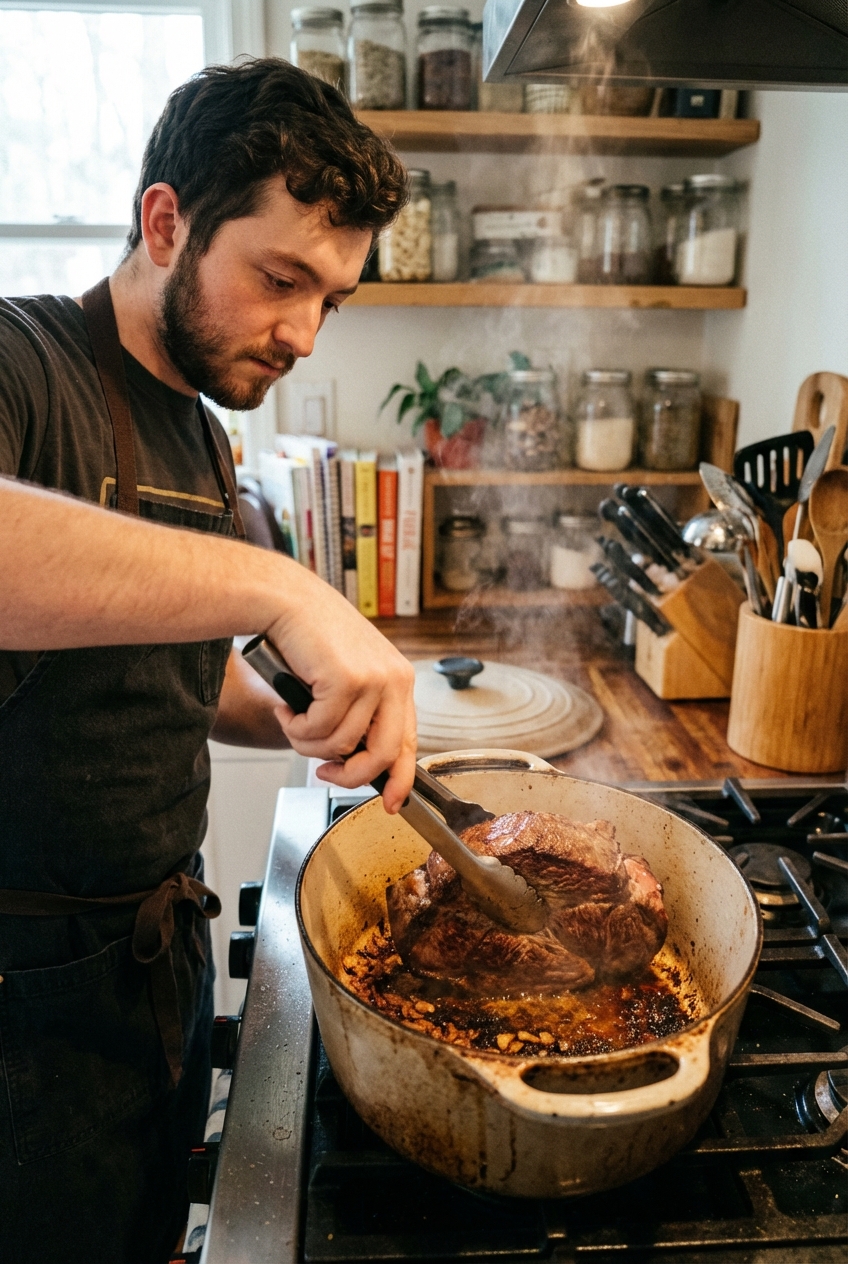
A cook searing a chuck roast in a Dutch oven on a stovetop with browned bits forming on the bottom

Why It Works

  • Fall-apart tender beef: Chuck roast has the right fat and connective tissue to turn buttery after a long braise.
  • Gravy with real flavor: Tomato paste, Worcestershire, and the browned fond build a rich base fast.
  • Sweet, not cloying: A small amount of maple syrup (or brown sugar) balances bitterness and brings out the beefiness.
  • One-pot logic: Sear, sauté, braise, and thicken all in the same Dutch oven.
  • Weeknight-friendly leftovers: The flavor gets even better the next day.

Pairs Well With

Storage Tips

Refrigerate: Cool leftovers, then store beef and vegetables with some gravy in an airtight container for up to 4 days.

Freeze: Freeze in portioned containers for up to 3 months. For best texture, freeze the beef in gravy. (Potatoes on the side tend to freeze better than potatoes cooked in the pot.)

Reheat: Warm gently on the stove over medium-low with a splash of broth or water to loosen the gravy. Microwave works too, just stir halfway so the edges do not overcook.

Make-ahead tip: If you refrigerate the whole pot overnight, you can skim the fat from the top before reheating for a cleaner, less greasy gravy.

Leftover move: Pile shredded pot roast onto toasted bread, top with provolone, and broil until bubbly. Dip in warm gravy like a very low-effort French dip.

Common Questions

What cut of beef is best for pot roast?

Chuck roast is the classic for a reason. It has enough marbling and connective tissue to turn tender and juicy after a long braise. Bottom round can work, but it is leaner and less forgiving.

Why is my pot roast tough?

It usually needs more time, not less. Tough means the collagen has not fully broken down yet. Keep braising until a fork twists easily in the meat. If it is getting dry or shredding poorly, make sure the pot is tightly covered and add a splash more broth so there is always some liquid in the bottom of the pot. Optional temperature clue: chuck that shreds easily is often around 195 to 205°F, but texture is the real test.

Can I make this in a slow cooker?

Yes. Sear the roast and sauté the onions and garlic first if you can. Then cook on LOW 8 to 9 hours or HIGH 4 to 5 hours. Add the carrots and potatoes near the end so they keep some shape: on LOW, add them for the last 2 to 3 hours; on HIGH, add them for the last 1 to 2 hours. Thicken the gravy on the stove with the cornstarch slurry.

Can I make it without wine?

Absolutely. Use more beef broth plus 1 tablespoon apple cider vinegar or lemon juice for a little brightness.

How do I keep the vegetables from getting too soft?

Cut them thick and add them later. For a firmer bite, add the carrots and potatoes about halfway through cooking, around the 1 hour 30 to 1 hour 45 minute mark. If you prefer classic tender vegetables, add them at the start.

Can I make it ahead?

Yes, and it is even better the next day. Cool, refrigerate overnight, then skim the fat from the top before reheating. Warm gently with a splash of broth to loosen the gravy.

The first time I tried to make pot roast on my own, I treated it like a steak. I cooked it “until done,” sliced it, and wondered why I was basically chewing a beef tire. That was my crash course in braising: the goal is not just heat, it is time. Now I lean into the slow part, and I sneak in a tiny sweet note because it makes the whole pot taste more rounded and intentional. It is the kind of dinner that makes people wander into the kitchen “just to check” and suddenly they are standing there, stealing carrots straight from the pot.