Mom's Best Recipes
Recipe

Fresh Tuna Salad Recipe

Bright, crunchy, and creamy in the best way. This fresh tuna salad uses simple pantry tuna plus lemon, herbs, and crisp veggies for a lunch that tastes like you actually tried.

Author By Matt Campbell
4.8
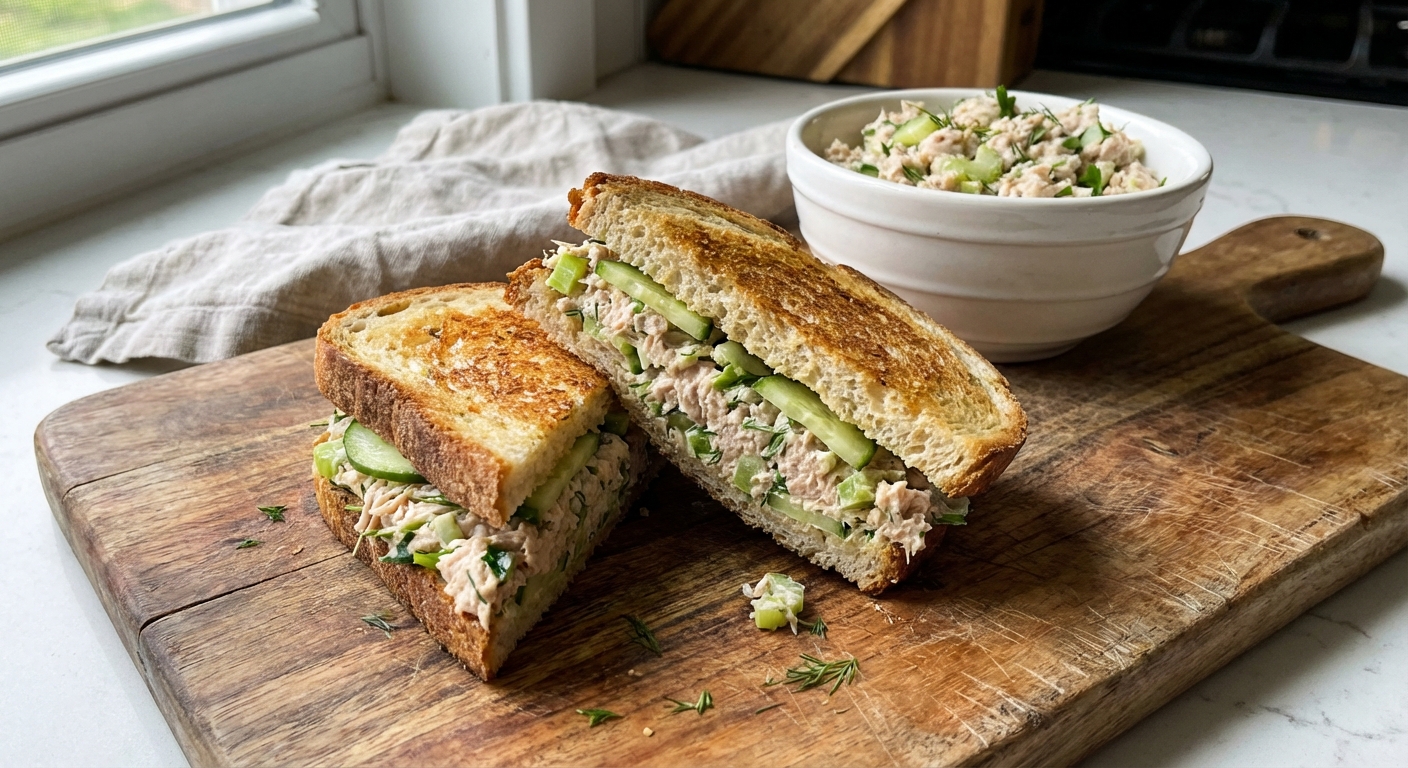
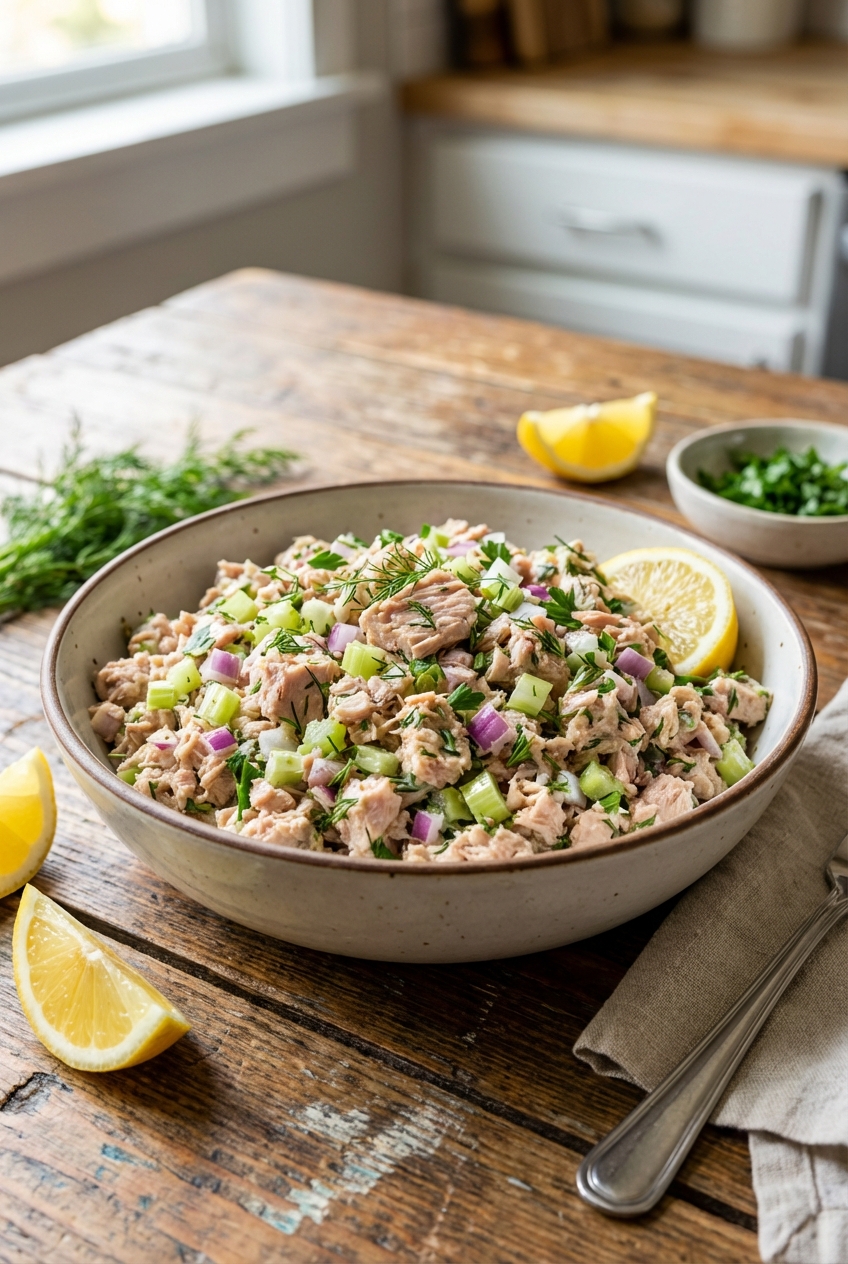
A bowl of fresh tuna salad with celery, red onion, and herbs, served with lemon wedges on a wooden table

If tuna salad makes you think of a soggy desk lunch, let’s fix that. This version is fresh on purpose: crunchy celery, quick-pickled red onion, lemony dressing, and a handful of herbs that make the whole bowl taste alive.

It’s the kind of recipe that behaves on a busy weekday. You stir it together in minutes, taste as you go, and suddenly you have a lunch that works in a sandwich, on crackers, or piled onto greens. No drama, no weird ingredients, just better tuna salad.

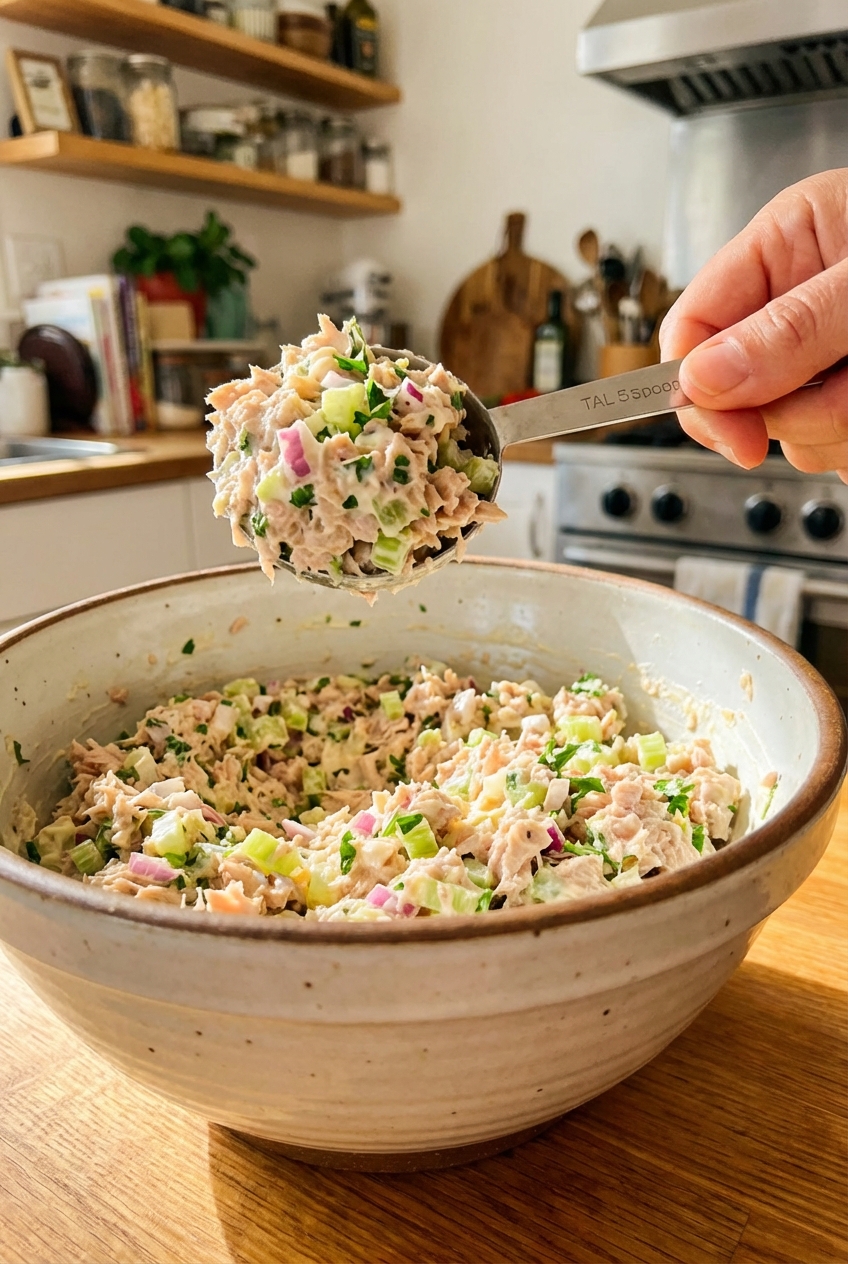
A spoon scooping fresh tuna salad from a mixing bowl

Why It Works

  • Clean, bright flavor: Lemon zest and juice wake up canned tuna without making it sour.
  • Real crunch: Celery and cucumber keep every bite crisp, not mushy.
  • Balanced creaminess: Mayo plus Greek yogurt gives richness with a lighter finish.
  • Meal prep friendly: It holds well for a few days, especially if you keep it chilled and add delicate herbs right before serving.

Pairs Well With

Storage Tips

Refrigerate promptly: Get it into the fridge within 2 hours of making (within 1 hour if it is above 90°F or 32°C). Keep your fridge at or under 40°F (4°C).

How long it lasts: Store in an airtight container for up to 3 to 4 days. For best texture, press a piece of parchment or plastic wrap directly onto the surface before sealing.

Keep it crisp: If you are meal prepping, store chopped cucumber separately and stir it in right before eating.

Revive leftovers: If it tightens up in the fridge, loosen with a squeeze of lemon or a teaspoon of yogurt, then taste for salt.

Freezing: I do not recommend freezing. The mayo and veggies get watery and sad when thawed.

Common Questions

What makes tuna salad taste fresh?

Acid plus crunch. Lemon juice and zest, a little Dijon, and crisp add-ins like celery and cucumber keep it bright. Herbs help a lot too, even just parsley.

Should I use tuna in water or oil?

Either works. Tuna in water tastes lighter and cleaner. Tuna in olive oil tastes richer and more deli style. If using oil-packed, drain well and consider using a touch less mayo.

Chunk light or albacore?

Use what you like. Chunk light tends to be softer and more budget-friendly. Albacore is firmer and milder. If mercury is a concern for you, many guidelines suggest choosing light tuna more often and treating albacore as an occasional option.

How do I keep tuna salad from getting watery?

Drain the tuna very well, and if you use cucumber, scrape out the seedy center or salt it lightly and blot dry. Also, do not overdo the lemon juice at first. Add gradually.

Can I make it without mayo or dairy?

Yes. Swap the mayo for more Greek yogurt, or use mashed avocado. For dairy-free, use dairy-free yogurt or do all mayo. The flavor will be tangier with yogurt and richer with avocado.

Is this safe for lunchboxes?

Yes, as long as it stays cold. Keep it at or under 40°F (4°C) with an ice pack. Do not leave it sitting out in the danger zone (40 to 140°F or 4 to 60°C) for long.

How long does it last in the fridge?

Stored cold in an airtight container, it is best within 3 to 4 days. If it smells off or gets watery in a weird way, do not push it.

Any allergen notes?

This version contains egg (mayo) and dairy (Greek yogurt). Use an egg-free mayo and dairy-free yogurt if needed.

I started making tuna salad when I wanted real food lunches without cooking a whole extra meal. The first few batches were fine, but they all tasted kind of flat. The fix was embarrassingly simple: treat it like an actual salad. Add something crunchy, hit it with lemon, and use herbs like you mean it. Now this is my clean-out-the-fridge lunch that still feels like a win, even if I’m eating it standing at the counter.