Mom's Best Recipes
Recipe

Fresh Tuna Tartare

A bright, citrusy tuna tartare with creamy avocado, crunchy cucumber, and a sesame soy kick. No cooking, just clean cuts and big flavor.

Author By Matt Campbell
4.9
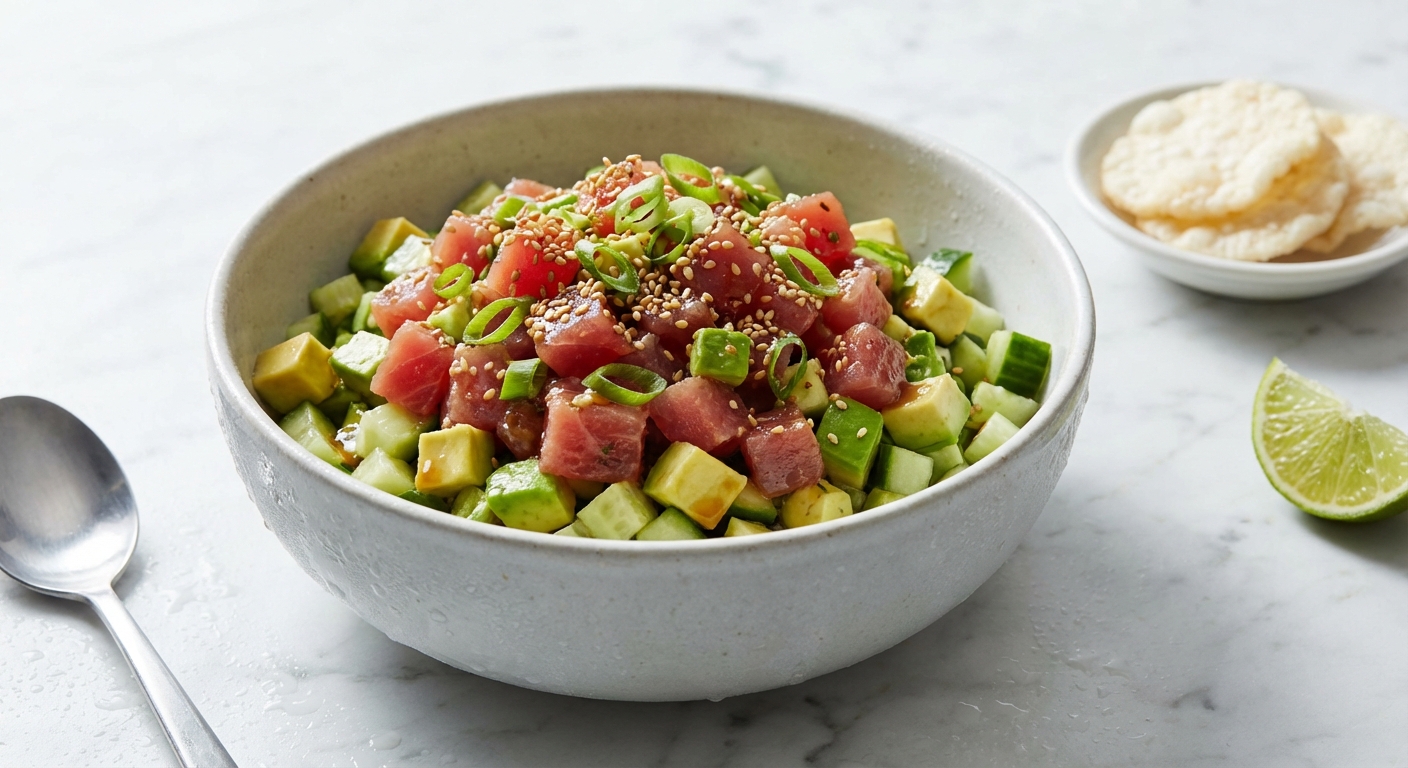
A chilled bowl of fresh tuna tartare with diced avocado and cucumber, topped with sesame seeds and sliced scallions on a marble countertop

Tuna tartare is one of those appetizers that looks like it belongs under moody restaurant lighting with a price tag that makes you blink twice. The secret is it is basically just excellent ingredients + a sharp knife + a confident stir. That is it. No stove. No drama. Just a glossy little mound of ruby tuna dressed in a punchy soy, lime, and sesame situation that tastes like you planned your life.

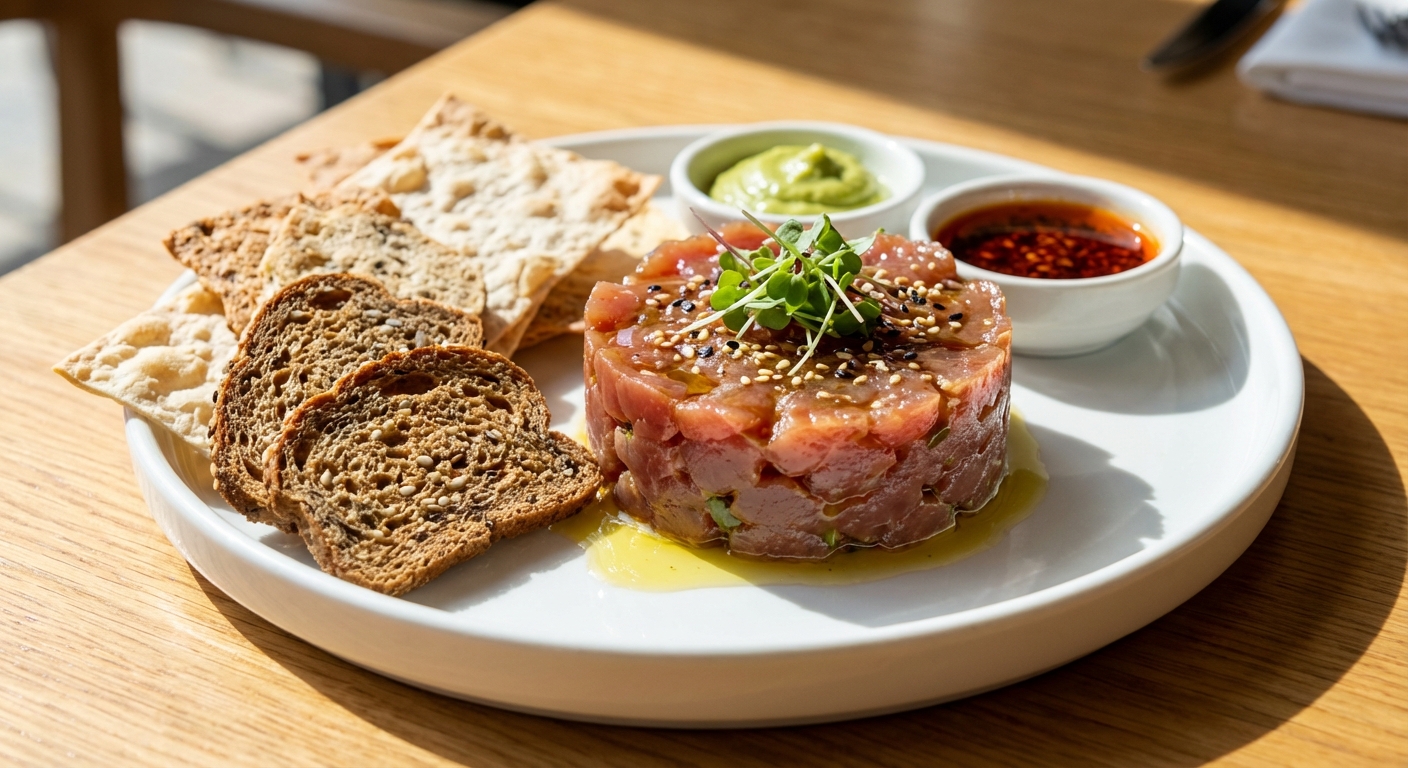
This version keeps things accessible and weeknight-friendly. It is bright and savory, with just enough heat to wake up your taste buds but not enough to ruin your conversation. Serve it with toasted baguette slices, wonton chips, or cucumber rounds, then watch it disappear like it has places to be.
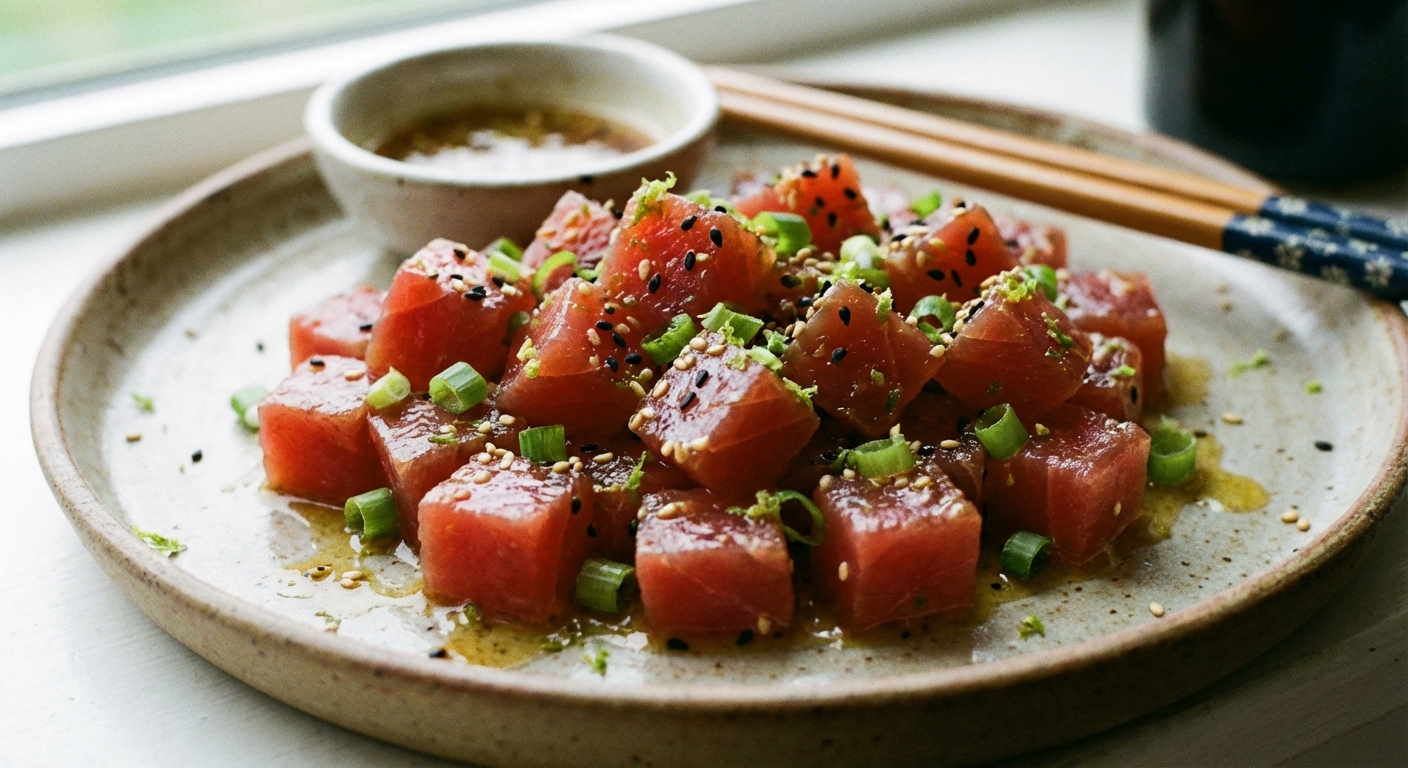
A close-up photograph of diced raw tuna tartare glistening with sesame oil and lime, with sesame seeds visible on top

Why It Works

  • Restaurant-level texture: Small, even dice gives you that clean bite instead of mush. Chill the tuna and your mixing bowl for extra crispness.
  • Big flavor, minimal ingredients: Soy sauce brings depth, lime brings lift, sesame oil brings that nutty finish that makes people ask what you did.
  • Customizable heat: Sriracha or chili crisp lets you steer from “gentle warmth” to “I have regrets.”
  • Built-in crunch and creaminess: Cucumber keeps it fresh, avocado makes it luxurious, scallions keep it lively.

Storage Tips

Tuna tartare is best the moment it is mixed. If you have leftovers, here is the safest and least-sad approach.

How to store

  • Transfer to an airtight container immediately.
  • Press plastic wrap directly against the surface to reduce air contact.
  • Refrigerate at or below 40°F (4°C) and keep it cold continuously.
  • For best quality and safety, eat the same day. If you must, 24 hours is the max, assuming it has stayed properly refrigerated the entire time.

What not to do

  • Do not freeze. The texture turns watery and dull.
  • Do not leave at room temp for longer than 1 hour total while serving.
  • If it smells “off” or looks dull and gray, toss it. This is not the place to be brave.

Raw-fish handling notes

  • Use a clean cutting board and knife, and wash hands before and after handling raw fish.
  • Keep the tuna cold until mixing, and avoid letting it linger on the counter.
  • Keep raw fish away from ready-to-eat foods and surfaces unless they have been cleaned and sanitized.

Common Questions

What kind of tuna should I buy for tartare?

Look for high-quality tuna intended for raw consumption from a reputable fishmonger, ideally yellowfin (ahi) or bigeye. “Sushi-grade” or “sashimi-grade” is not a regulated term everywhere, so ask directly if it is appropriate to eat raw, how fresh it is, and whether it has been previously frozen for raw consumption (a common parasite-risk mitigation step, depending on species and sourcing). When in doubt, follow your local food-safety guidance and buy from a place you trust.

Is tuna tartare safe to eat?

Raw fish always carries some risk. To reduce it, buy fish intended for raw consumption, keep it refrigerated at or below 40°F (4°C), use clean tools, avoid cross-contamination, and serve immediately. If you are pregnant, immunocompromised, or serving someone who is, it is best to choose a cooked option.

Can I make tuna tartare ahead of time?

You can prep components ahead: dice the cucumber, slice scallions, and mix the dressing. Dice the tuna and avocado right before serving, then toss everything together.

What can I serve with it besides chips?

Toasted baguette, sesame crackers, nori sheets, endive leaves, cucumber rounds, or spooned over warm rice for a not-quite-appetizer situation.

How do I keep the avocado from browning?

Lime juice helps. Also, mix and serve right away. If you must hold it briefly, press plastic wrap directly on the surface.

Can I swap salmon for tuna?

Yes. Use salmon intended for raw consumption and keep the same seasoning. Salmon is richer, so you might want a touch more lime to keep it bright.

The first time I made tuna tartare at home, I acted like it was a high-stakes cooking show challenge. I chilled the bowl. I sharpened the knife. I whispered “do not mess this up” to a piece of fish like it could hear me. Then I took one bite and realized it was not scary at all. It was just clean, punchy, and honestly kind of smug in the best way.

Now it is my favorite “friends are coming over and I want them to think I have my life together” appetizer. The trick is to keep it cold, cut it neatly, and stop tinkering once it tastes great. If you find me in the fridge at midnight, I am not above spooning the leftovers onto rice and calling it a very elegant snack.