Why is my tzatziki watery?
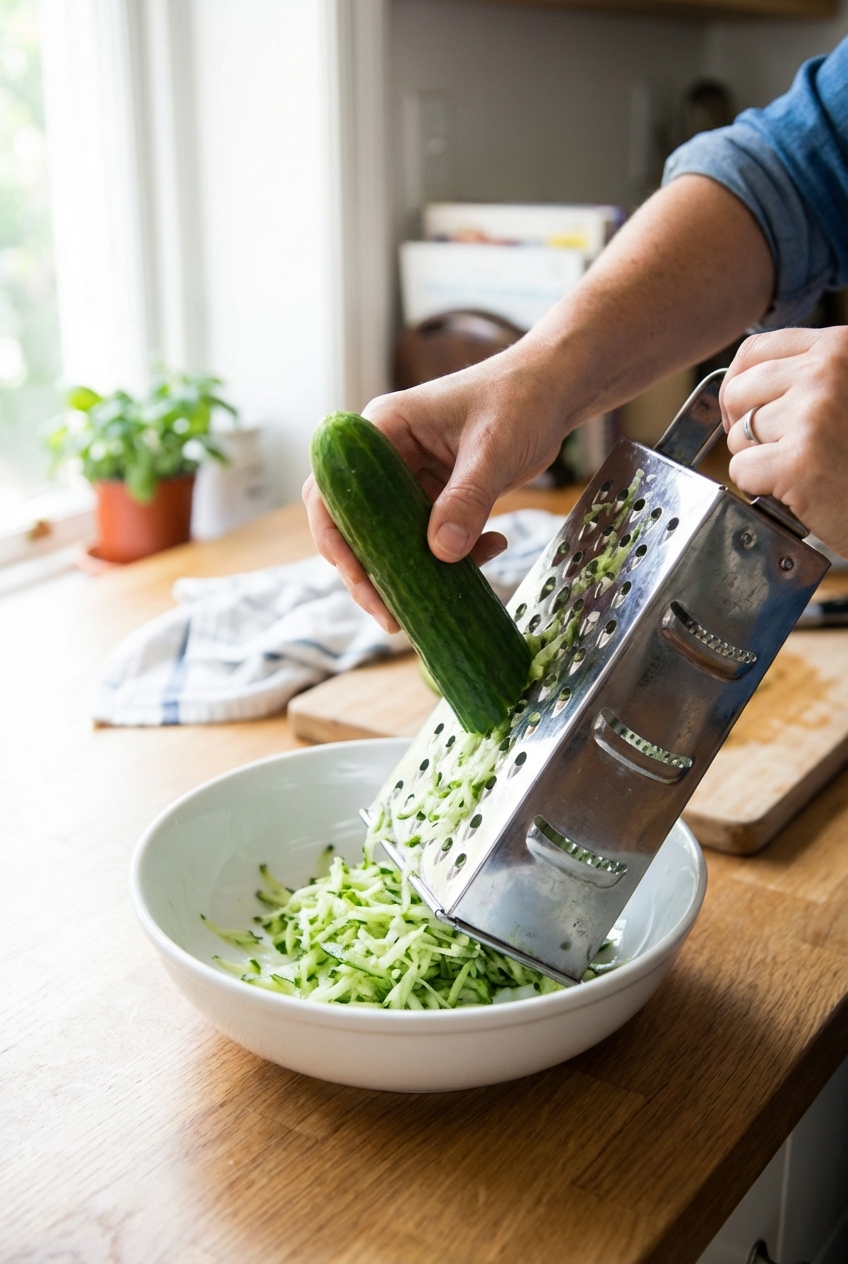
Most often, it is the cucumber. Grate it, salt it, then squeeze it very dry in a clean towel. Also make sure you are using Greek yogurt, not regular yogurt. If your Greek yogurt is on the thinner side, you can strain it for 30 to 60 minutes for extra-thick tzatziki.
Do I have to peel the cucumber?
Not required. If the skin is thick or waxy, peel it. If it is a thin-skinned English or Persian cucumber, I usually leave some peel on for color and a little bite.
Do I need to remove the seeds?
For English or Persian cucumbers, you can usually skip it. For a regular waxed cucumber, I recommend halving it lengthwise and scraping out the watery seeds before grating. Less water, thicker dip, happier you.
Can I use dried dill instead of fresh?
Yes. Use about 1 teaspoon dried dill in place of 1 tablespoon fresh. Fresh tastes brighter, but dried works on a weeknight.
Can I make it without dill?
Absolutely. Use mint, parsley, or a mix. Dill is classic, but tzatziki is not a law.
Can I use nonfat Greek yogurt?
Yep. It will be a little less rich and can be slightly looser. If you want it thicker, strain the yogurt in a fine-mesh strainer lined with a coffee filter or paper towels for 30 to 60 minutes.
How can I make it less garlicky?
Use 1 clove, or grate the garlic and let it sit in the lemon juice for 5 minutes before mixing. That little soak softens the raw edge.
How long should it chill?
Even 10 minutes helps, 20 to 30 minutes is ideal, and overnight is honestly great. The garlic mellows and everything tastes more put-together.
Is tzatziki gluten-free?
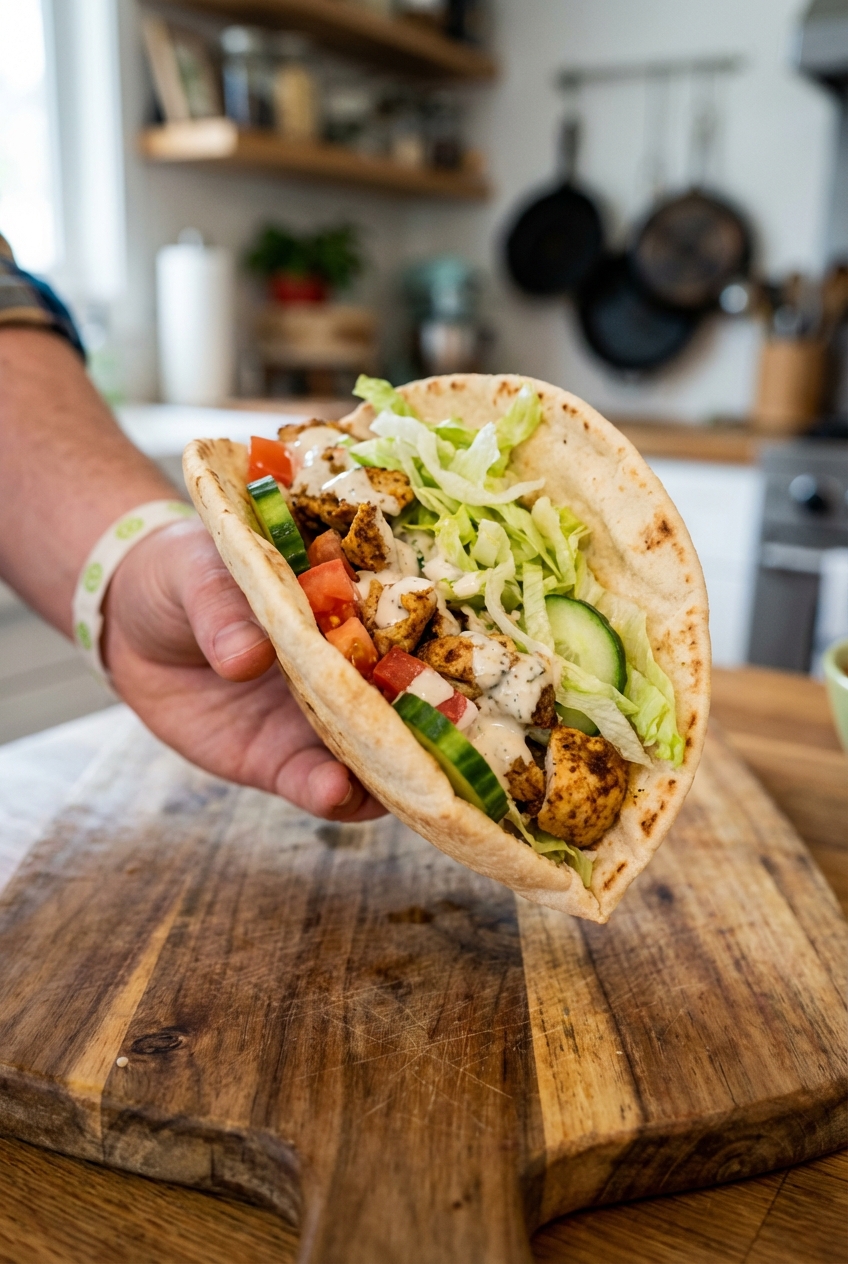
The sauce itself is gluten-free with the ingredients listed here. Still, check labels if you are sensitive, since brands vary and cross-contamination happens. Also watch what you serve it with, like pita or crackers.