Common Questions
Why is it called frog eye salad?
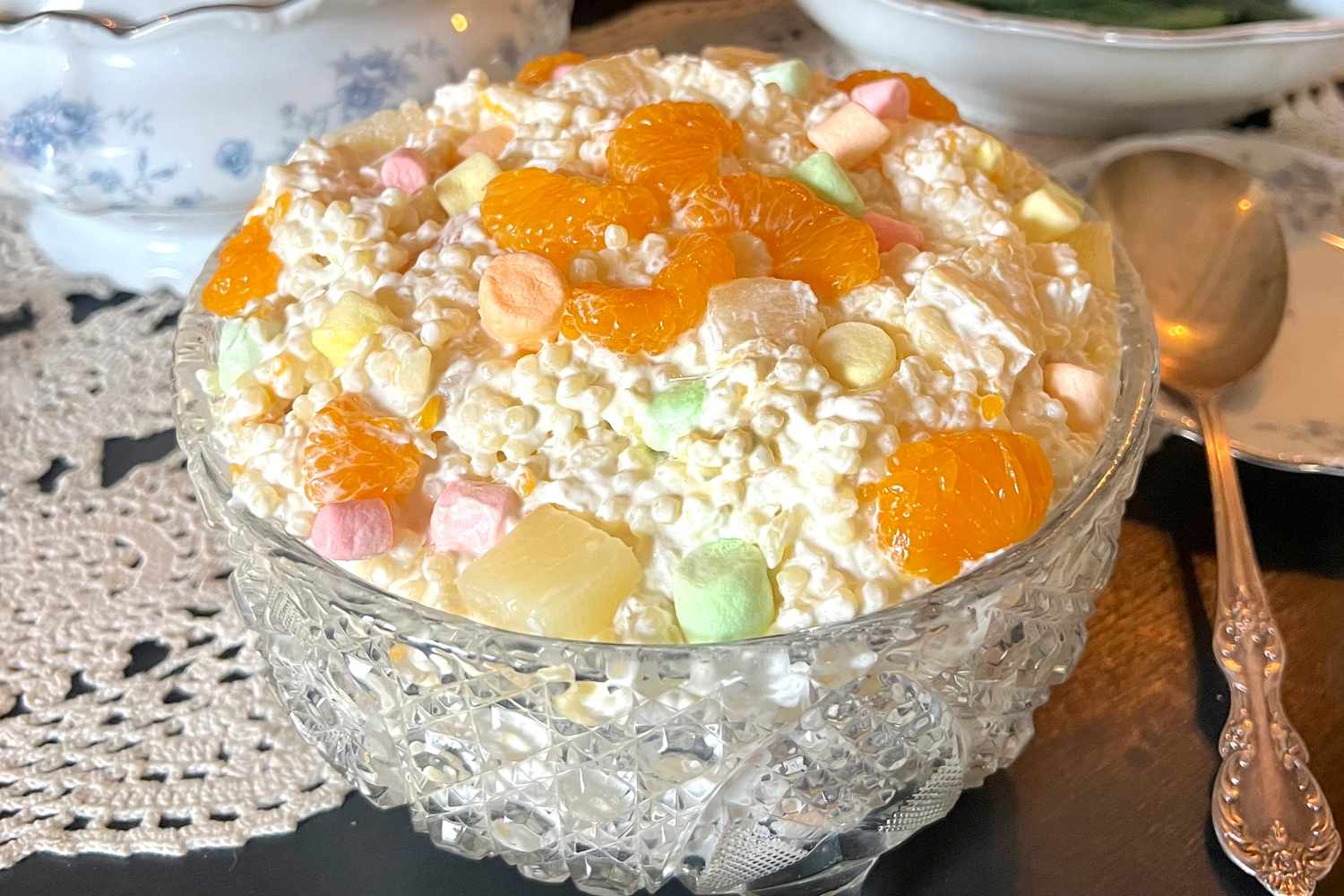
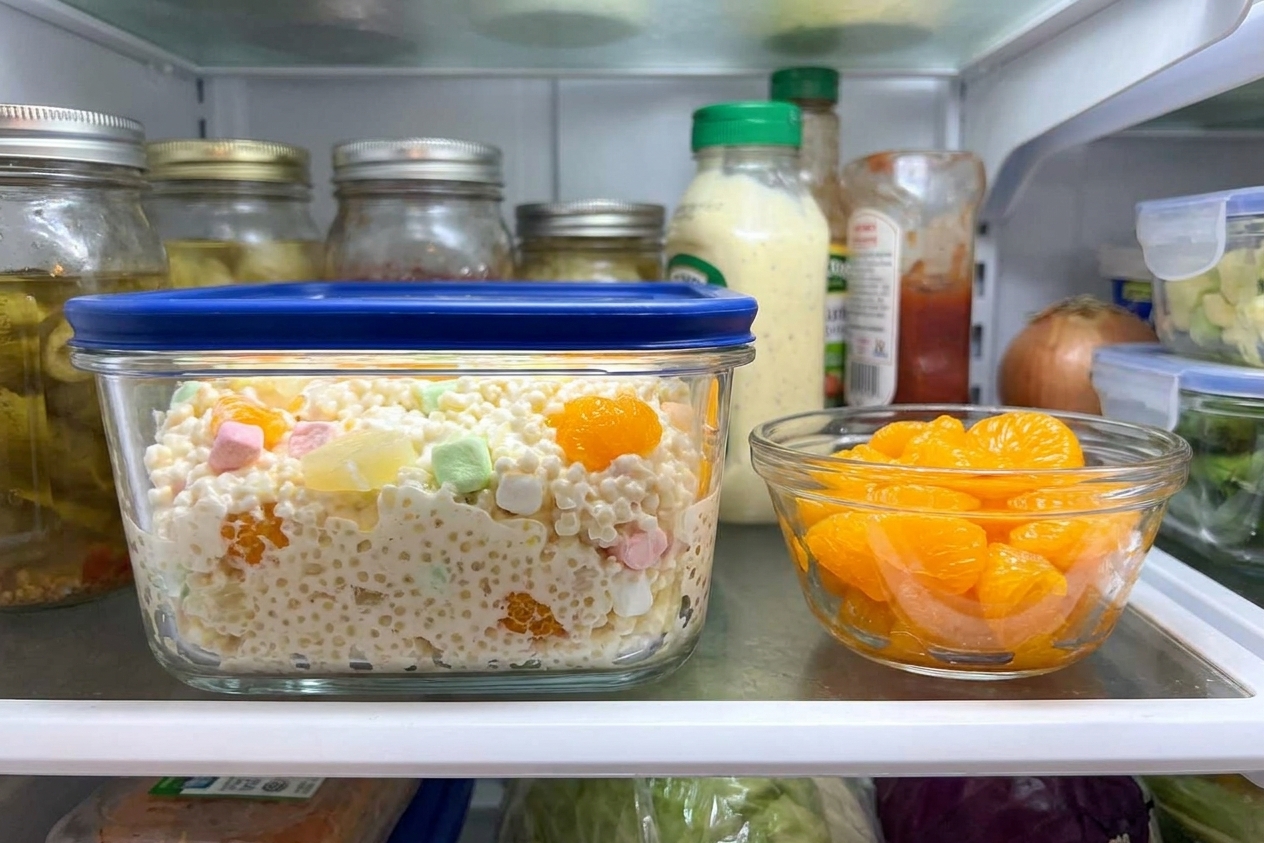
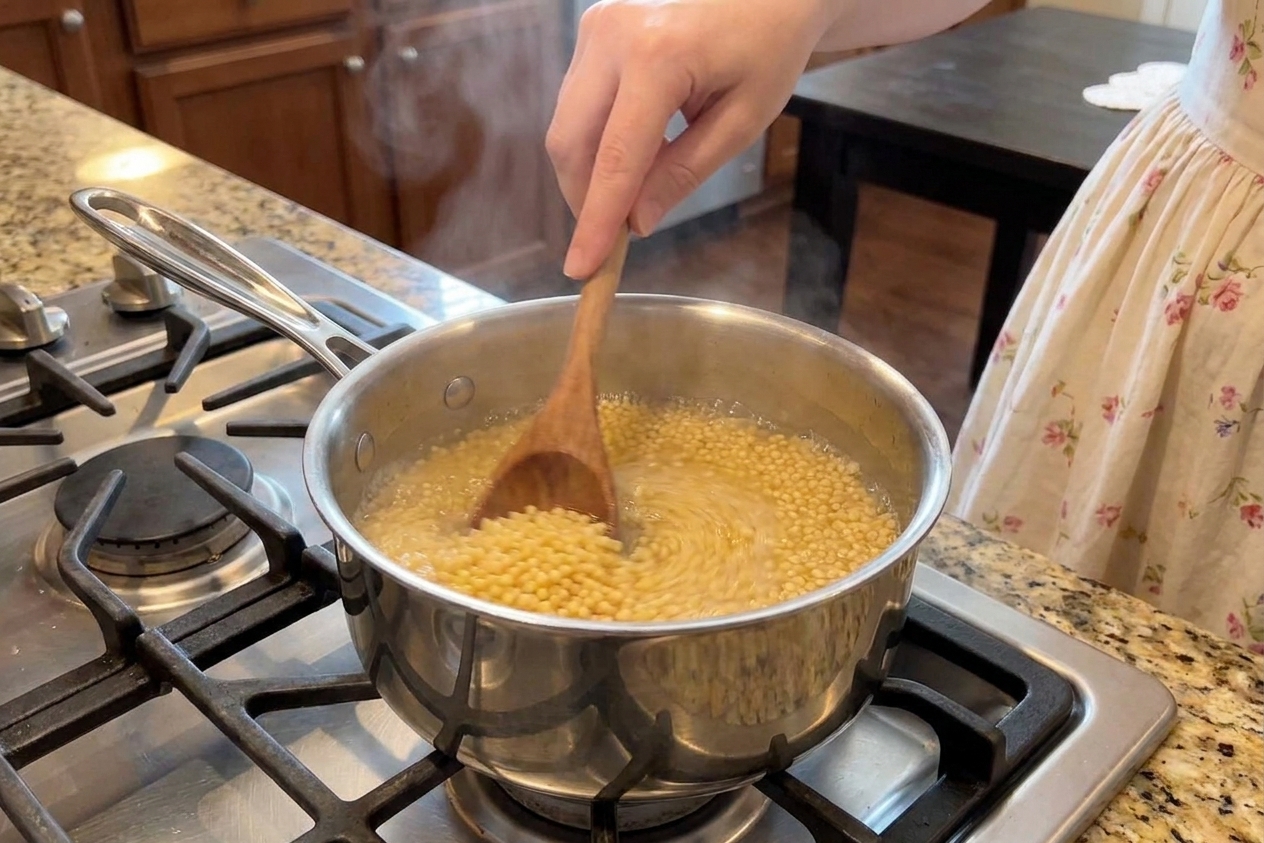
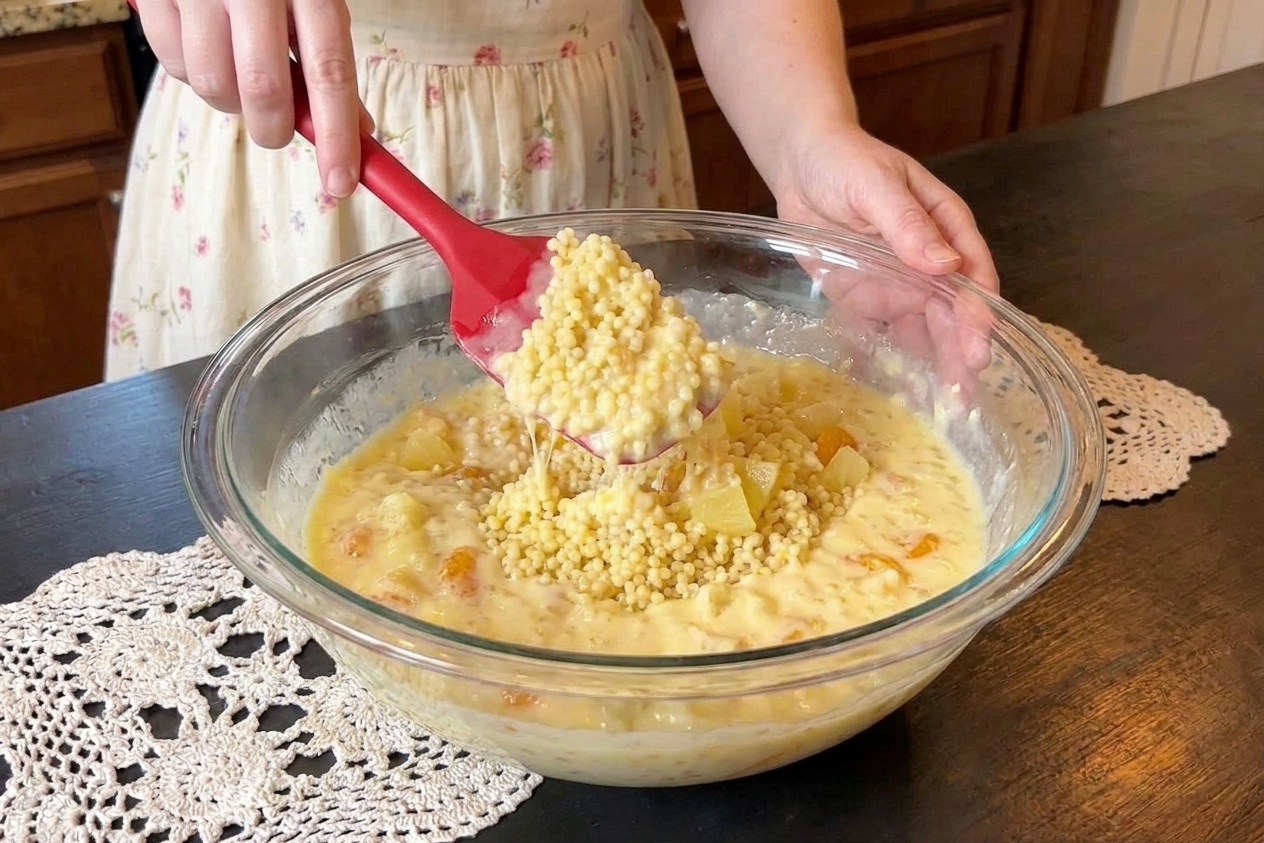
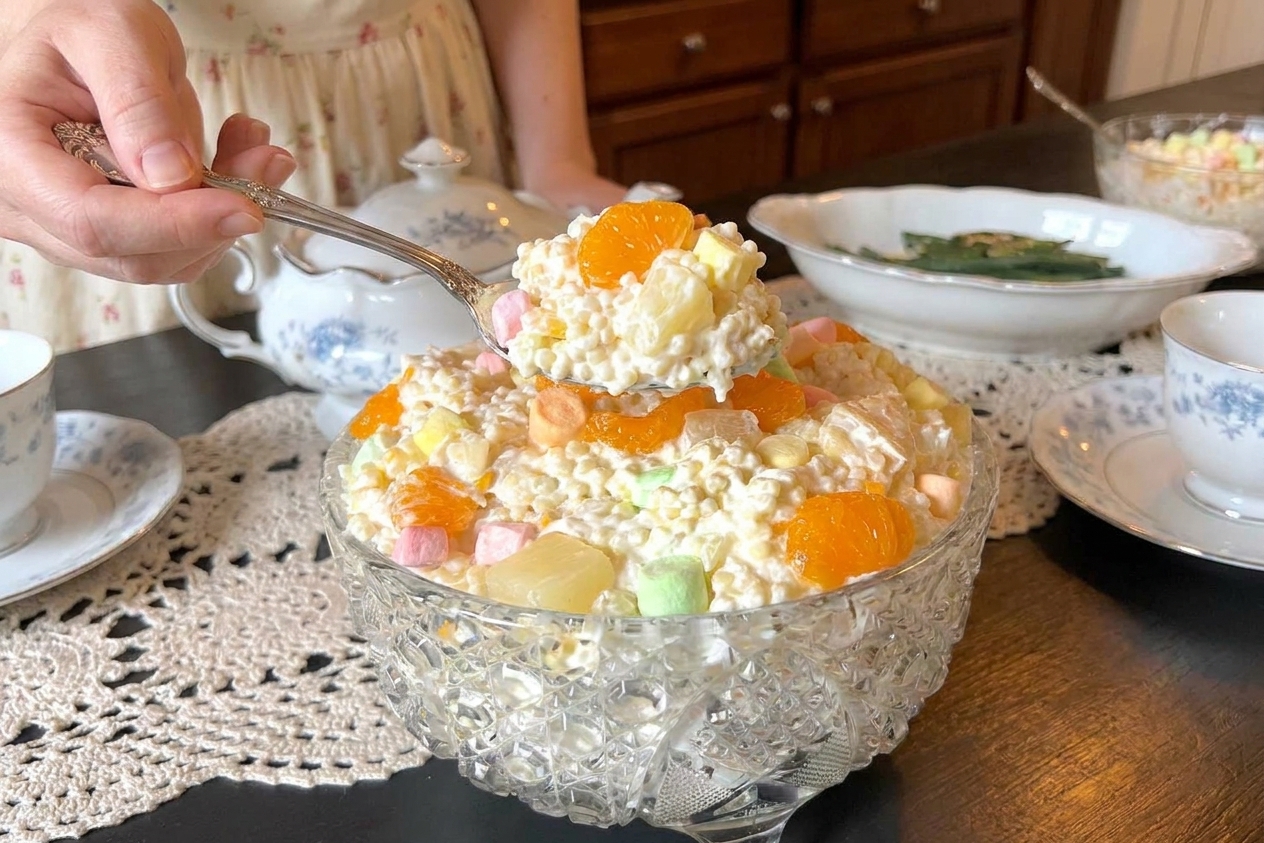
The “frog eyes” are the tiny pasta pearls. Once they are cooked and coated in the creamy dressing, they look like little round dots throughout the salad. Not the most glamorous name, but the bowl never seems to care.
What is acini di pepe and can I substitute it?
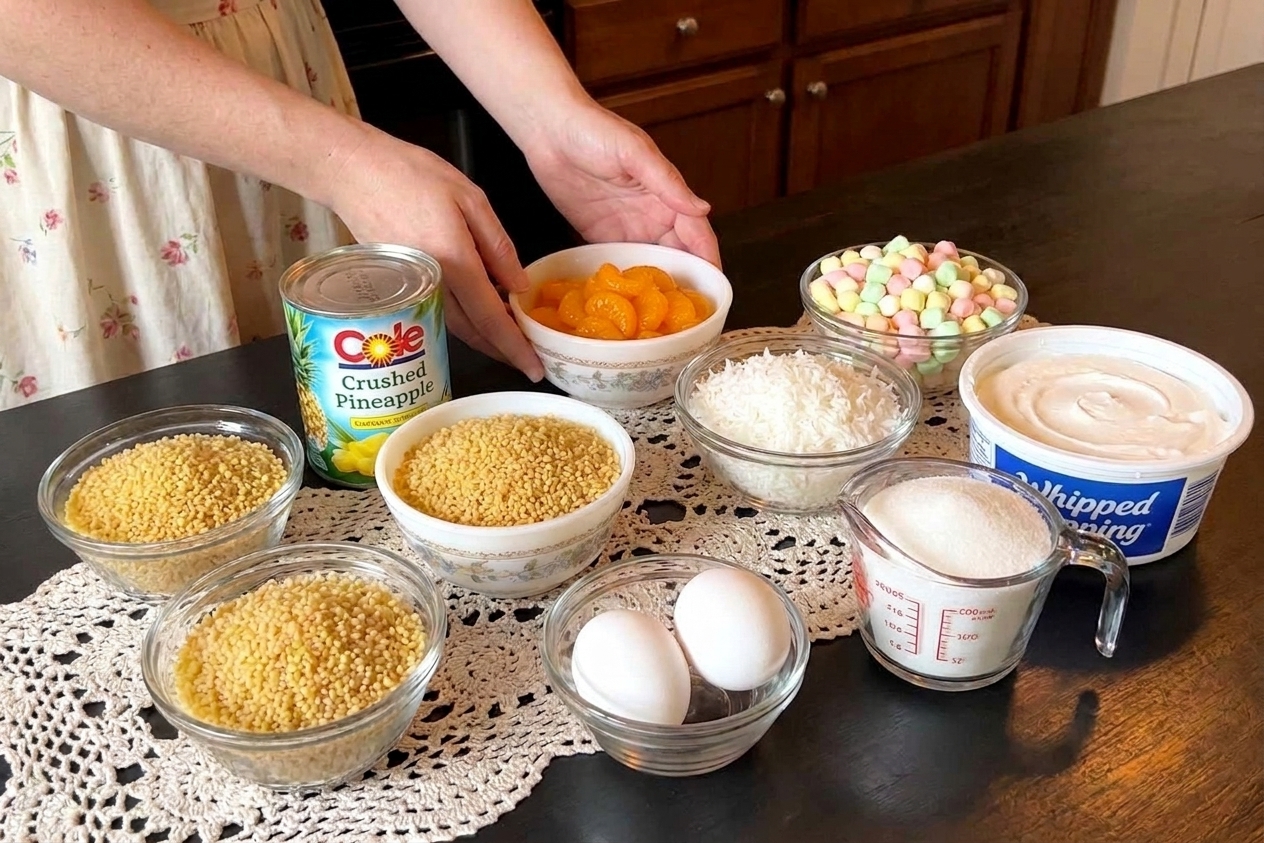
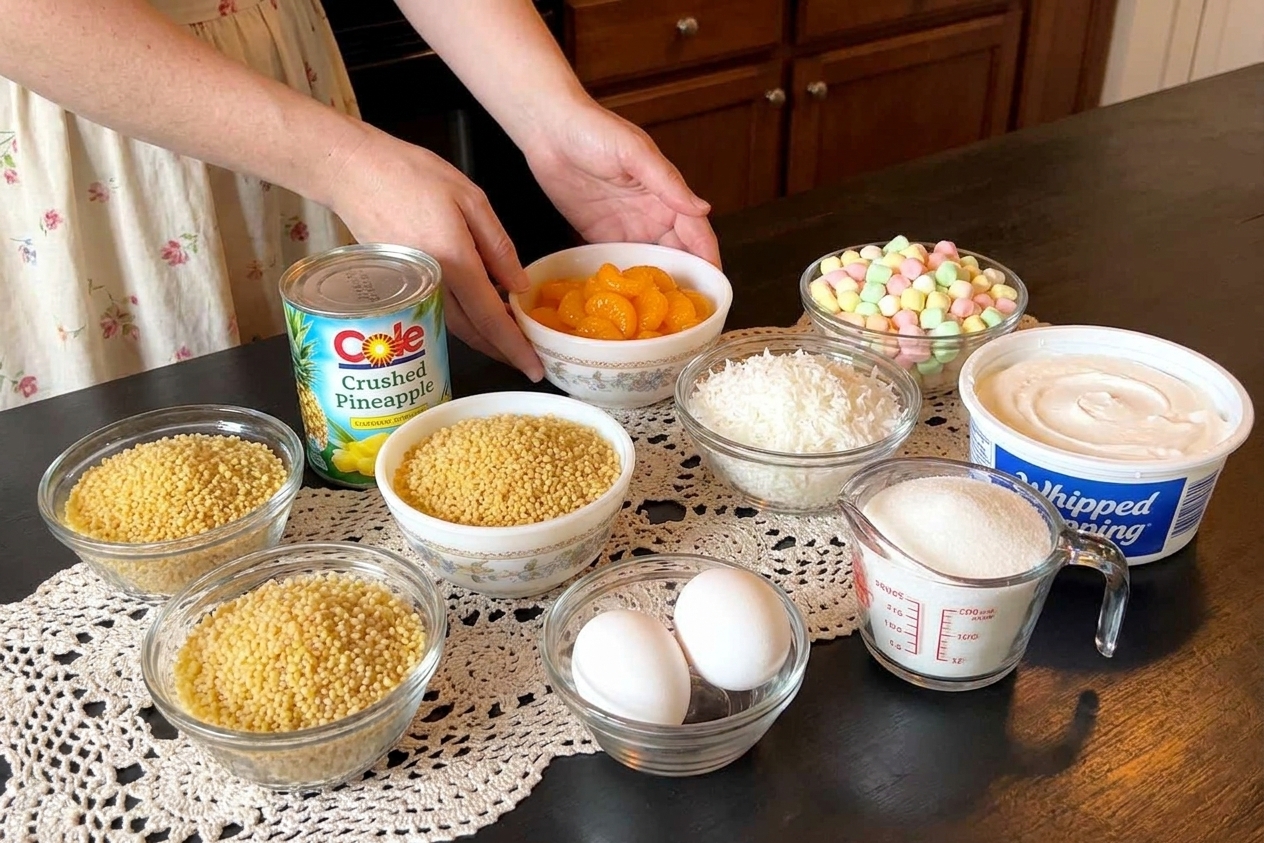
Acini di pepe is a tiny pasta that looks like small beads. If you cannot find it, pastina is the closest swap and keeps the classic texture.
If you are in a pinch, pearl couscous can work, but it is much larger and turns this into a more non-traditional, chewy version (still tasty, just different).
Do I have to cook the dressing?
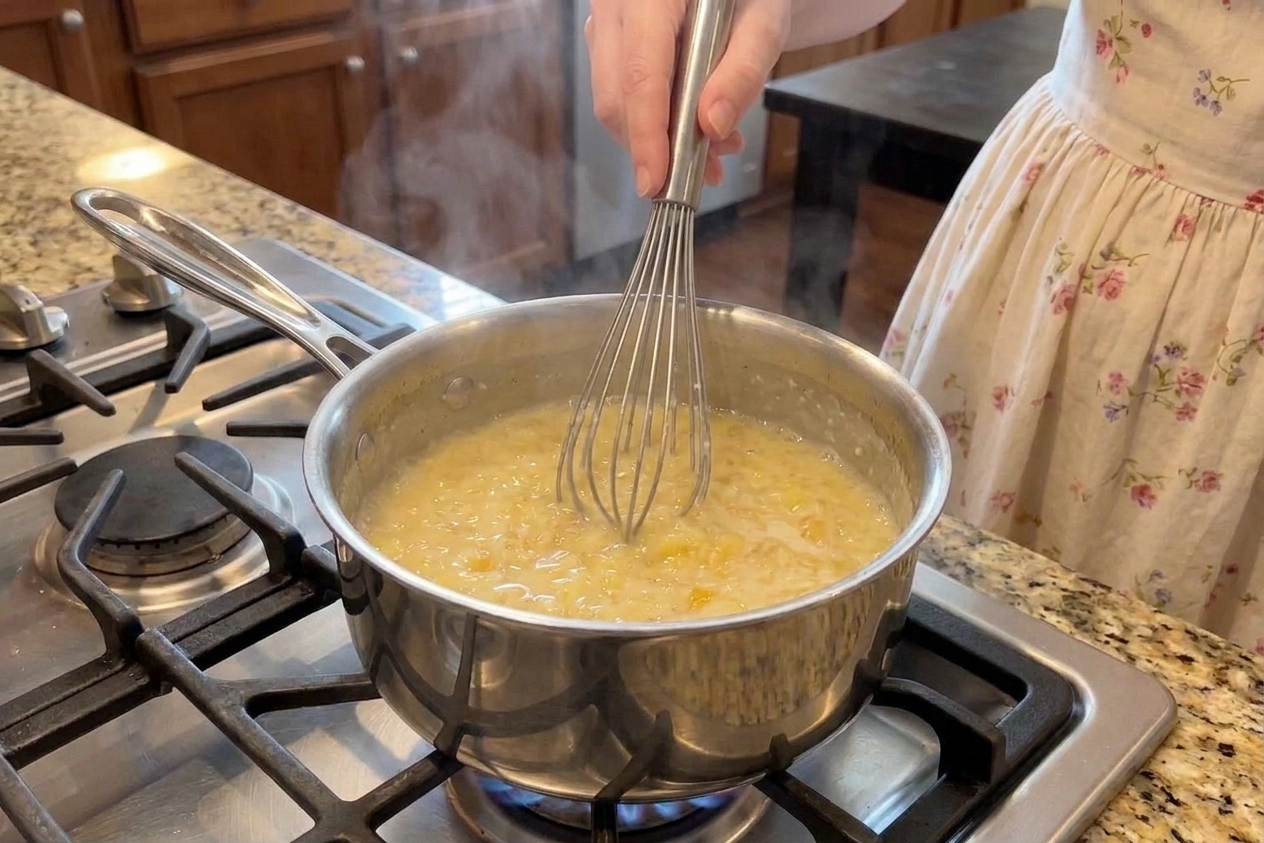
Traditional frog eye salad usually uses a cooked custard style base, and it is worth it for flavor and structure. If you skip it, the salad can taste one-note sweet and get runny. The cooked base takes about 8 to 10 minutes and chills fast.
Can I make frog eye salad the night before?
Yes, and I actually recommend it. Make it 6 to 24 hours ahead so the pasta and dressing have time to mingle. It will thicken a bit overnight, so give it a gentle stir before serving and, if needed, fold in a couple spoonfuls of whipped topping to fluff it back up. If you are worried about the fruit getting too soft, fold in the mandarin oranges right before serving.
Is there a way to make it a little less sweet?
Use unsweetened shredded coconut, add an extra pinch of salt, and do not skip the lemon juice. You can also reduce the sugar slightly, but keep in mind the custard needs some sweetness to balance the tang.
Any easy variations?
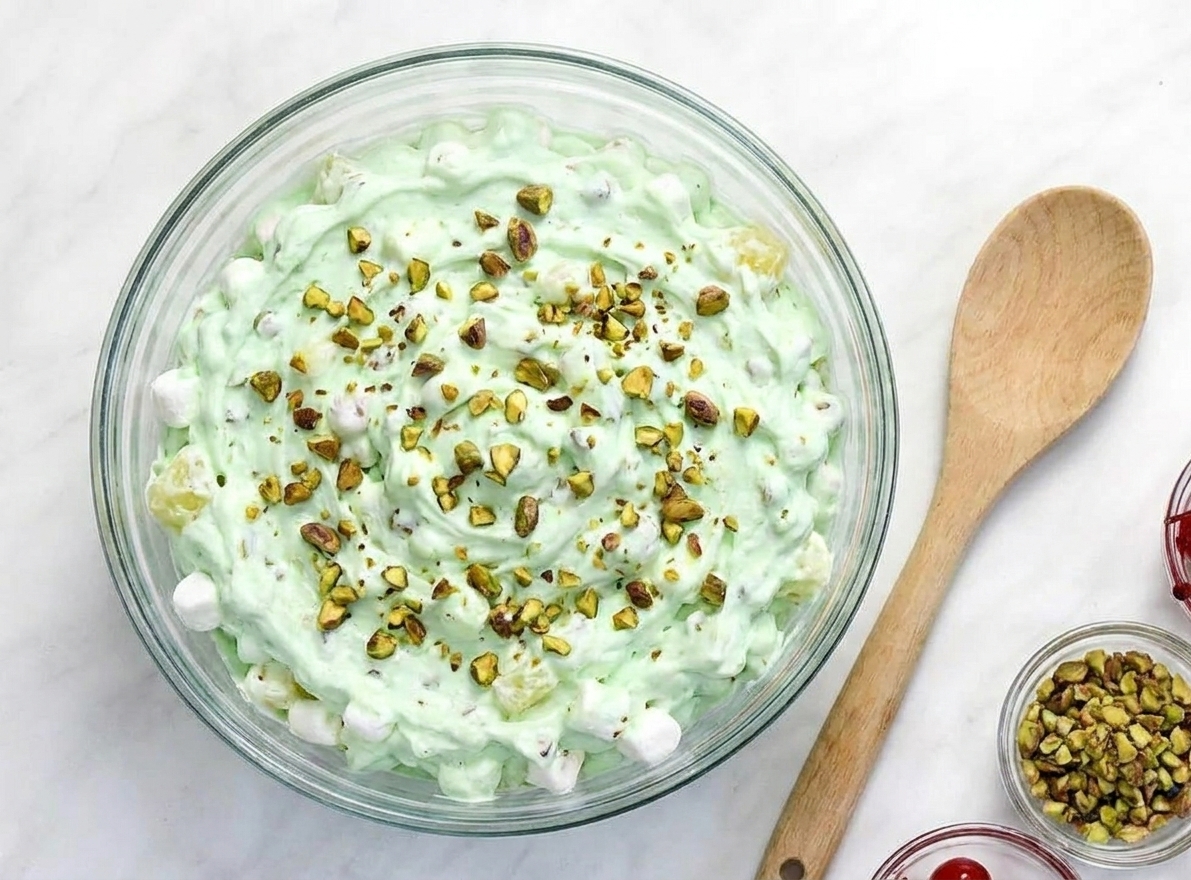
Totally. Try folded-in halved grapes (add right before serving), a handful of chopped pecans for crunch, or a few tablespoons of finely diced maraschino cherries for extra pop.
Allergens to note?
This recipe contains egg and coconut, and many whipped toppings contain dairy (check your label if you need it dairy-free).