Mom's Best Recipes
Recipe

Fusion Beef Stew: Smooth and Silky

A cozy beef stew with a glossy, silky broth built from miso, ginger, and a sneaky blender trick. Big comfort, bright flavor, and zero fuss.

Author By Matt Campbell
4.8
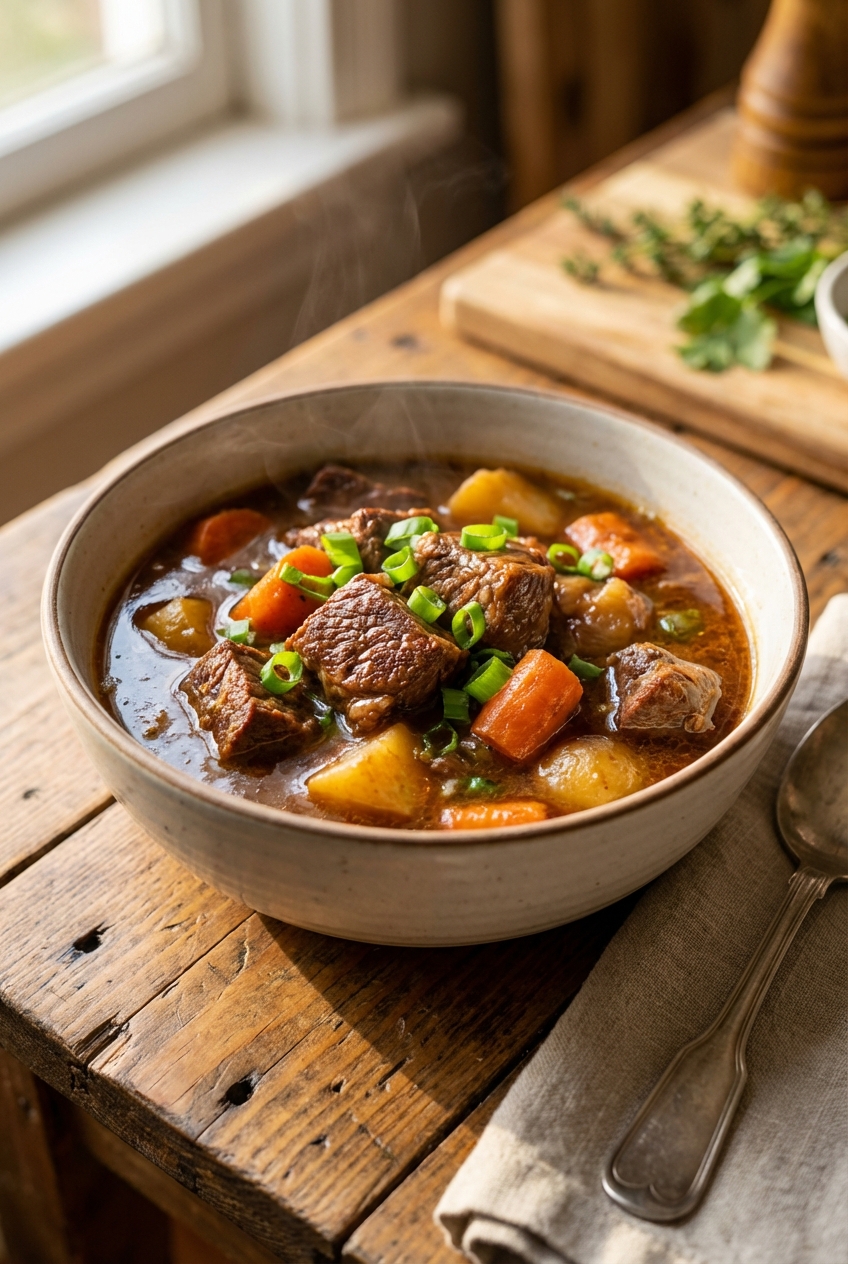
A real photograph of a bowl of glossy fusion beef stew with tender beef chunks, carrots, and potatoes in a silky broth, garnished with scallions on a wooden table in warm natural light

This is the beef stew I make when I want classic cozy but I also want to taste something interesting. Think: fork-tender beef, soft potatoes, sweet carrots, and a broth that is smooth, silky, and lightly glossy like it has its life together.

The fusion part is simple and very home kitchen friendly. We borrow a few flavor boosters from East Asian cooking like miso, ginger, and a little soy sauce, then we keep the comfort-food backbone you already know. The real magic is a quick blend of some cooked veggies back into the pot, which thickens everything without flour, cornstarch, or drama.

If you have a Dutch oven and an hour or two, you are about to make a stew that tastes like you babysat it all day. You did not.
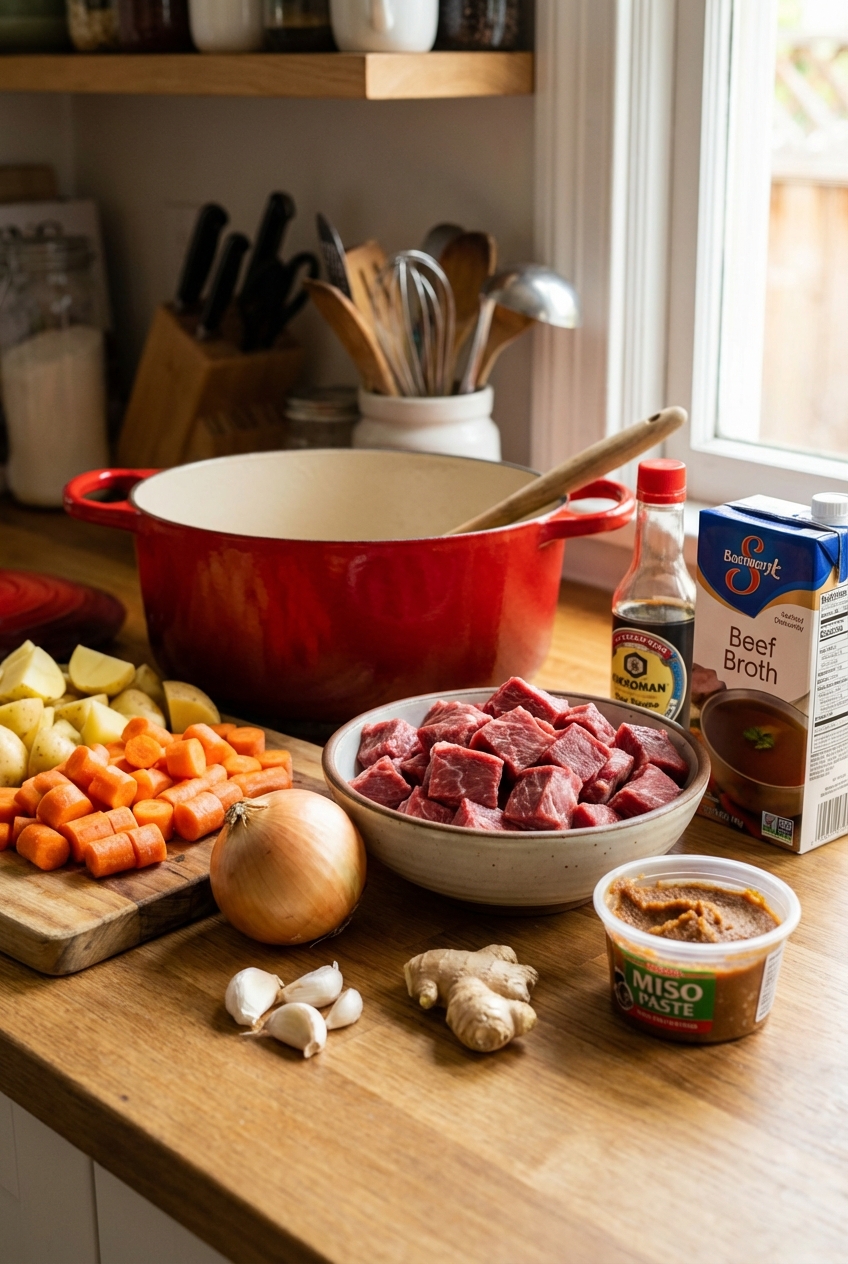
A real photograph of stew ingredients on a counter including cubed beef, carrots, potatoes, onion, garlic, ginger, miso paste, soy sauce, and beef broth next to a Dutch oven

Why It Works

  • Silky texture without heavy cream: Blending a portion of the cooked vegetables creates a smooth body and a glossy finish.
  • Deep, layered flavor fast: Tomato paste browns with the aromatics, then miso and soy add savory depth at the end so it stays bright, not flat.
  • Tender beef, reliably: A steady, gentle simmer plus flexible timing cues gets you to fork-tender, even when chuck decides to take its sweet time.
  • Balanced fusion, not confusing: It still reads as beef stew, just with a little extra “wait, what is that?” in the best way.

Pairs Well With

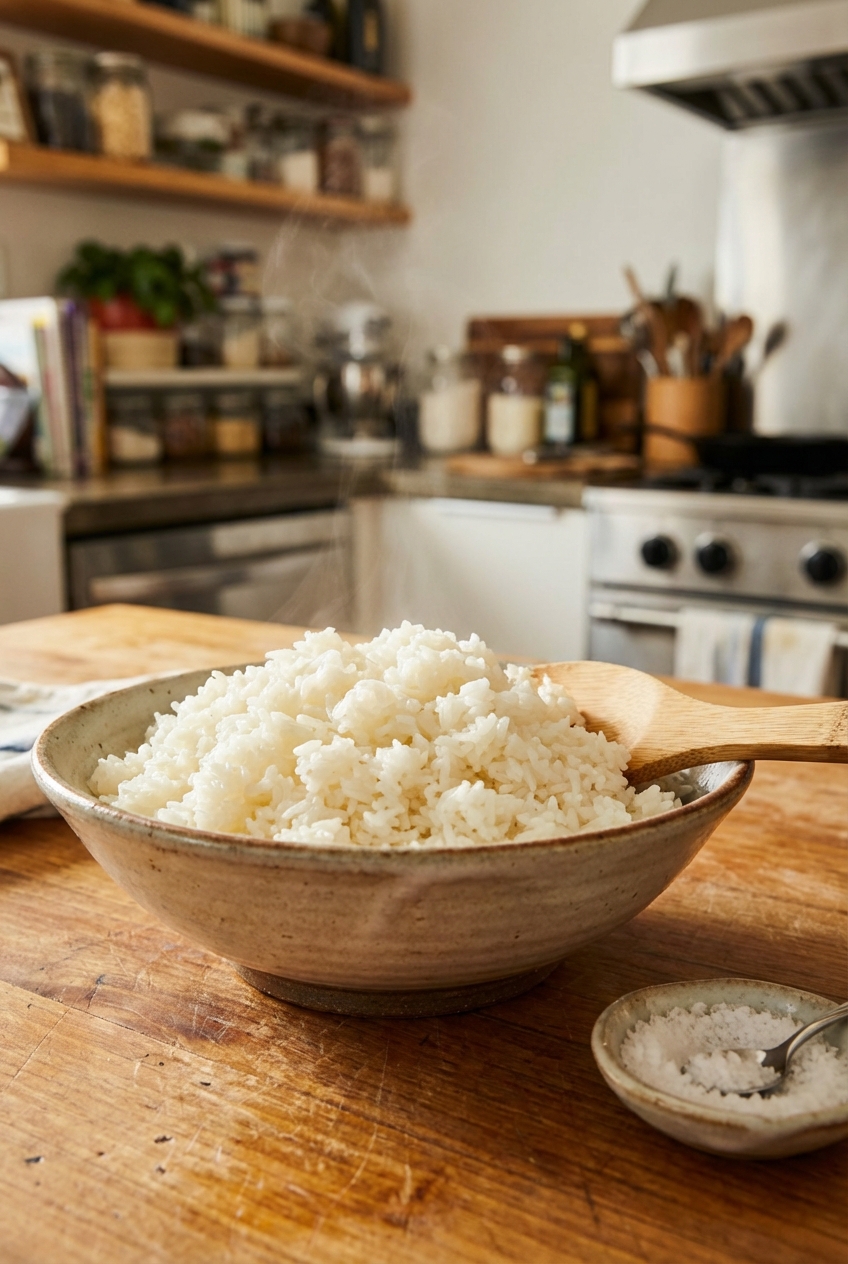
Storage Tips

This stew gets even better after a night in the fridge, which is the most comforting kind of future-you gift.

Refrigerator

  • Cool completely, then store in an airtight container for up to 4 days.
  • The broth will thicken as it chills. Add a splash of broth or water when reheating to bring it back to silky.

Freezer

  • Freeze in portioned containers for up to 3 months.
  • Potatoes can become softer or a bit mealy after freezing. If you are making it specifically for the freezer, consider leaving the potatoes out and simmering in fresh potatoes when you reheat (or serve it over rice instead).

Reheating

  • Stovetop is best: warm over medium-low, stirring occasionally.
  • Microwave works: cover loosely and heat in 60 to 90 second bursts, stirring between.
  • Tip: If you want the miso flavor to pop the most, reheat gently and avoid boiling.

Common Questions

What makes this stew “smooth and silky”?

Two things: we blend some of the cooked carrots, potatoes, and broth back into the pot, and we finish with a little butter. That combo gives you a naturally thickened stew with a glossy texture.

When do I add the vegetables so they do not turn to mush?

If you like distinct chunks, add the carrots and potatoes later in the simmer (see Step 4). They will still get tender, just not collapse into the broth. If you like melt-in-your-mouth veg (also valid), add them earlier and let them go longer.

Do I have to use miso?

Miso is the easiest shortcut to savory depth. If you do not have it, you can swap in 1 to 2 teaspoons fish sauce (then go lighter on added salt and soy, and adjust at the end), or add an extra 1 tablespoon soy sauce plus a squeeze of lemon at the end. It will be different, but still delicious.

What cut of beef is best for stew?

Chuck roast is the move. It has enough fat and connective tissue to turn tender and rich after simmering. Avoid lean cuts like sirloin here.

Can I make this in a slow cooker?

Yes. Brown the beef and sauté the aromatics and tomato paste first, then add everything except the miso, butter, and vinegar. For chunkier vegetables, add the potatoes and carrots for the last 3 to 4 hours on low (or last 1 1/2 to 2 hours on high). Cook on low 8 hours or high 4 to 5 hours, until the beef is tender. Blend a portion, then stir in miso, butter, and vinegar at the end.

How do I keep miso from getting weird or grainy?

Do not boil it. Mix miso with warm broth in a bowl, then stir it into the stew off heat or at a very gentle simmer.

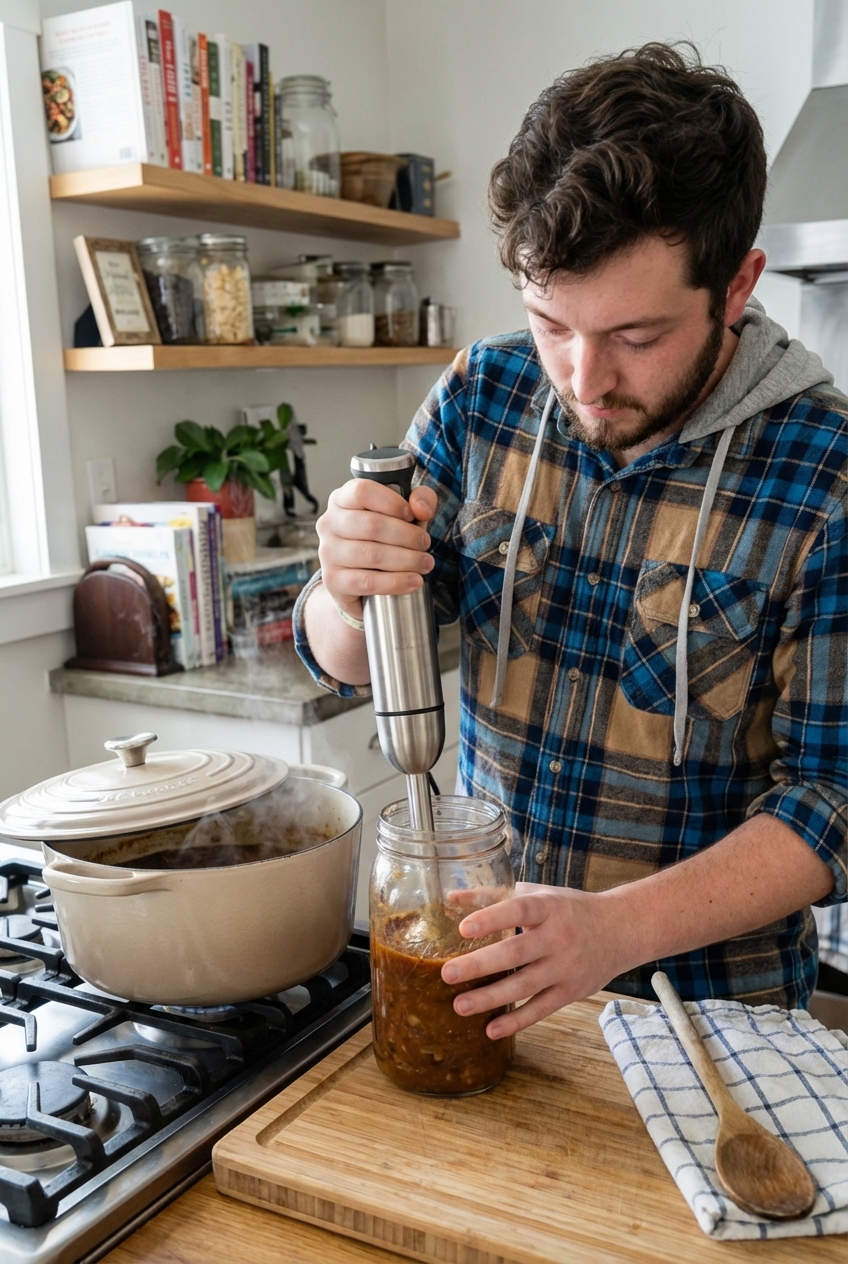
A real photograph of an immersion blender blending a portion of beef stew in a tall heat-safe jar next to a Dutch oven on a stovetop

I love beef stew, but I am impatient in a very specific way. I want the slow-cooked payoff, but I also want to feel like I did something clever, not just “waited.” The first time I blended a scoop of stew back into the pot, it felt like a cheat code. Suddenly it was thick, glossy, and restaurant-cozy without flour.

Then I started nudging the flavor toward things I crave all the time: ginger warmth, soy depth, and miso’s savory hug. It still tastes like the stew you grew up with, just with a little extra personality. Like it showed up in comfy clothes but also remembered to wear good cologne.