Mom's Best Recipes
Recipe

Gourmet Chicken Cacciatore

A bold, cozy chicken cacciatore with crisped chicken skin, a wine-kissed tomato sauce, and briny olives for that restaurant-level finish.

Author By Matt Campbell
4.8
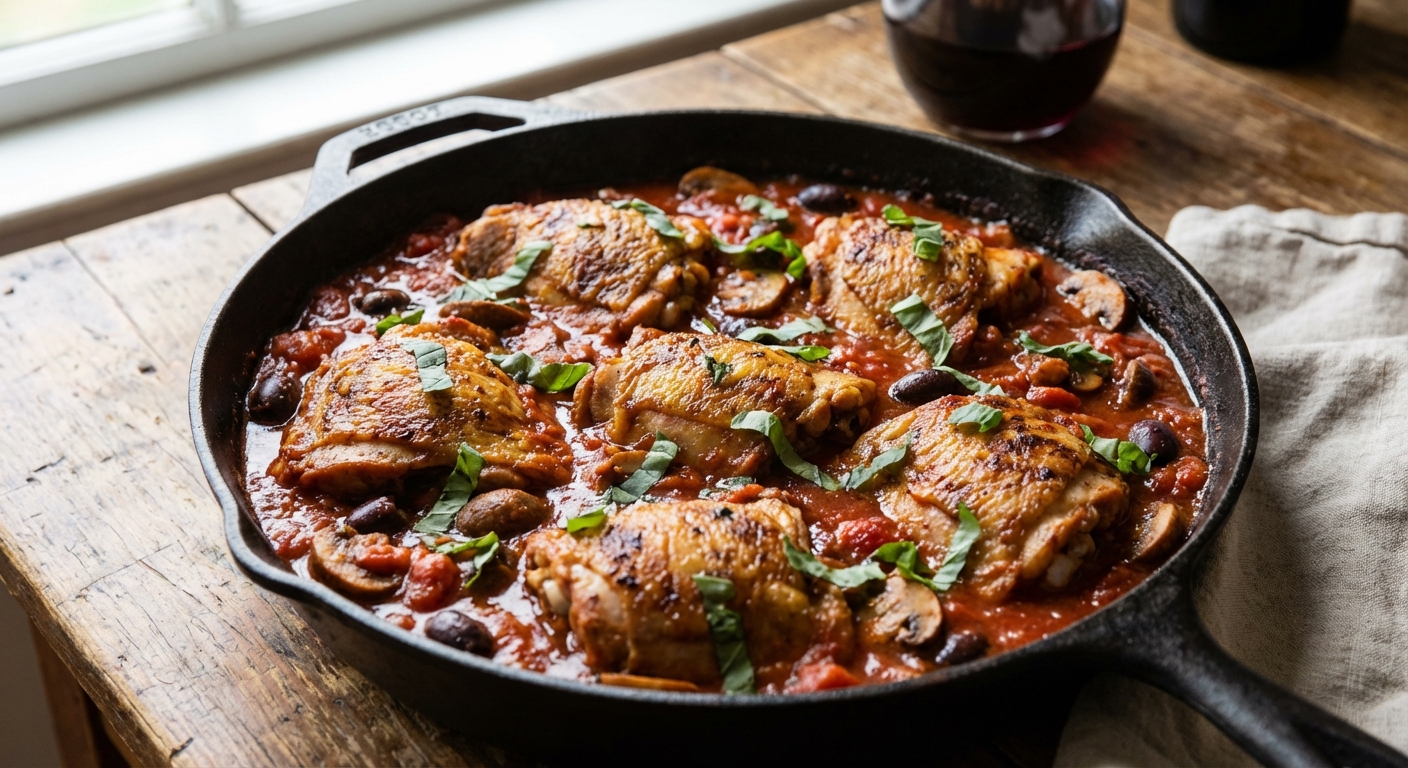
Chicken cacciatore in a rustic skillet with browned chicken thighs nestled in a chunky tomato sauce with mushrooms, olives, and fresh basil

Chicken cacciatore is one of those dishes that feels like it took all day, even when it did not. You get juicy chicken, a tomato sauce that tastes like it has a backstory, and enough savory aroma to make people wander into the kitchen asking, “What’s happening in here?”

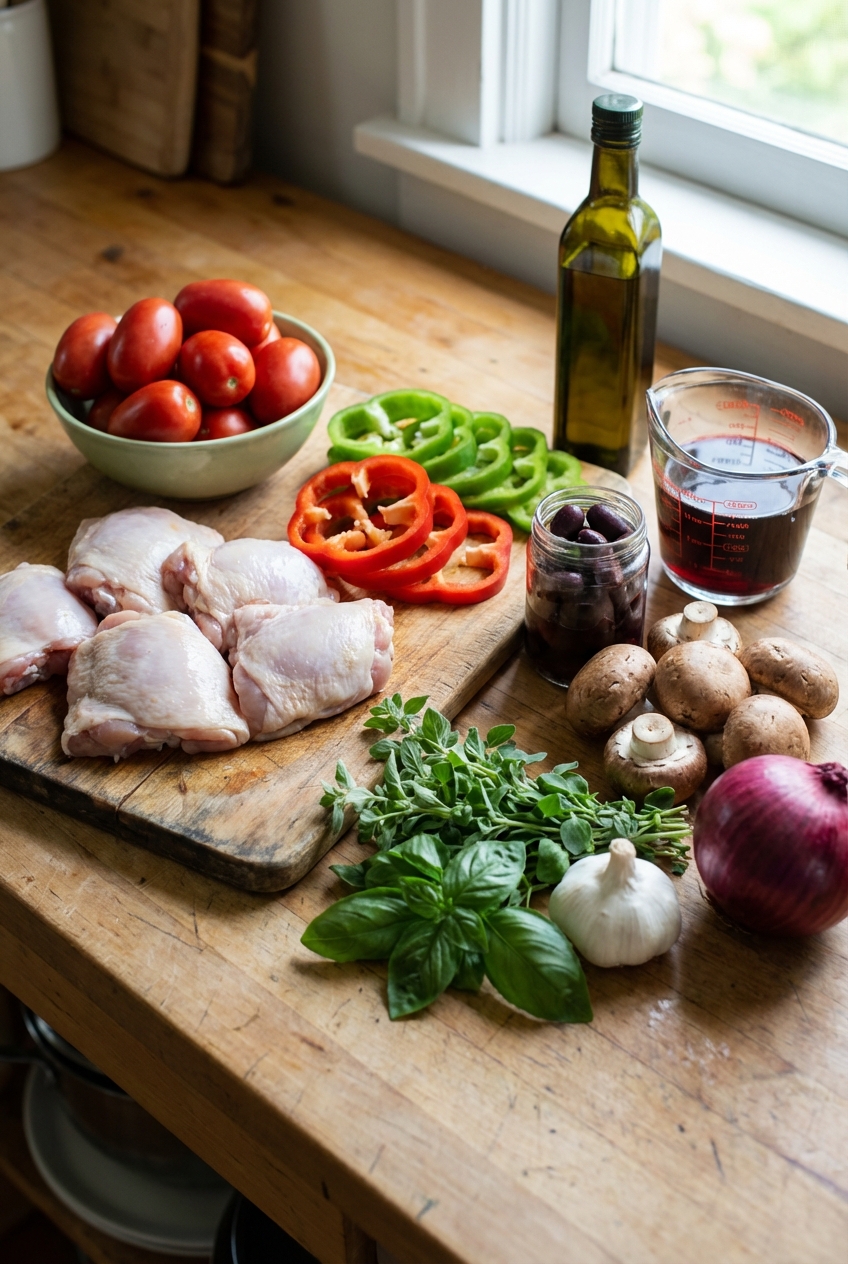
This is my gourmet but still totally doable version: we brown the chicken until the skin gets properly golden, then build a sauce with sautéed onion, peppers, mushrooms, garlic, a splash of wine, and a few sneaky flavor boosters like anchovy (optional, but powerful) and olives. It lands bright, rich, and a little dramatic in the best way.
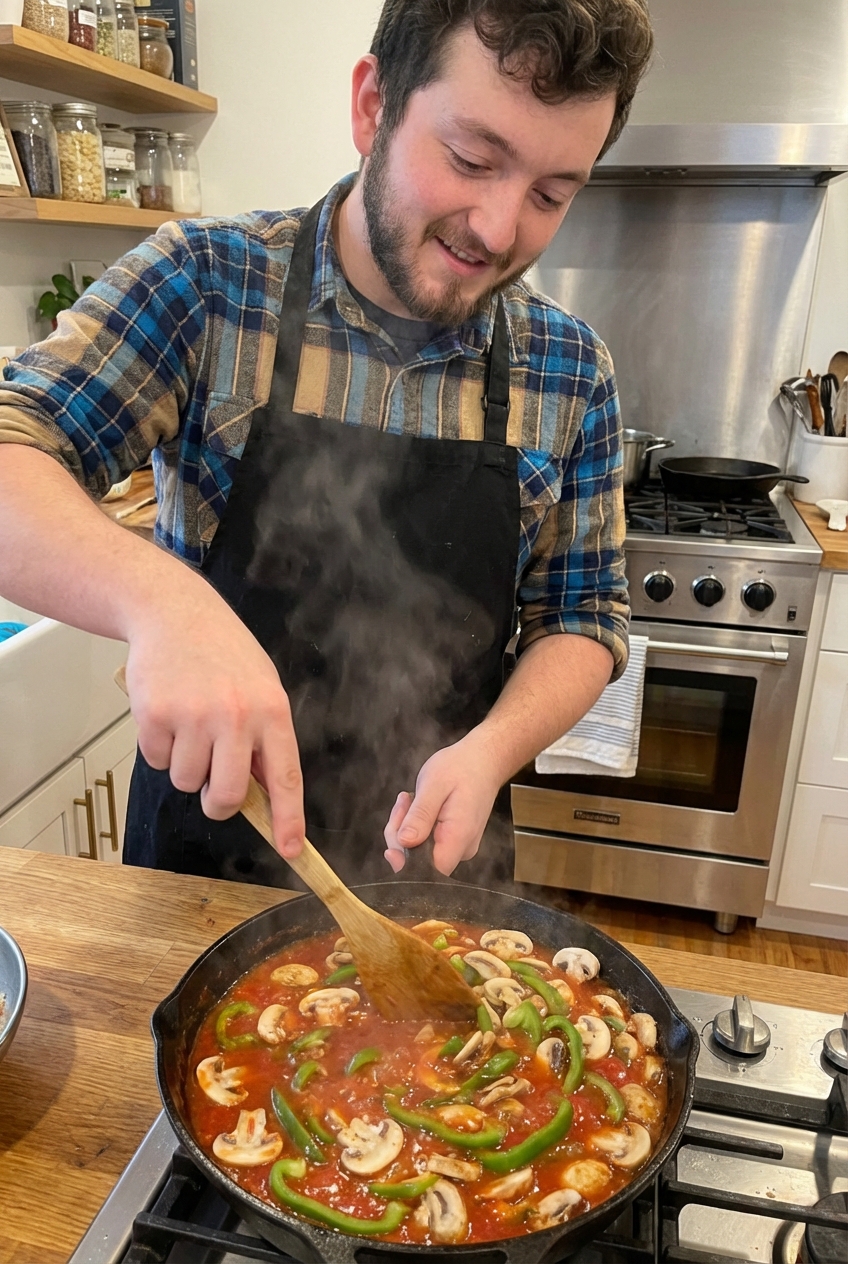
Wooden spoon stirring a bubbling tomato sauce with sliced mushrooms and peppers in a skillet

Why It Works

  • Deep flavor, not flat sauce: Browning first, toasting paste, reducing wine, and blooming herbs create layers without extra fuss.
  • Juicy, tender chicken: Thighs stay forgiving in the simmer, with best tenderness as they climb past 165°F.
  • Balanced finish: Olives add briny punch, vinegar brightens at the end, and butter (optional) rounds everything out.
  • Weeknight-friendly technique: One pan, straightforward steps, and plenty of built-in wiggle room if you need to swap ingredients.

Pairs Well With

Storage Tips

How to Store Leftovers

This dish somehow gets even better after a night in the fridge. The sauce thickens slightly and the flavors knit together.

Refrigerator

  • Cool leftovers, then store in an airtight container for up to 4 days.
  • Keep chicken tucked under sauce to prevent it from drying out.

Freezer

  • Freeze in freezer-safe containers for up to 3 months.
  • For best texture, freeze chicken and sauce together, fully cooled.

Reheating

  • Stovetop (best): Warm gently in a covered skillet over medium-low heat with a splash of water or broth until hot.
  • Microwave: Cover and heat in short bursts, stirring sauce between rounds.
  • If you want the skin to perk up again, run the chicken under the broiler for 2 to 3 minutes after reheating. Watch closely.

Make Ahead

  • You can make the sauce 1 to 2 days ahead, then reheat and braise the chicken just before serving.
  • Or cook the full dish ahead, then reheat gently and use the broiler right before serving for a fresher finish.

Common Questions

FAQ

What does “cacciatore” mean?

“Cacciatore” translates to hunter-style. In Italian cooking, it generally refers to braised meat (often chicken) with aromatics like onions and herbs, sometimes with peppers and mushrooms. Many versions are tomato-forward like this one, but regional recipes can vary.

Can I use chicken breasts instead of thighs?

You can, but thighs are more forgiving and stay juicy during simmering. If using breasts, sear them, then simmer gently and start checking for doneness earlier. Pull them when they hit 165°F.

Do I have to use wine?

No. Wine adds complexity and acidity, but you can swap in extra chicken broth plus 1 tablespoon balsamic or red wine vinegar to mimic the lift.

Is anchovy really necessary?

Not necessary, just helpful. One anchovy fillet melts into the sauce and adds savory depth without tasting fishy. If you are not into it, skip it and add a little extra salt at the end.

How do I keep the sauce from tasting too acidic?

Two moves: toast the tomato paste and finish with a small knob of butter or a drizzle of olive oil. Also, make sure you are simmering long enough to mellow the tomatoes.

What internal temperature should thighs reach?

165°F is the safe minimum. For thighs, you will often get the most tender, pull-apart texture closer to 175 to 190°F. If you have time, let them go a little longer at a gentle simmer.

I started making chicken cacciatore when I wanted “restaurant comfort” without restaurant chaos. You know the vibe: something that smells like you worked hard, tastes like you know what you’re doing, and still lets you sit down and eat while it’s hot. The first time I nailed the sauce, I caught myself tasting it straight from the spoon like it was a new hobby. Now it’s my go-to when I want a cozy dinner that feels a little fancy, even if I’m wearing sweatpants and calling it a night.