What noodles should I use for chow mein?
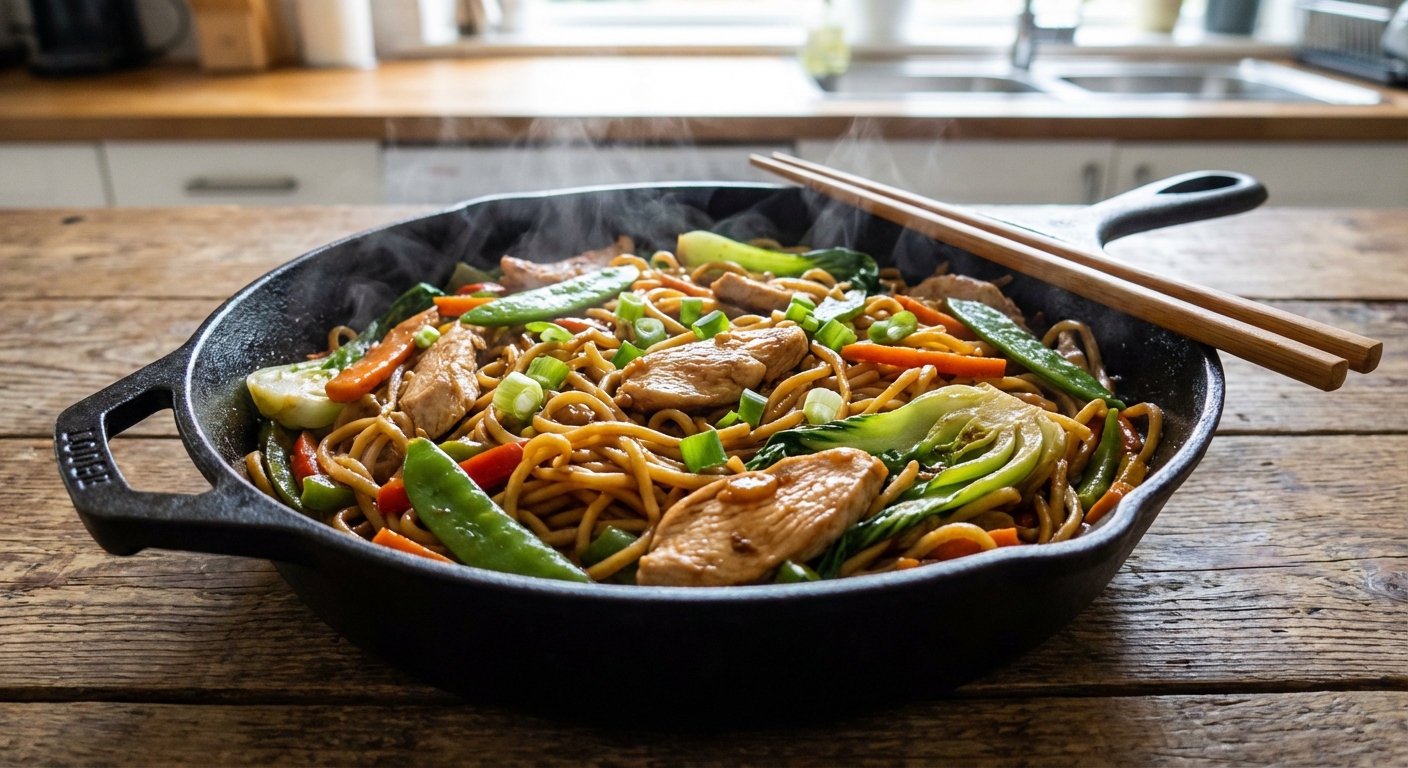
Look for chow mein noodles (fresh or refrigerated) or yakisoba-style noodles. Yakisoba noodles are often pre-steamed and lightly oiled, so they usually do not need boiling and they can brown faster. If all you have is spaghetti, you can use it in a pinch, but the texture will be more pasta-like. Cook spaghetti just to al dente, rinse briefly, then toss with a little oil to prevent sticking.
Quick rule: If the package says “ready to stir-fry,” loosen and use as-is. If it is dried and says “boil,” cook just under the time listed, then drain very well.
How do I keep chow mein from getting soggy?
Three things: use high heat, avoid overcooking the vegetables, and do not drown the pan in sauce. Also, cook in a large skillet so the noodles can sear instead of steam.
Can I make it gluten-free?
Yes. For a similar “bouncy noodle” vibe, use gluten-free ramen-style stir-fry noodles if you can find them. If using wide rice noodles, cook or soak until just tender (do not overdo it), rinse, and toss with a little oil so they do not stick or break. Swap in tamari (gluten-free soy sauce). Check your oyster sauce label, or use a gluten-free oyster sauce.
Can I swap the chicken?
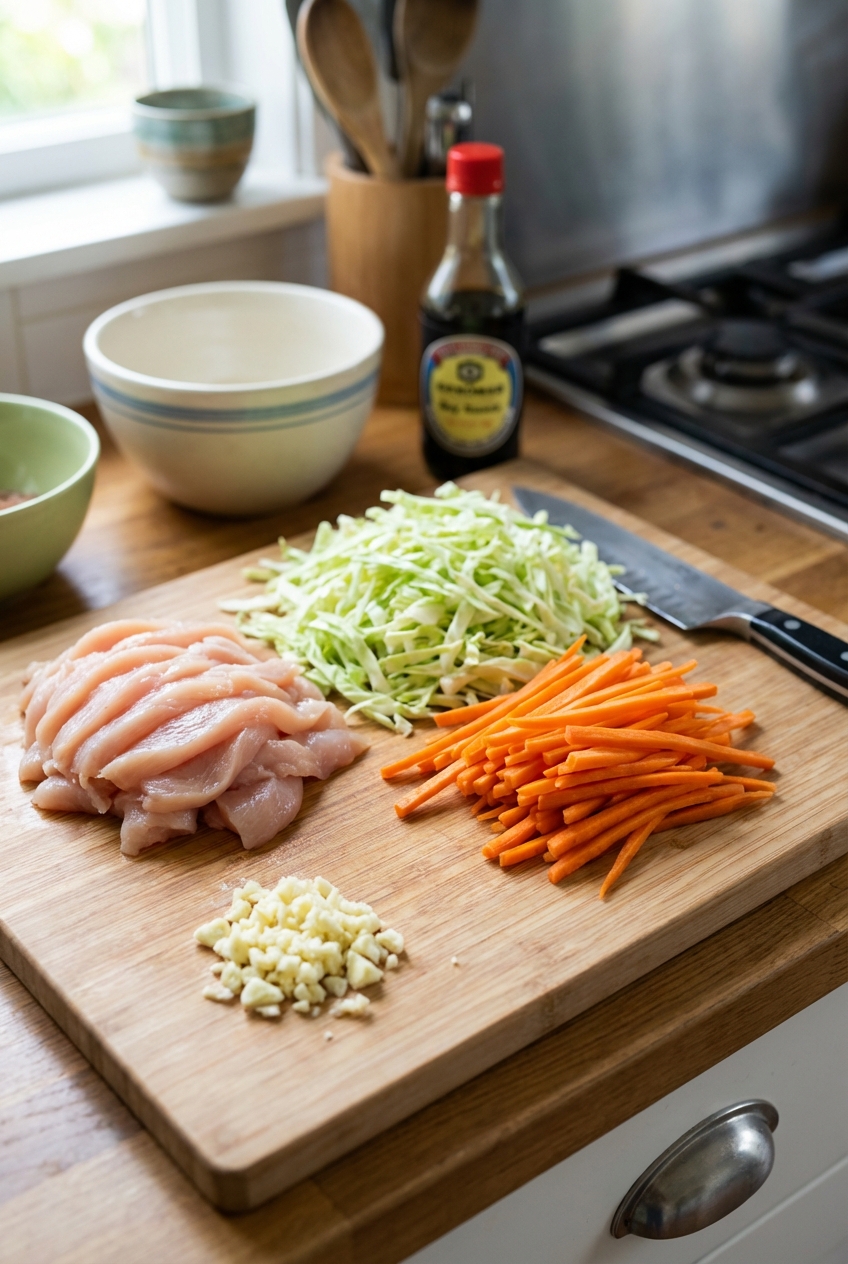
Absolutely. Thinly sliced pork, shrimp, or tofu all work. For shrimp, cook just until pink, then remove and add back at the end so it stays juicy.
Do I need a wok?
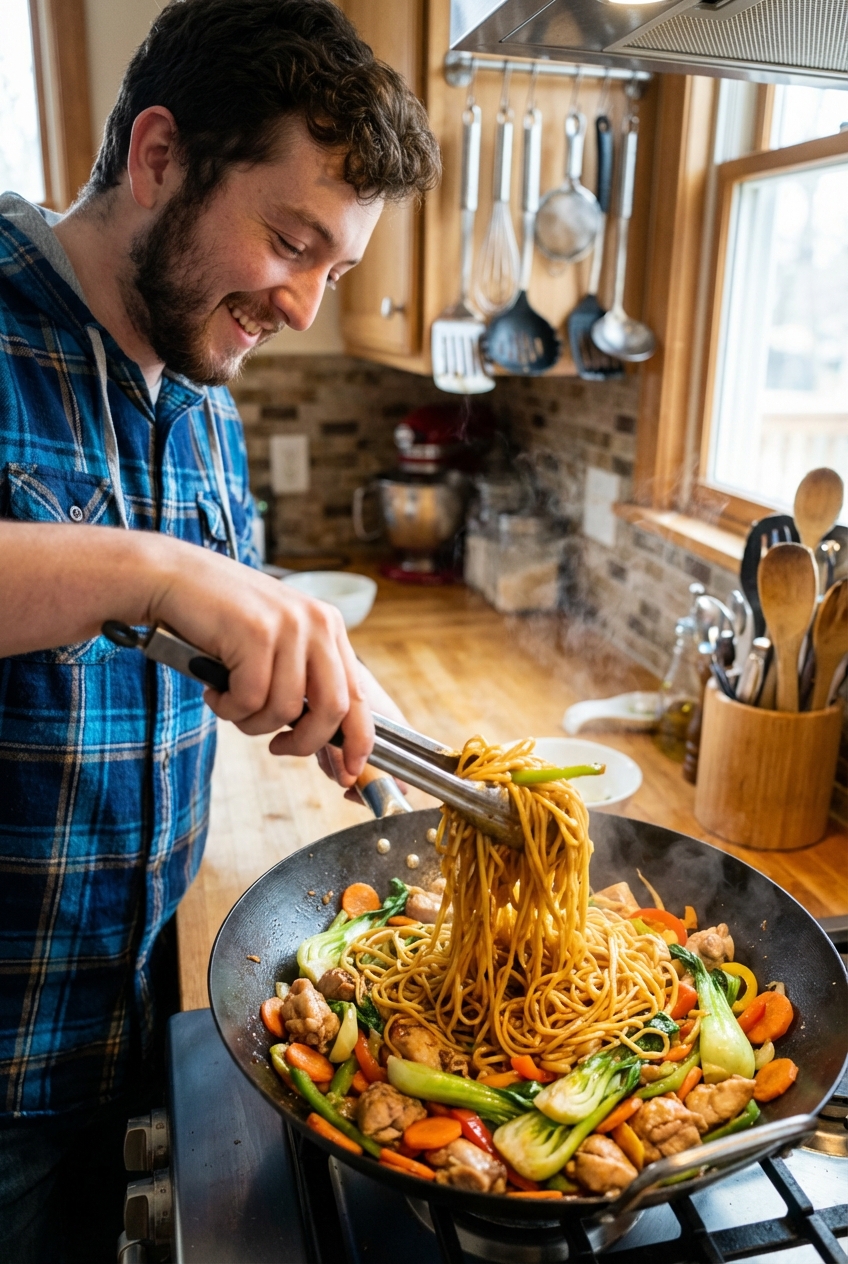
Nope. A large, heavy skillet works great. The key is surface area and heat, not a specific pan shape.