Mom's Best Recipes
Recipe

Grilled Salmon

Juicy, grill-kissed salmon with a bold miso citrus glaze and crispy edges. Fast enough for a weeknight, fancy enough to feel like a restaurant move.

Author By Matt Campbell
4.9
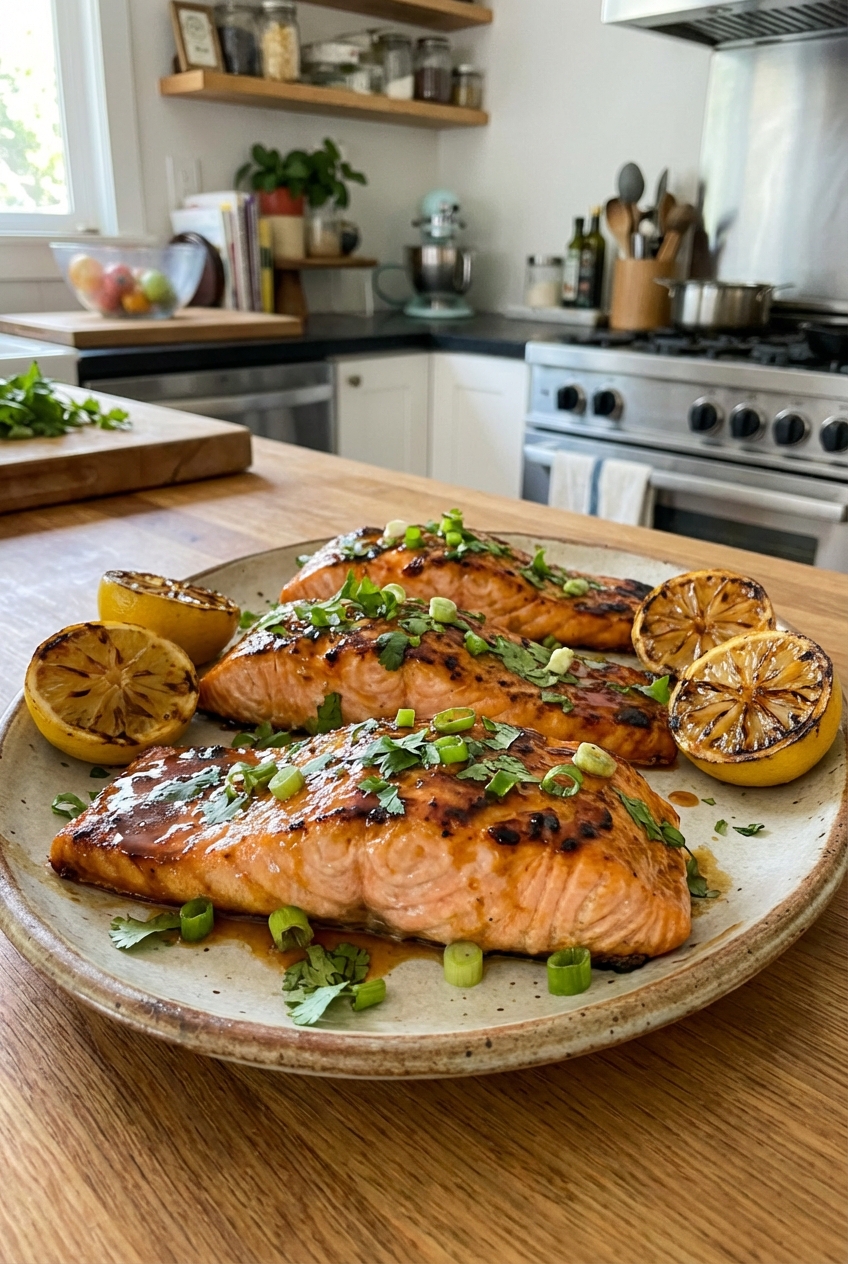
A real photograph of grilled salmon fillets on a platter with glossy miso citrus glaze, charred lemon halves, and chopped herbs

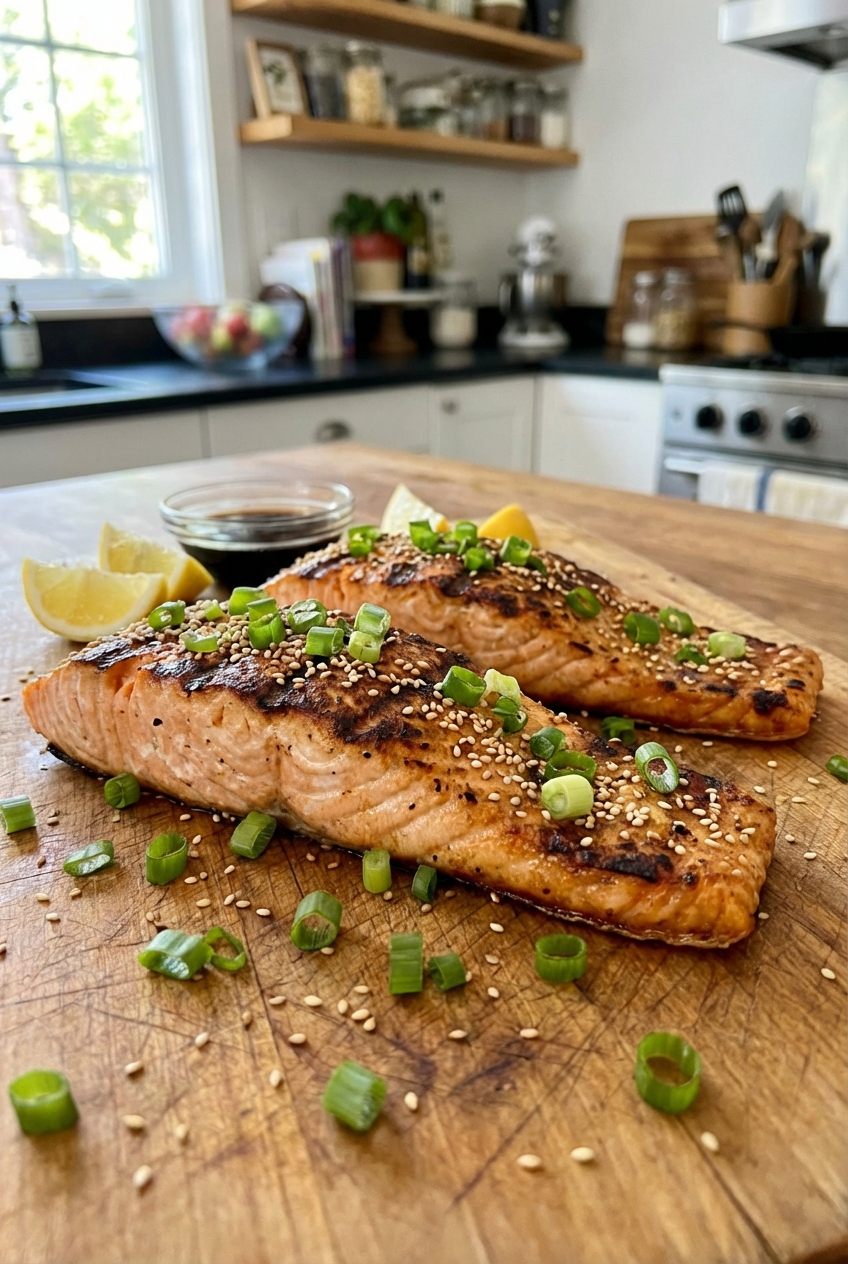
Grilled salmon can be either a total flex or a totally dry tragedy. This version stays firmly in the flex zone. We are going for crisp edges, a lacquered, bold glaze, and that buttery center that makes you stop talking for a second.

The secret is a quick miso citrus glaze that does three jobs at once: it seasons every bite, it caramelizes like a dream over heat, and it gives you that glossy, restaurant-style finish without requiring a pantry scavenger hunt.
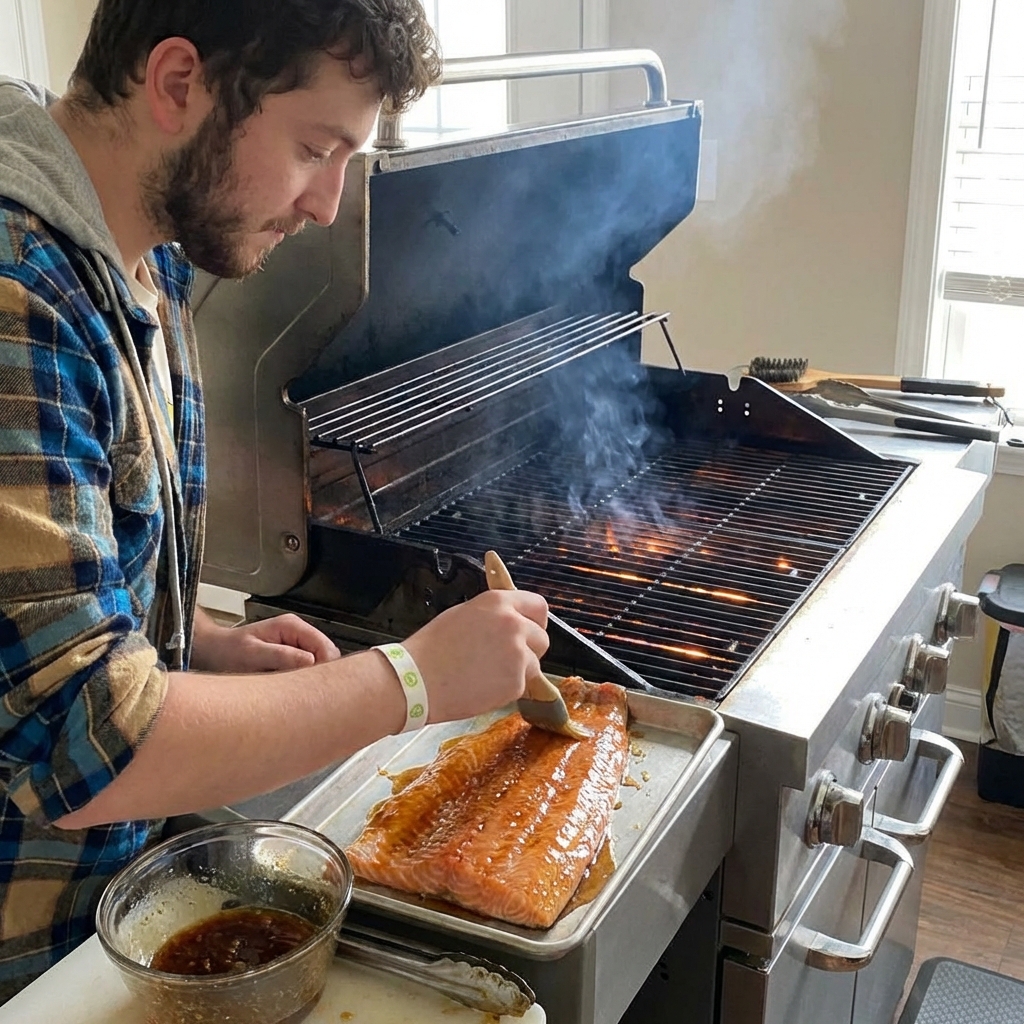
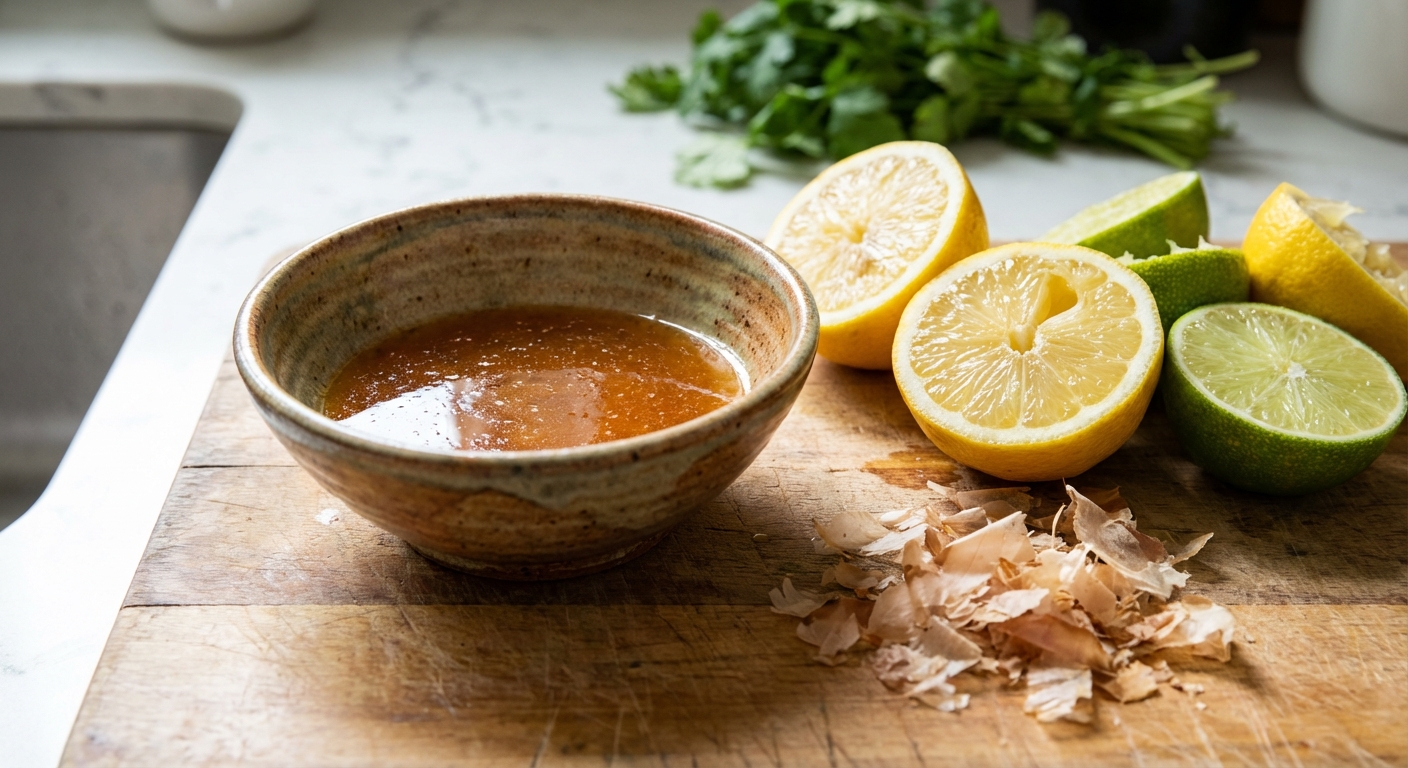
A real photograph of a salmon fillet being brushed with glaze beside a hot grill with visible grates

Why It Works

  • Bold flavor with minimal effort: white miso, soy, honey, and citrus make a big, balanced glaze that tastes like you planned ahead.
  • Crisp outside, juicy inside: high heat plus a short cook time keeps salmon tender and gives you those craveable charred edges.
  • No sticking panic: you will oil the grates and start skin-side down so the fish releases cleanly.
  • Built-in sauce: you will split the glaze for food safety, then brush and serve with a bright, glossy finish.

Pairs Well With

Storage Tips

Refrigerate: Cool leftovers quickly, then store in an airtight container for up to 3 to 4 days.

Reheat gently: For best texture, warm salmon in a 300°F oven for 6 to 10 minutes, depending on thickness, just until heated through. Microwaving works, but use low power and short bursts to avoid drying it out.

Eat it cold on purpose: Leftover grilled salmon is amazing flaked into a salad, tucked into a rice bowl, or layered on toast with a swipe of mayo and lemon.

Freezing: You can freeze cooked salmon up to 2 months, but the texture softens. Wrap tightly, then thaw overnight in the fridge.

Common Questions

Can I use frozen salmon?

Yes. Thaw it overnight in the fridge, then pat it very dry before glazing. Moisture is the enemy of good char.

Do I have to keep the skin on?

No, but skin-on is easier on the grill because it acts like a built-in nonstick layer. If you go skinless, use a well-oiled grate and a fish spatula, and consider grilling on a piece of lightly oiled foil with a few small holes poked in it.

What internal temperature should salmon be?

For a juicy, just-set center, many cooks aim for 125°F to 130°F in the thickest part, then rest 3 minutes (carryover heat finishes the job). For a more done center, go to 135°F to 140°F. Food safety note: the USDA recommends fish reach 145°F.

My glaze is thick. Is that okay?

Totally. If it is too paste-like to brush, loosen it with 1 to 2 teaspoons warm water or extra citrus juice until it spreads easily.

How do I keep the glaze food-safe?

Split it. Put half in one bowl for brushing during cooking, and keep the other half untouched for finishing and serving.

Can I cook this without a grill?

Yes. Use a grill pan over medium-high heat, or broil on a foil-lined sheet pan 5 to 7 inches from the heat, brushing glaze near the end so it does not burn.

I used to treat grilling salmon like a high-stakes test where the grill always graded me harshly. Stick to the grates, overcook by accident, pretend it was “intentional.” Then I started cooking it like I cook for friends: keep it simple, keep it hot, and keep tasting the glaze until it makes you grin.

This miso citrus thing happened after one of those “I wonder if…” moments with a spoonful of miso in the fridge and a lemon that was begging to be used. It turned into my go-to because it feels gourmet, but it is still very much a Tuesday night recipe. The kind where you stand at the counter, take a bite, and immediately plan what you are putting the leftover glaze on next.