Mom's Best Recipes
Recipe

Gourmet Japchae Recipe

Sweet potato noodles tossed with a glossy soy sesame sauce, crisp vegetables, and tender beef or mushrooms for a bold, restaurant style bite at home.

Author By Matt Campbell
4.8
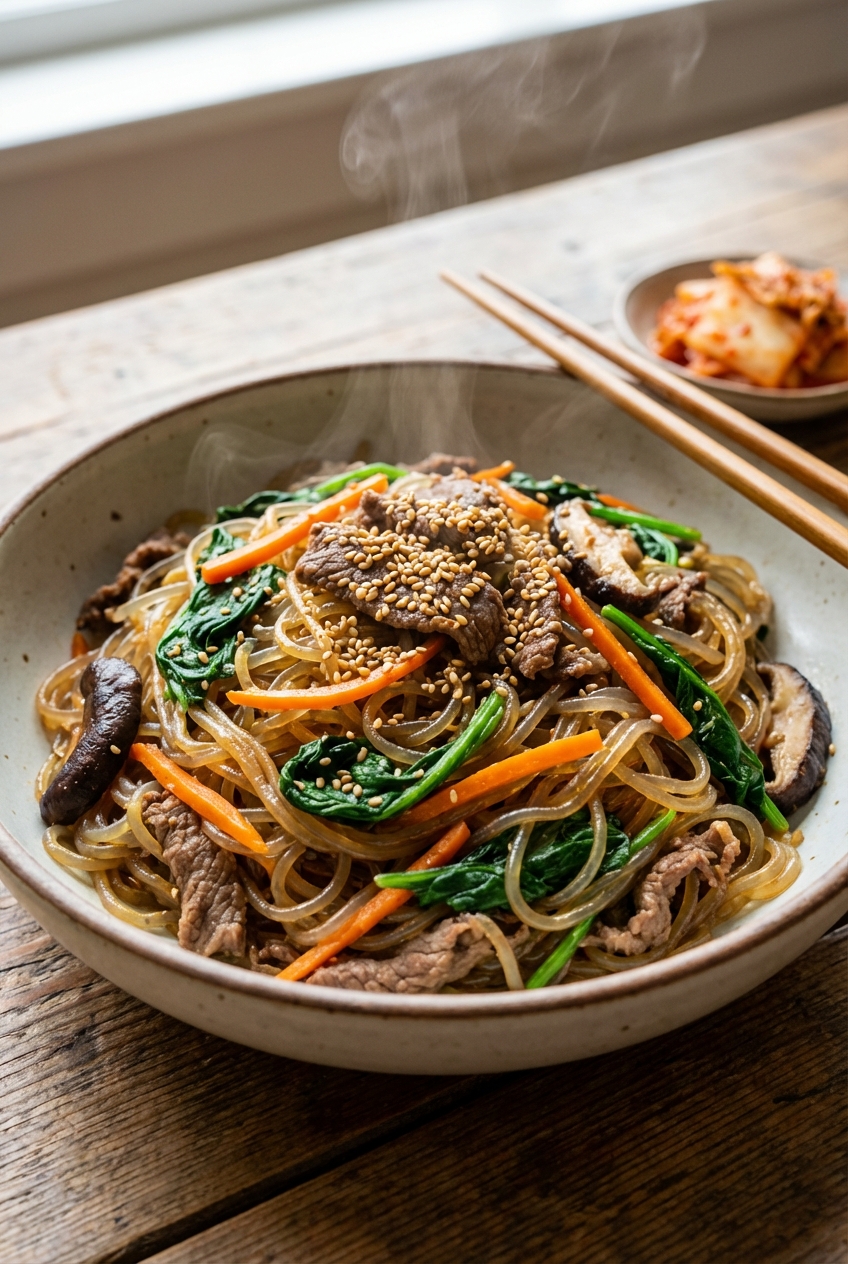
A steaming bowl of japchae with glossy glass noodles, sliced beef, spinach, carrots, and shiitake mushrooms topped with toasted sesame seeds on a wooden table

Japchae is one of those dishes that feels fancy without being fussy. You get chewy, bouncy sweet potato noodles, a sauce that hits salty sweet and nutty all at once, and vegetables that stay crisp enough to snap back when you bite. The best part is you can make it on a weeknight if you keep your prep tight and your pan hot.

This “gourmet” version leans into big flavor: seared beef (or extra mushrooms if you want it vegetarian), extra aromatics, and a sauce that clings instead of sliding off. It is the kind of bowl where you keep “taste testing” and suddenly half the noodles are gone. No judgment. That is quality control.
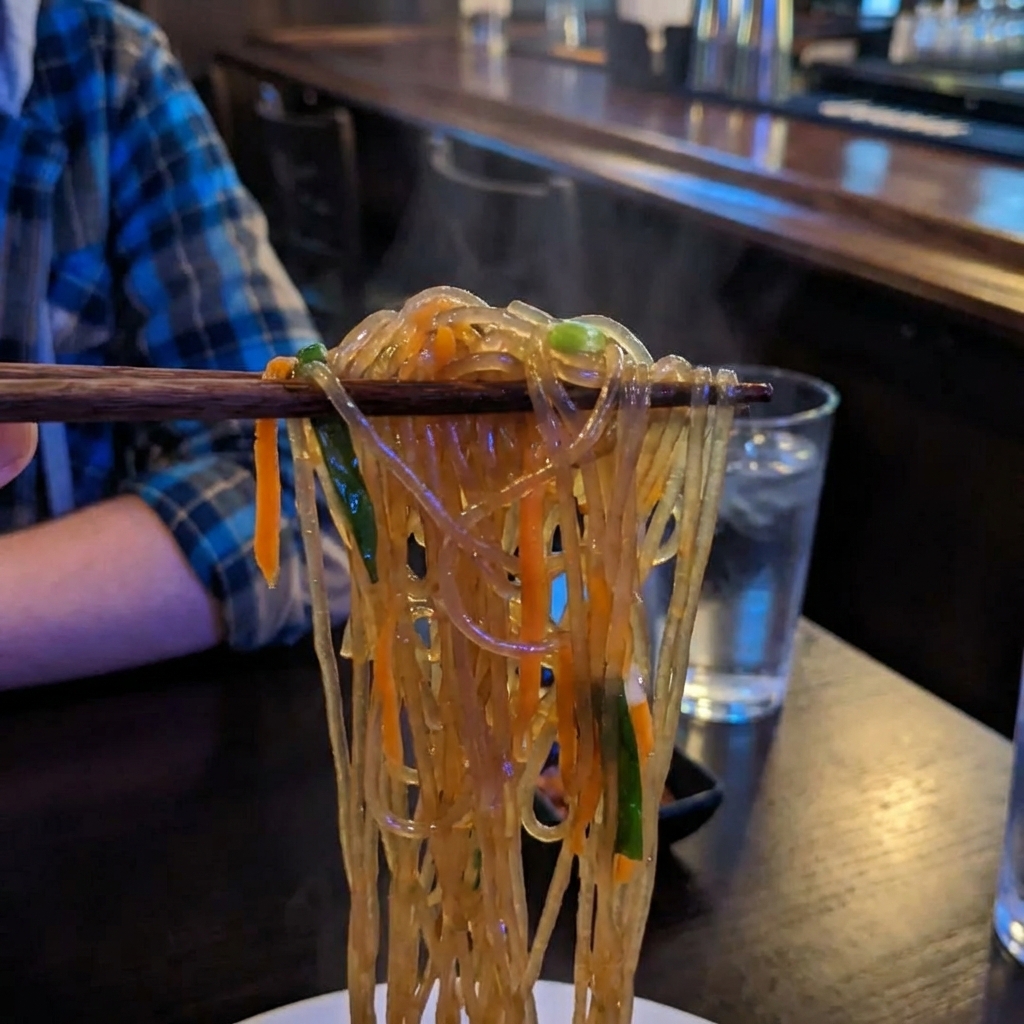
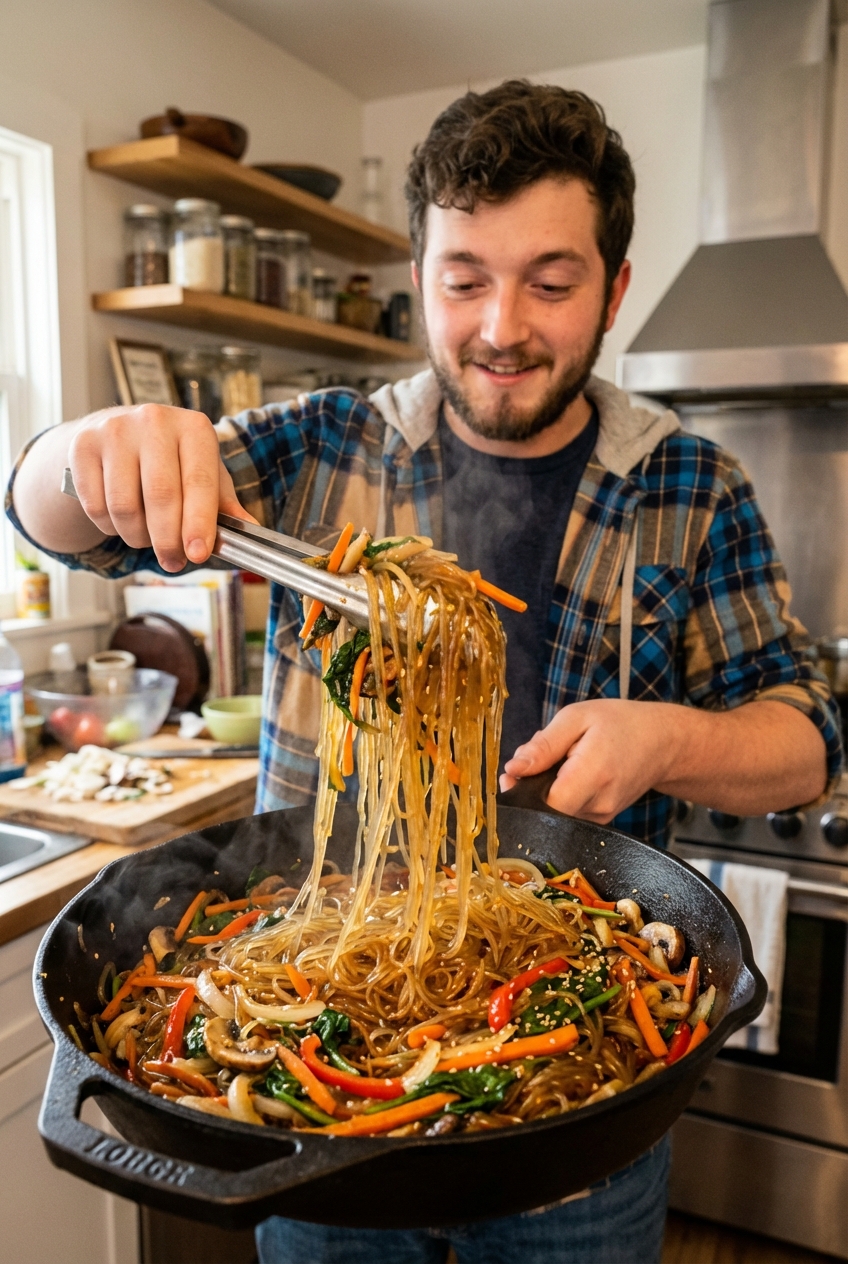
A close up photo of chopsticks lifting a tangle of glossy japchae noodles with strips of carrot and scallions

Why It Works

  • Chewy noodles that do not clump: Drain well, then a sesame oil toss keeps the dangmyeon slick and separate. A quick, optional rinse can help, but it is not required.
  • Bright, balanced sauce: Soy sauce for depth, brown sugar or honey for shine, and optional rice vinegar to keep it lively.
  • Crisp tender vegetables: We cook components quickly (and in batches if needed) and combine at the end so nothing turns sad and soggy.
  • Restaurant style aroma: Garlic, scallions, and toasted sesame oil finish the dish so the whole kitchen smells like a win.

Pairs Well With

Storage Tips

Fridge: Store japchae in an airtight container for up to 4 days. The noodles will firm up a bit, which is normal.

Reheat: Best move is a skillet over medium heat with a splash of water. Toss until the noodles loosen, then finish with a few drops of sesame oil. Microwave works too, but cover it and add a teaspoon of water so it steams instead of drying out.

Make ahead tip: If you are prepping for a party, cook the noodles and prep the vegetables in advance. Keep sauce separate, then toss everything together right before serving for the freshest texture.

Freezing: You can freeze it, but the texture takes a hit. If you do it anyway, freeze in an airtight container and try to use within 1 month. Reheat gently in a skillet and expect softer vegetables.

Common Questions

What noodles do I need for japchae?

Look for Korean sweet potato starch noodles labeled dangmyeon. They are clear to grayish when dry and turn glossy and translucent when cooked.

Why did my noodles clump together?

Usually it is one of two things: they were overcooked, or they sat without oil. Drain well, then toss with a little sesame oil while they are still warm. A quick snip with kitchen shears also helps keep them from tangling.

Do I have to rinse the noodles?

Nope. A brief rinse is optional. Rinsing stops the cooking fast and helps prevent sticking, but it can wash off some surface starch, which means slightly less sauce cling. If you skip the rinse, just drain very well and toss with sesame oil right away.

Can I make japchae vegetarian?

Absolutely. Swap beef for extra mushrooms (aim for about 10 to 12 ounces total mushrooms) or use 6 to 8 ounces firm tofu. You may want an extra pinch of salt or a splash of soy sauce to taste since beef brings seasoning of its own.

Is japchae served hot or cold?

Both. It is great warm, room temp, or straight from the fridge if you are in your “cold noodle” era. For best texture, I like it warm or room temp.

Can I use regular soy sauce?

Yes. Standard low sodium soy sauce is the easiest, most consistent option. Korean soup soy sauce is much saltier and can be more pungent, so it is not a straight swap. If it is all you have, start with about half the amount and adjust at the end.

Is rice vinegar traditional in japchae?

Not really. I keep it optional because a tiny splash brightens the sauce, but you can skip it for a more classic vibe.

The first time I made japchae, I treated it like a basic noodle stir fry and wondered why it tasted flat. Turns out, japchae is all about tiny choices: cook the vegetables fast, give the components a little seasoning as you go, and then let the sauce gloss everything instead of drowning it. Now it is my go to “I want something impressive but I also want to be in sweatpants” dinner. It looks like a celebration bowl, even if it is just you at the counter eating straight from the pan.