Do I really need to rinse jasmine rice?
Yes, if you want distinct grains and that soft-chewy texture. Rinsing removes surface starch that can turn the pot into a sticky blanket. Rinse 3 to 5 times, until the water looks mostly clear. Do not rinse forever, since excessive rinsing can dull the aroma a bit.
What water-to-rice ratio makes jasmine rice soft and chewy?
For stove-top jasmine rice, I like 1 cup rice to 1 1/4 cups water (after rinsing and draining well), and it works well for most brands. If you like it softer, go up to 1 1/3 cups water. If you like it drier and more separate, try a scant 1 1/4 cups (about 1 cup plus 3 tablespoons). Because rice brands, age, and even pot and burner strength vary, you may need to adjust by a tablespoon or two after your first run.
Why is my rice mushy?
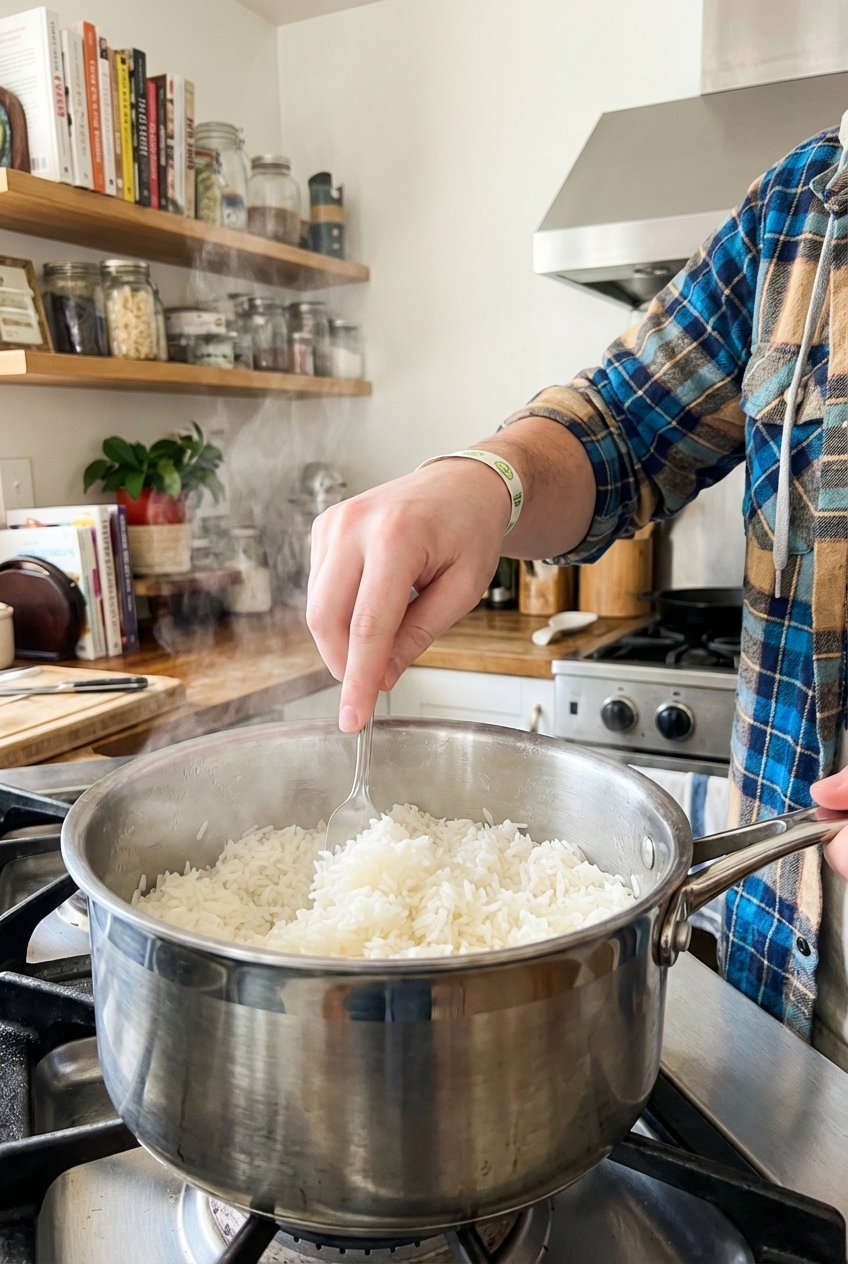
Usually one of these: too much water, not draining well after rinsing, simmering too hard, or skipping the rest. Keep it at a gentle, barely-bubbling simmer and let it sit off heat 10 minutes.
Why is my rice crunchy?
Most common culprit is heat that’s too high (water evaporates before the rice finishes) or a lid that leaks steam. Also, a 10-minute soak helps a lot for even cooking. If it is still a bit under after resting, add 1 to 2 tablespoons water, cover, and steam on low for 1 to 2 minutes.
Can I make this without butter?
Absolutely. Use 1 teaspoon neutral oil, coconut oil, or olive oil. Or skip fat entirely and just season with salt. Butter just adds that subtle “restaurant rice” gloss.
Can I cook jasmine rice in broth?
Yes. Swap water for low-sodium chicken or vegetable broth. Still rinse the rice, and keep the same ratio. Taste at the end before adding extra salt.