Mom's Best Recipes
Recipe

Gourmet Manhattan Recipe

A bold, velvety Manhattan with rye spice, deep vermouth, and bright bitters, finished with a citrus twist and a proper cherry.

Author By Matt Campbell
4.9
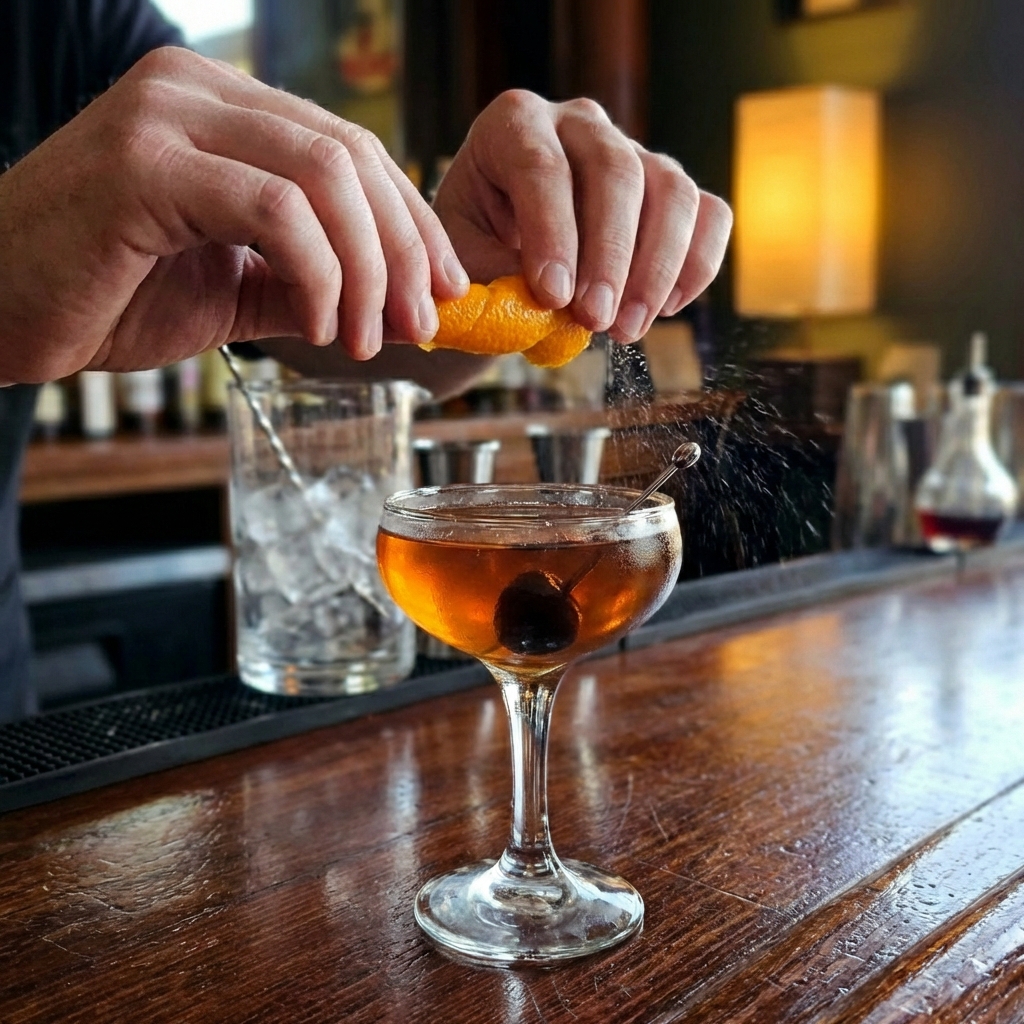
A real photograph of a chilled Manhattan cocktail in a coupe glass on a dark wood bar, garnished with a brandied cherry, with a mixing glass and bar spoon softly blurred in the background

If you want a cocktail that tastes like you planned the evening, the Manhattan is it. It is bold, a little mysterious, and somehow still cozy, like a wool coat that fits perfectly. This gourmet version keeps the ingredient list tight but turns the flavor dial up with rye that brings peppery bite, a richer vermouth that tastes like dried fruit and herbs, and bitters that snap everything into focus.

Also, this is a stirred drink, which means it is basically the low-drama dinner of cocktails. No shaker chaos, no foam situation, just dilution and chill done on purpose. Get those right and your Manhattan will taste like it came from a great bar, not a random glass you grabbed from the cabinet.
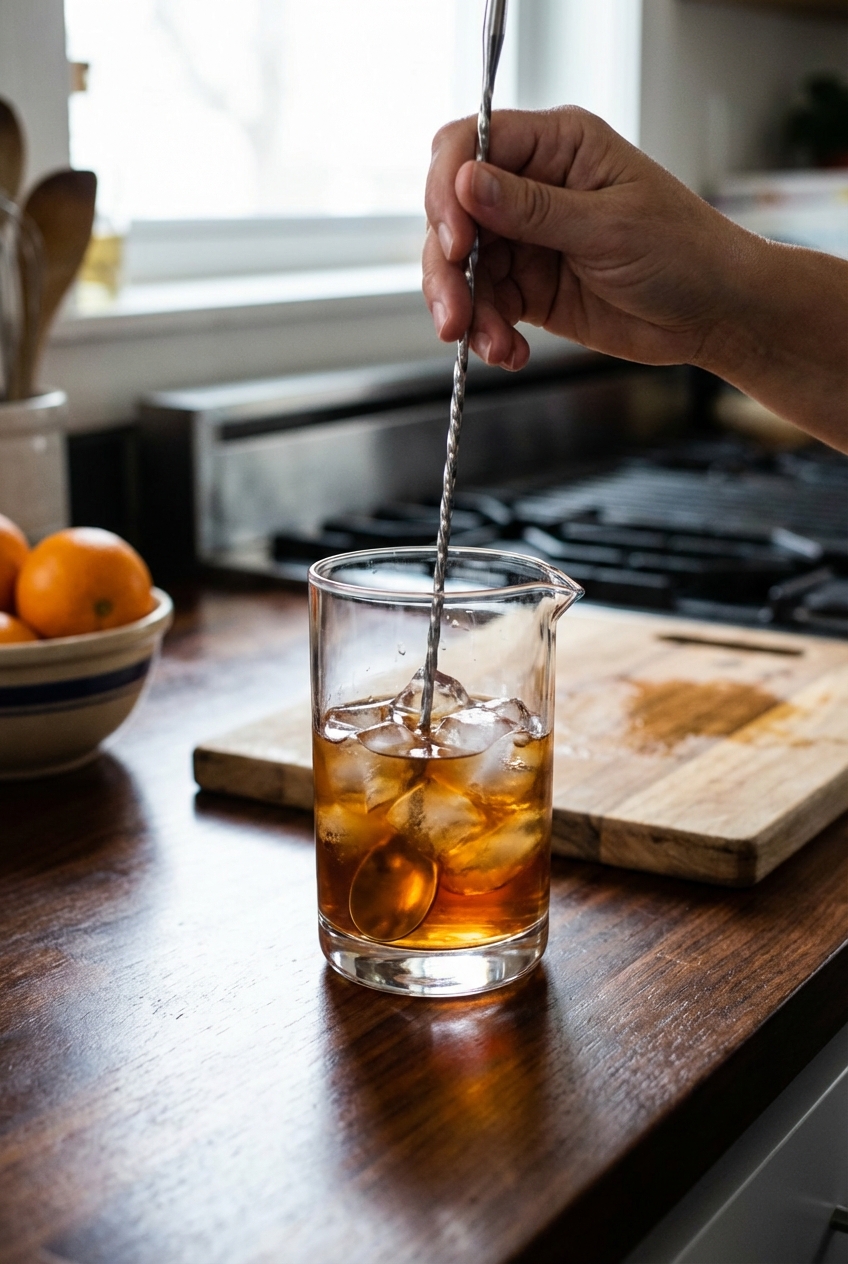
A real photograph of a Manhattan being stirred with a bar spoon in a clear mixing glass filled with ice on a kitchen counter

Why It Works

  • Big flavor, balanced: Rye gives structure, sweet vermouth adds depth, and bitters keep it from tipping into syrupy.
  • Silky texture: Stirring with plenty of ice creates that glossy, restaurant-level mouthfeel.
  • Bright finish: A quick orange twist perfumes the top of the drink so the first sip hits like a citrusy hello.
  • Flexible but not fussy: You can adjust the whiskey-to-vermouth ratio without losing the Manhattan soul.

Pairs Well With

Storage Tips

Manhattans are best fresh, but you can absolutely prep them if you are hosting.

  • Batch and chill (best option): Mix the whiskey, vermouth, and bitters in a sealed bottle or jar. Refrigerate up to 48 hours. When ready to serve, stir each drink with ice (or stir the whole batch with ice in a pitcher), then strain and garnish.
  • Avoid adding water during batching unless you plan to serve straight from the fridge: If you want a pour-and-serve batch, add water on purpose. Start with about 1/2 oz water per drink, then adjust up to 3/4 oz if you like it softer. Chill the batch, then pour straight from the fridge into a chilled glass and garnish.
  • Garnishes: Keep cherries sealed. Store orange peel wrapped tightly so it does not dry out.

Note for publishers: This section reads best with a front-end label like “Make Ahead and Batching” rather than “Leftovers.”

Common Questions

What makes this a “gourmet” Manhattan?

Two things: ingredient quality and technique. Using a bold whiskey, a flavorful sweet vermouth, and good bitters creates depth. Then you nail the chill and dilution by stirring properly with lots of ice.

Rye or bourbon?

Both are totally at home in a Manhattan. Rye is the classic choice and brings that spicy, dry backbone. Bourbon makes a softer, sweeter Manhattan. If you love caramel notes, use bourbon. If you want crisp edges and structure, go rye.

What is the best ratio for a Manhattan?

The standard is 2 oz whiskey to 1 oz sweet vermouth. For a drier, more spirit-forward drink, try 2 1/2 oz whiskey to 3/4 oz vermouth. If your vermouth is especially rich and you like it rounder, keep it closer to 2:1.

Can I make it “Perfect”?

Yes. Use 1/2 oz sweet vermouth and 1/2 oz dry vermouth instead of 1 oz sweet. Same bitters, same stirring.

Do I have to use a coupe?

Nope. A chilled Nick and Nora glass is ideal, but a small martini glass works too. The classic presentation is served up (no ice). If you like it on the rocks, serve it over one big cube in a rocks glass.

How do I keep vermouth from ruining my drink?

Store opened vermouth in the refrigerator, tightly capped. It is wine-based, so it goes flat and oxidized if it sits on the counter. For best flavor, try to use it within about 4 to 8 weeks (smaller bottles help if you do not make cocktails often).

I learned pretty quickly that a Manhattan is less about showing off and more about paying attention. The first time I tried to make one at home, I under-stirred it, used vermouth that had been open way too long, and wondered why it tasted kind of tired. Once I treated it like food, fresh ingredients, proper seasoning (bitters), and tasting the finished drink and adjusting next round, it clicked. Now it is my go-to when I want something bold and grown-up, without turning my kitchen into a full bar scene.