Mom's Best Recipes
Recipe

Gourmet Rice Pilaf Recipe

A bold, buttery rice pilaf with toasted aromatics, a savory broth, and crisped nuts for that restaurant-style bite at home.

Author By Matt Campbell
4.8
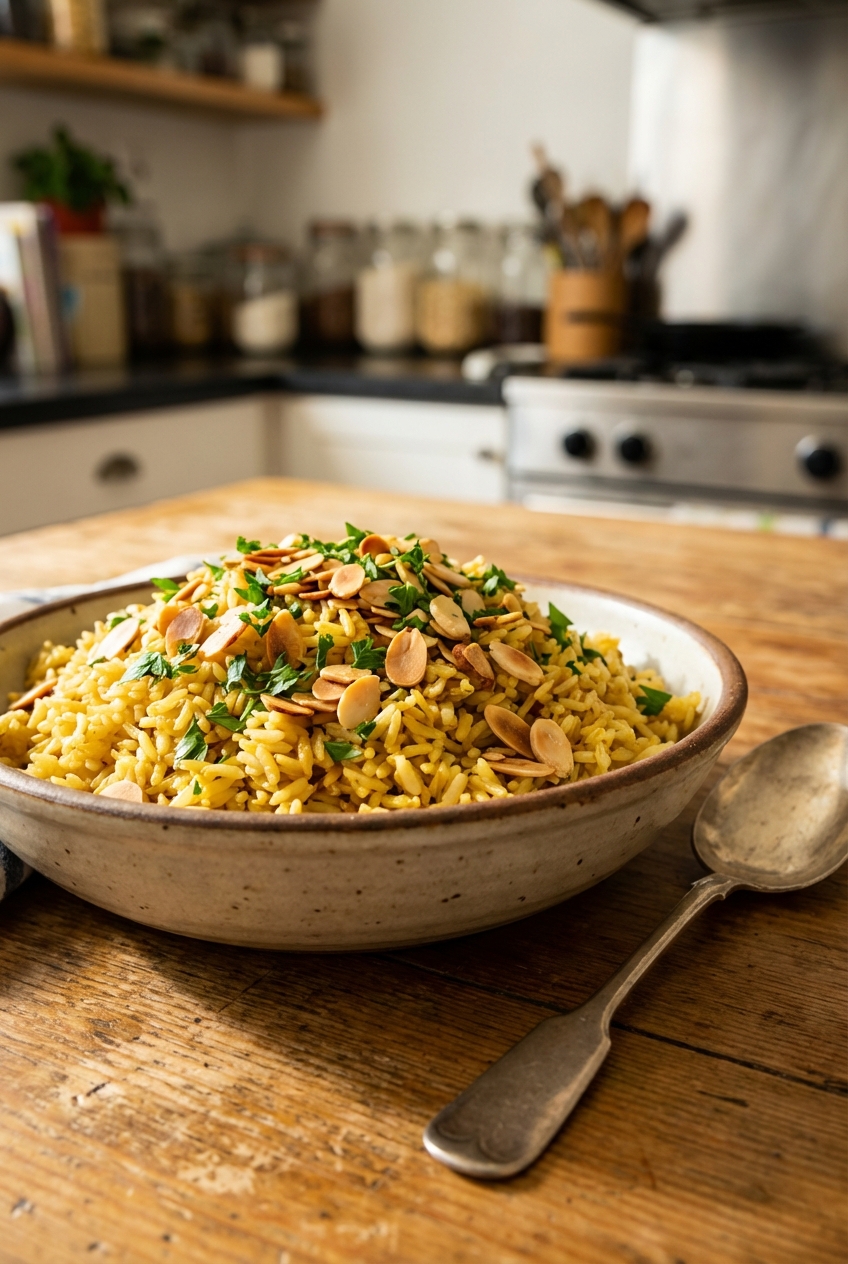
A bowl of golden rice pilaf with toasted almonds and chopped parsley on a wooden table with a spoon nearby

Rice pilaf is one of those quiet flex dishes. It looks simple, but when you toast the rice properly, build a real flavor base, and finish with something crunchy and bright, it turns into the side dish people remember. This is my gourmet rice pilaf for weeknights when you want cozy carbs, crisp edges, and that little moment where you stop chewing and go, “Okay, wow.”

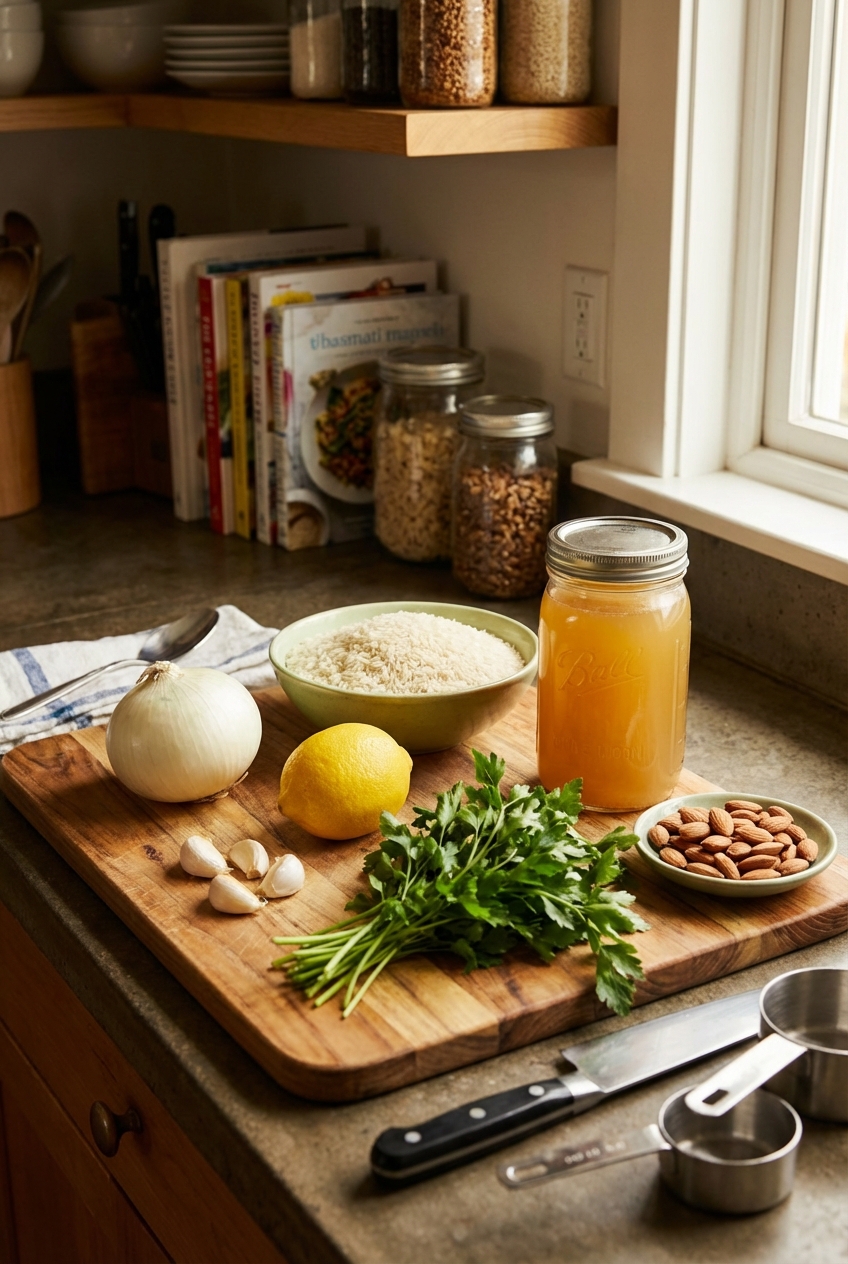
It uses everyday ingredients: long-grain rice, onion, garlic, broth, and a few upgrades that do heavy lifting like lemon zest, toasted nuts, and fresh herbs. The method is the main character here, and once you learn it, you can remix it endlessly.
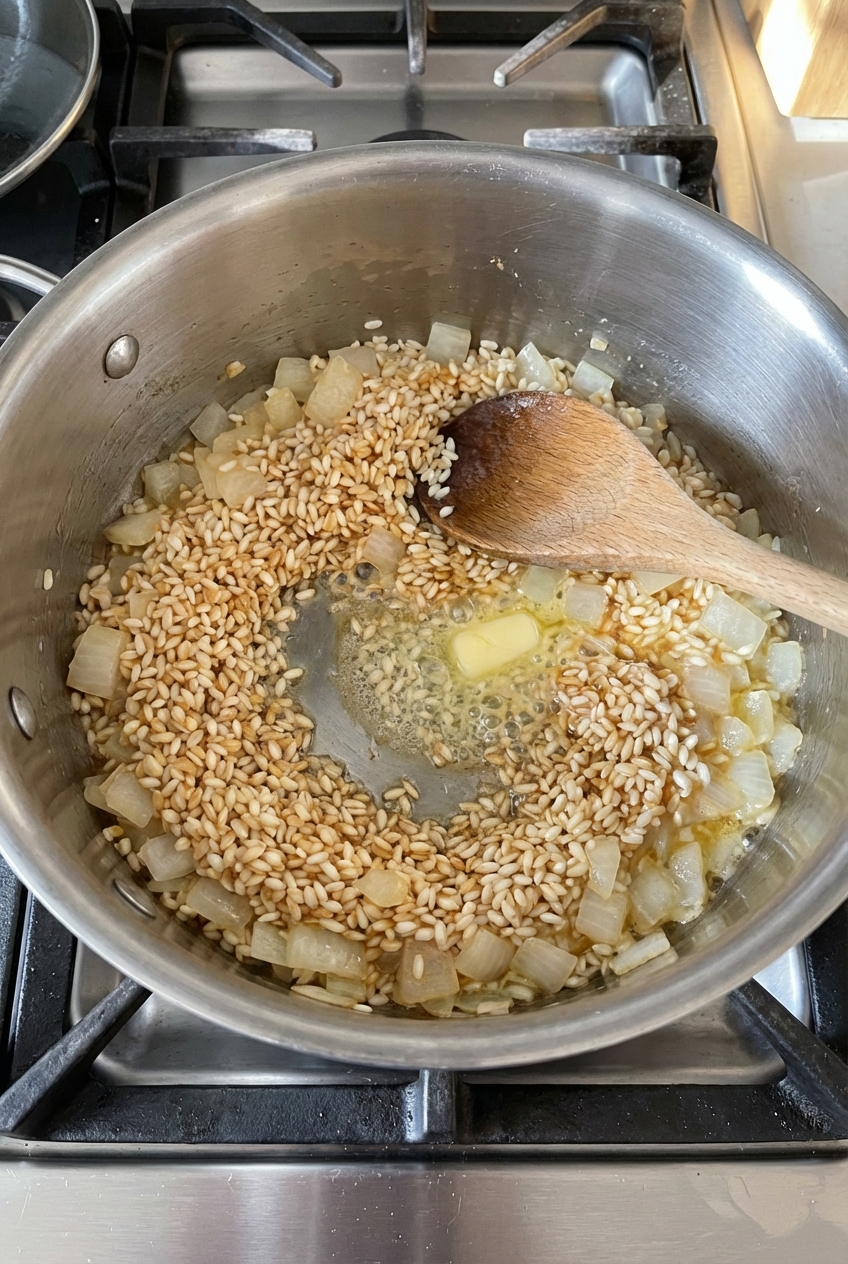
A close-up of rice toasting in a saucepan with diced onion and butter

Why It Works

  • Distinct, fluffy grains thanks to rinsing and toasting the rice before it simmers.
  • Big, savory flavor from sautéed aromatics, a bay leaf, and good broth.
  • Restaurant energy from the finish: lemon zest for lift, parsley for freshness, and toasted almonds for crunch.
  • Low-drama timing and one pot, with a built-in steam rest that fixes most rice problems.

Pairs Well With

Storage Tips

Refrigerate: Cool pilaf quickly, then store in an airtight container for up to 4 days.

Reheat: Add a splash of broth or water (about 1 to 2 tablespoons per cup). Warm in a covered skillet over low heat, or microwave covered in 30-second bursts, fluffing between rounds.

Freeze: Freeze in flat, labeled bags for up to 2 months. Thaw overnight in the fridge, then reheat with a little liquid.

Texture tip: Keep the toasted nuts separate if you know you will have leftovers. Add them at the end so they stay crisp.

Common Questions

Do I have to rinse the rice?

You do not have to, but it helps a lot. Rinsing removes surface starch so the pilaf stays fluffy instead of sticky. Rinse until the water runs mostly clear, then drain well.

What makes this “pilaf” and not just rice?

Pilaf starts by cooking the rice in fat with aromatics, then simmering in broth. That quick toast step is the flavor builder, and it also helps the grains stay separate.

Can I use brown rice?

Yes, but timing and liquid change. Use long-grain brown rice, increase broth to 3 cups, and simmer covered for 35 to 45 minutes, then rest 10 minutes.

My rice came out wet. How do I fix it?

Uncover, fluff, and let it sit on very low heat for 2 to 3 minutes to drive off extra moisture, then rest off heat. Next time, drain rinsed rice really well and keep the lid on during the simmer. Also make sure you are using the right amount of broth for your rice (especially jasmine, which can go soft faster).

Can I make it dairy-free?

Absolutely. Swap butter for olive oil, and finish with extra lemon zest and herbs to keep it lively.

I used to think rice pilaf was “just a side,” which is the kind of underestimation that gets you humbled fast. The first time I nailed it, I wasn’t even trying to be fancy, I was just hungry and trying to make chicken feel less boring. I toasted the rice a little longer than usual, used broth instead of water, and finished with lemon zest because I had a lemon rolling around in the fridge like it paid rent. Suddenly the pot smelled like something you would happily overpay for in a dimly lit restaurant. Now this is the rice I make when I want dinner to feel intentional without getting precious about it.