Mom's Best Recipes
Recipe

Gourmet Sauerkraut Recipe

Bright, tangy, and unapologetically flavorful sauerkraut with caraway, garlic, and a crisp finish. Easy ingredients, clear steps, and a jar that upgrades everything from brats to bowls.

Author By Matt Campbell
4.8
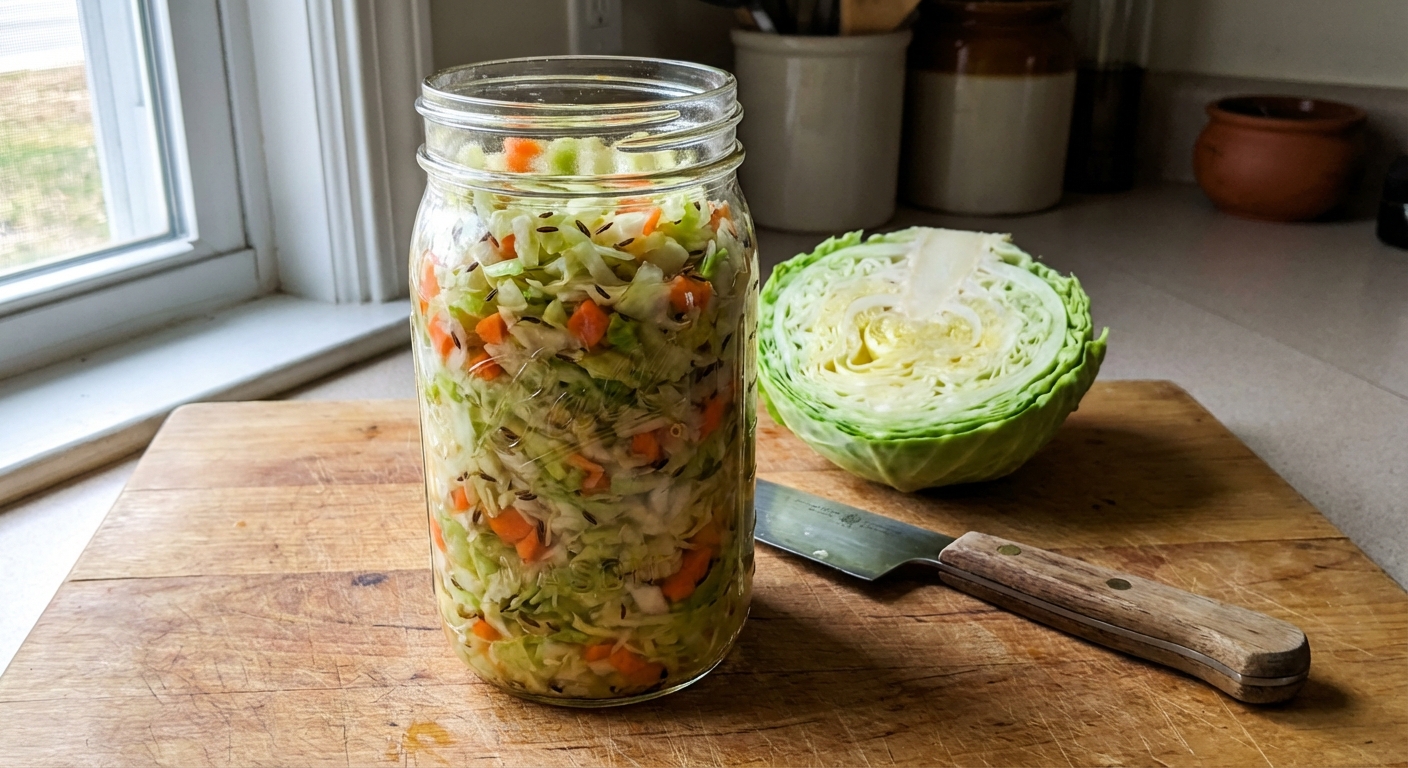
A real photo of a wide-mouthed glass jar filled with vibrant sauerkraut flecked with caraway and shredded carrot, sitting on a wooden cutting board with a cabbage half and a chef's knife nearby in natural window light

Sauerkraut gets a bad rap for being either bland, too sour, or that sad gray pile that only shows up next to a hot dog. This version is the opposite. It is crunchy, punchy, and layered with aromatics that make you want to eat it straight from the jar like a midnight snack.

We are taking classic fermented cabbage and giving it a gourmet lean with garlic, caraway, black pepper, and a little carrot for sweetness and color. The goal is not complicated. The goal is flavor that feels alive.

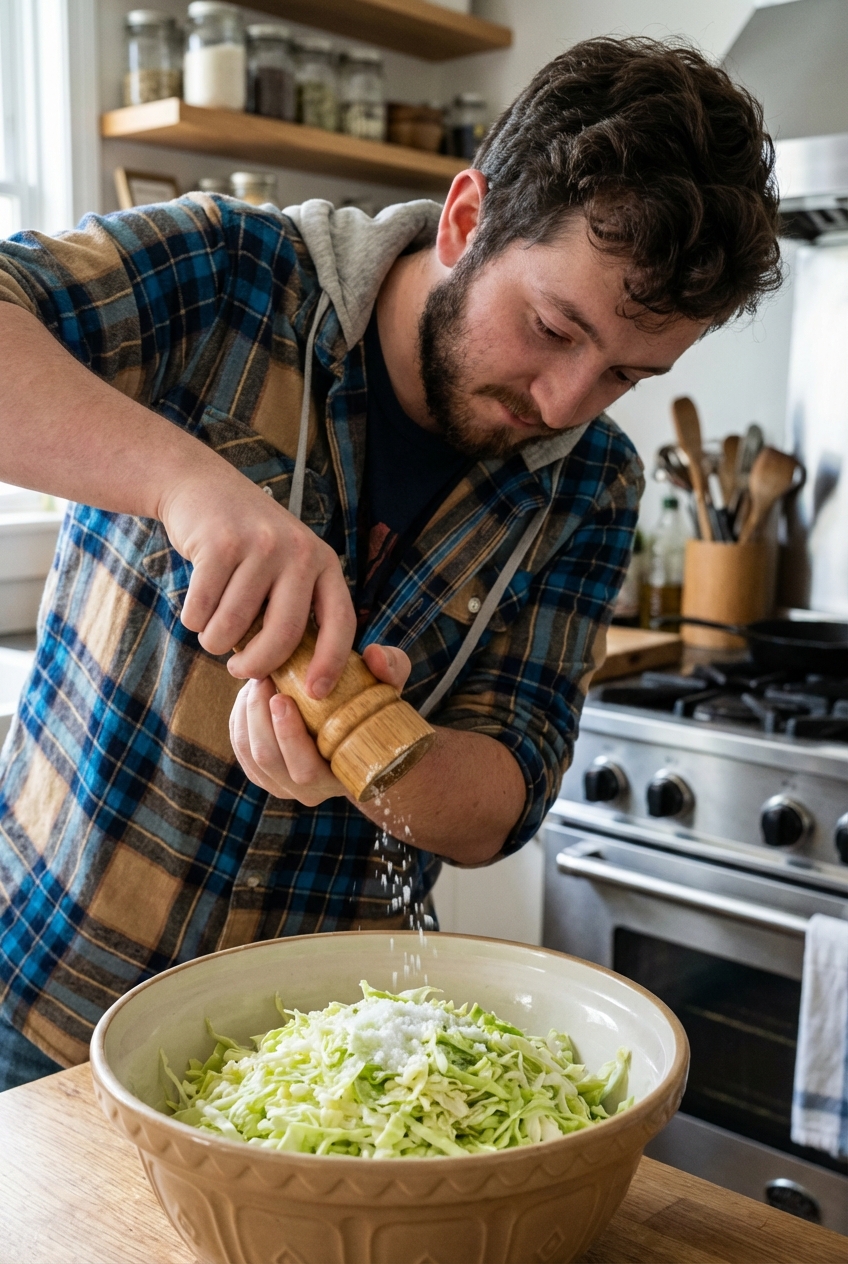
A real photo of shredded green cabbage in a large mixing bowl with salt being sprinkled over it

Why It Works

This sauerkraut is designed to be:

  • Bold: garlic, caraway, and pepper bring that deli-style kick without tasting harsh.
  • Crisp: we use the right salt ratio and a short, hands-on massage to pull out brine fast, which helps keep the cabbage snappy.
  • Reliable: a simple, safe fermentation method that works with a jar and everyday tools.
  • Balanced: a touch of carrot rounds the acidity so it tastes bright, not aggressive.

Fermentation time is flexible. Taste as you go. Your kitchen temperature and your personal tang tolerance get a vote.

Pairs Well With

Storage Tips

How to Store It

Refrigerator: Once the kraut tastes the way you like it, move it to the fridge with everything still submerged. It keeps its quality for 2 to 3 months, often longer. Flavor continues to develop slowly.

Keep it submerged: The cabbage should stay under brine. If bits float up, press them down with a clean spoon. If needed, top off with a little 2% salt brine.

2% brine that is actually 2%: The easiest reliable method is by weight: 5 g salt per 250 g water (about 1 cup). If you do not have a scale, use about 1 teaspoon fine sea salt per 1 cup water. If your water is heavily chlorinated, use filtered water or let it sit out for a bit before mixing, since chlorine can slow fermentation.

Clean fork rule: Use a clean fork each time to avoid introducing unwanted bacteria.

When to toss it: If it smells rotten, turns slimy, or you see fuzzy mold or pink coloring, do not eat it.

Freezing: You can freeze sauerkraut for up to 2 months, but it will soften. Great for soups, not ideal if you love crunch.

Common Questions

Common Questions

Do I need special fermentation equipment?

No. A clean wide-mouth jar, something to use as a weight, and a place out of direct sunlight is enough. Fancy airlock lids are nice, but not required.

What salt should I use?

Use non-iodized salt. Fine sea salt or kosher salt works well. Iodized salt and anti-caking agents can slow fermentation and may add off flavors in some batches.

How do I know it is fermenting?

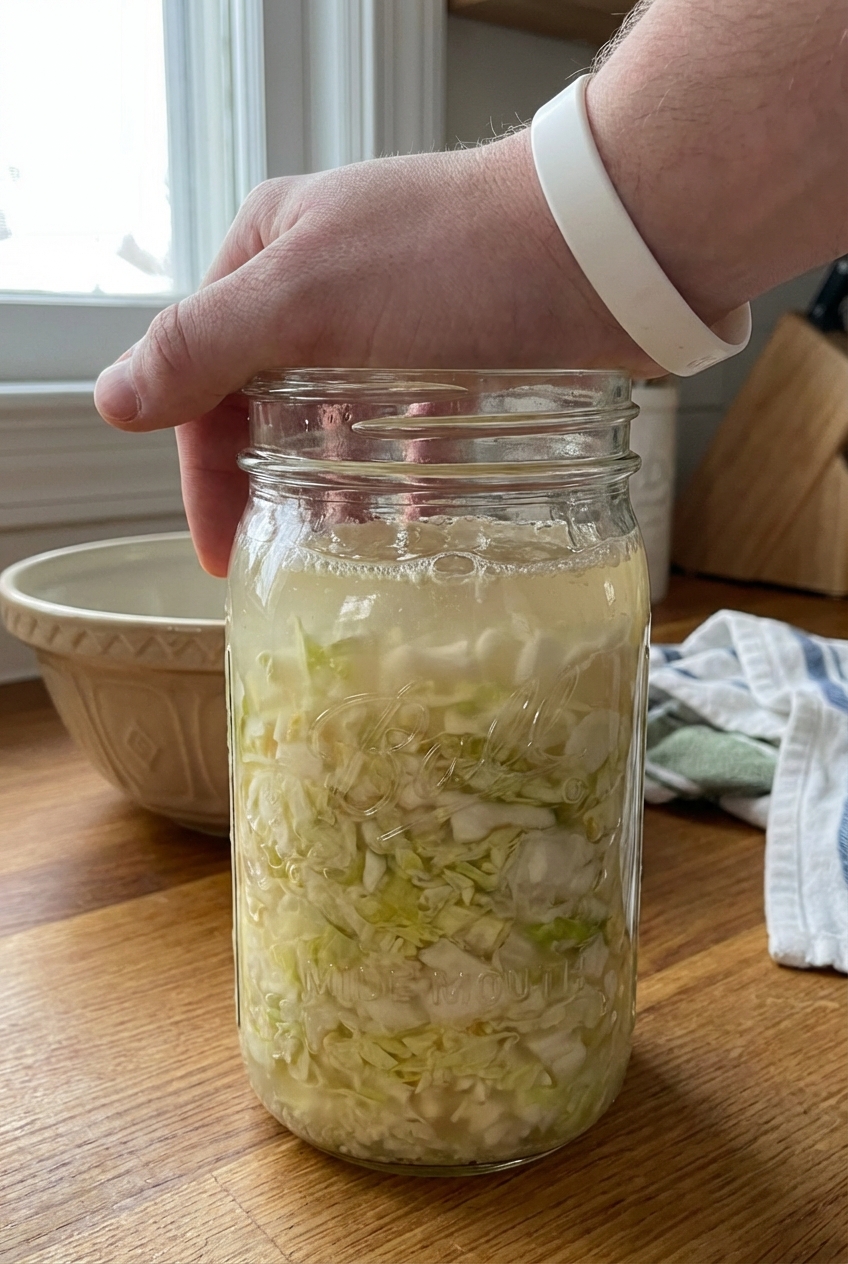
Within a day or two, you will usually see small bubbles, a tangy aroma, and the cabbage will look more translucent. That is a good sign.

Is surface foam normal?

Yes. A little white foam can happen. Skim it off, keep the cabbage submerged, and carry on.

What about kahm yeast?

You might see a thin white film on top. That is usually kahm yeast. It is not dangerous, but it can taste weird. Skim it, make sure everything stays submerged, and consider switching to a loose lid or airlock for an easier ride.

What about mold?

If you see fuzzy mold (green, blue, black, or pink), that is not the vibe. When in doubt, throw it out. Keeping everything below brine is the best prevention.

How long should I ferment it?

Typical range is 5 to 14 days for a bright, crunchy kraut. If you want it funkier and more sour, it is totally normal to keep going for 2 to 4 weeks. Warmer kitchens ferment faster. Start tasting around day 5. When it hits your perfect tang, refrigerate it.

I used to think sauerkraut was one of those things you either bought or avoided. Then I made a batch on a random weeknight because I had a cabbage staring me down from the fridge. The first time it fizzed and turned into something sharp, garlicky, and weirdly addictive, I was hooked. Now I keep a jar going like a low-maintenance kitchen pet. It makes basic meals taste like you tried harder than you did, which is honestly my favorite kind of cooking.