
Mom's Best Recipes
Recipe

Greek Pastitsio

Layered baked pasta with cinnamon-scented meat sauce and a thick, creamy béchamel top that slices clean after a good rest.

Author By Matt Campbell
4.8
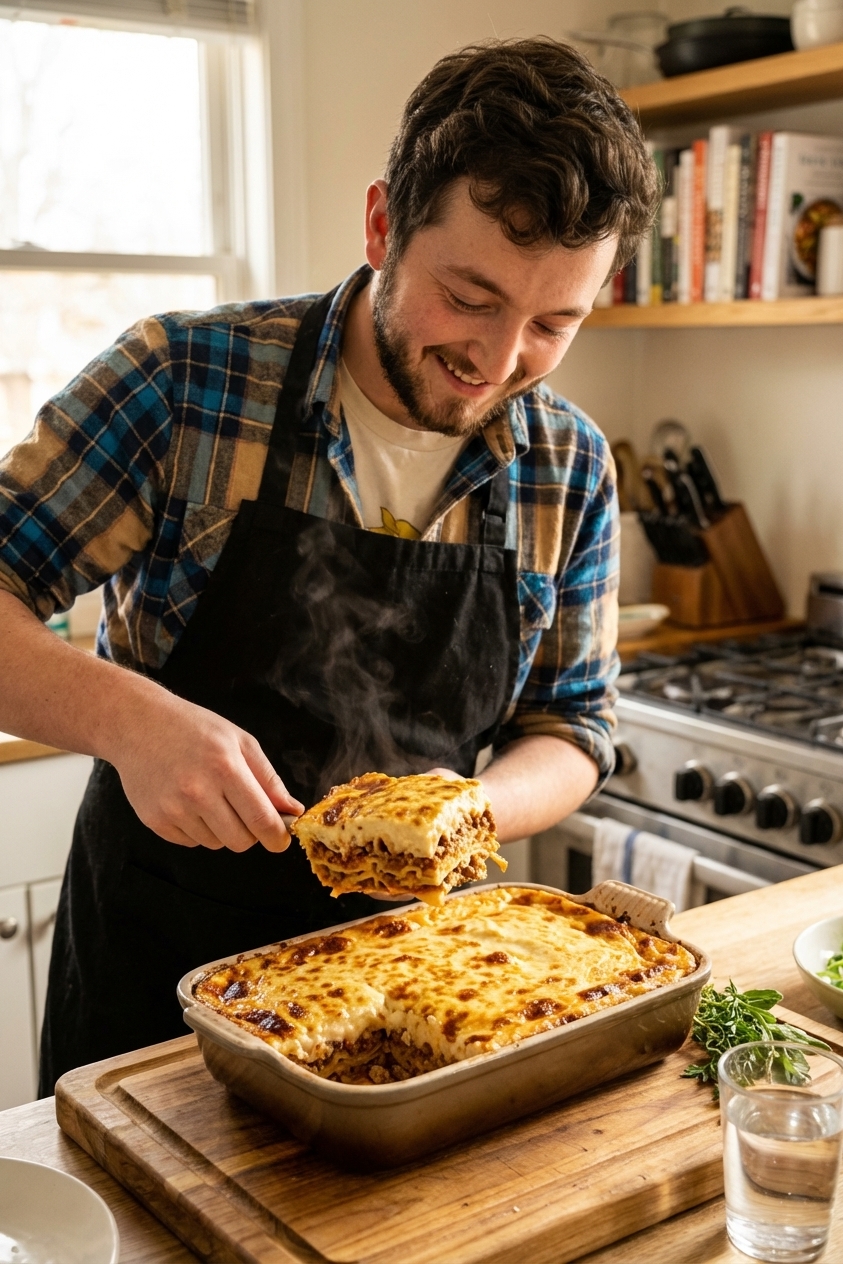
A freshly baked Greek pastitsio casserole in a rectangular baking dish with a golden béchamel top and one neat slice lifted out, warm kitchen lighting, real food photography

Pastitsio is the Greek answer to baked pasta when you want maximum comfort but still crave a little structure. Think: tubular pasta, a rich meat sauce scented with cinnamon, and a thick béchamel top that turns golden in the oven and makes the whole thing slice like a dream.

This version keeps ingredients approachable and the instructions calm. We’re building it in three parts, then stacking them like you’re assembling the world’s coziest lasagna. The secret isn’t fancy technique. It’s seasoning as you go and giving the pan time to cool so you can cut clean squares instead of delicious rubble.
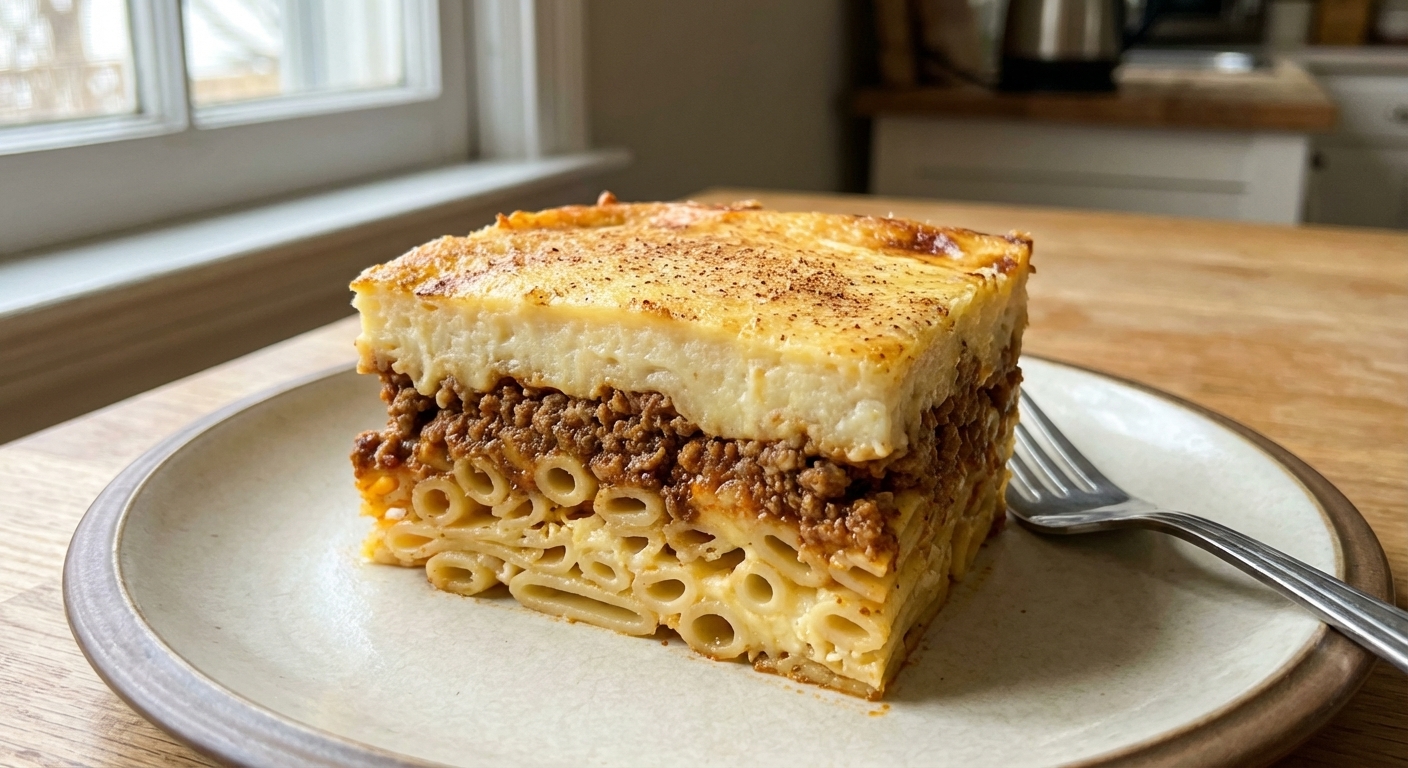
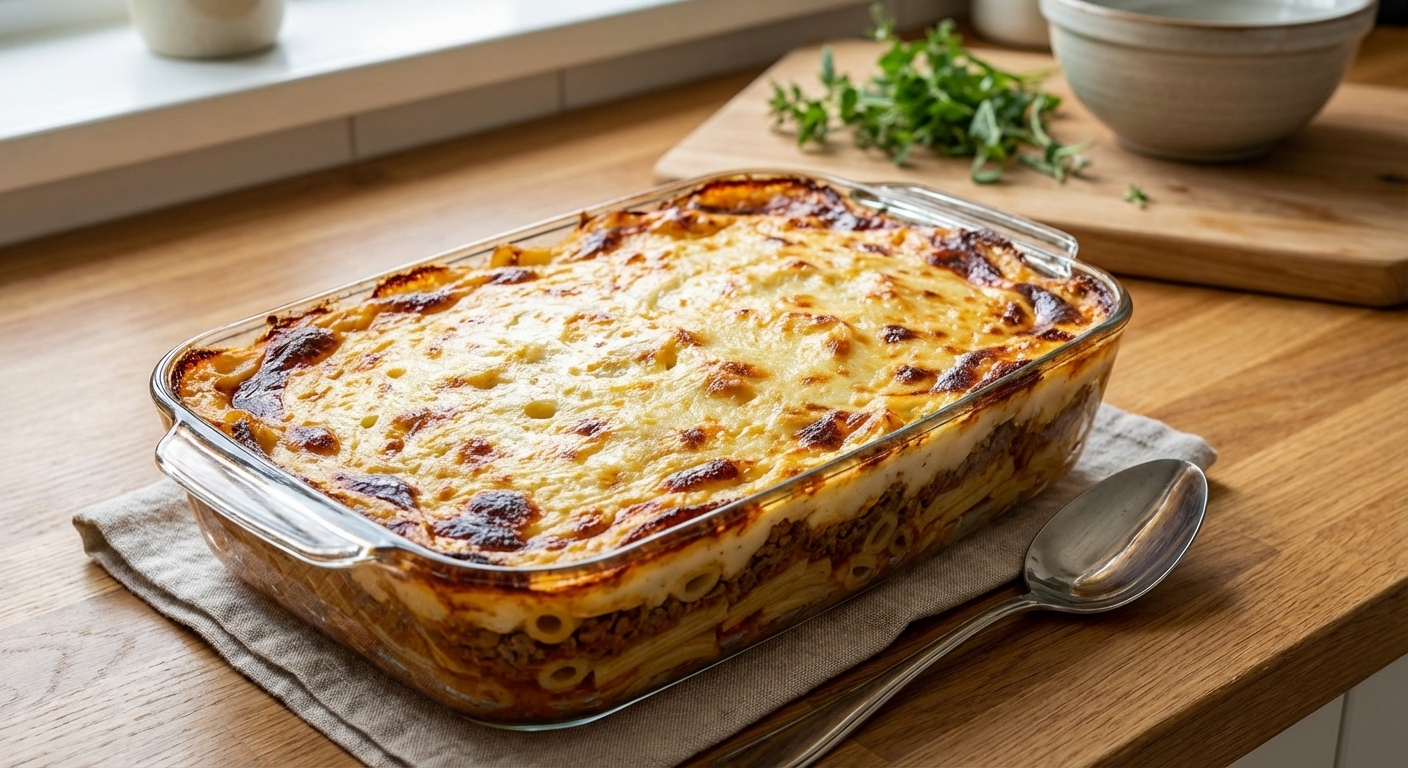
A square slice of Greek pastitsio on a plate showing distinct layers of pasta, meat sauce, and béchamel, with a fork resting beside it, natural window light

Why It Works

  • Real layers, not mush: Eggs and cheese help the pasta set, and a thick béchamel cap keeps everything cohesive.
  • Warm spices, balanced flavor: Cinnamon and a pinch of clove give that classic Greek vibe without tasting like dessert.
  • Béchamel that stays thick: We cook the roux long enough and simmer the milk mixture until it can coat a spoon before it goes on top.
  • Cleaner slices: A rest after baking lets the béchamel and pasta layers firm up, so you get tidy squares that still feel creamy.

Pairs Well With

Storage Tips

How to Store Pastitsio

Refrigerator

  • Cool completely, then cover the baking dish or transfer slices to airtight containers.
  • Refrigerate for up to 4 days.

Freezer

  • Pastitsio tends to freeze well. The eggs in the béchamel help it re-set after thawing, though the sauce can get slightly grainy depending on the cheese and how it’s reheated.
  • Freeze as individual slices or as a full pan wrapped tightly in plastic wrap, then foil.
  • Freeze up to 2 months for best texture.

Best Reheating Methods

  • Oven (best for texture): Cover with foil and reheat at 350°F until hot in the center, about 20 to 30 minutes for slices, 35 to 45 minutes for a larger portion. Uncover for the last 5 minutes to re-crisp the top. If you use temperature guidance, aim for 165°F in the center.
  • Microwave (fastest): Add a tiny splash of water or milk on the plate, cover loosely, and heat in short bursts. The béchamel softens more, but it still tastes great.
  • From frozen: Thaw overnight in the fridge when you can. If reheating from frozen, keep it covered and plan on extra time.

Heads up: Pastitsio slices even better the next day. Cold fridge time is basically free set time.

Common Questions

Common Questions

What pan size should I use?

A 9 x 13-inch baking dish is the standard and gives you a nice balance of layers. You can also use:

  • 10 x 15-inch (jelly roll style): thinner layers, a bit more edge browning, and a slightly shorter bake.
  • 9 x 9-inch: thicker layers, needs a longer bake. Scale the recipe down to about two thirds unless you like a very tall casserole.

Why does my béchamel turn out thin?

Usually one of three things: the roux didn’t cook long enough, the milk went in too fast, or the sauce didn’t simmer long enough after the milk was added. You want it thick enough that it coats a spoon. Also, add the eggs only after the béchamel cools slightly so they don’t scramble.

Do I have to use bucatini?

No. Traditional pastitsio is often made with pastitsio pasta (No. 2), a long thick tube pasta that’s made for layering. If you can’t find it, bucatini is a great stand-in, and penne or ziti work well too. Just avoid very small shapes that disappear into the bake.

Can I make pastitsio ahead?

Yes. You can assemble the full casserole, cover, and refrigerate up to 24 hours before baking. Let it sit at room temp for 20 to 30 minutes before it goes in the oven (and don’t leave it out longer than 2 hours total). Bake as directed, adding 5 to 10 minutes if it’s still very cold.

How do I get clean slices?

Let it rest at least 20 to 30 minutes after baking. For extra clean slices, chill for 1 hour, slice, then rewarm the pieces. Use a sharp knife and wipe it between cuts.

Is pastitsio the same as moussaka?

They’re cousins, not twins. Moussaka is usually layered with eggplant or potatoes. Pastitsio is layered with pasta and often has that cinnamon-forward meat sauce.

The first time I made pastitsio at home, I treated it like casual baked ziti and tried to cut into it five minutes out of the oven. Delicious? Yes. Sliceable? Absolutely not. It was a landslide of pasta and sauce, which was fun in a chaotic way, but not the vibe when you want those clean Greek diner squares. Now I bake it, let it chill out on the counter, and I use that time to clean up and “taste test” the crispy bits around the edge. Pastitsio rewards patience, and it tastes like you put in way more effort than you actually did.