
Mom's Best Recipes
Recipe

Guinness Beef Stew (Slow Cooker or Dutch Oven)

A rich, cozy beef stew braised with Guinness stout, root vegetables, and herbs for a dark, glossy gravy with malty depth. Make it low and slow in a Dutch oven or let your slow cooker do the work.

Author By Matt Campbell
4.8
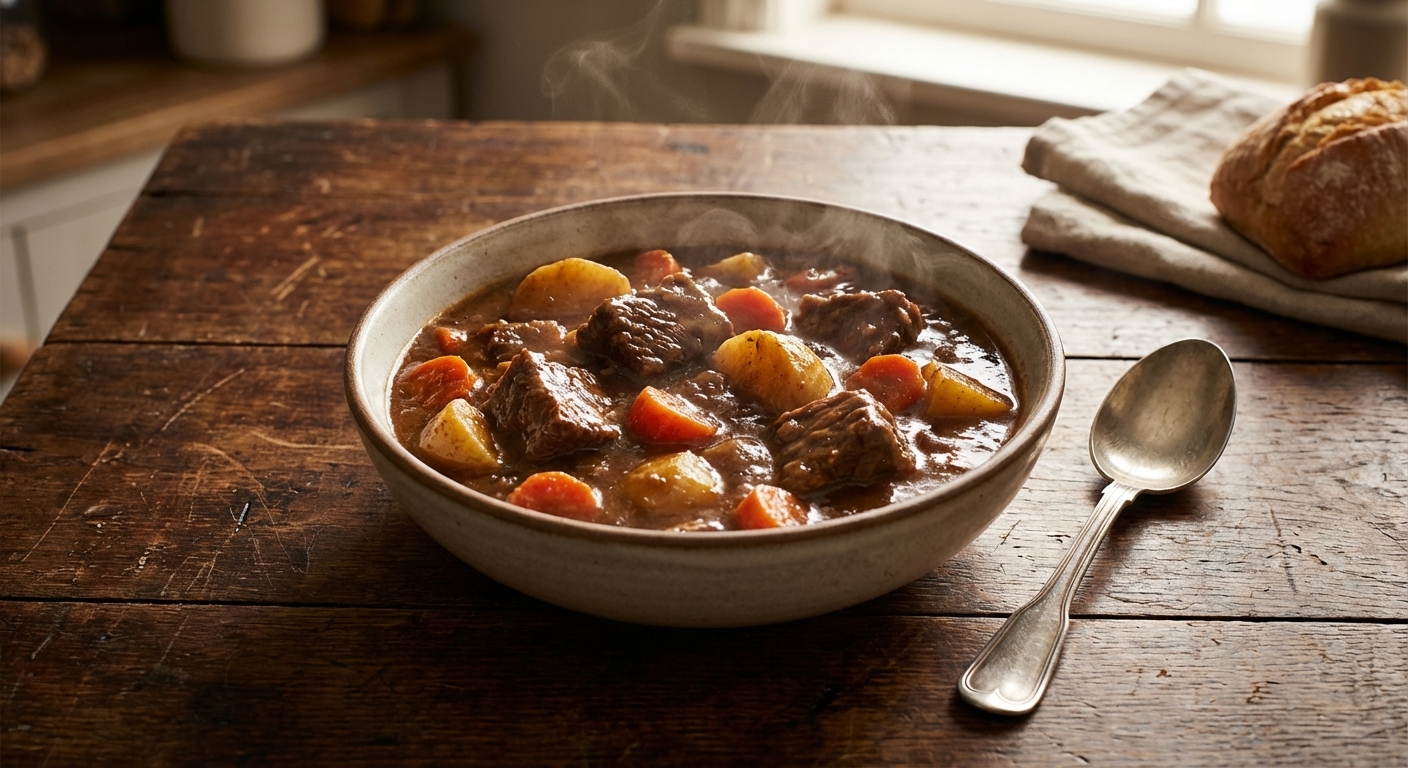
A steaming bowl of Guinness beef stew with large chunks of tender beef, carrots, and potatoes in a rich dark gravy, set on a rustic wooden table with a spoon beside it, warm natural light, photorealistic food photography

If classic beef stew is the cozy sweater, Guinness beef stew is the same sweater but with a leather jacket on top. It is deeper, darker, and a little more interesting, thanks to stout. Guinness brings roasted malt flavor that reads like coffee and cocoa without tasting like dessert. It just makes the gravy taste like it has been working overtime.

This recipe gives you two paths: Dutch oven for max flavor and those browned bits, or slow cooker for the set-it-and-forget-it win. Either way, you get fork-tender beef, sweet root veggies, and a sauce you will want to drag bread through like it owes you money.
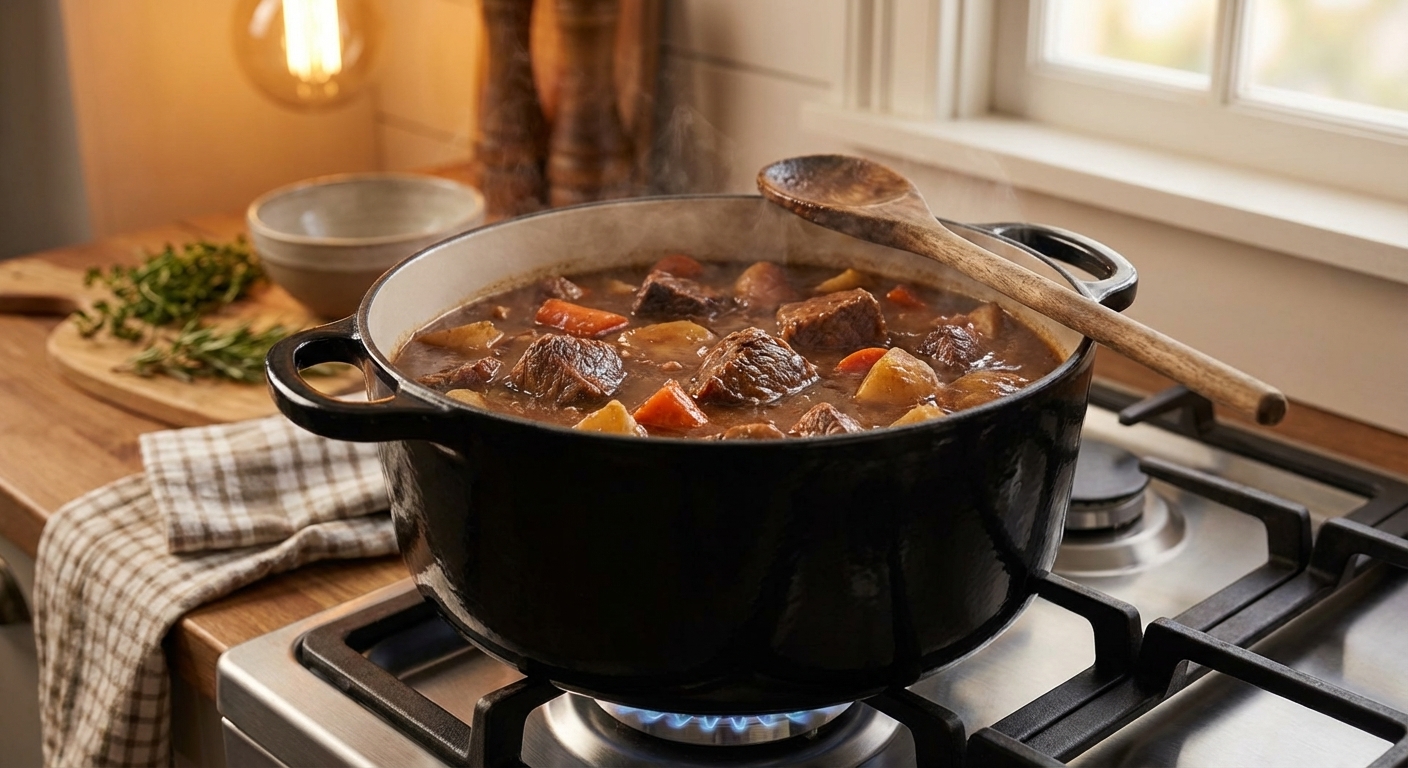
A cast iron Dutch oven on a stovetop with Guinness beef stew simmering, visible browned beef chunks and carrots in a dark broth, a wooden spoon resting on the rim, cozy kitchen lighting, photorealistic

Why It Works

  • Guinness builds a bigger stew flavor. The stout’s roasted malt gives you that long-simmered depth with a mostly hands-off cook time.
  • Tomato paste plus thickener equals glossy gravy. Tomato paste adds umami, flour helps in the Dutch oven, and cornstarch can rescue (or replace flour) in the slow cooker.
  • Staged veggies keep the texture right. Potatoes and carrots go in after the beef starts to tenderize, and mushrooms go in late so they stay substantial.
  • A splash of acid at the end wakes everything up. A little vinegar makes the beef taste beefier and balances the stout’s richness.

Pairs Well With

Storage Tips

Refrigerator: Let the stew cool slightly, then refrigerate in an airtight container within 2 hours (use shallow containers to speed it up). Keeps up to 4 days. The flavor gets better on day two. That is not a myth.

Freezer: Freeze in airtight containers for up to 3 months. For best texture, slightly undercook the potatoes or swap in parsnips if you know you are freezing (potatoes can go a bit grainy after thawing).

Reheating: Warm gently on the stovetop over medium-low, stirring occasionally. If it thickens too much, loosen with a splash of beef broth or water. Taste and re-salt at the end.

Meal prep move: Make the stew, cool, and refrigerate overnight. Skim any solidified fat from the top the next day for a cleaner, more restaurant-style gravy.

Common Questions

Does Guinness make the stew taste bitter?

Not if you cook it long enough and balance it. The roasted notes mellow as it simmers. The carrots, onions, and a little tomato paste add sweetness, and a small splash of vinegar at the end keeps everything rounded.

Can I use a different stout?

Yes. Any Irish stout works. Guinness Extra Stout is especially good here and often tastes a bit more roasty and traditional for stews. Bottle sizes vary (often 11.2 to 12 ounces), so if you are short of a full 14.9-ounce can, just top up with a splash of broth or water. Avoid super hoppy beers since bitterness can get loud after a long simmer.

Do I have to brown the beef?

For the Dutch oven method, yes, it is worth it. Browning creates the fond that makes the gravy taste like it came from a real pub kitchen. For the slow cooker method, you can skip it, but the stew will be a little flatter. If you have 10 extra minutes, sear it.

How do I thicken Guinness stew if it is too thin?

Simmer uncovered for 10 to 20 minutes, stirring occasionally. If you need a faster fix, mix 1 to 2 tablespoons cornstarch with 1 to 2 tablespoons cold water (start with 1 tablespoon each, then add more if you want it thicker). Stir it in, then simmer 2 to 3 minutes.

Can I make it gluten-free?

Yes, with swaps. Regular Guinness is not gluten-free because it is barley-based. Use a gluten-free stout if you can find one, and swap the flour for a gluten-free all-purpose flour blend or use cornstarch at the end to thicken.

I started making Guinness beef stew for the same reason most of us do: it was cold, I wanted something that felt like a hug, and I did not want to babysit a complicated recipe. The first time I poured stout into a pot of browned beef, I had a brief “is this a mistake” moment. Ten minutes later, the kitchen smelled like onions, toast, and pure comfort. Now it is one of my favorite meals to make when I want dinner to feel special without turning my night into a cooking show.