Mom's Best Recipes
Recipe

Easy Hamburger Gravy

Creamy, savory hamburger gravy made in one skillet with pantry staples. Cozy over mashed potatoes, biscuits, or rice.

Author By Matt Campbell
4.8
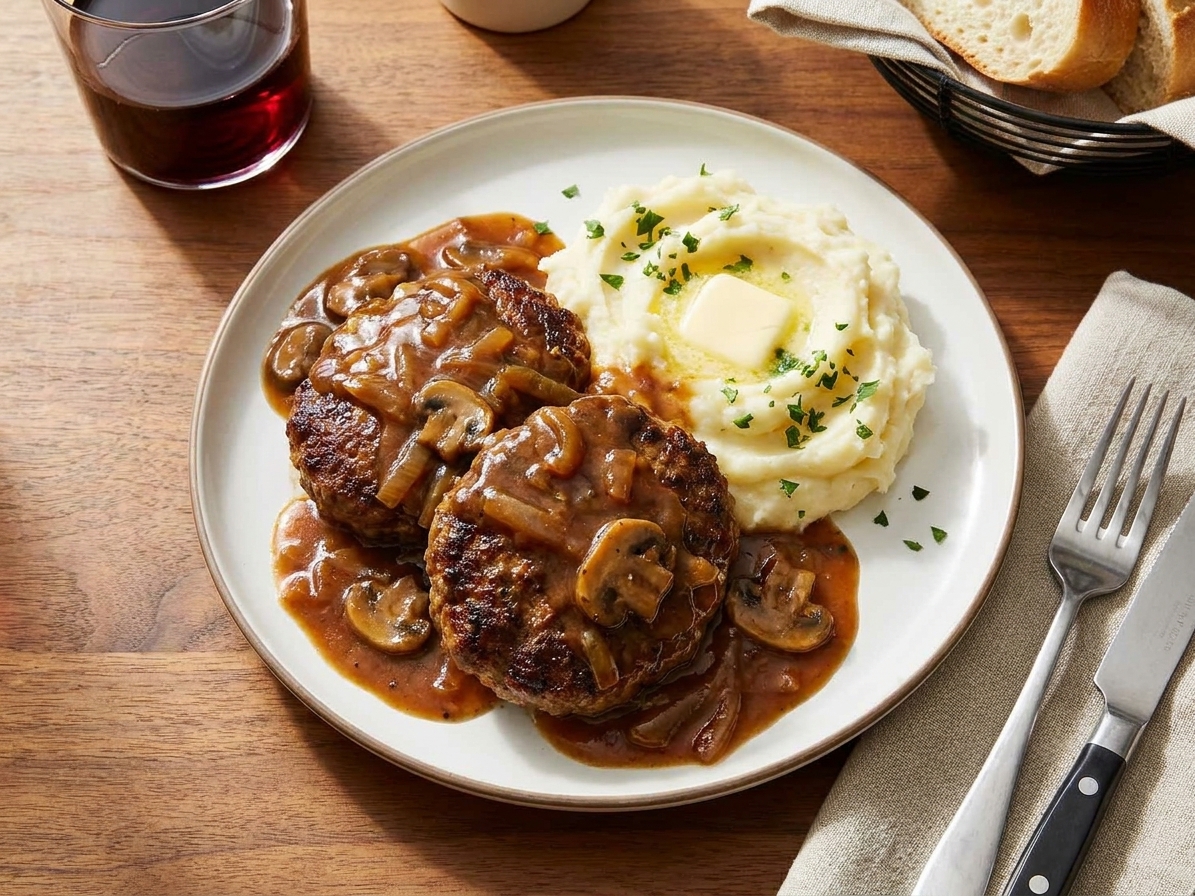
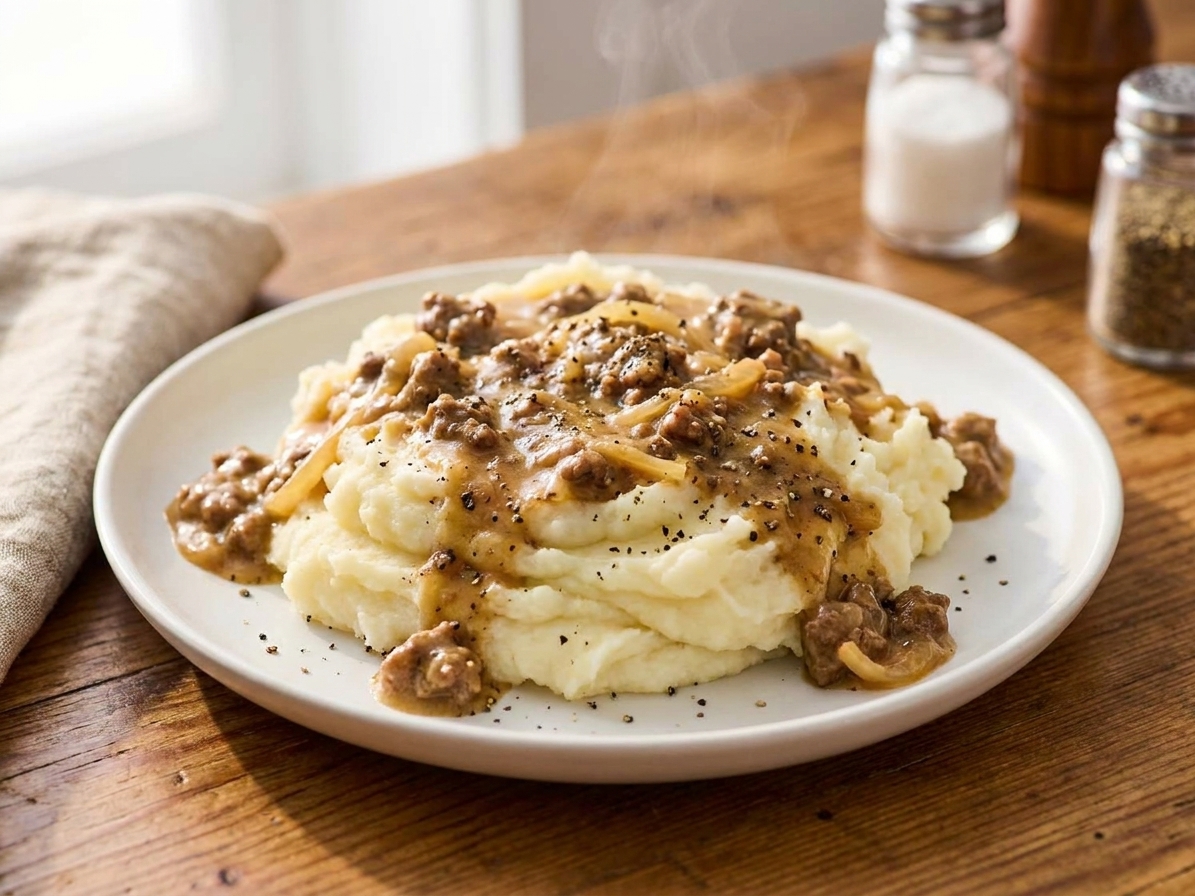
A white plate of creamy hamburger gravy spooned over fluffy mashed potatoes with cracked black pepper on top, on a warm wood table setting

Hamburger gravy is what I make when I want dinner to feel like a hug, but I do not want a sink full of dishes. It is the kind of food that looks a little humble in the pan, then you taste it and suddenly you are standing at the stove doing “just one more bite” with a spoon. Respectfully, that is the correct way to cook this.

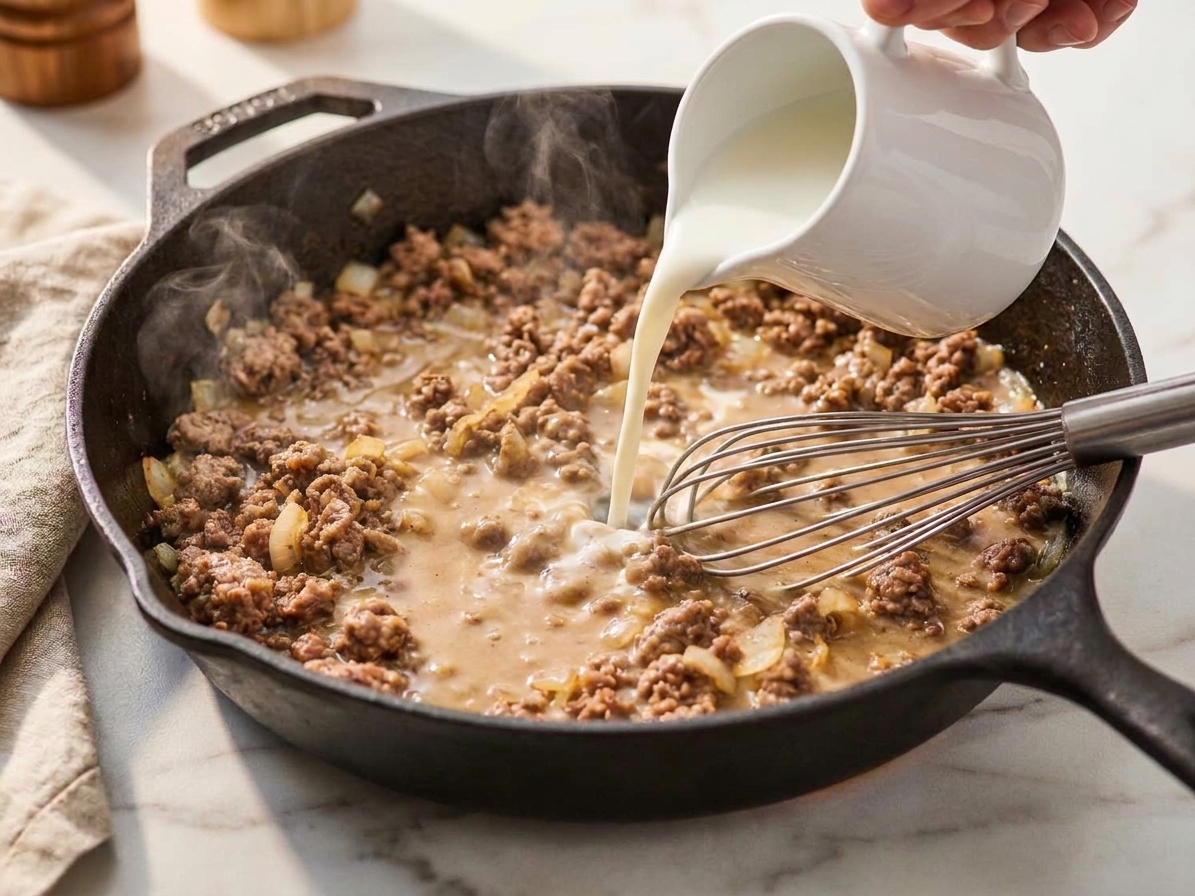
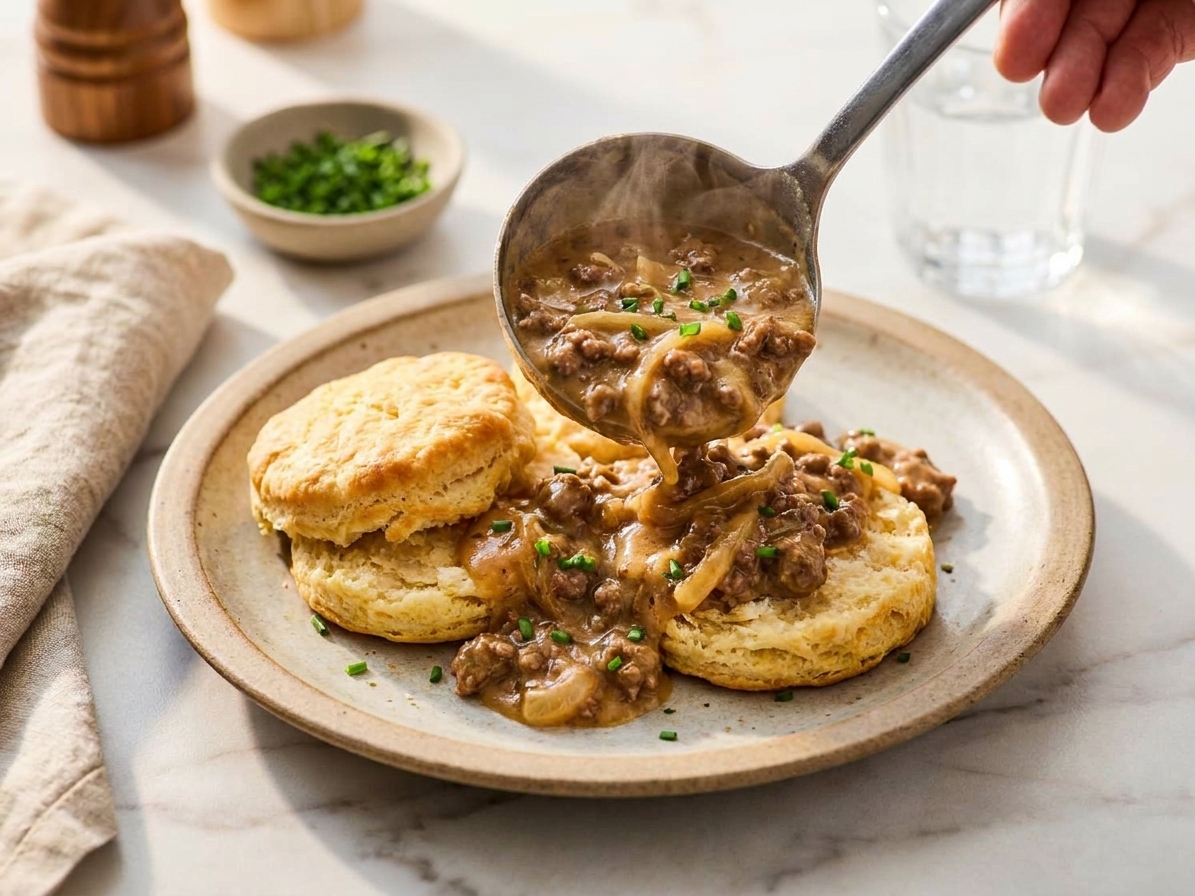
This version is one skillet, built on browned ground beef, a quick flour roux, and milk for a creamy, pepper-forward gravy that clings to whatever you pour it on. My favorites: mashed potatoes for maximum coziness, biscuits for a weekend vibe, or steamed rice when I am trying to make the grocery budget stretch without making it sad.

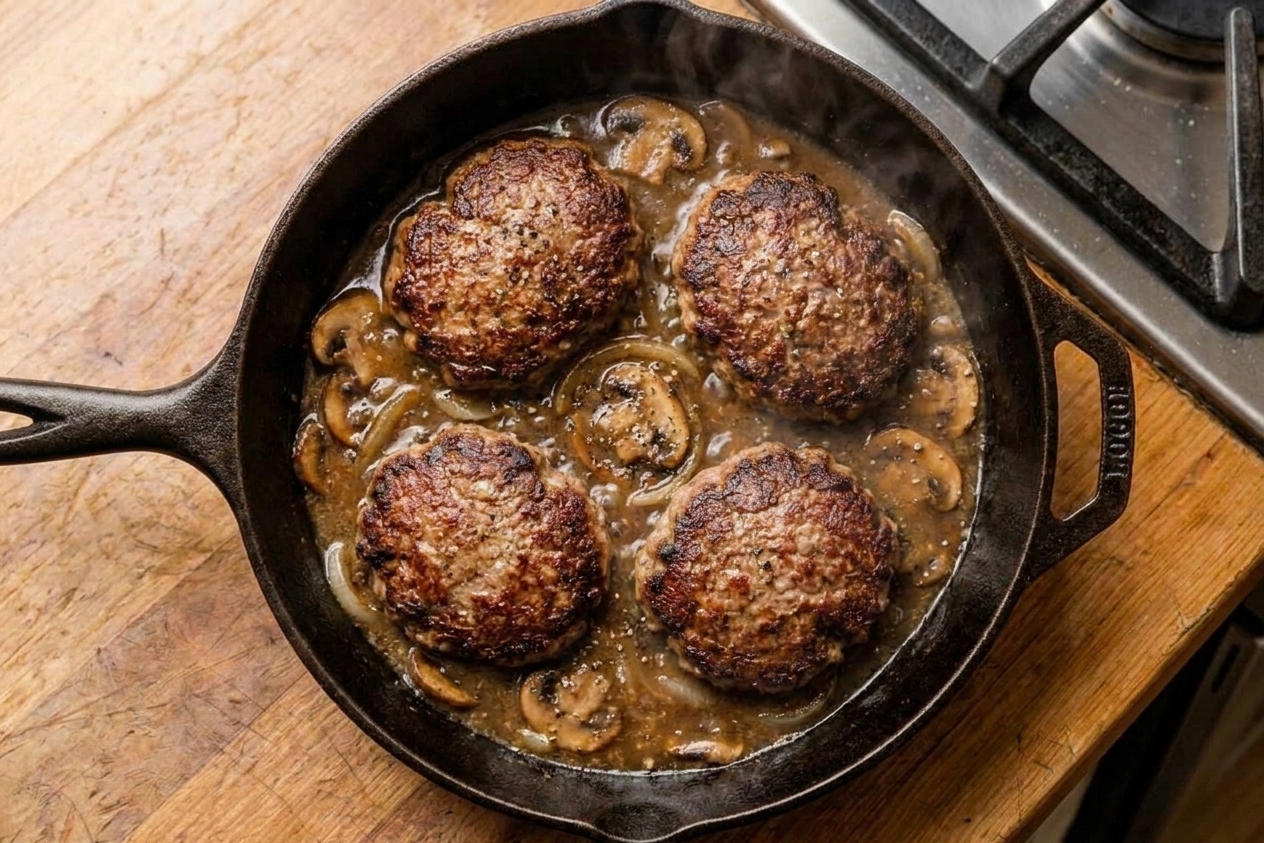
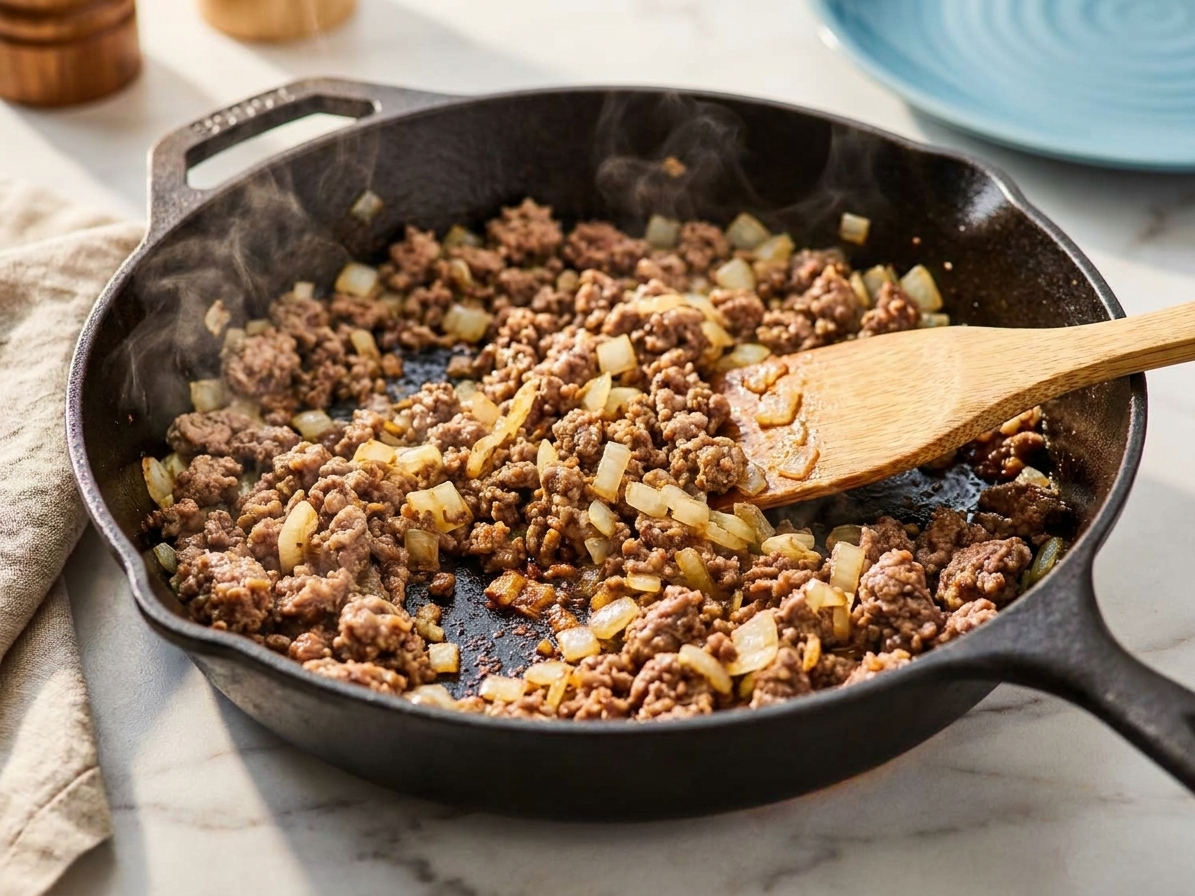
Ground beef and diced onions browning together on a stovetop in a cast iron skillet with a wooden spoon

Why It Works

  • Big flavor, low drama: browning the beef and onions builds the base so the gravy tastes savory, not flat.
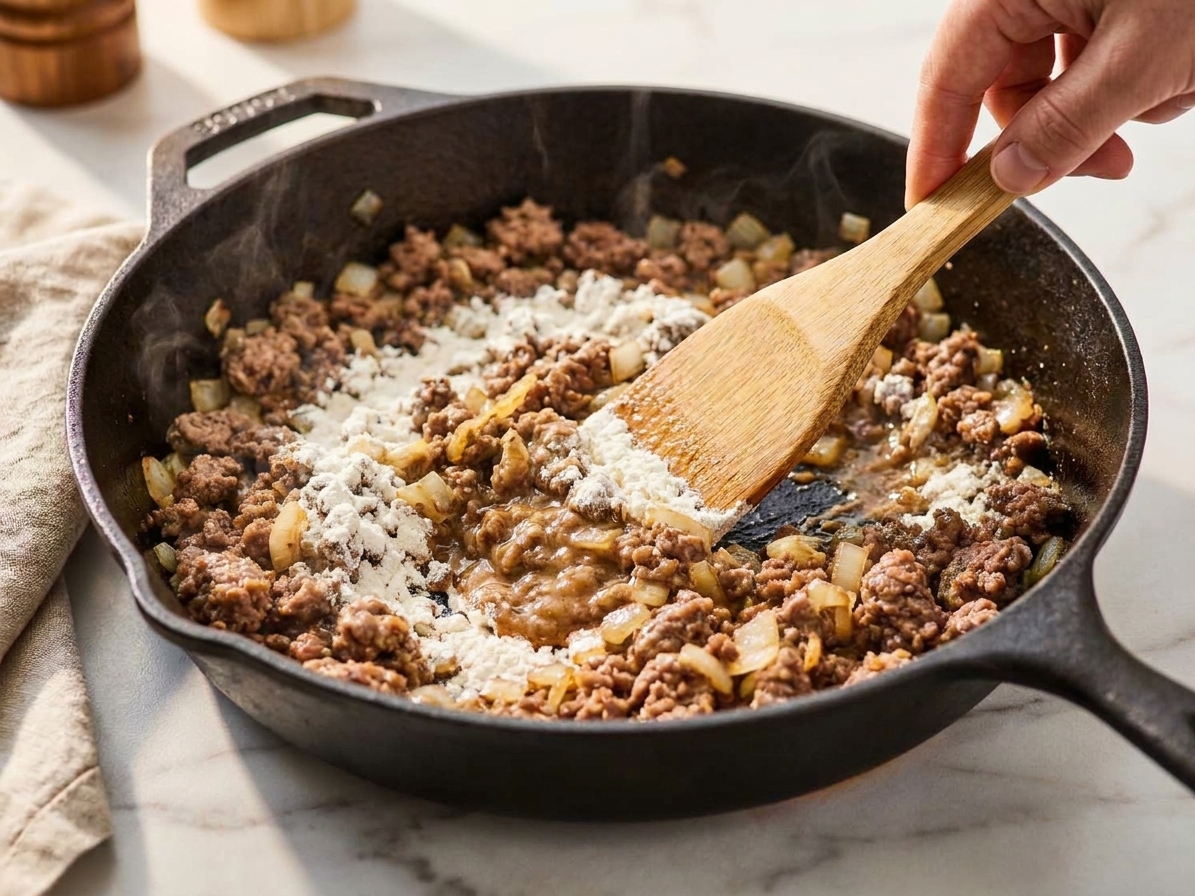
  • Silky, not pasty: cooking the flour for 1 to 2 minutes keeps the gravy creamy and smooth.
  • Flexible texture: make it thicker for biscuits, looser for rice, and you are still winning either way.
  • Pantry-friendly: everything here is easy to find, and the swaps are forgiving.

Pairs Well With

Storage Tips

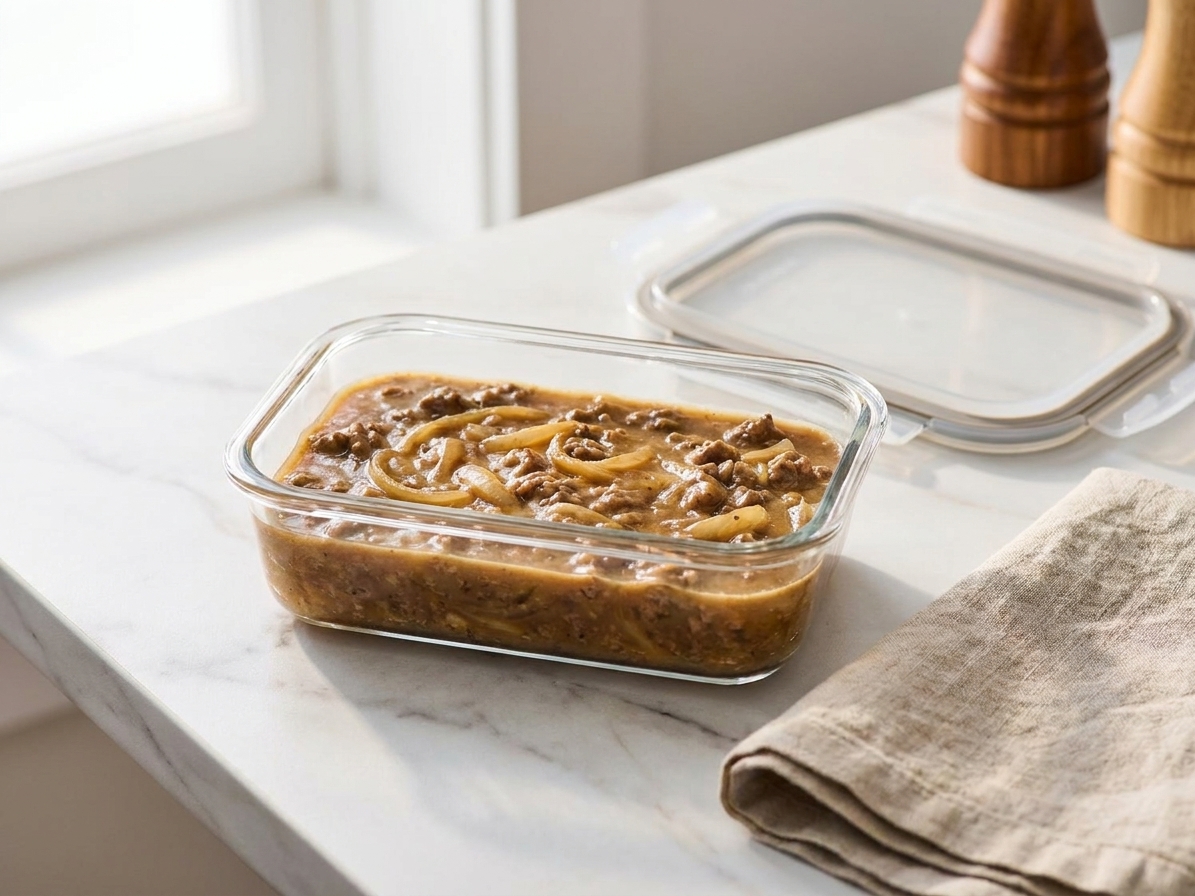
Refrigerate: Cool, then store in an airtight container for up to 4 days. The gravy will thicken as it chills.

Freeze: Freeze in a freezer-safe container for up to 2 months. Creamy gravies can separate or get a little grainy after freezing. It usually comes back together with gentle reheating and a good stir, but it may not be quite as silky as day one.

Reheat: Warm in a saucepan over medium-low, stirring often. Add a splash of milk or broth, 1 to 2 tablespoons at a time, until it is back to your favorite consistency.

A glass meal prep container filled with leftover hamburger gravy cooling on a kitchen counter next to its lid

Common Questions

Why is my hamburger gravy lumpy?

Usually it is one of two things: the flour did not get cooked into the fat first, or the milk went in too fast. Next time, stir the flour into the drippings until it looks like a thick paste, cook it for 1 to 2 minutes until it smells a little nutty, then add the milk in small splashes at first while whisking until smooth. If you already have lumps, whisk hard and let it simmer a few minutes. In a real emergency, strain it, then pretend it never happened.

Can I make hamburger gravy without flour?

Yes. You can thicken with a cornstarch slurry: mix 1 tablespoon cornstarch with 1 tablespoon cold water, then stir a little of it into the simmering gravy until it thickens. You might not need the whole slurry, depending on how thick you like it. You will not get the exact same roasty roux flavor, but it is still very good.

Can I use water instead of milk?

You can, but it will taste less rich. If you are out of milk, use half broth and half water, then finish with a small knob of butter for a little body.

How do I make it thicker or thinner?

Thicker: simmer longer, stirring often. Thinner: add more milk or broth in small splashes until it pours the way you want.

What should I serve with hamburger gravy?

Mashed potatoes, biscuits, rice, egg noodles, toast, or even roasted broccoli if you want something green on the plate that does not require a pep talk.

Can I use turkey or sausage instead of beef?

Absolutely. Ground turkey works great, just plan to add the optional butter (or a tablespoon of oil) because it is leaner. Breakfast sausage is also delicious and already seasoned, so start light on the salt and taste as you go.

I started making hamburger gravy when I was in my “learn by doing” era, the one where I was more interested in what happens in a real pan than what happens in a lecture hall. It is a perfect practice recipe because it teaches you the basics fast: brown the meat, build a roux, season like you mean it, and taste as you go. Also, it is the kind of meal that makes a kitchen feel lived-in in the best way, like somebody is about to yell, “Dinner’s ready,” and everyone actually shows up.