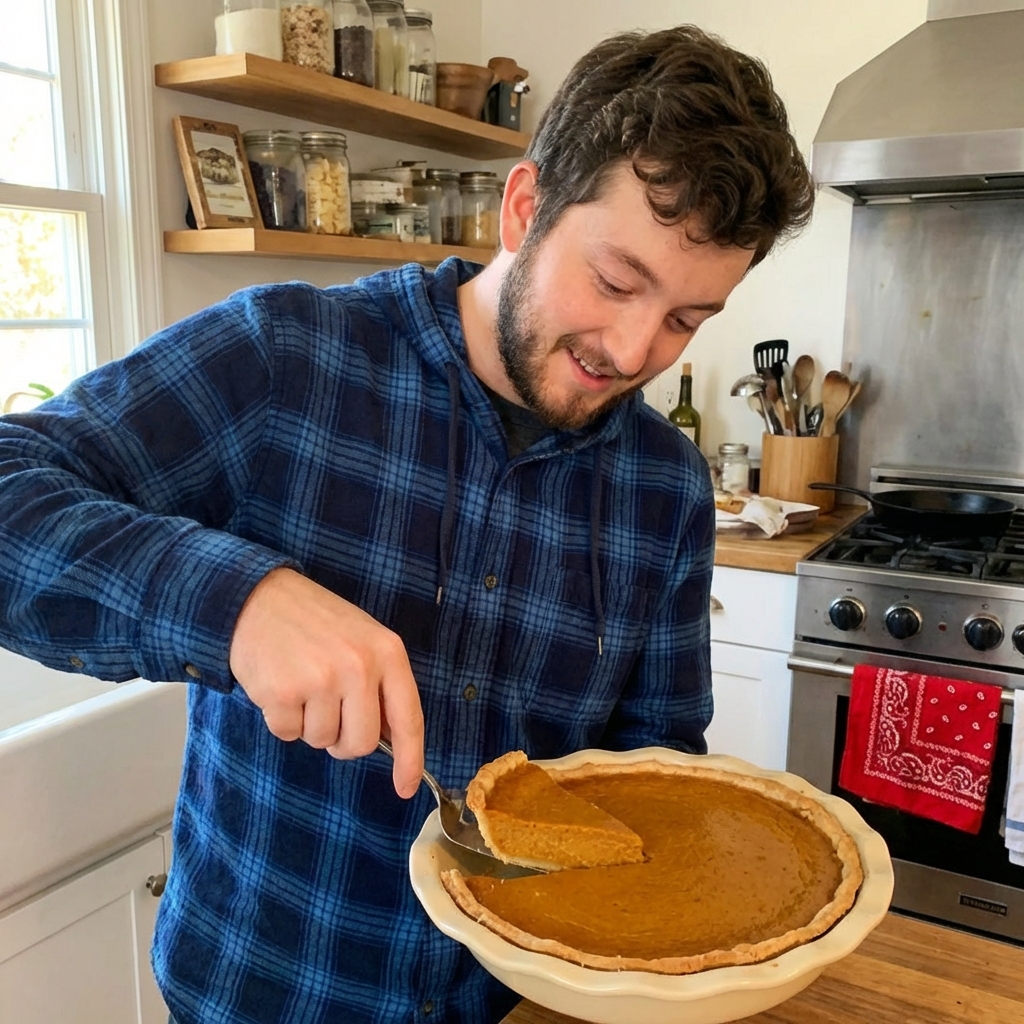
Is pumpkin pie actually healthy?
It can be. Pumpkin is naturally rich in nutrients, and this recipe leans lighter by using Greek yogurt for creaminess and maple syrup for sweetness. It may be lower in added sugar and saturated fat than some classic versions, but it is still pie. The goal here is a more balanced slice that still feels like a holiday dessert.
Can I use homemade pumpkin puree?
Yes, but texture matters. Homemade puree can be watery, which leads to a looser custard. If your puree looks wet, strain it in a cheesecloth-lined sieve for 30 to 60 minutes, then measure.
Should I use pumpkin puree or pumpkin pie filling?
Use 100% pure pumpkin puree, not pumpkin pie filling. Pumpkin pie filling already has sugar and spices added, which will throw off the flavor and texture here.
How do I know when pumpkin pie is done?
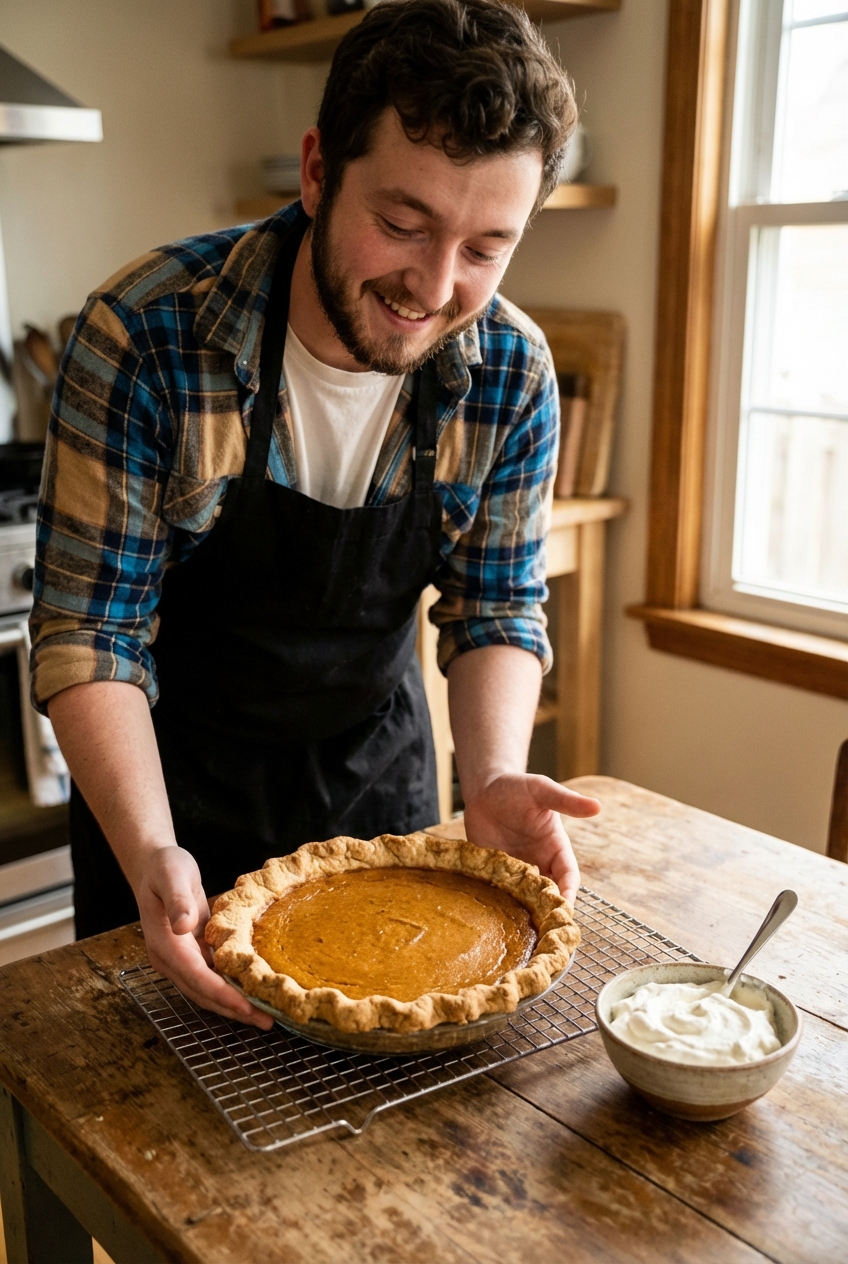
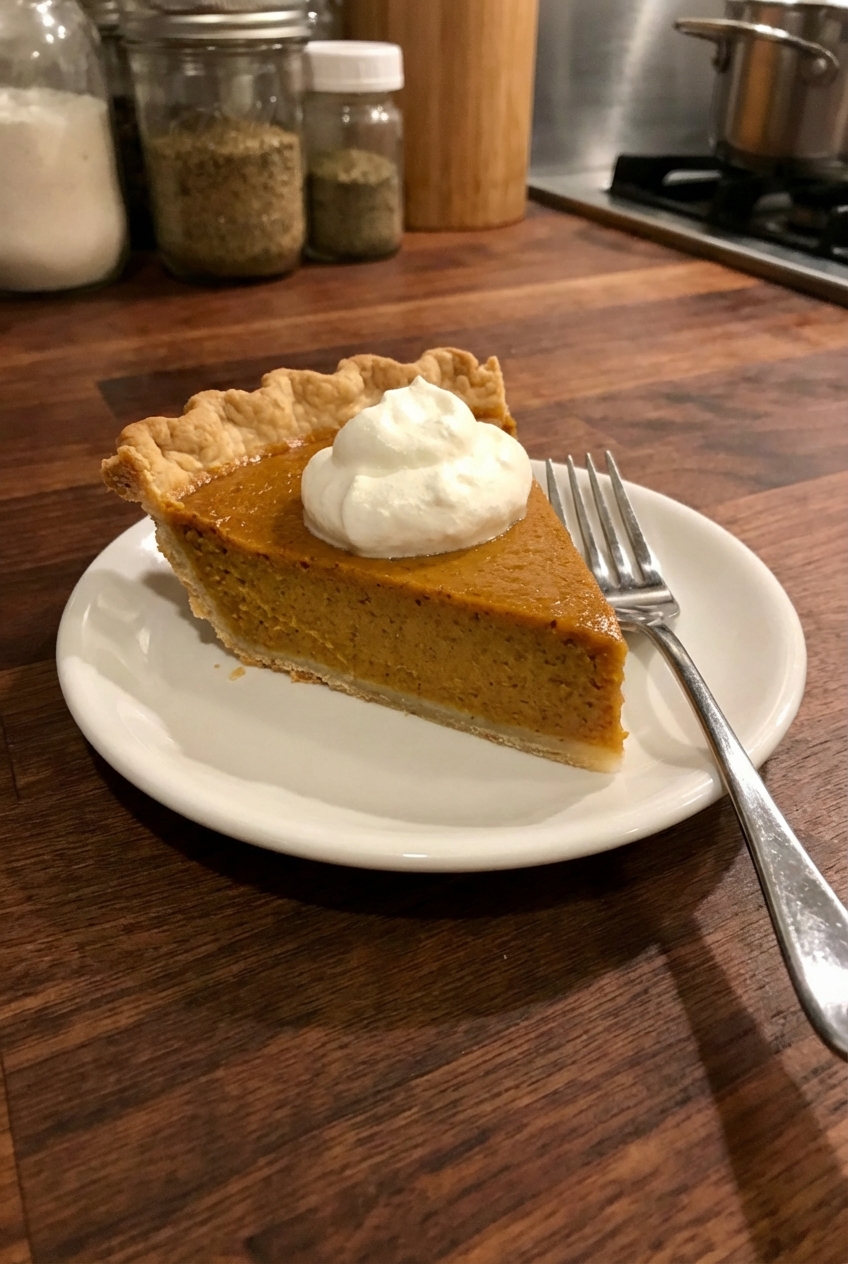
The edges should look set, and the center should still have a small jiggle like gelatin, about a 2 to 3 inch wobble in the middle. It will finish setting as it cools. If it ripples like soup, it needs more time. If you like precision, the center should read about 175°F on an instant-read thermometer.
Why did my pie crack?
Cracks usually come from overbaking or cooling too fast. Pull it when the center still jiggles, and let it cool at room temp before refrigerating. Also, avoid overmixing, which can add extra air.
Can I make it dairy-free?
You can. Swap the Greek yogurt for a thick dairy-free yogurt and use a plant-based milk. Use refined coconut oil or vegan butter in the crust. The flavor shifts slightly, but it still bakes up nicely.