Is homemade mayo safe to eat?
Homemade mayo uses raw egg yolk, so there is always some risk. The best way to reduce that risk is to use pasteurized eggs. “Fresh” is great for flavor, but it is not a safety guarantee. Refrigerate promptly and keep it cold. If you are serving to pregnant guests, young kids, older adults, or anyone immunocompromised, pasteurized eggs are the move.
How long can it sit out?
Do not leave it out longer than 2 hours total (or 1 hour if it is hot out). When in doubt, toss it and make a new batch. It is cheaper than regret.
My mayo broke. Can I fix it?
Absolutely. Put 1 teaspoon Dijon (or 1 egg yolk) in a clean bowl. Slowly whisk your broken mayo into it a little at a time until it comes back together, then continue until fully smooth.
My mayo is too thin. Now what?
If it will not thicken, start fresh: whisk 1 egg yolk (or 1 tsp Dijon) in a clean bowl, then slowly whisk the thin mayo into it in a steady trickle until it turns thick and glossy.
Do I need a blender?
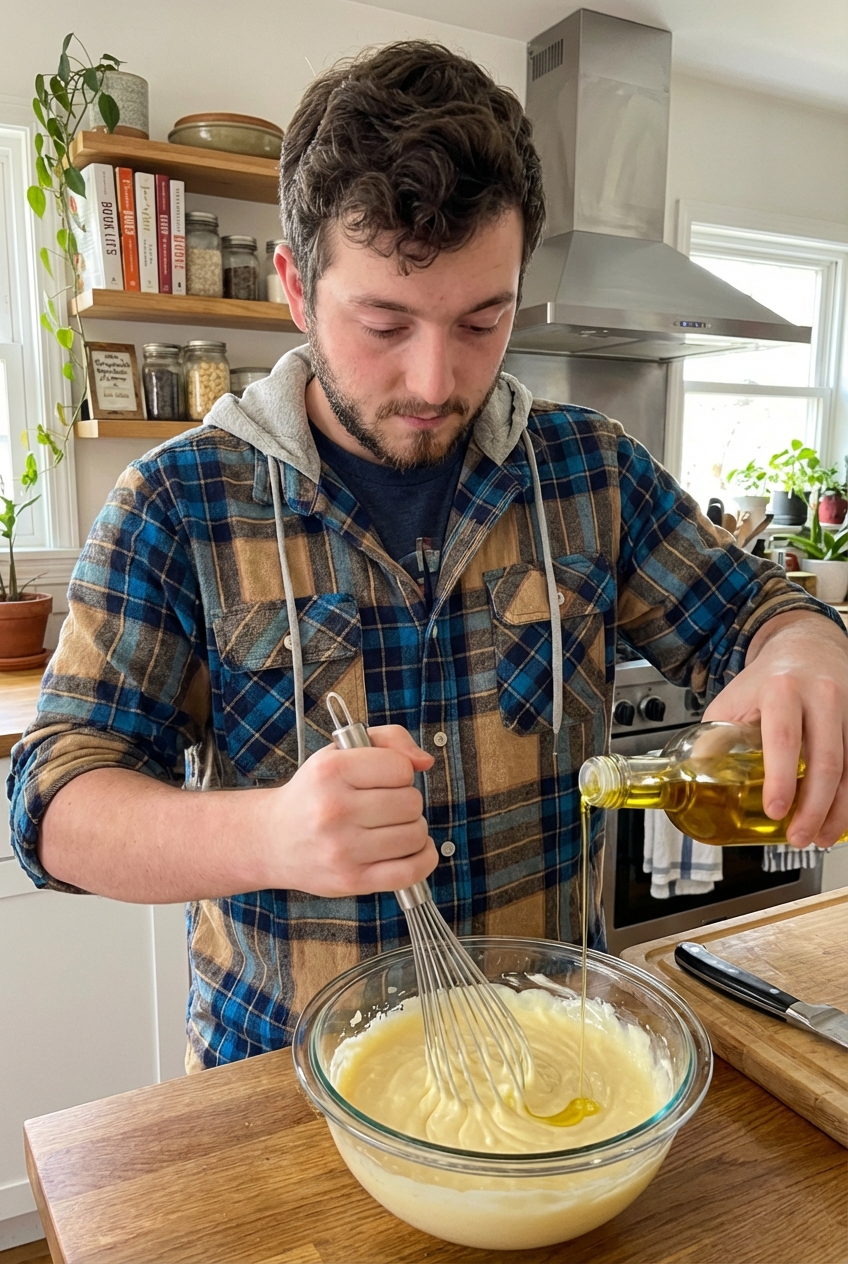
No. A whisk works. A blender or immersion blender makes it faster, but whisking gives you more control and fewer surprises.
What oil is best?
Use a neutral oil like avocado, canola, grapeseed, or light olive oil. Extra virgin olive oil can turn bitter when blended hard.
How do I make it spicier?
Add 1 to 2 teaspoons sriracha, a pinch of cayenne, or a spoon of chili crisp. If you add chili crisp, reduce the salt a touch and taste as you go.
Any allergy swaps?
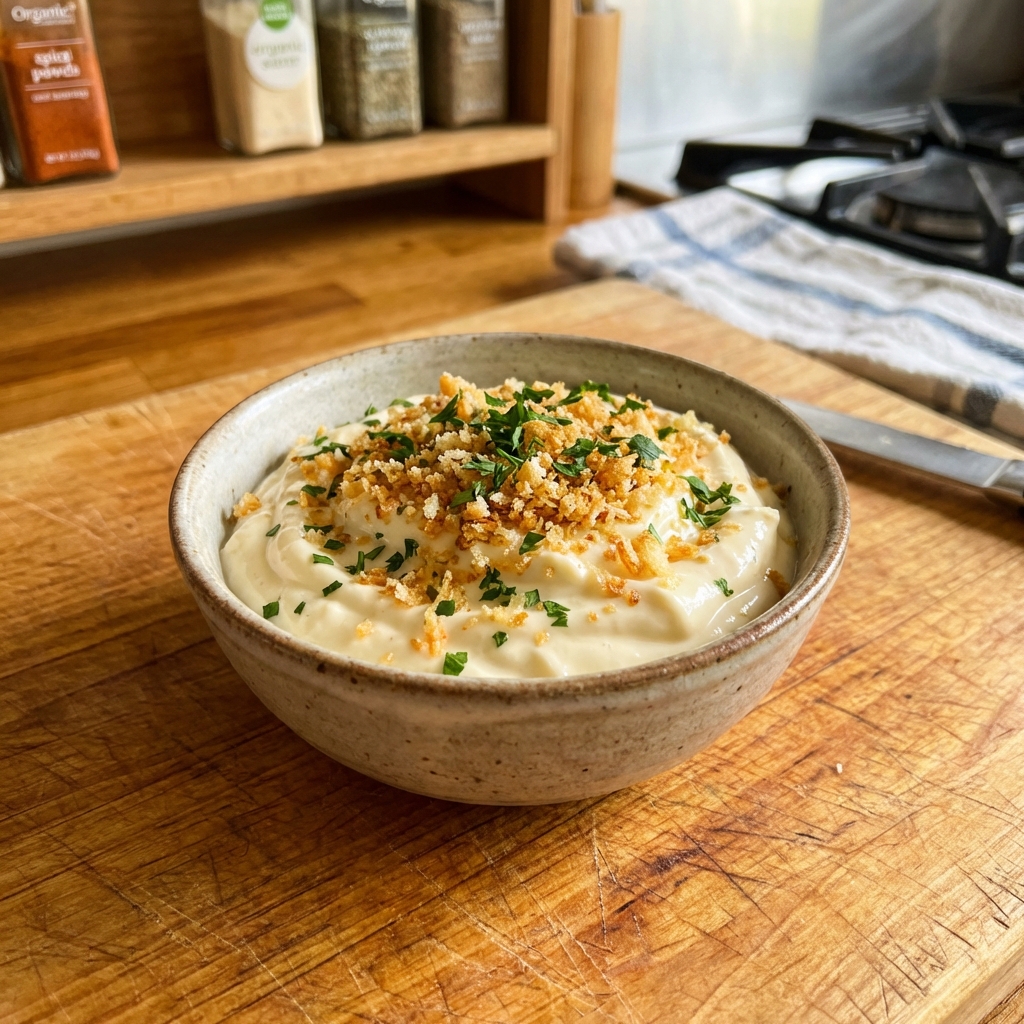
This contains egg, and panko usually contains wheat (gluten). Use gluten-free panko if needed. For egg-free mayo, you will want a different base recipe (aquafaba or a commercial egg-free mayo), then fold in the crunchy mix-in.
Will the garlic get stronger?
Yes. Raw garlic gets louder as it sits. If you want it mellower, use 1/2 tsp garlic powder or swap in a little roasted garlic.