Mom's Best Recipes
Recipe

Hearty Dutch Oven Beef Stew

Red wine, mushrooms, and fork-tender beef in a rich gravy, built for a Dutch oven with real searing, deglazing, and smart veggie timing.

Author By Matt Campbell
4.8
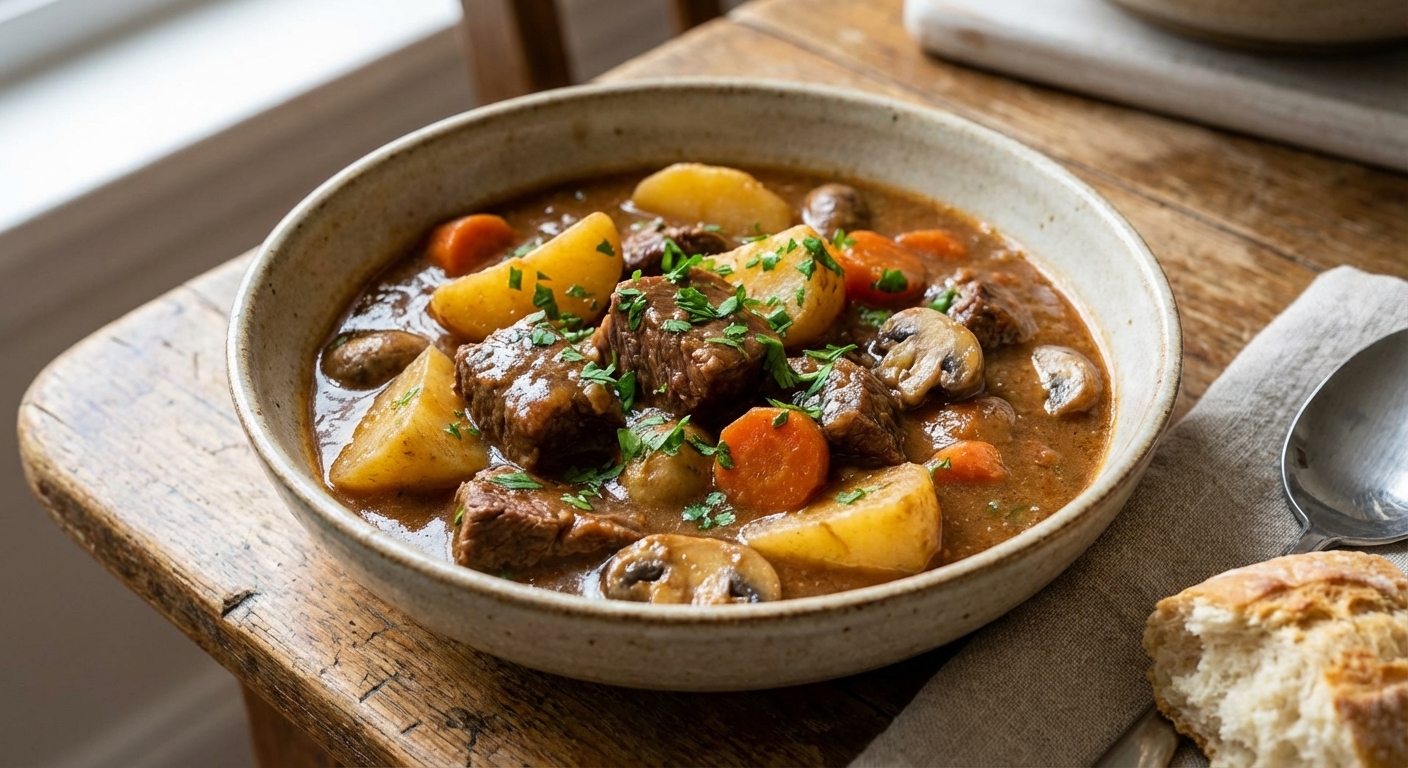
A real photograph of a heavy Dutch oven filled with beef stew with tender beef chunks, carrots, potatoes, and mushrooms in a glossy brown gravy on a rustic kitchen counter with a ladle nearby

If you want actual Dutch oven beef stew, not the "dump it in and hope" version, this is your move. We are going to sear big beef chunks until they get those crisp edges, deglaze with red wine to pull all that flavor off the bottom, then slow-simmer until the meat turns spoon-tender. Mushrooms bring that deep, cozy savoriness, and the gravy ends up glossy and rich, not watery and bland.

You can do this on the stovetop or in the oven. Oven-braising is a little more hands-off and gives you that gentle, even heat that Dutch ovens were born for. Either way, I will show you exactly when to add the vegetables so your potatoes do not dissolve and your carrots do not turn into orange mush.

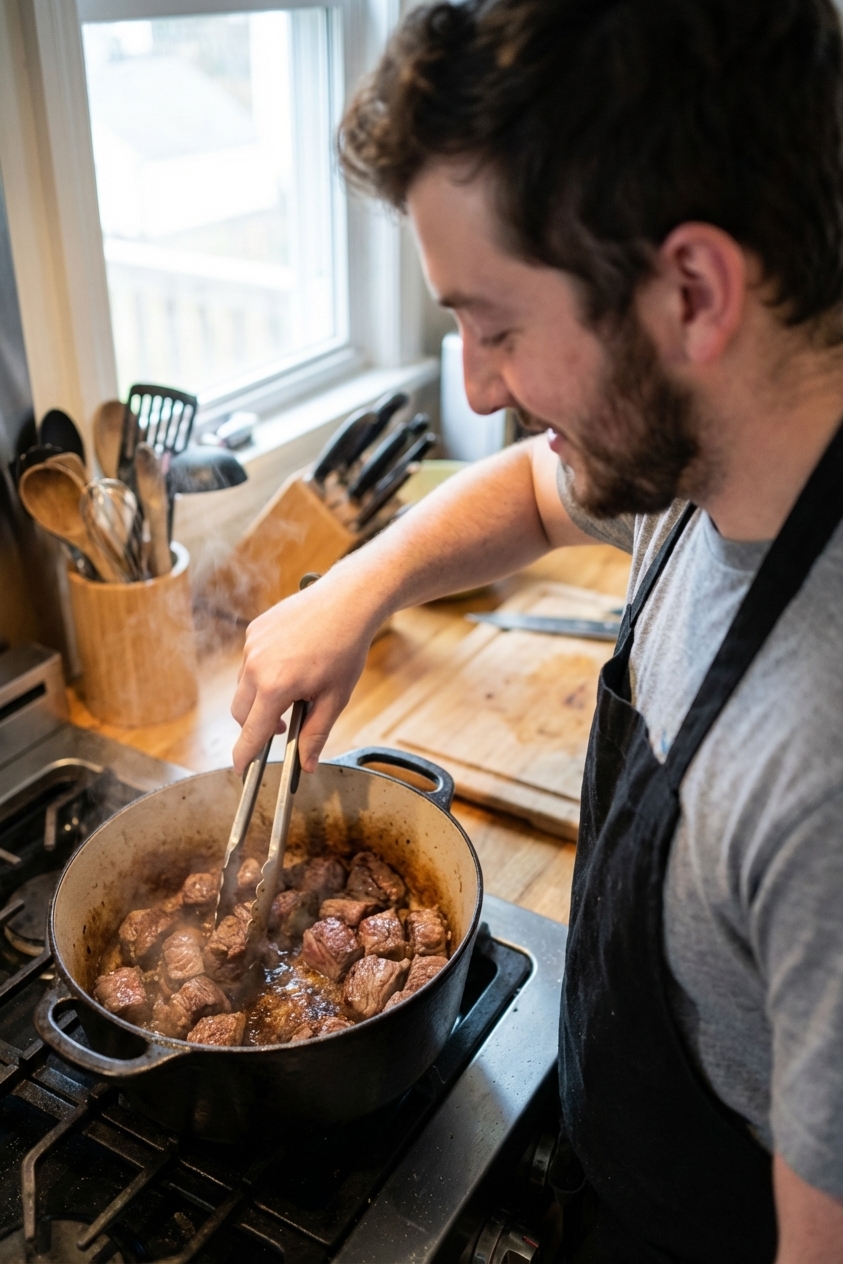
A real photograph of beef stew meat chunks browning in a Dutch oven with visible browned bits on the bottom of the pot, shot over a stovetop

Why It Works

  • Deep flavor fast: A real sear plus tomato paste and garlic builds a base that tastes like you put in serious time.
  • Richer gravy: Flour coats the beef, then the stew reduces slightly uncovered at the end for a glossy, spoon-coating finish.
  • Vegetables with a backbone: Carrots and potatoes go in later, so they stay intact and soak up flavor without disintegrating.
  • Dutch oven friendly: One pot from browning to braise, with both oven and stovetop simmer times.

Pairs Well With

Storage Tips

How to Store and Reheat

Refrigerator

Cool stew quickly, then store in an airtight container for up to 4 days. The flavor gets better overnight, which is honestly one of the best perks of stew life.

Freezer

Freeze in portioned containers for up to 3 months. For best texture, cool completely before freezing. Potatoes can soften a bit after freezing, but this stew still reheats beautifully.

Reheat

  • Stovetop: Simmer gently over medium-low, stirring occasionally, adding a splash of broth or water if it is too thick.
  • Microwave: Cover loosely and heat in bursts, stirring in between for even warming.

Make-ahead tip

If you want peak texture, make the stew through the beef braise, then cool and refrigerate. Reheat the next day and add potatoes and carrots during the reheat simmer so they cook fresh.

Bonus: If you chill the stew overnight, you can easily lift off any solidified fat before reheating.

Common Questions

Common Questions

What cut of beef is best for Dutch oven stew?

Chuck roast is the classic. It has enough fat and connective tissue to turn tender and juicy after a long braise. Look for good marbling and cut it into 1 1/2-inch chunks.

Do I have to use wine?

No. Swap the wine with more beef broth plus 1 tablespoon balsamic vinegar (or 2 teaspoons red wine vinegar) to keep that little pop of acidity that makes stew taste less flat.

Why is my stew watery?

Usually one of three things: you did not sear deeply, you did not simmer long enough, or it stayed covered the whole time. Fix it by simmering uncovered for 10 to 20 minutes at the end. You can also mash a few potato chunks into the broth for extra body.

How do I get a richer, darker gravy?

Brown the beef hard (dark brown, not black), cook the tomato paste until it darkens, and do a proper wine deglaze. Then at the end, let it reduce uncovered. If you want even deeper color, add 1 teaspoon soy sauce or Worcestershire.

Oven vs stovetop: which is better?

Oven is more even and forgiving and the Dutch oven shines there. Stovetop is great when the oven is busy. Both work. Just keep the simmer gentle and steady.

When is the stew done?

The beef should be fork-tender and easy to pull apart. If it still feels tight or chewy, keep cooking and check every 15 to 30 minutes. Stew does not care about your schedule, but it does reward patience.

Do mushrooms really go in this early?

Yes, and it is intentional. They soften and give the broth that deep, savory backbone. If you prefer firmer mushrooms, hold half back and stir them in for the last 30 minutes.

Do I need both flour and cornstarch?

No. The flour on the beef plus a little uncovered simmer usually does it. The cornstarch slurry is only if you want a thicker, more stew-like gravy right now.

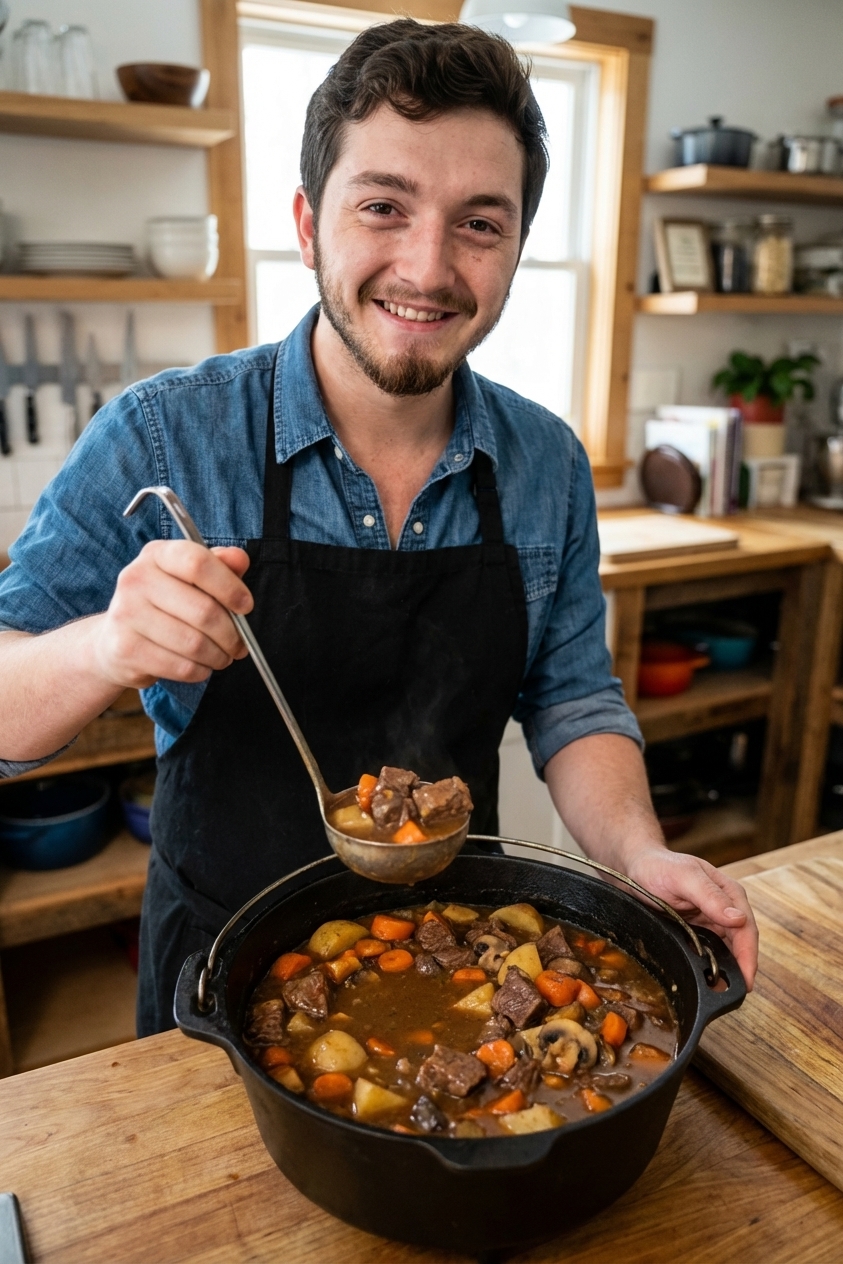
I love stew because it is basically the kitchen version of putting on your comfiest hoodie. This one is my "friends are coming over and I want the house to smell like I have my life together" move. The wine hits the hot pot, all the browned bits lift up, and suddenly you have this dark, savory gravy that tastes like you planned ahead. Spoiler: you did not have to. You just had to sear like you mean it and let the Dutch oven do its slow, cozy thing.