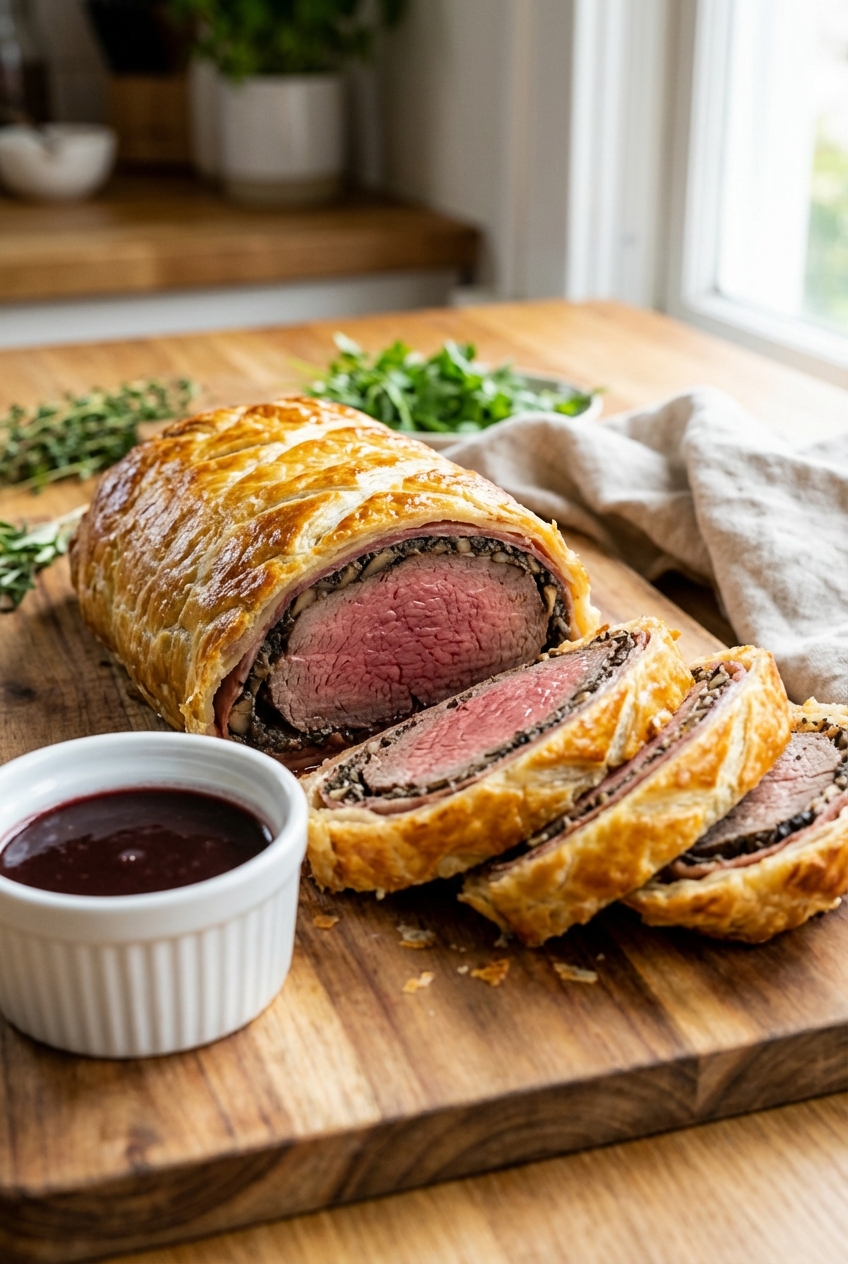
What cut of beef should I use for fillet Wellington?
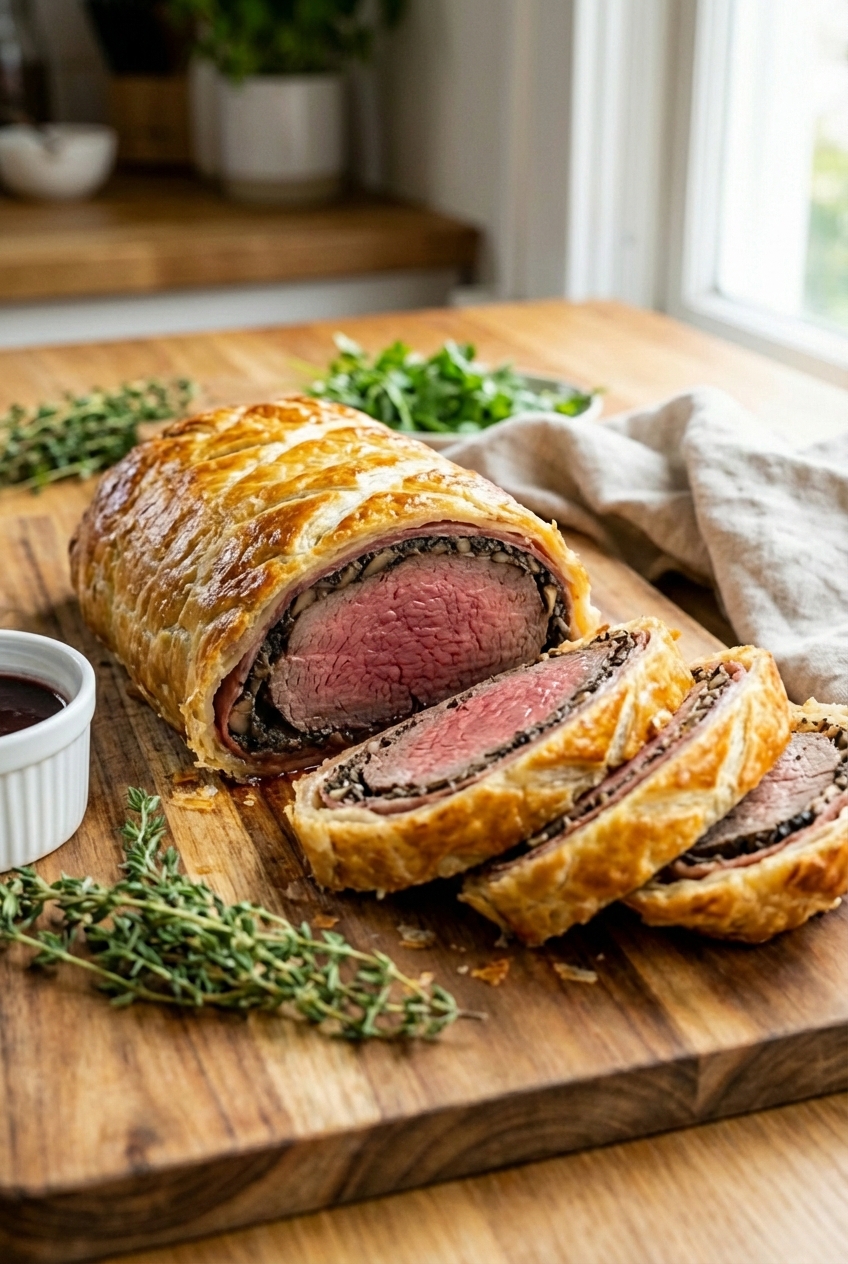
Use center-cut beef tenderloin (also called fillet). It is tender, evenly shaped, and cooks predictably. If your piece is skinny on one end, tuck it under and tie it briefly with kitchen twine for an even thickness, then remove the twine after searing.
How do I keep Wellington from getting soggy?
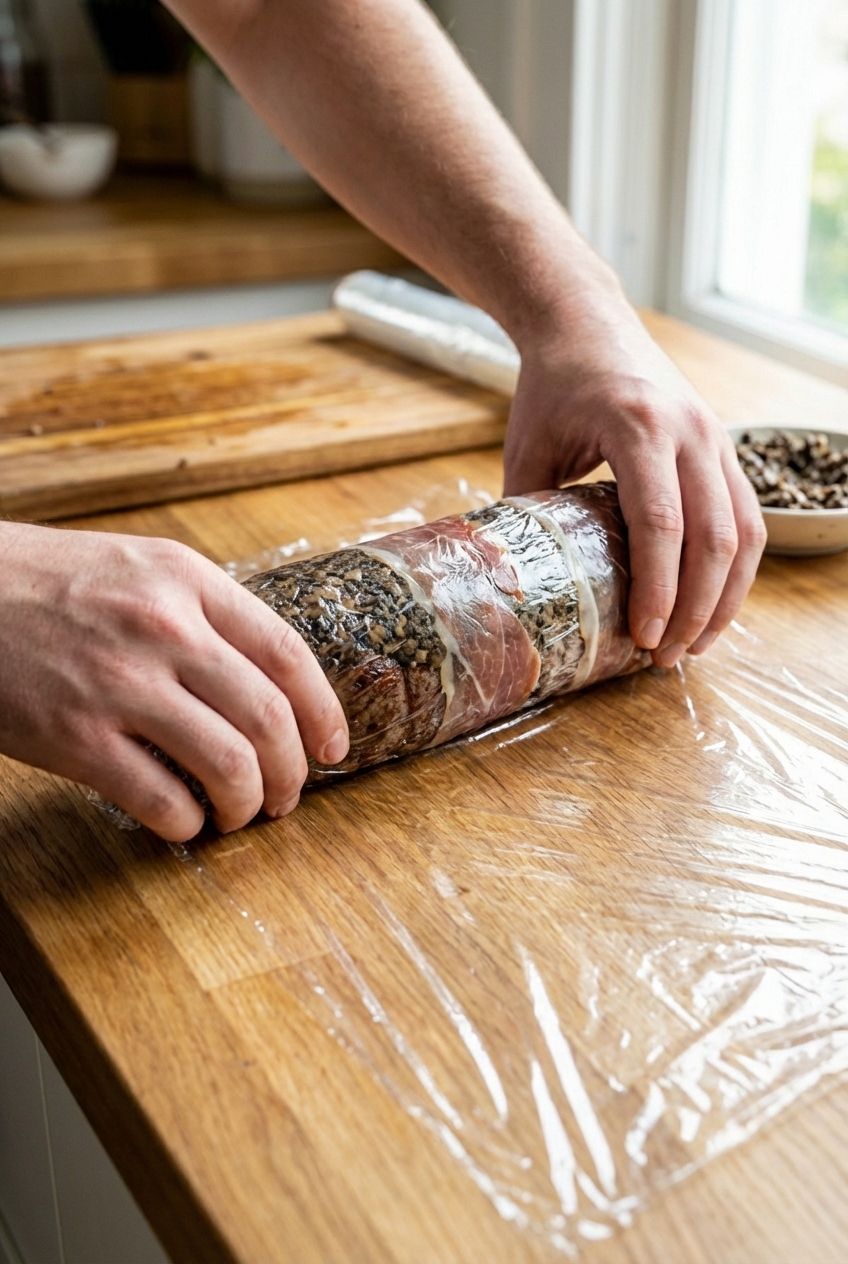
Three things: cook the mushrooms until they are very dry, wrap the beef with prosciutto as a barrier, and chill the assembled Wellington before baking so the pastry hits the oven cold and puffs fast.
Can I make Beef Wellington ahead of time?
Yes. Assemble up through the final puff pastry wrap, then refrigerate up to 24 hours. For best pastry texture, aim for 12 to 18 hours and keep it tightly wrapped so it does not dry out or absorb fridge odors. Brush with egg wash and bake right before serving. If it is very cold from the fridge, you may need an extra 3 to 5 minutes in the oven.
What internal temperature should I aim for?
It depends on preference and how cold your Wellington is going into the oven. For a classic rosy center, pull it when the beef hits 120 to 125°F (medium-rare) and rest 10 minutes. If you want a deeper medium-rare, pull at 125 to 130°F. For medium, still a little pink, pull at 130 to 135°F. For true medium, pull closer to 135 to 140°F. Carryover cooking is real, especially with thicker tenderloins.
Do I really need a thermometer?
For this recipe, it is the lowest-drama insurance policy you can buy. Puff pastry hides the beef, so you cannot rely on visuals. A quick probe check prevents heartbreak.
Can I skip the prosciutto?
You can, but it helps a lot. If you do not eat pork, use very thin slices of bresaola or even a thin layer of crepes as a moisture barrier. The goal is the same: keep pastry dry.
Any food safety notes?
Wellington is usually made with a whole-muscle tenderloin, which is fine cooked medium-rare. If your tenderloin has been blade-tenderized (sometimes labeled), cook to a higher temperature for safety.