Mom's Best Recipes
Recipe

Hearty Split Pea Soup

Thick, cozy split pea soup with smoky ham, tender veggies, and a bright finishing splash that keeps every spoonful lively.

Author By Matt Campbell
4.8
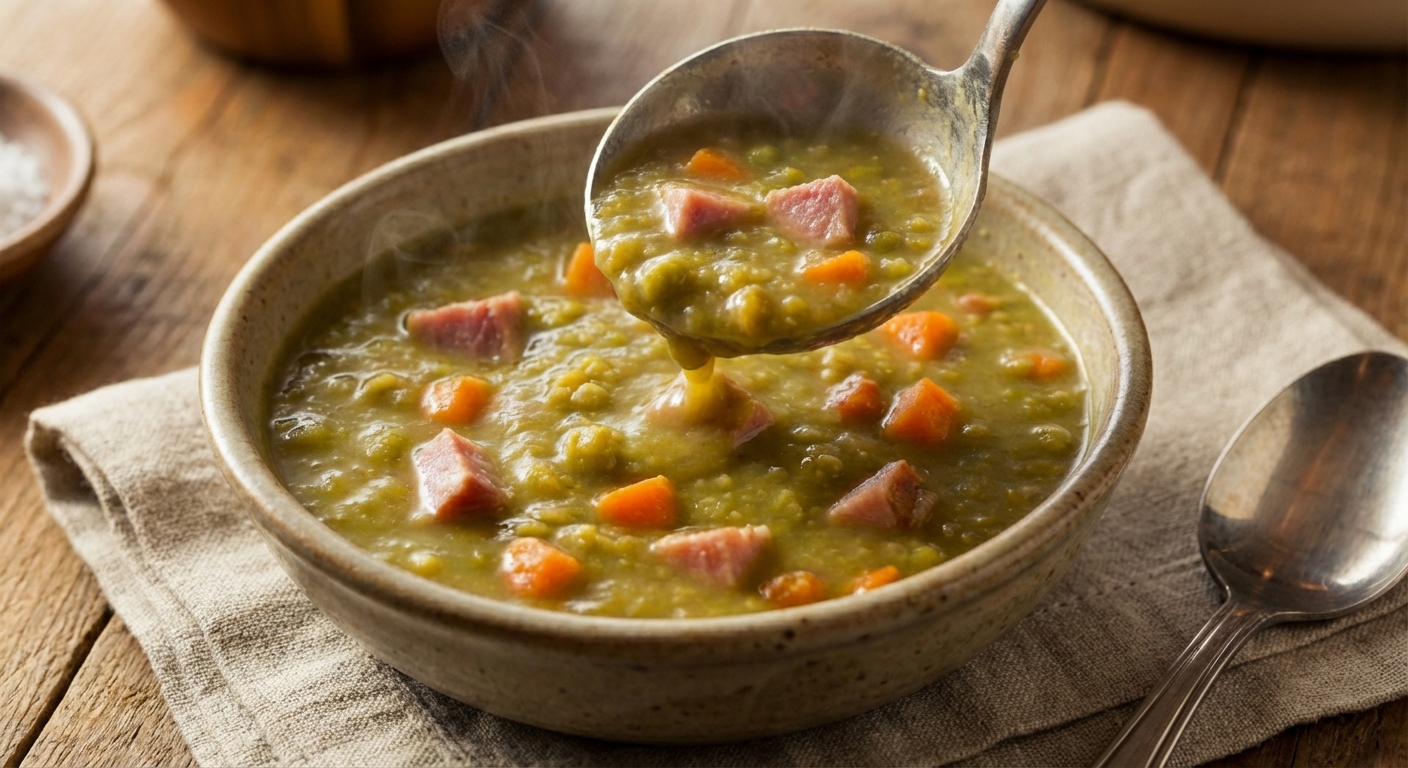
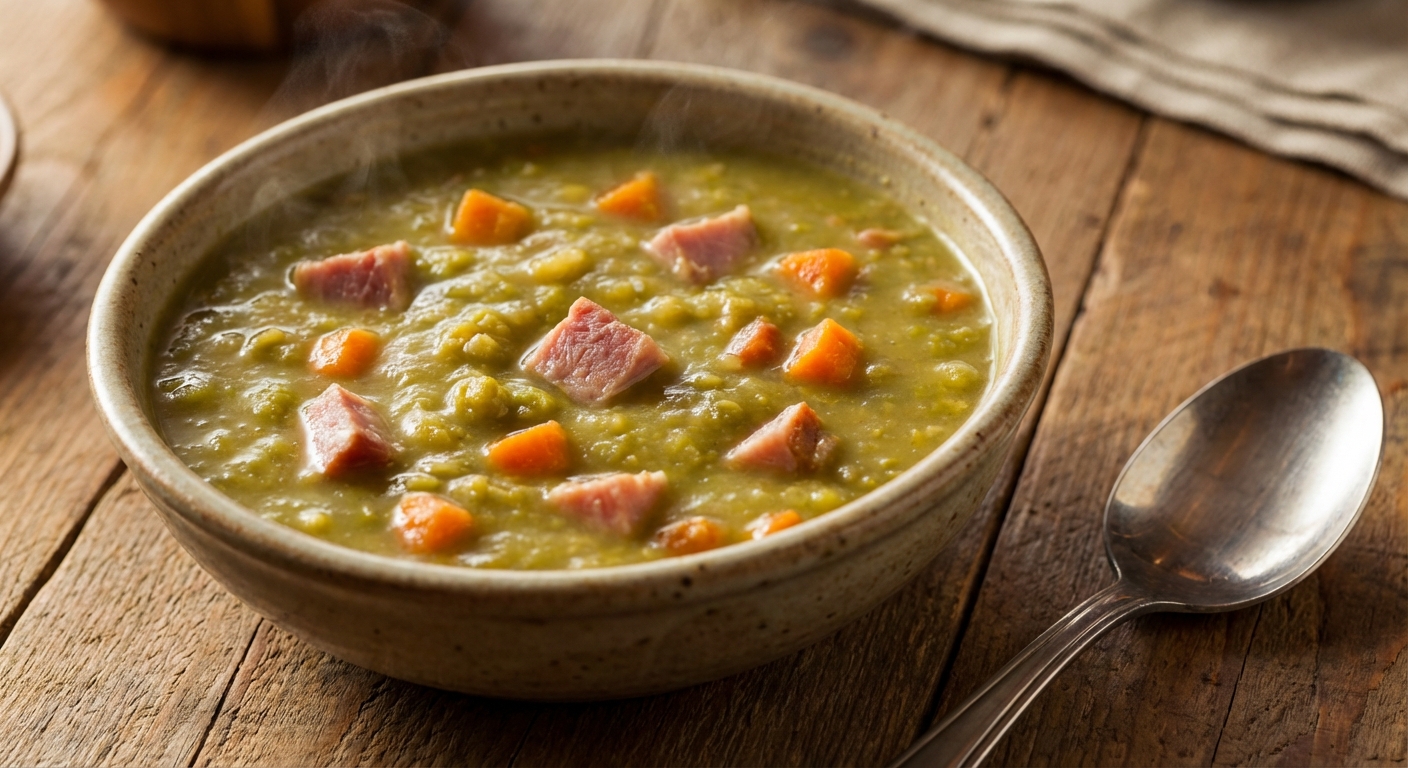
A steaming bowl of hearty split pea soup with chunks of ham and carrots on a rustic wooden table with a spoon beside it

Split pea soup is one of those old-school, feed-everyone meals that somehow tastes even better the next day. It is cozy and thick, packed with tender peas and vegetables, and it has that gentle smoky vibe that makes the whole kitchen smell like you did something responsible with your life.

This is my hearty version: simple ingredients, clear steps, and a couple small moves that make it taste like it simmered all day even if you are just trying to get dinner on the table. We are talking soft peas, sweet carrots, savory ham, and a finish that keeps it from going flat.
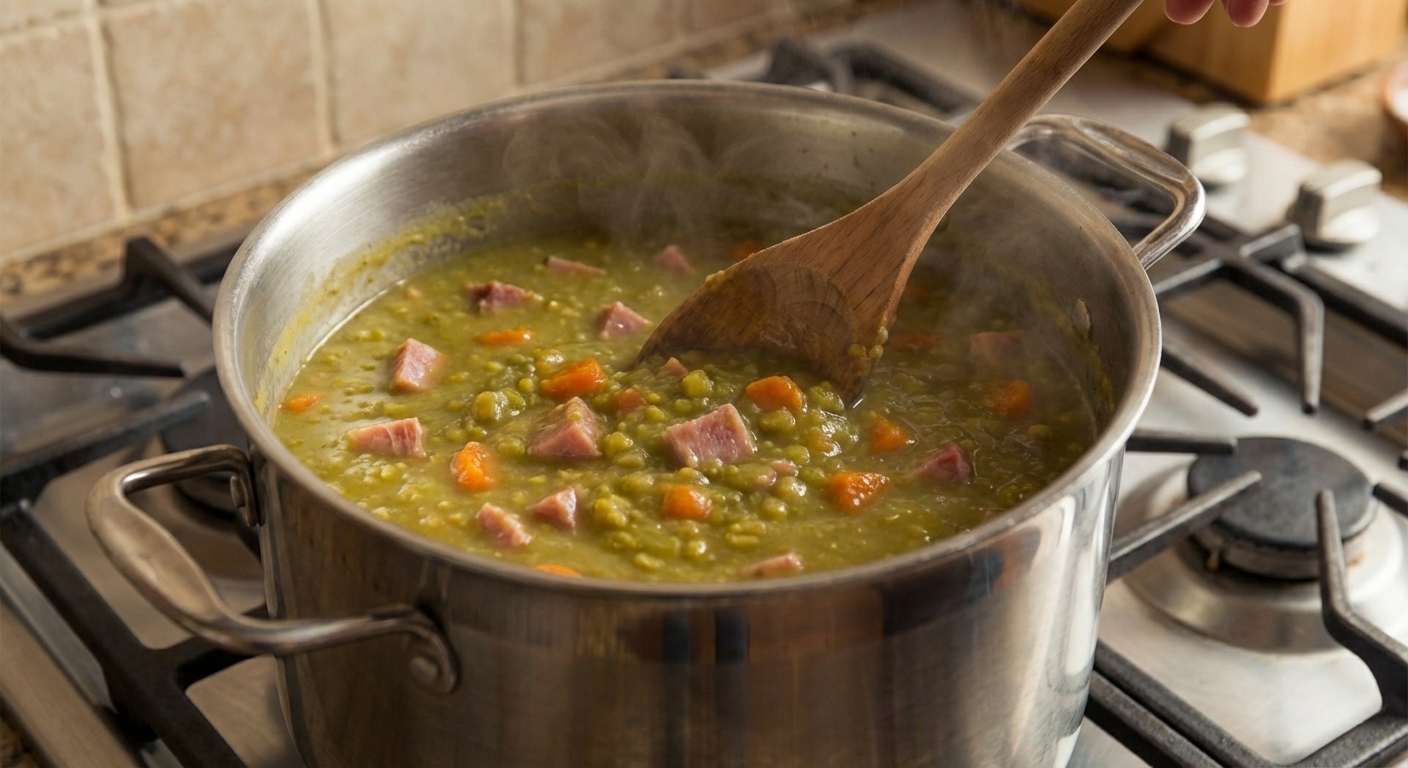
A pot of split pea soup simmering on the stovetop with a wooden spoon stirring

Why It Works

  • Big flavor from basic pantry staples: onion, garlic, thyme, and a ham hock (or leftover ham) do the heavy lifting.
  • Perfect texture without stress: split peas naturally break down as they cook, so you get thick and hearty without needing cream.
  • Not one-note: a small splash of vinegar or lemon at the end wakes everything up and keeps the soup tasting bright, not muddy.
  • Built for leftovers: it thickens overnight in the fridge, which is honestly a feature, not a bug.

Pairs Well With

Storage Tips

Refrigerator: Cool completely, then store in an airtight container for up to 4 days. This soup thickens as it sits. When reheating, add a splash of broth or water and stir until silky again.

Freezer: Freeze in portion containers for up to 3 months. Thaw overnight in the fridge or reheat gently from frozen over low heat, stirring often.

Reheating tip: Warm over medium-low heat and stir frequently because thick pea soup likes to stick. If it gets too thick, loosen with broth a little at a time.

Common Questions

Do I need to soak split peas?

Nope. Split peas are already split and dried, so they cook without soaking. Just rinse and pick through them for any tiny stones or debris. (If your peas are ancient, soaking can help a little, but it is not required.)

Why is my split pea soup still crunchy?

Usually it is one of two things: old peas (they can take forever) or a simmer that is too gentle. Keep the soup at a steady, low simmer and give it time. A couple other culprits: hard water can slow softening, and adding acid too early can keep peas firm. Save the vinegar or lemon for the end.

How do I make it thicker or thinner?

Thicker: simmer uncovered for 10 to 15 minutes, stirring often. You can also mash some peas against the pot or blend a cup of soup and stir it back in.

Thinner: add broth or water, a splash at a time, until it is the texture you like.

Can I make this without ham?

Yes. Swap the ham hock for smoked paprika and use vegetable broth. For extra depth, add a splash of soy sauce or a spoonful of miso at the end (off the heat).

Do I have to blend it?

No. I like it rustic and chunky. If you want it smoother, use an immersion blender for just a few pulses, or blend 1 to 2 cups and mix back in. Quick note: pull out the bay leaf first.

This soup is my cold-weather reset button. The first time I made split pea soup on my own, I expected it to be boring. Then the peas started melting into the broth, the ham did its smoky thing, and suddenly I was standing over the pot tasting “just one more spoon” like it was a personality trait. Now it is a regular at my place when I want something hearty, low-drama, and deeply satisfying. Also, it is the kind of meal that makes you feel like you have your life together, even if your kitchen is a mess.