
Mom's Best Recipes
Recipe

Hearty Starter Dough Bread

A cozy, crusty loaf with a soft, chewy center and that subtle sourdough tang. Built for soups, sandwiches, and ripping apart while it is still warm.

Author By Matt Campbell
4.8
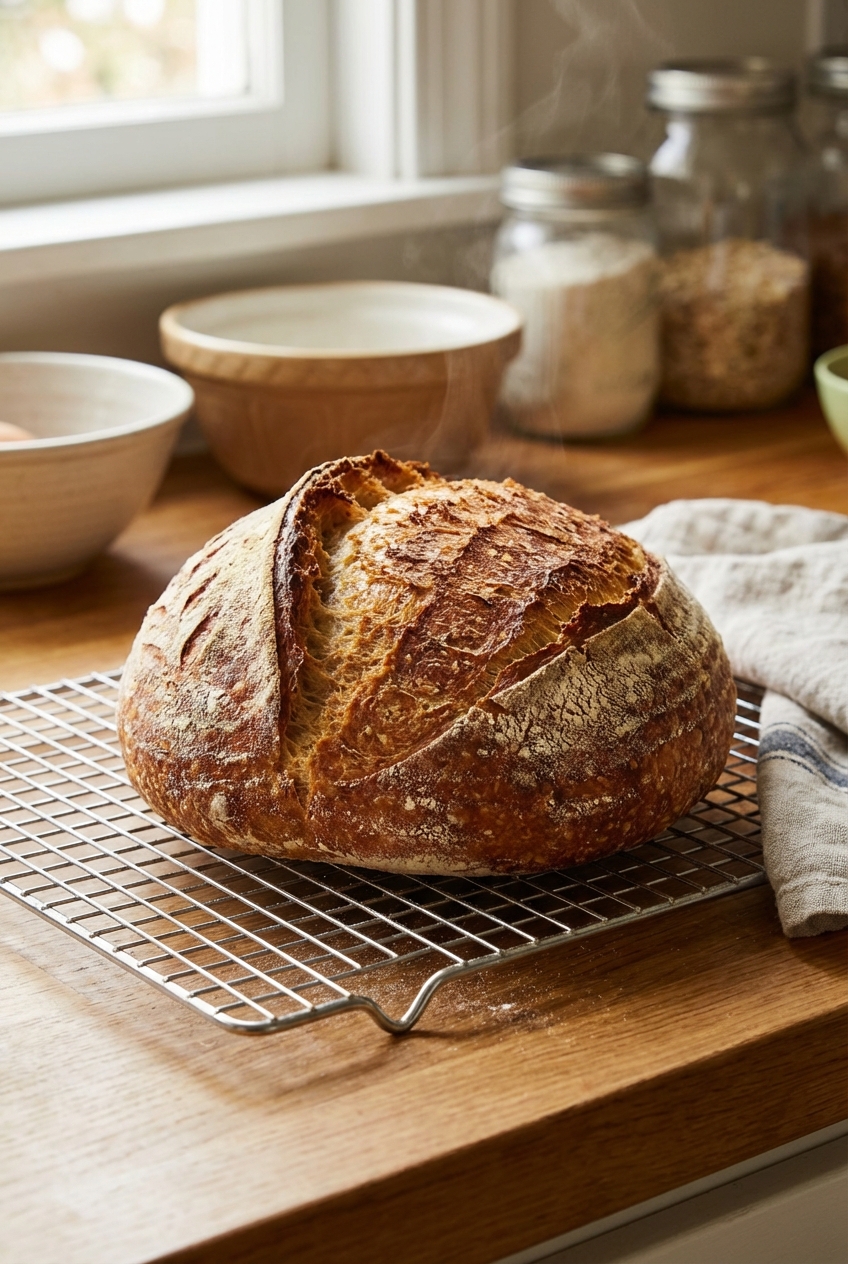
A rustic round loaf of sourdough bread with a deep golden crust and a scored top cooling on a wire rack in a warm kitchen

This is the loaf I make when I want my kitchen to smell like comfort and my dinner to feel a little more put together, even if it is just soup and a salad. It is hearty starter dough bread, meaning we are using active sourdough starter for flavor and lift, plus a touch of whole wheat for that cozy, wheaty depth.

There is no need for fancy mixers or bakery-level drama. We are going to lean on time, a few folds, and a hot pot to get that crisp crust and tender crumb. Expect a loaf that toasts like a dream, holds up to butter, and makes a grilled cheese that feels like it has a personal mission.
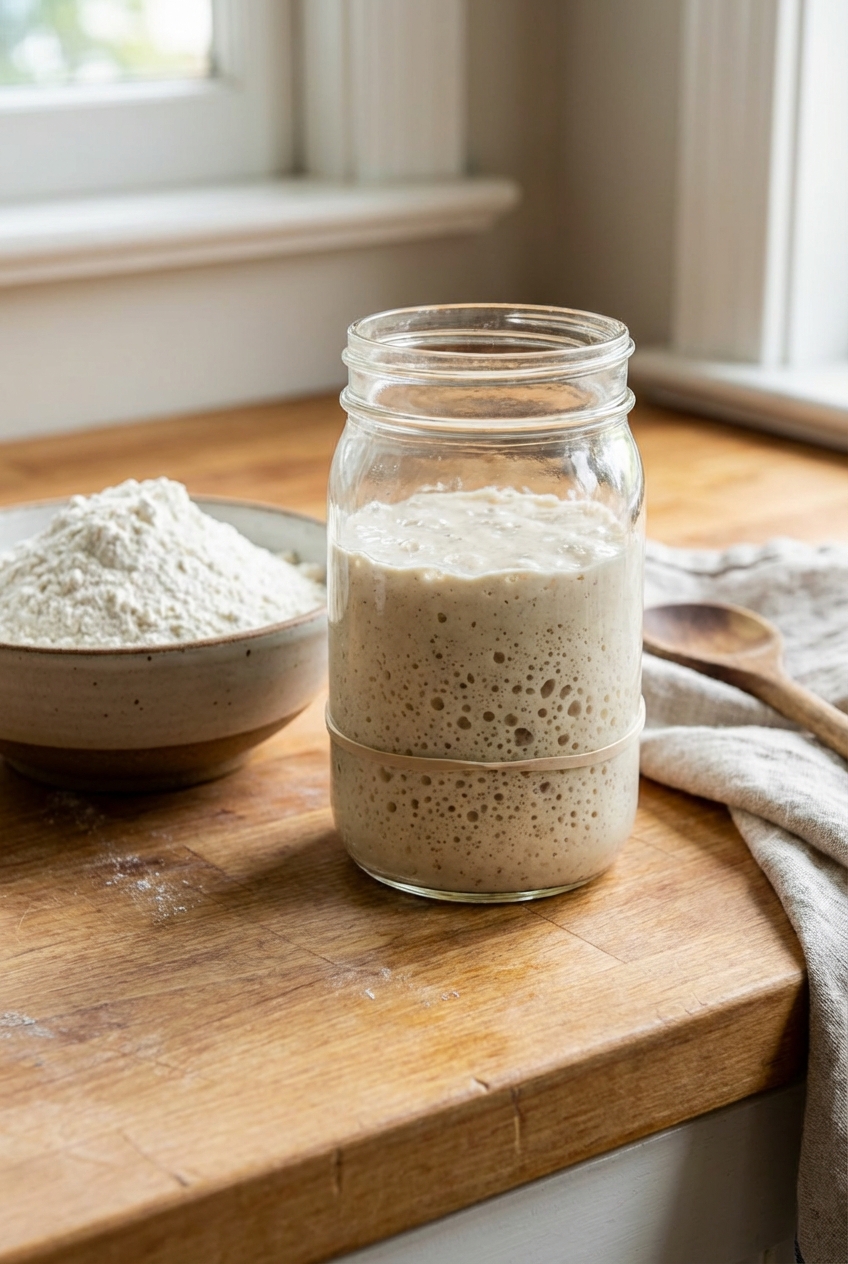
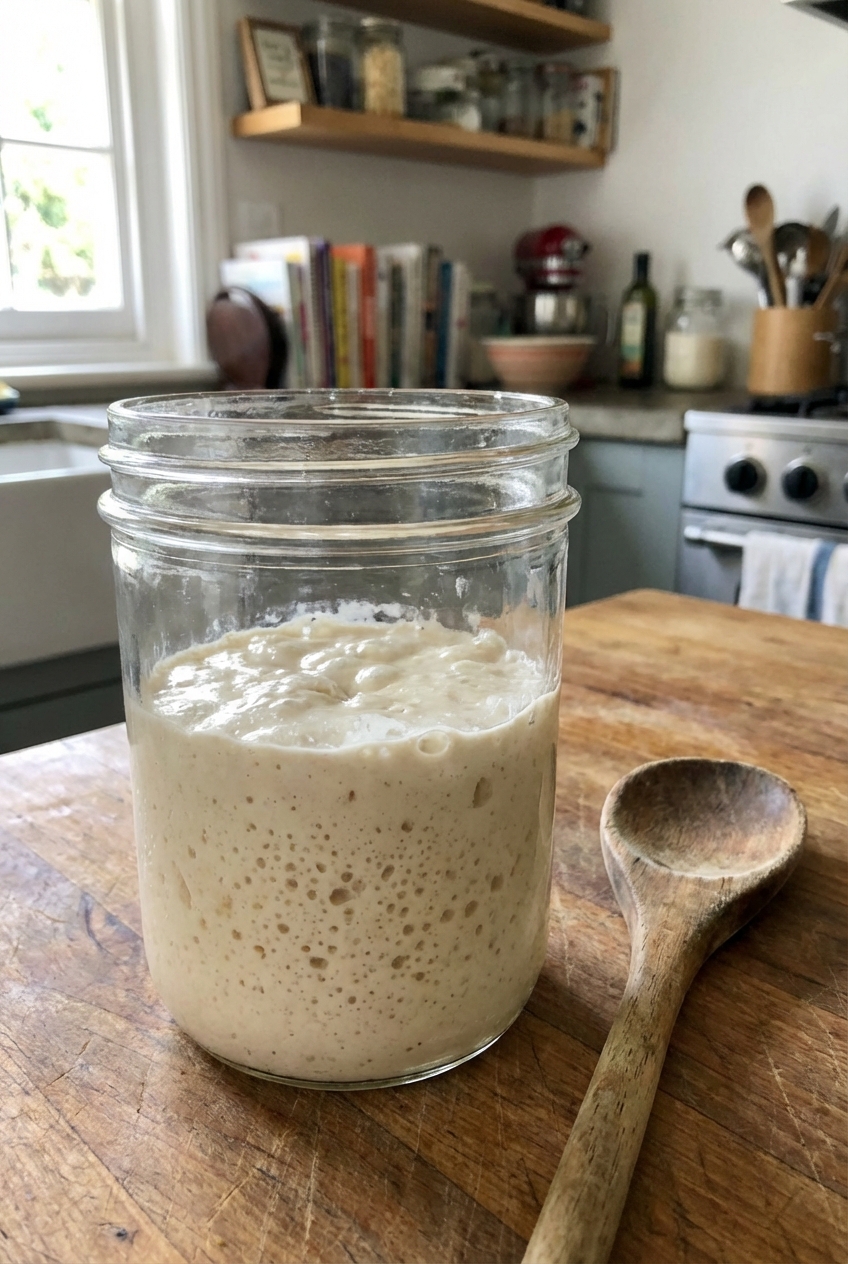
A close-up of bubbly active sourdough starter in a glass jar on a countertop next to a bowl of flour

Why It Works

  • Big flavor without extra ingredients: Long fermentation builds that gentle tang and deep, bready aroma.
  • Cozy texture: Chewy, satisfying crumb that stays soft inside with crisp edges outside.
  • Reliable oven spring: A preheated Dutch oven traps steam so the loaf rises high and bakes evenly.
  • Flexible schedule: You can do an overnight cold proof and bake when it works for you.

Pairs Well With

Storage Tips

Day 1 and 2: Store the loaf cut-side down on a cutting board, or in a paper bag. Avoid plastic unless your kitchen is extremely dry, since plastic softens the crust fast.

Longer storage: Slice the cooled loaf, then freeze in a zip-top bag with parchment between a few slices if you want easy grab-and-toast portions. It keeps well for up to 2 months.

Re-crisp the crust: Sprinkle the crust lightly with water, then bake at 375°F for 8 to 12 minutes. It comes back to life like it never left.

Leftover plan: Cubes become croutons. Thicker slices become French toast. End pieces become bread crumbs. Nothing gets wasted on my watch.

Common Questions

My starter is bubbly, but my dough is not rising much. What gives?

Most often it is temperature. Sourdough loves warmth. Aim for a dough temperature around 75°F to 80°F during bulk fermentation. If your kitchen is cool, give it more time or proof in the oven with the light on.

Do I have to use a Dutch oven?

No, but it makes life easier. If you do not have one, bake on a preheated pizza stone or sheet pan and add steam by placing a metal pan on the bottom rack and pouring in 1 cup of hot water when the bread goes in. Be careful with the steam.

How do I know when bulk fermentation is done?

Look for about a 30% to 60% rise, visible bubbles along the sides, and a dough that feels lighter and jiggly. It should pull from the bowl more easily and hold some shape.

My loaf is gummy inside. Did I underbake it?

Possibly, yes. Sourdough often needs a little longer than you think. Use a thermometer if you can. The center should be around 205°F to 210°F. Also make sure you let it cool at least 1 hour before slicing.

Can I make this more whole wheat?

Absolutely. This recipe already uses 50 grams of whole wheat. If you want a heartier loaf, swap another 50 grams of the bread flour for whole wheat (so 100 grams whole wheat total). Whole wheat absorbs more water, so you may need an extra splash, plus a slightly longer rest before folding.

The first time I really got starter bread to work, I felt like I had unlocked a new level of home cooking. Not in a precious way, more like, wait, I can make this with flour, water, salt, and a jar of bubbly chaos living on my counter? This loaf became my default because it fits real life. I can fold it between emails, cold-proof it while I sleep, then bake it the next day and suddenly dinner has main-character energy. Also, if you have ever eaten a heel of warm sourdough standing at the counter with butter melting into it, you get it.