Mom's Best Recipes
Recipe

Healthy Prime Rib Roast

A creative prime rib with a bright, punchy herb-citrus crust and a quick pan sauce. Big holiday flavor, lighter feel, and surprisingly low drama.

Author By Matt Campbell
4.8
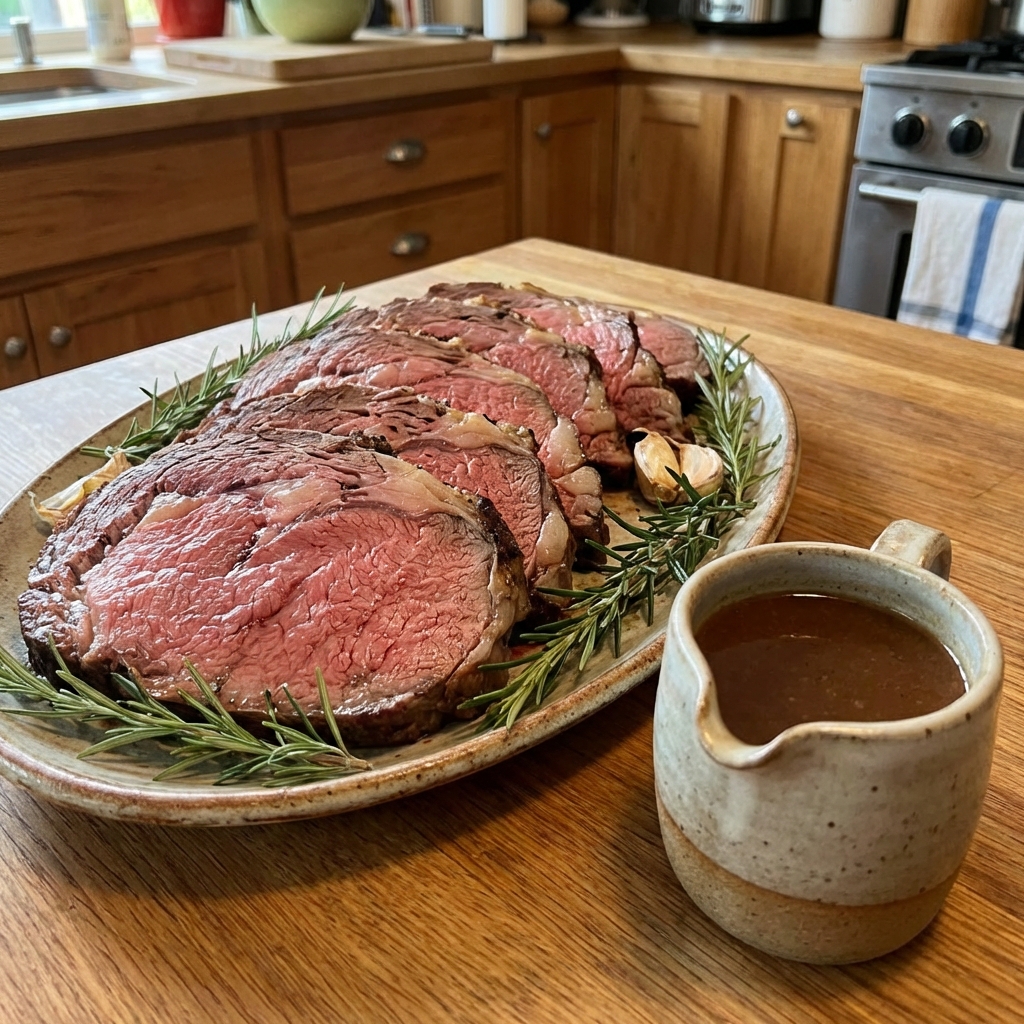
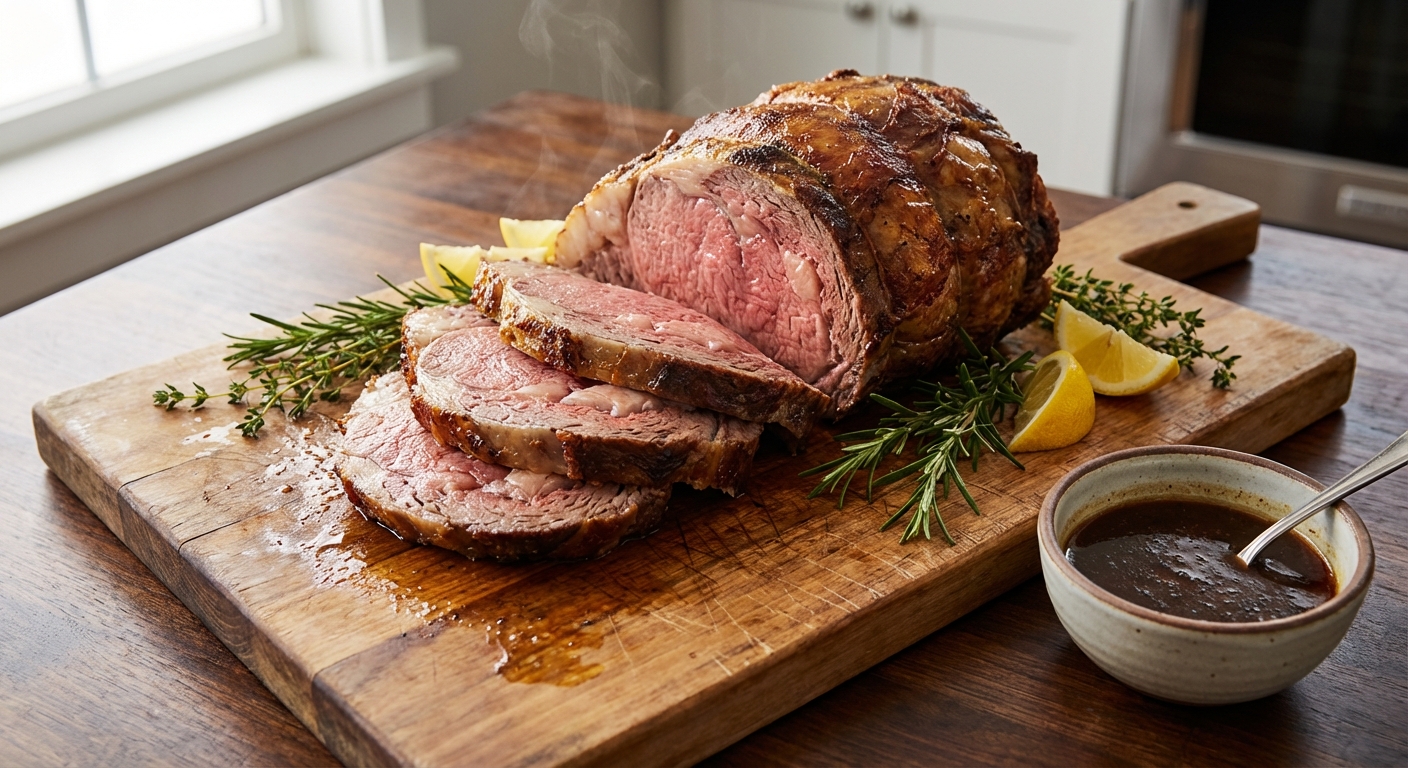
A golden-brown prime rib roast sliced on a wooden cutting board with fresh herbs, lemon wedges, and a small bowl of pan sauce nearby

Prime rib has a reputation. It walks into the room like it owns the place, usually followed by a butter avalanche and a heavy nap. I love that energy, but I also like a roast that tastes alive, not just rich.

This version leans into a herb-citrus crust that hits you with rosemary, lemon zest, black pepper, and that holiday smell that makes people hover near the oven. Then we finish with a quick, glossy pan sauce that uses the roast drippings and broth instead of a ton of cream. You still get the cozy beefy payoff, just with a brighter, cleaner finish that makes you want a second slice for the flavor, not because you are committed to a food coma.

Why It Works

  • Bright crust, crisp edges: Citrus zest and fresh herbs perfume the meat, while the dry, high-heat start jump-starts browning.
  • Juicy interior without fuss: A simple roast after the initial sear gives you even doneness and a tender slice.
  • Lighter, wholesome balance: We use olive oil, herbs, and broth-forward pan sauce. You get richness from the beef, not from extra add-ins.
  • Reliable doneness: This method is built around a thermometer, because the roast deserves better than guessing.

Pairs Well With

Storage Tips

Cool fast: Slice what you need, then refrigerate the rest within 2 hours. Keeping a larger chunk intact helps it stay juicier.

  • Refrigerator: Store in an airtight container for 3 to 4 days. Drizzle a spoon of pan sauce over slices before sealing to prevent drying.
  • Freezer: Freeze sliced prime rib for up to 2 months. Wrap tightly, then place in a freezer bag. Thaw overnight in the fridge.
  • Reheat (best way): Place slices in a baking dish with a splash of broth or pan sauce, cover with foil, and warm at 250°F until just heated through, usually 10 to 20 minutes. Avoid blasting it hot or it will turn from luxurious to chewy.
  • Leftover glow-up: Thin slices make an unreal sandwich with mustard and arugula, or toss into a veggie-packed grain bowl with a lemony vinaigrette.

Common Questions

What makes this healthier if it is still prime rib?

Prime rib is inherently rich, but you can keep it more wholesome by focusing on flavor-building without heavy extras. This recipe uses olive oil, herbs, citrus, and a broth-based pan sauce. You still get satisfaction, just with more balance.

How much salt do I actually need?

Enough to wake the whole roast up. For a 5 to 6 lb roast, a good starting point is roughly 18 to 24 g kosher salt total. Measuring by weight is the most reliable, because kosher salt brands vary. If you are measuring by volume, that is about 1 1/2 to 2 tbsp Diamond Crystal or 1 to 1 1/2 tbsp Morton. Season generously, and remember that most of the salt stays on the exterior.

Can I salt it ahead of time?

Yes, and it is a great move. Salt the roast and refrigerate uncovered 12 to 24 hours for a dry brine. It seasons deeper and dries the surface for better browning. If you are short on time, salting right before roasting is still totally fine.

Do I have to bring the roast to room temperature?

Not for hours. I like 30 to 60 minutes on the counter while you prep. It helps the roast cook a little more evenly, but the thermometer matters more than the clock.

Bone-in or boneless?

Either works. Bone-in is classic and helps with insulation. Boneless is easier to carve. Cooking time varies, so cook to temperature, not to minutes.

What internal temp should I aim for?

  • Rare: pull at 120°F to 125°F, rest to 125°F to 130°F
  • Medium-rare (recommended): pull at 122°F to 128°F, rest to 130°F to 135°F (carryover varies)
  • Medium: pull at 130°F to 135°F, rest to 135°F to 145°F

USDA recommends 145°F with a 3-minute rest for whole cuts. Many people prefer prime rib at medium-rare, so choose what fits your table.

How do I keep the crust from burning?

Two things matter most: keep the first blast of heat dry (no broth in the pan yet), and stir the garlic into the paste after the initial browning so it does not turn bitter. Also, place the roast on a rack so hot air circulates and the drippings do not scorch the bottom.

The first time I made prime rib for a group, I treated it like a final exam. I had timers for everything and the vibe was tense. The roast was great, but I was not. These days, I cook it like a friend hanging out in your kitchen: thermometer in, music on, and a crust that smells like you actually know what you are doing.

This herb-citrus version is my favorite kind of special food because it is bold without being fussy. It tastes like celebration, but it still leaves room for the rest of the meal and the people around the table.