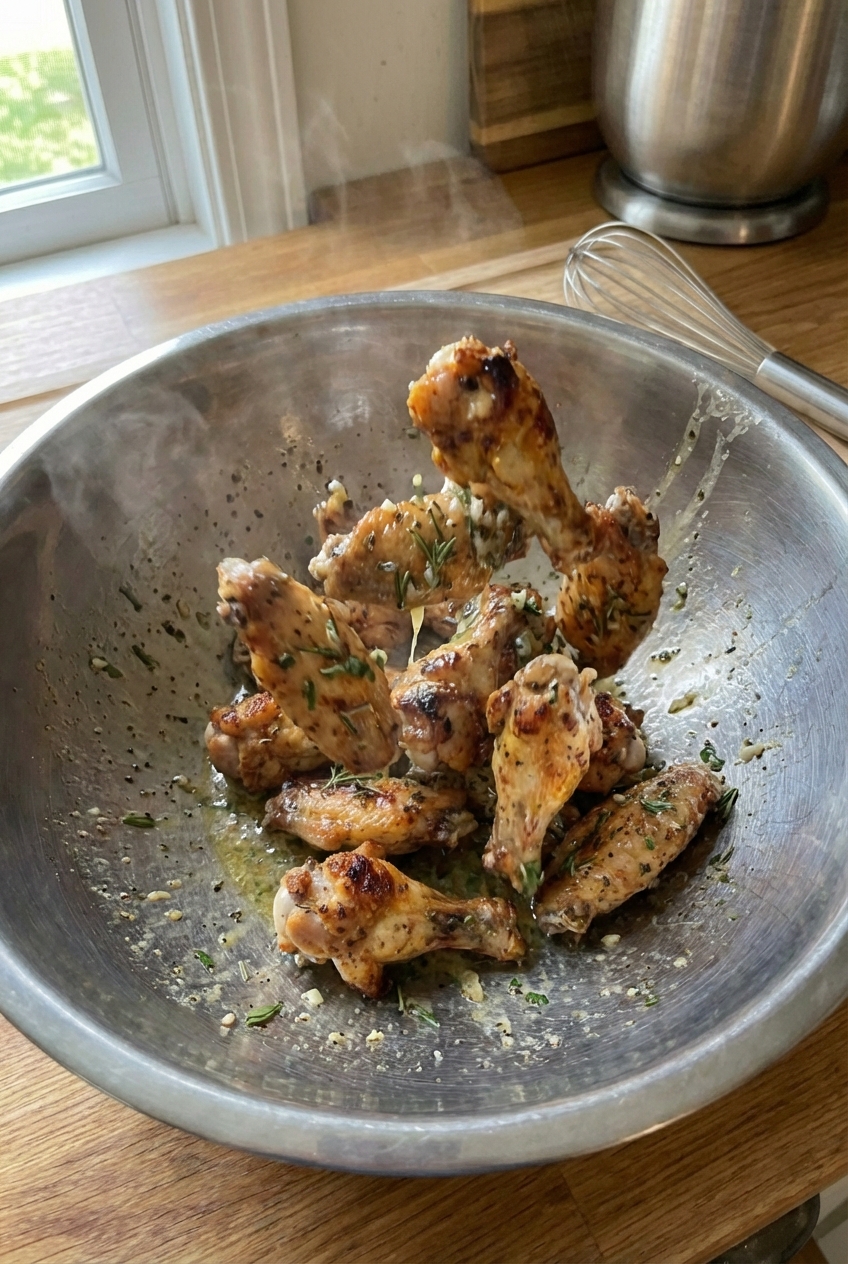
Do I need baking powder for crispy wings?
No, but it helps. A little baking powder dries the skin and promotes better browning and crisping. If you use it, many cooks prefer aluminum-free baking powder to avoid a faint metallic aftertaste, but it is not required. Skip it if you want, just make sure your wings are very dry and do not overcrowd the basket.
Can I use dried herbs instead of fresh?
Yes. Use dried herbs in the rub (they handle heat well). For the finishing toss, fresh herbs are the upgrade, but dried will still taste great. If using dried in the butter, use about 1 teaspoon total instead of a full tablespoon of fresh.
How do I avoid smoky air fryer wings?
Wings can drip fat. If your air fryer runs smoky, check your manufacturer guidance first. Some models let you add 1 to 2 tablespoons water to the bottom of the drawer (not the basket) to reduce smoking. Another option is placing a small piece of bread under the basket to catch drips. Also wipe out old grease between batches.
What internal temp should wings be?
Chicken is safe at 165°F. Wings often eat best closer to 175°F to 190°F because more fat renders and connective tissue softens, which helps crisp-tender texture. Do not treat 190°F as a safety requirement, use it as a doneness preference and pull when they are juicy and crisp.
Can I stack wings?
Try not to. Overlapping blocks airflow and you will lose those crisp edges. For 2 pounds, most 5 to 6 quart basket air fryers do best with two batches. If you are cooking a lot, do batches and keep the first batch warm in a 200°F oven on a rack.
Can I use frozen wings?
Best move is to thaw, then pat very dry before seasoning. If you must cook from frozen, air fry at 360°F until thawed and the exterior is dry enough to season, then drain any liquid, pat dry, season, and finish at 400°F until crisp and cooked through.