What herb works best in blueberry muffins?
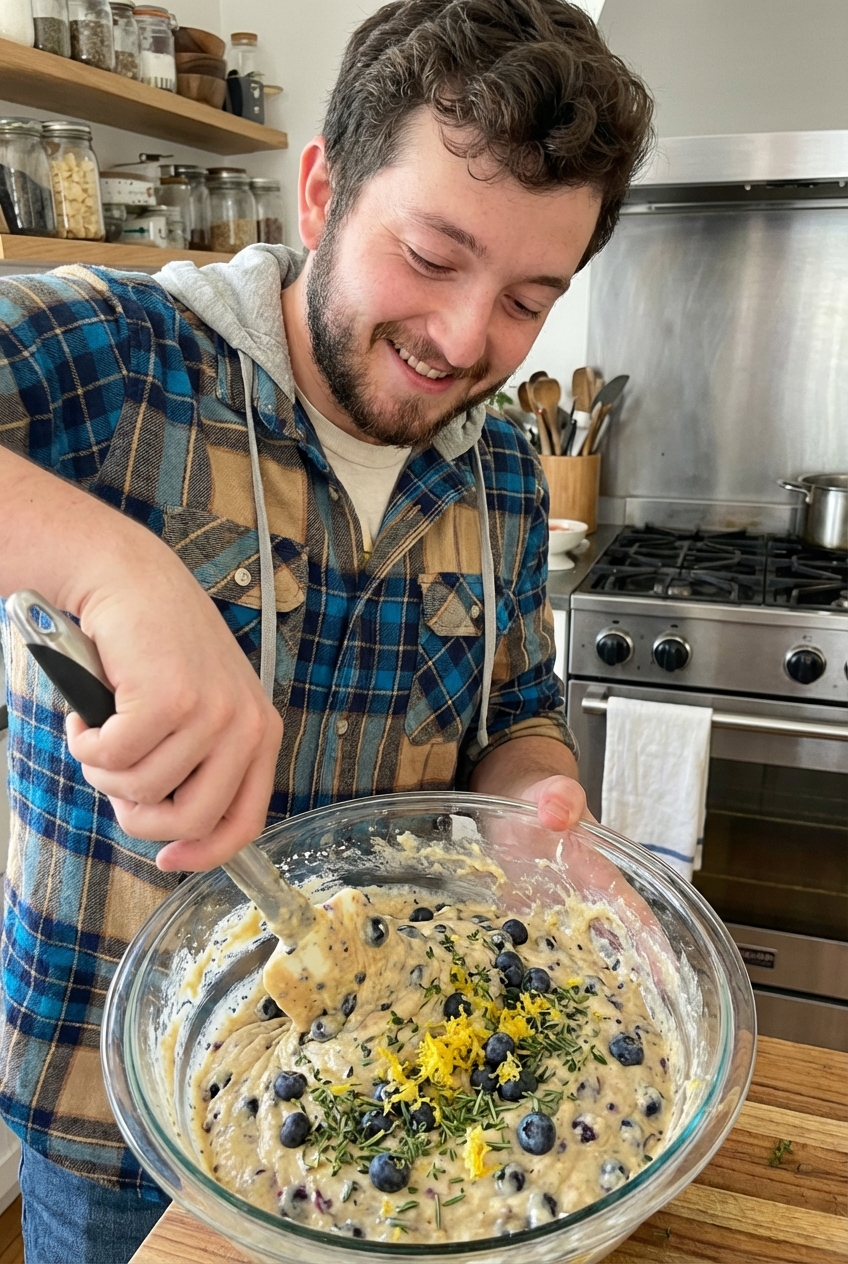
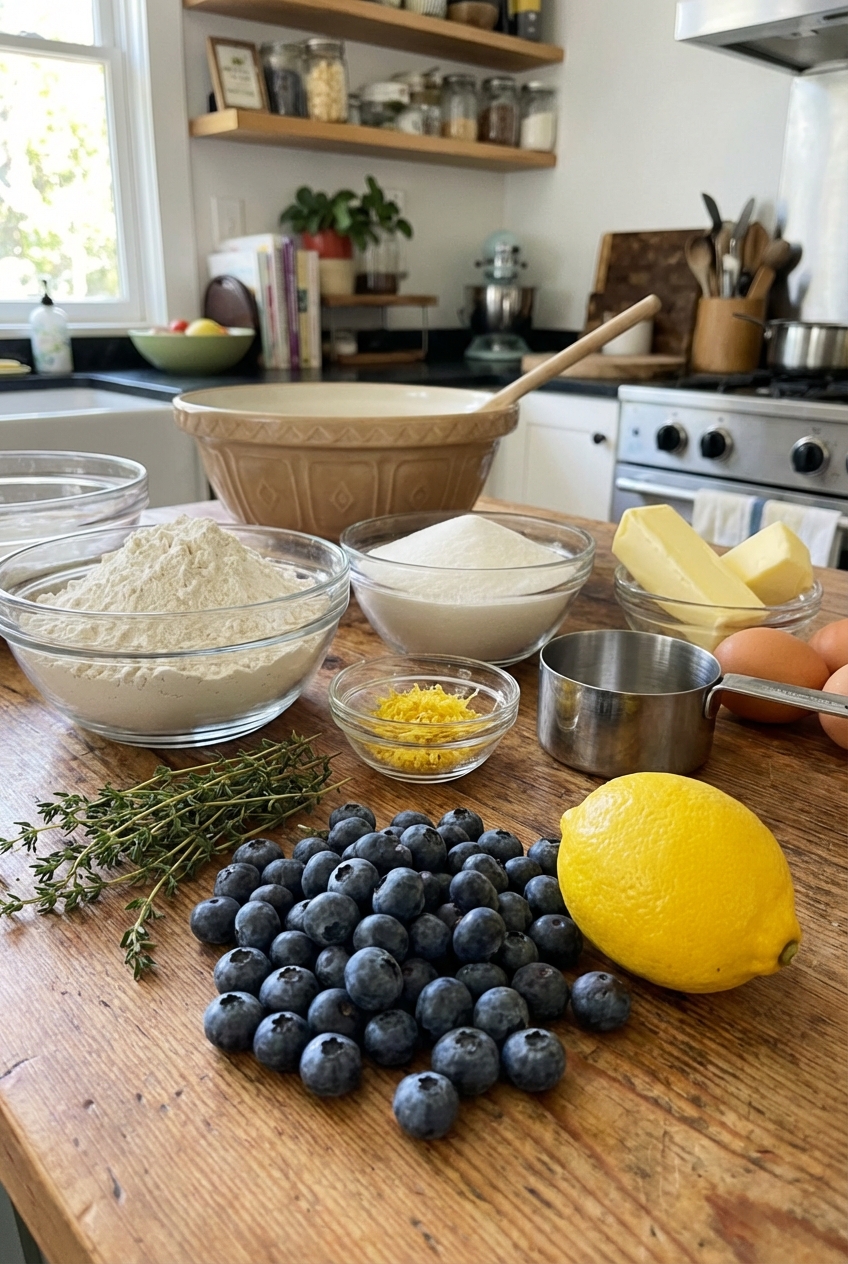
Thyme is my favorite for a subtle, almost floral savory note that plays nicely with lemon. Rosemary is bolder, so use less. Basil is surprisingly good and reads more sweet, especially with lemon zest. Mint can be overpowering and toothpaste-adjacent if you use too much, so keep it very light.
Will the muffins taste “savory”?
No. The herb is a background note, not the main event. If you are nervous, start with the smaller amount listed and go thyme or basil.
Can I use frozen blueberries?
Yes. Use them straight from the freezer (do not thaw). Toss with a teaspoon of flour before folding in, and fold quickly and gently to limit purple streaking. A little streaking is not a problem, it is just honest muffin behavior.
How do I keep muffins from turning out dense?
Two things: do not overmix, and do not pack your flour. Stir just until you stop seeing dry flour. A few small lumps are good. Lumps are friends.
Can I make these dairy-free?
Yes, with a couple of smart swaps. Use a neutral oil in place of butter, and use a thick dairy-free yogurt (coconut, almond, or soy) in place of Greek yogurt to keep the crumb tender. If you do not have dairy-free yogurt, you can use dairy-free milk plus 1 teaspoon lemon juice, but the batter will be thinner and the muffins a bit less plush.
Can I reduce the sugar?
You can drop the sugar by 2 to 3 tablespoons without wrecking the texture. Keep in mind sugar helps the muffins stay moist and encourages browning.
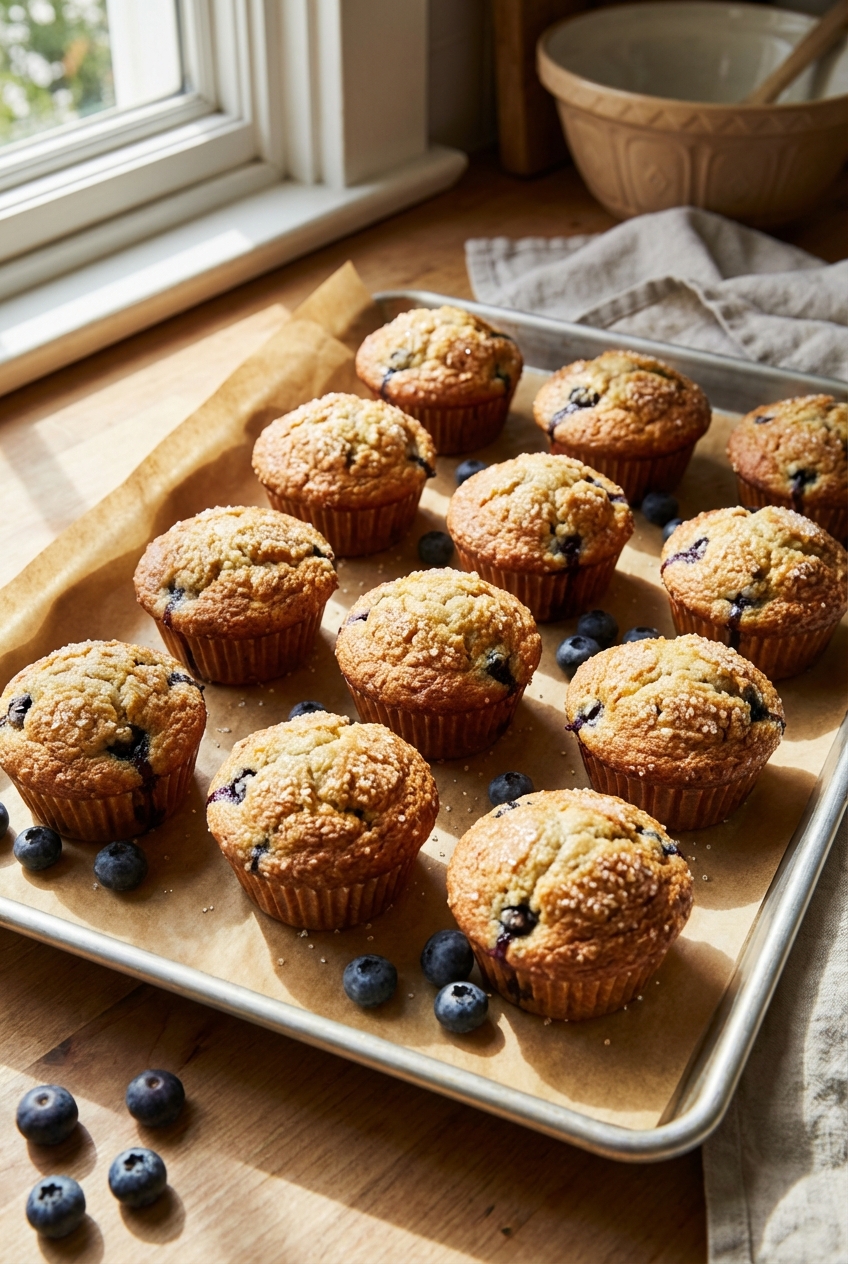
How can I tell when they are done?
A toothpick should come out clean or with a few moist crumbs. Avoid wet batter. If you like precision, aim for an internal temperature of 200 to 205°F in the center of a muffin.