Common Questions
Is hibachi fried rice actually “hibachi”?
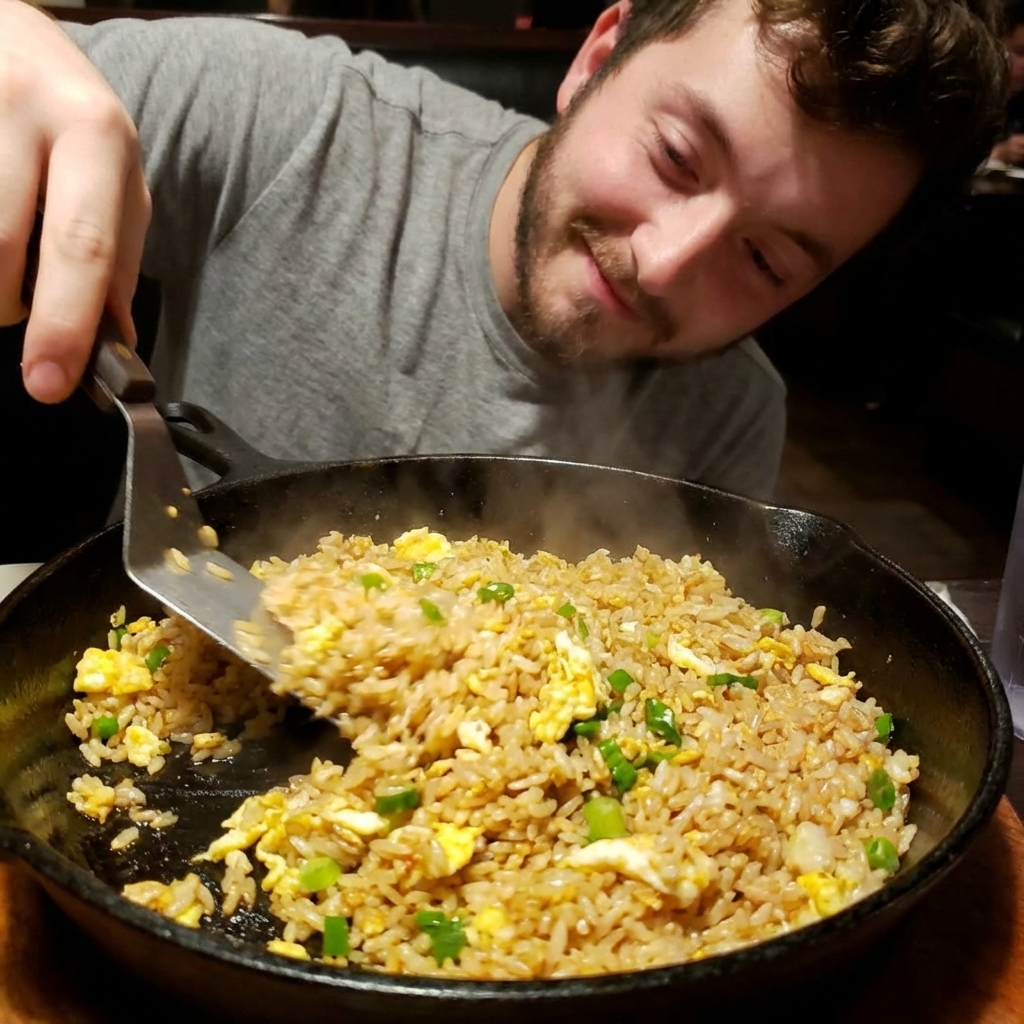
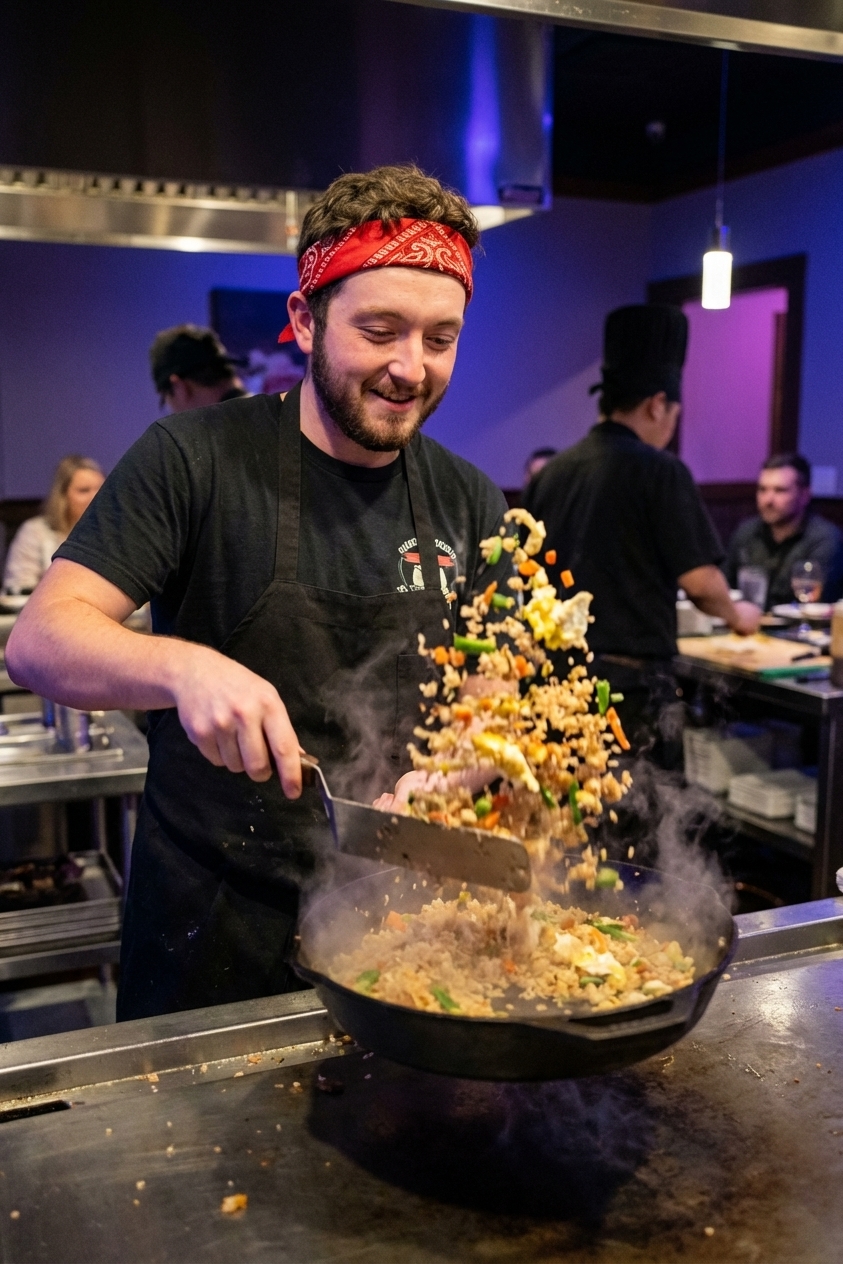
In the U.S., “hibachi” fried rice is the common name, but it is usually cooked teppanyaki-style on a flat-top griddle at Japanese steakhouses. Same vibe, same flavors, different equipment. At home, a hot skillet gives you the same delicious result.
What type of rice is best?
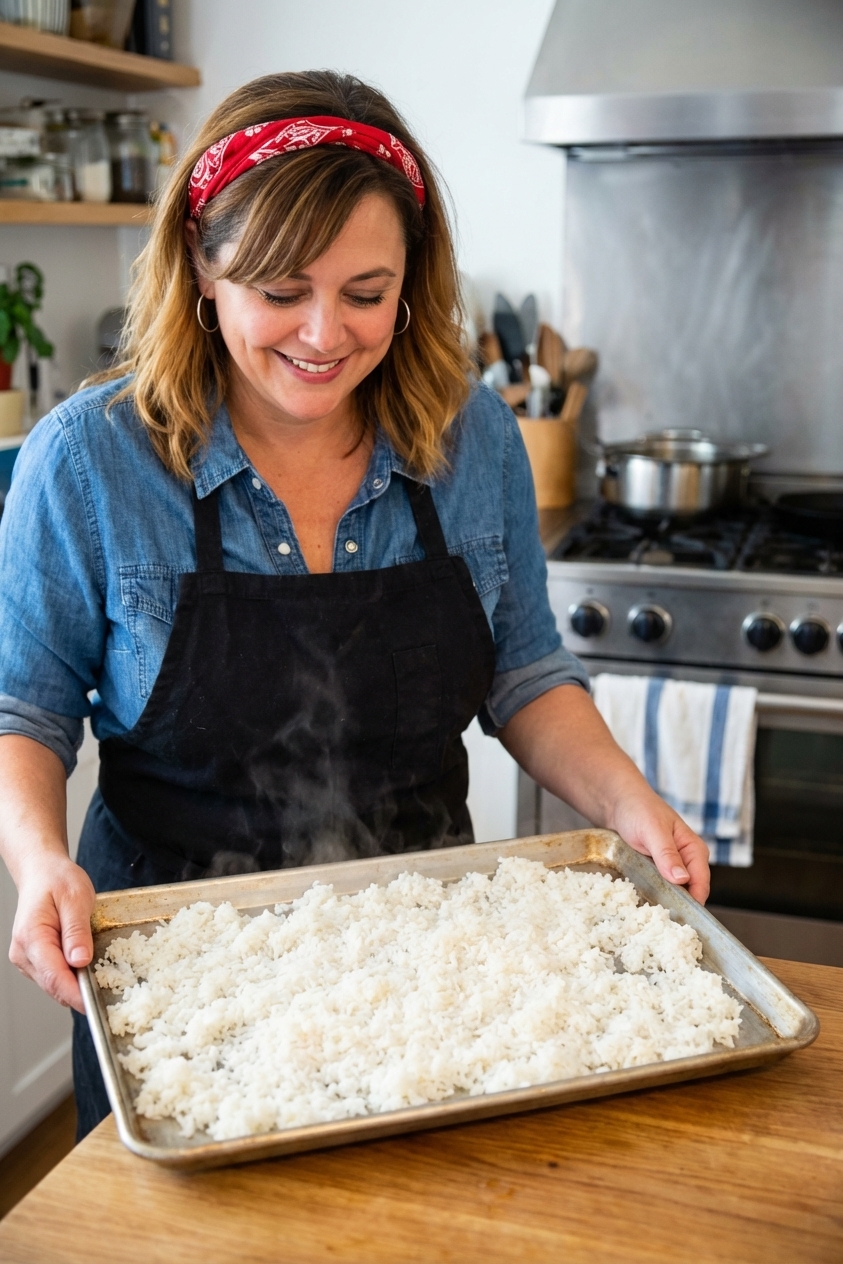
Japanese steakhouses typically use a short to medium grain white rice (think Calrose or sushi-style rice) because it fries up tender with a little chew. That said, jasmine or long-grain also works, just a bit drier and more separate. Whatever you use, the real rule is: cook it ahead and chill it.
What makes hibachi fried rice taste different from regular fried rice?
Two big things: butter (Japanese steakhouses use it a lot) and soy sauce hitting the hot surface instead of just being stirred in off-heat. It sizzles, toasts, and reduces for a deeper savory flavor.
Do I need a flat top griddle?
Nope. A large skillet, cast iron pan, or wok works great. The key is high heat and not overcrowding. If your pan is small, cook in two batches.
Why does my fried rice get mushy?
Usually it is warm, fresh rice or too much sauce. Use cold rice and add soy sauce in small amounts, ideally onto the pan so it sizzles first.
Can I use brown rice?
Yes. It will be a bit chewier and nuttier. Still delicious. Make sure it is fully chilled and dry before frying.
Is there sesame oil in hibachi fried rice?
Some restaurants use a little at the end for aroma, but the classic steakhouse taste leans more on butter + soy + garlic. If you love sesame oil, add just a few drops at the end so it does not overpower.
How do I add steak, chicken, or shrimp?
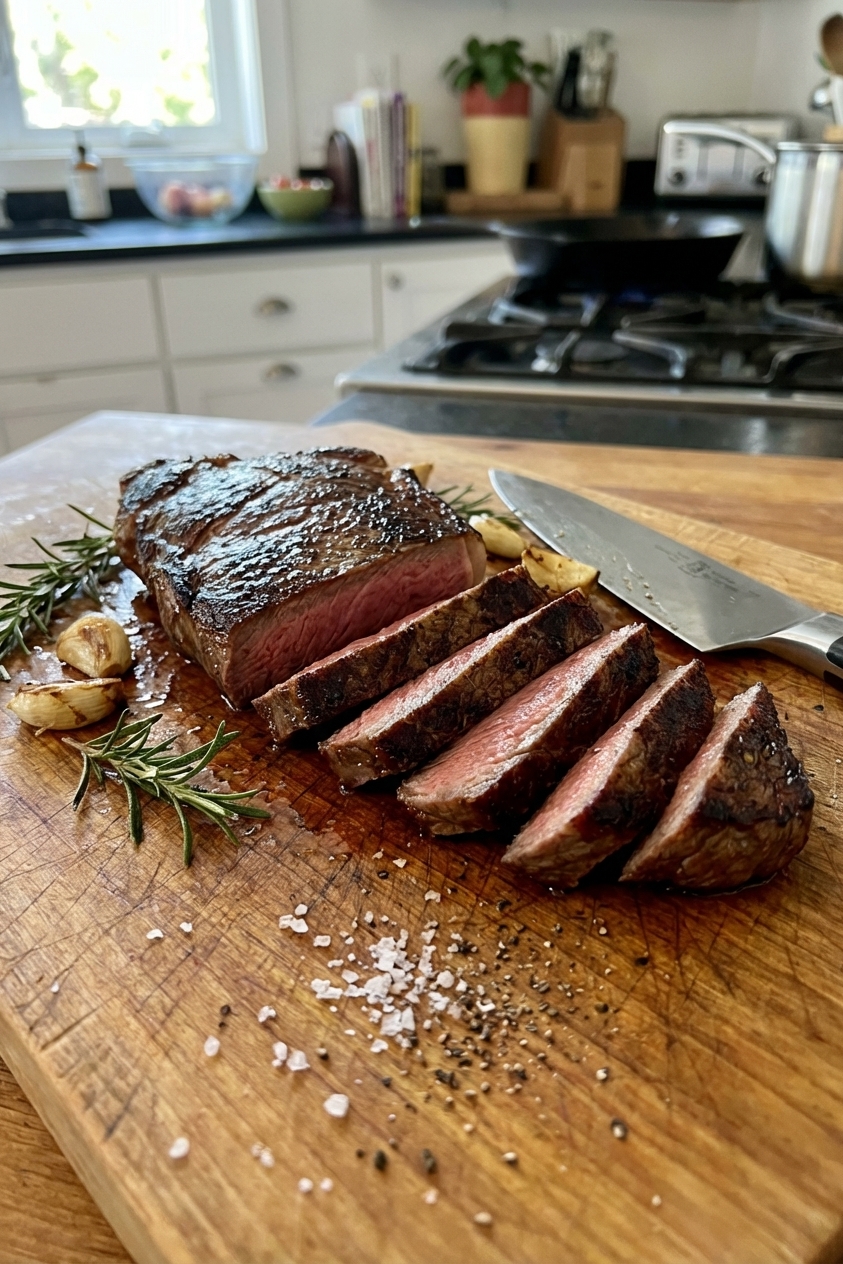
Cook the protein first, remove it, then make the rice in the same pan. Stir the cooked protein back in at the end so it stays juicy and does not overcook.