1) Make the sauce
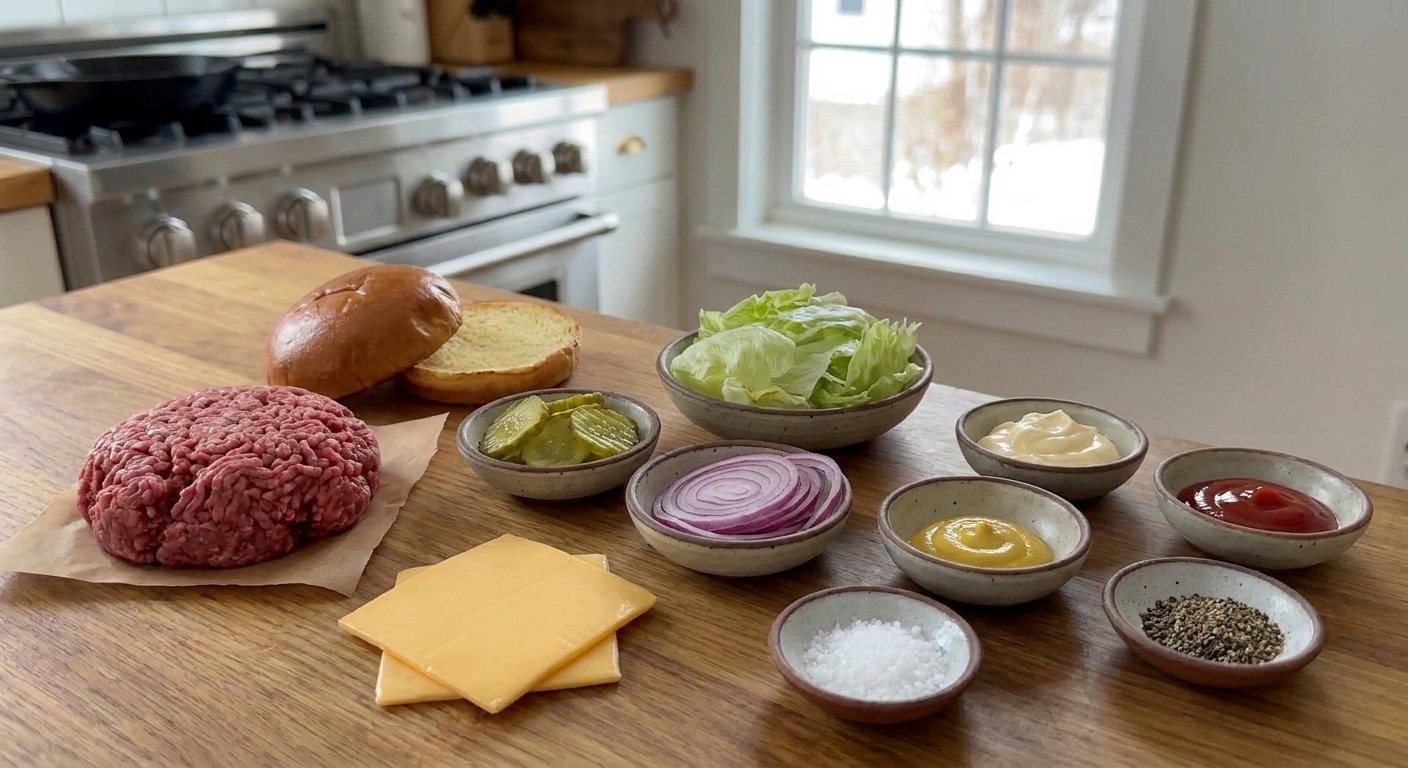
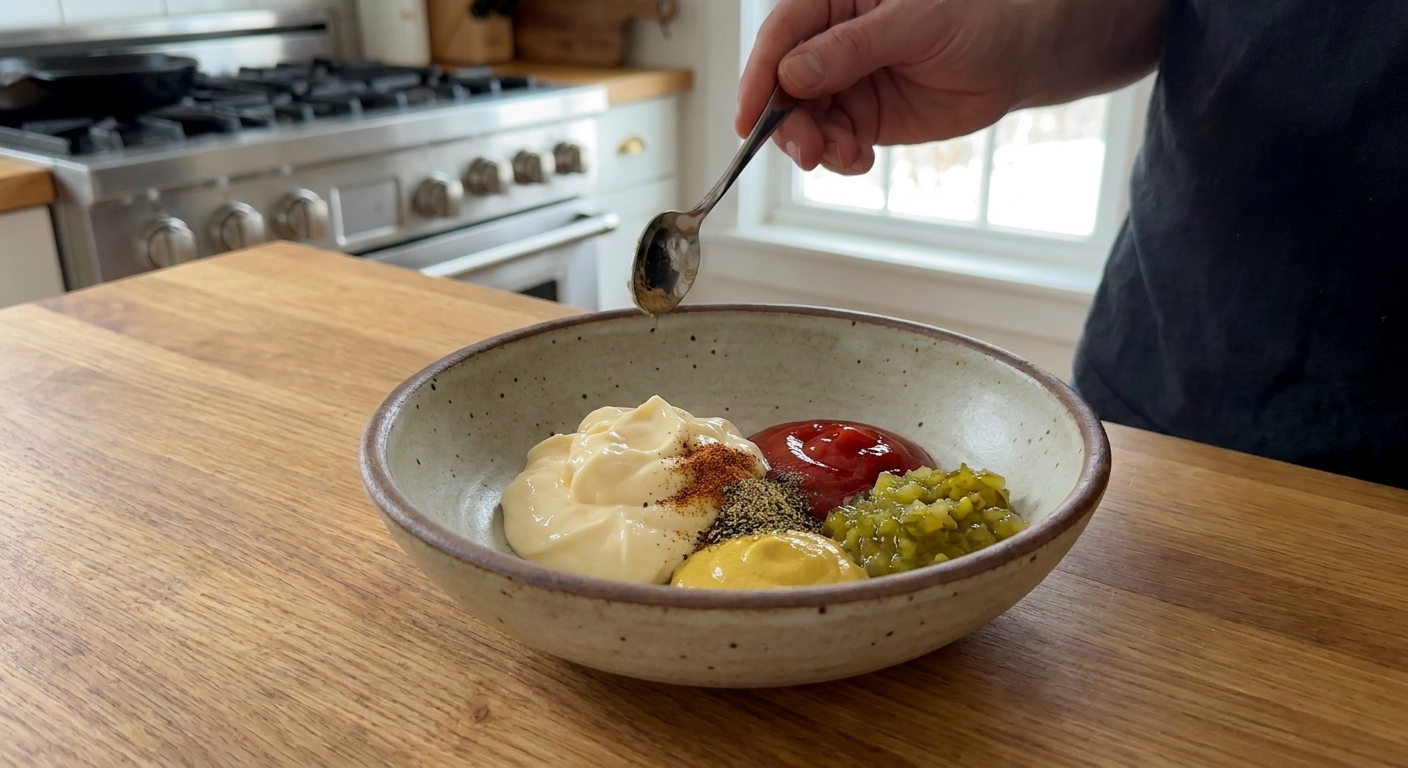
In a small bowl, stir together the mayo, ketchup, mustard, relish, vinegar (if using), smoked paprika (if using), garlic powder, and black pepper. Taste it. If you want it tangier, add a tiny splash more vinegar. Refrigerate while you cook.
2) Prep your toppings and buns
Slice onion, set out pickles and lettuce, and split your buns. This part is boring, but it keeps burger night from turning into a scramble.
3) Heat the skillet (and your vent)
Smash burgers can get smoky. Turn on your hood fan and crack a window if you can.
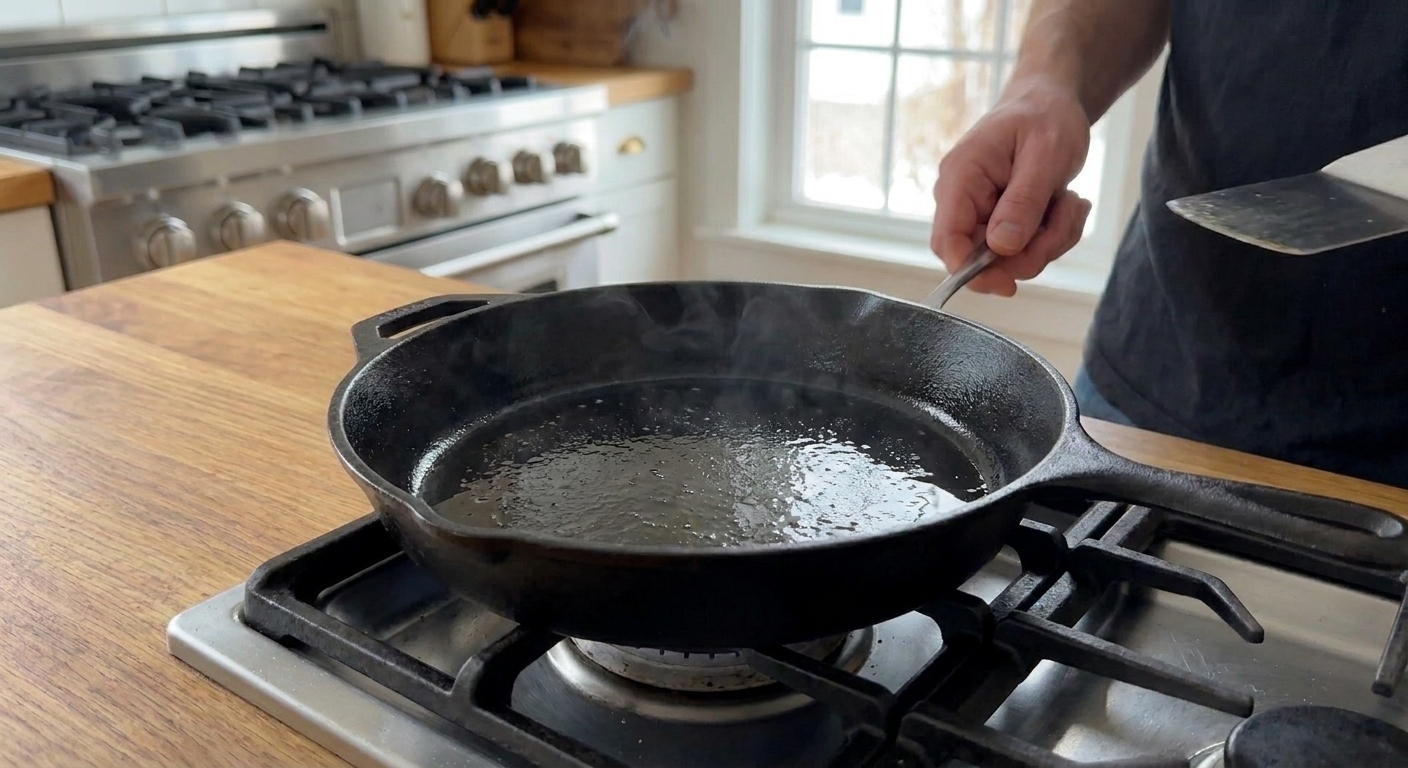
Place a cast iron or heavy skillet over medium-high heat for 3 to 5 minutes. You want it properly hot. Add the oil and swirl to coat.
4) Form loose balls, then smash
Divide the cold ground beef into 8 loose balls (about 3 ounces each). Don’t pack them tight.
Working in batches, place 2 to 3 balls in the skillet, leaving space so they sear instead of steam. Top each ball with a square of parchment and smash hard with your spatula until thin, about 1/4-inch thick. Peel off the parchment.
5) Season and cook, no touching
Season the patties immediately after smashing with salt and pepper (just the side facing up is perfect). Let them cook undisturbed for 1 1/2 to 2 minutes, until the edges look deeply browned and crisp.
Flip cue: when you see the top start to look a little glossy and you spot juices bubbling through, the crust is usually ready to scrape and flip.
6) Flip, add cheese, finish
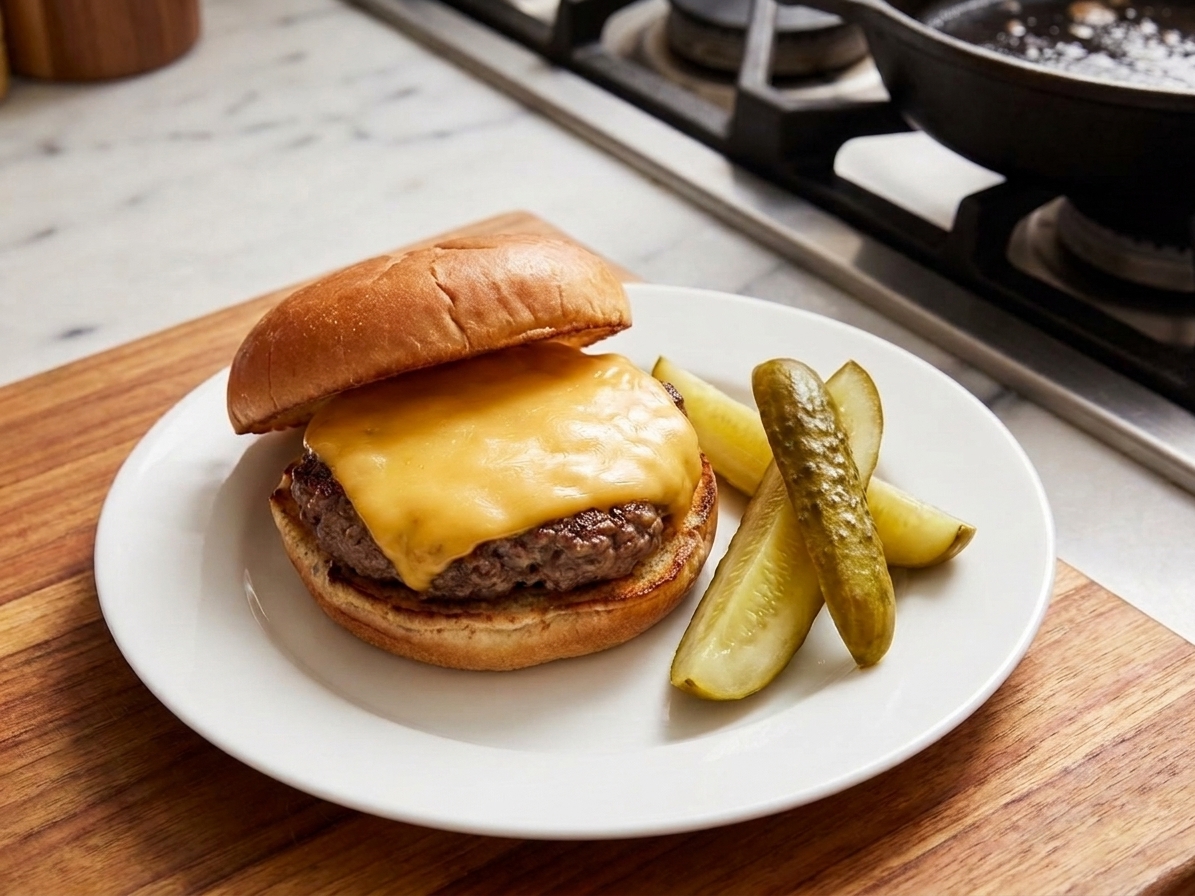
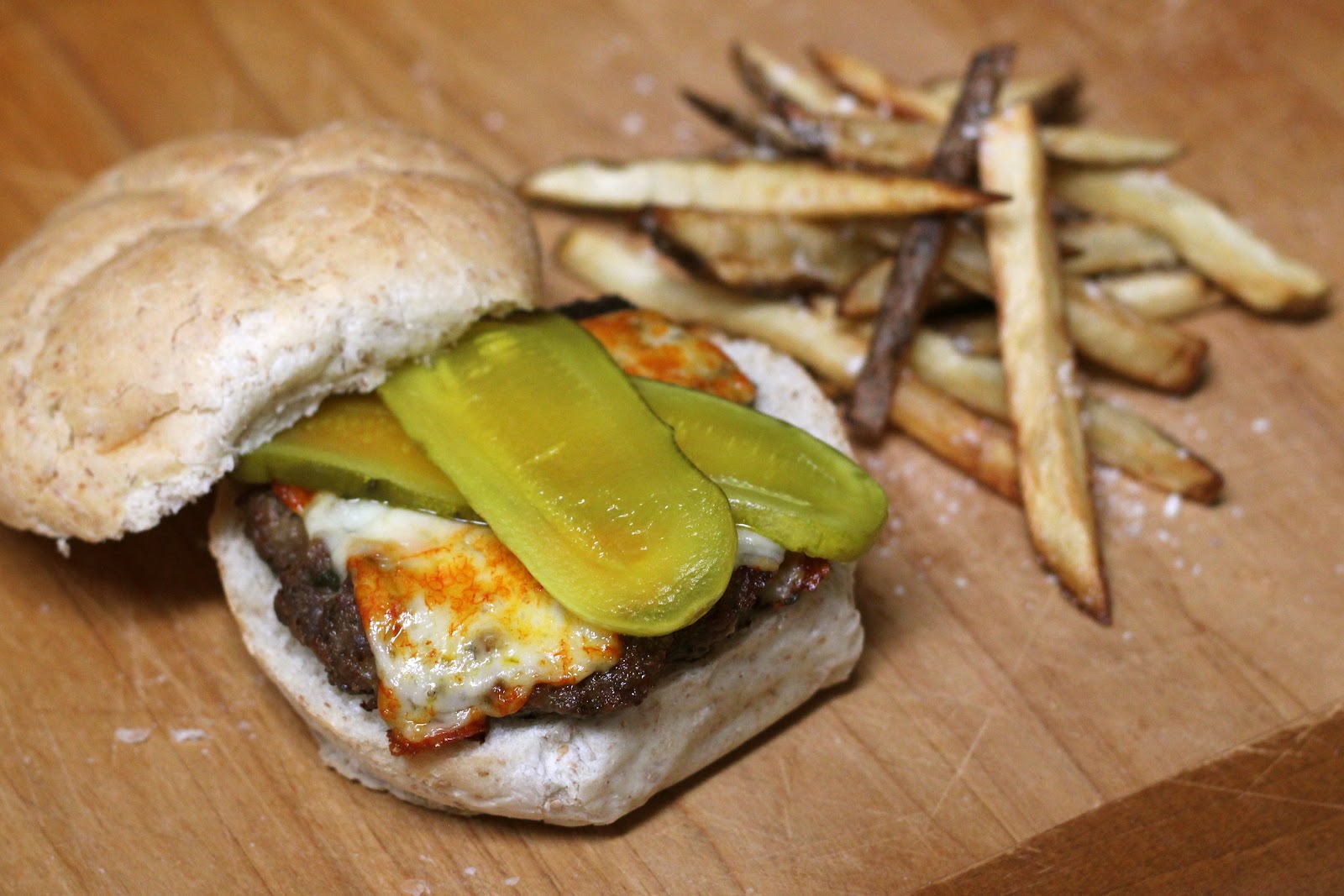
Scrape under each patty firmly to keep the crust intact, then flip. Immediately add a slice of cheese to each patty. Cook 45 to 75 seconds more, until the cheese is melty and the second side is browned.
That’s one flip per patty. Stack two patties per burger for maximum joy.
7) Toast the buns in the same skillet
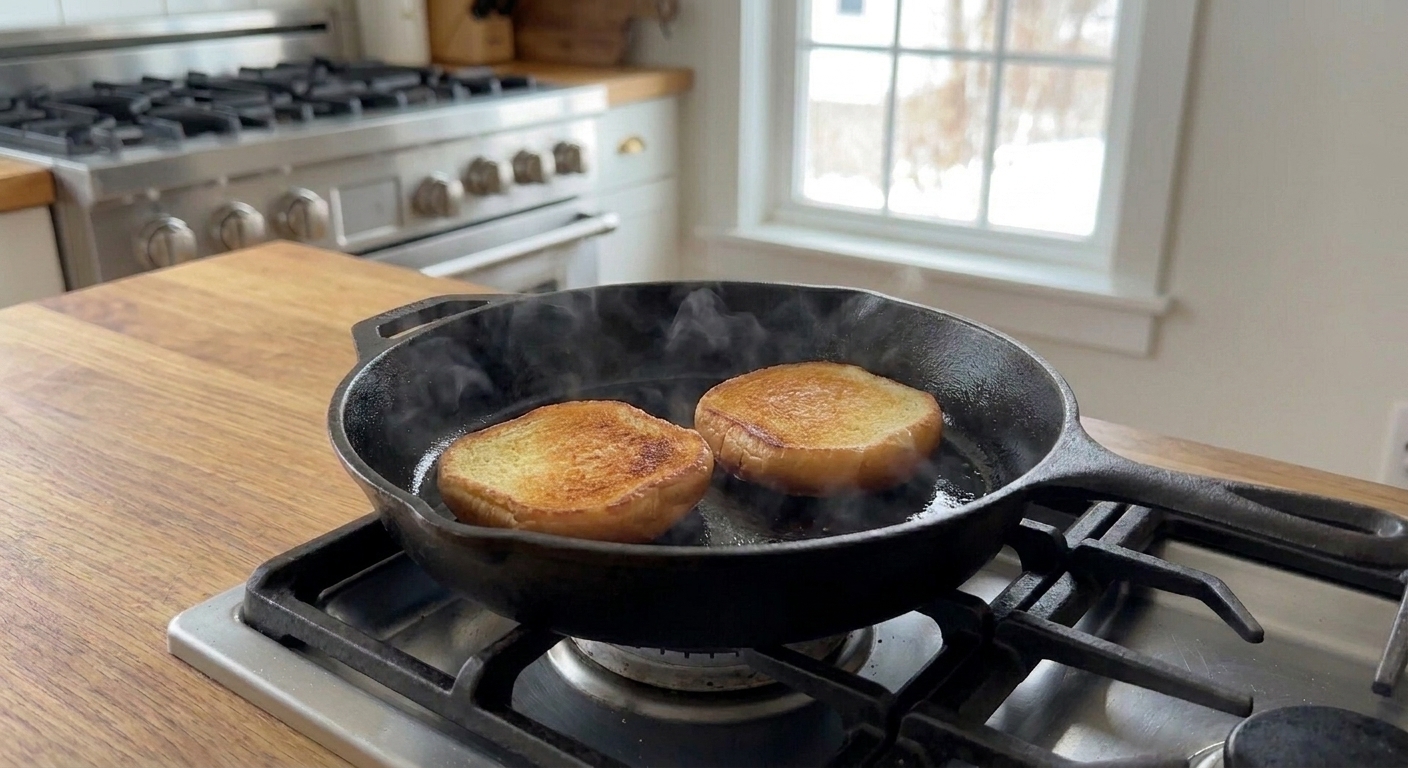
Turn heat to medium. Toast buns cut-side down in the skillet for 30 to 60 seconds, until golden.
If you want the full diner move, toast in the rendered burger fat. If you’d rather keep it simple and a little less intense, add a small pat of butter to the pan and toast the buns in that instead.
8) Build your homeburger
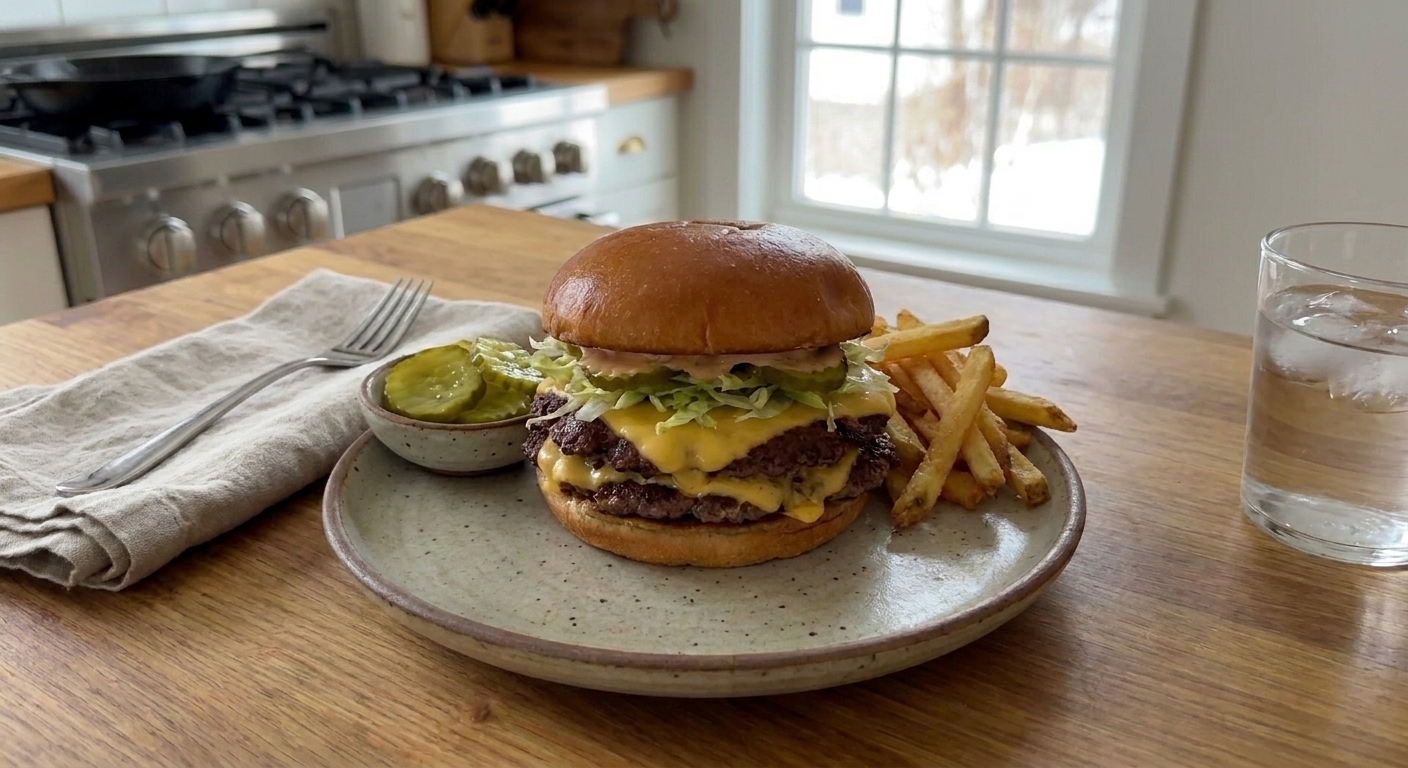
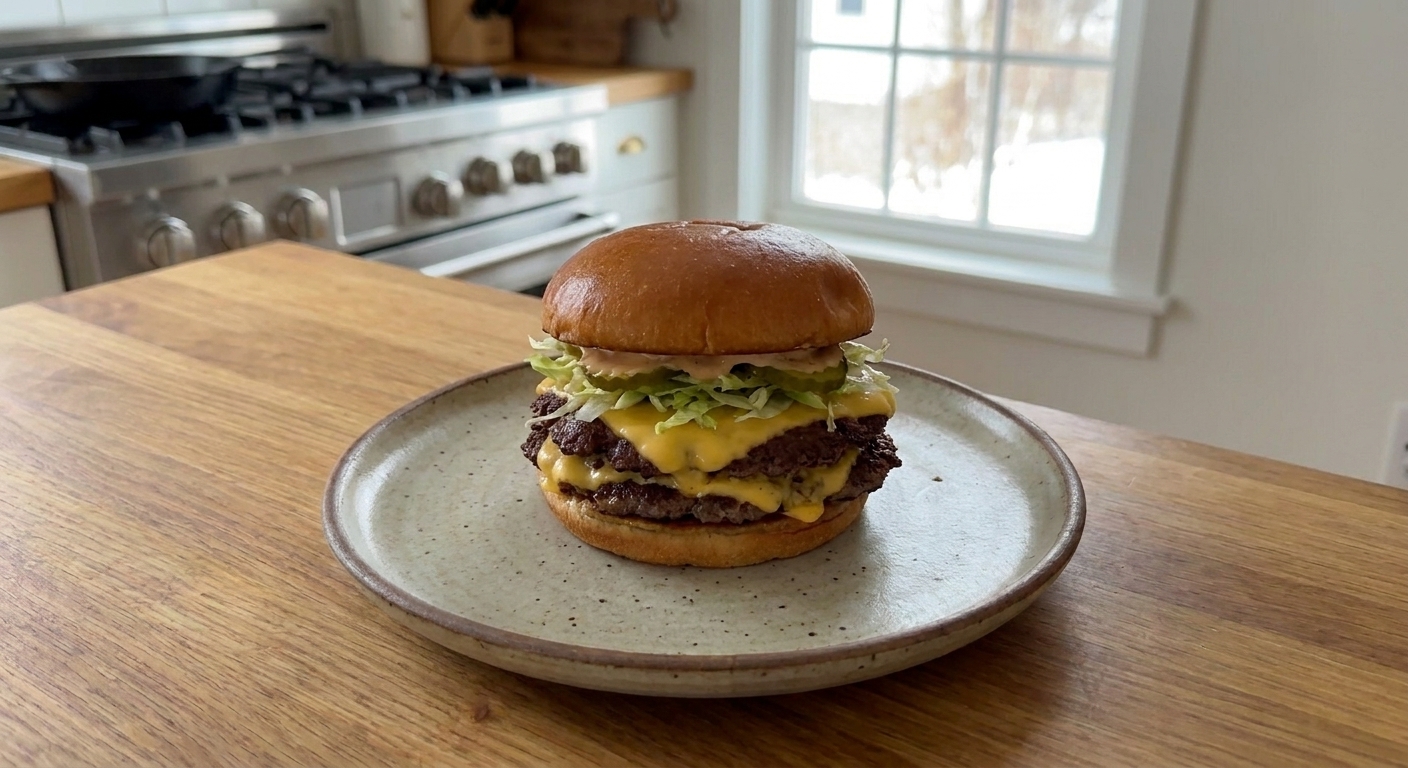
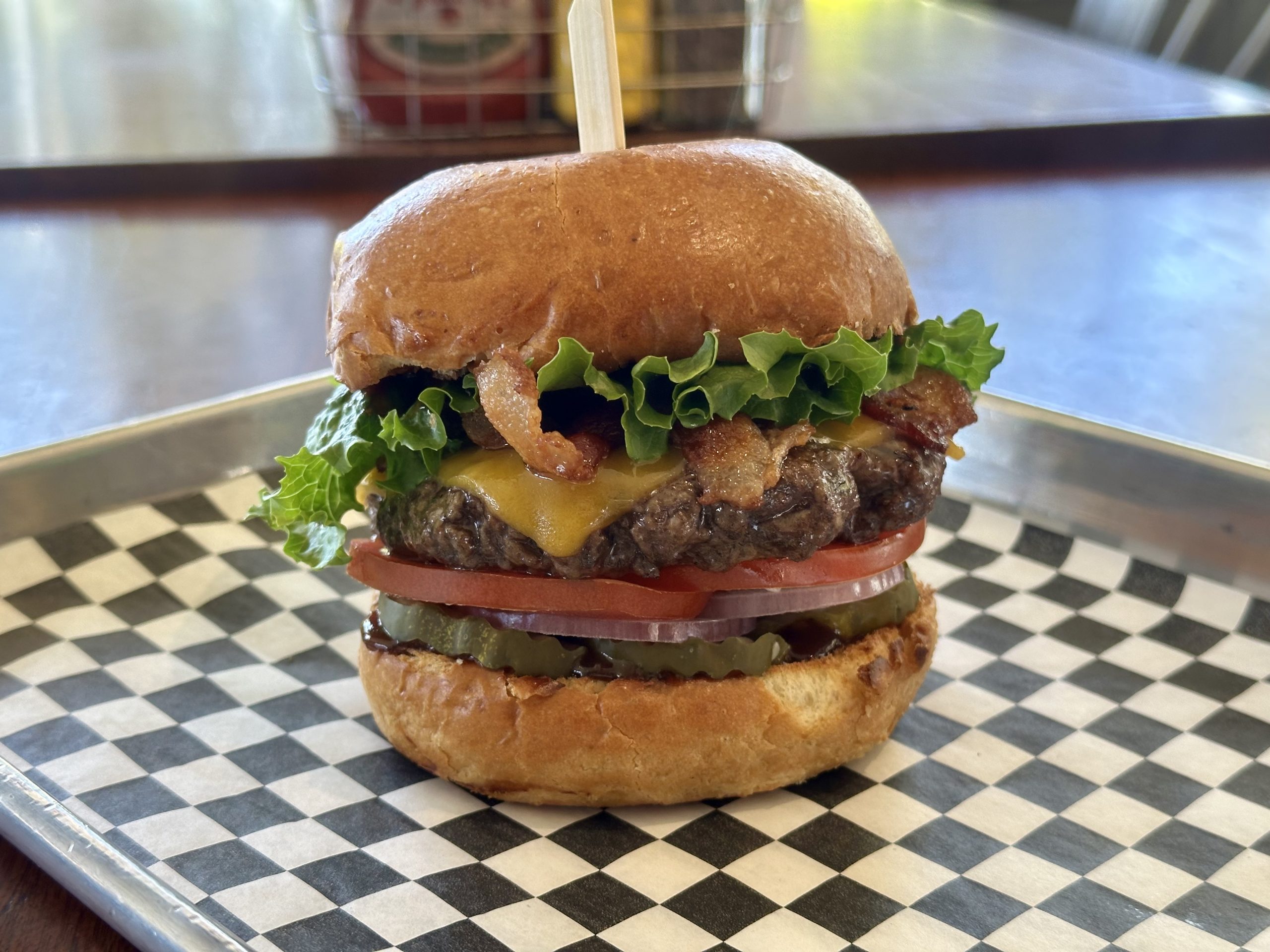
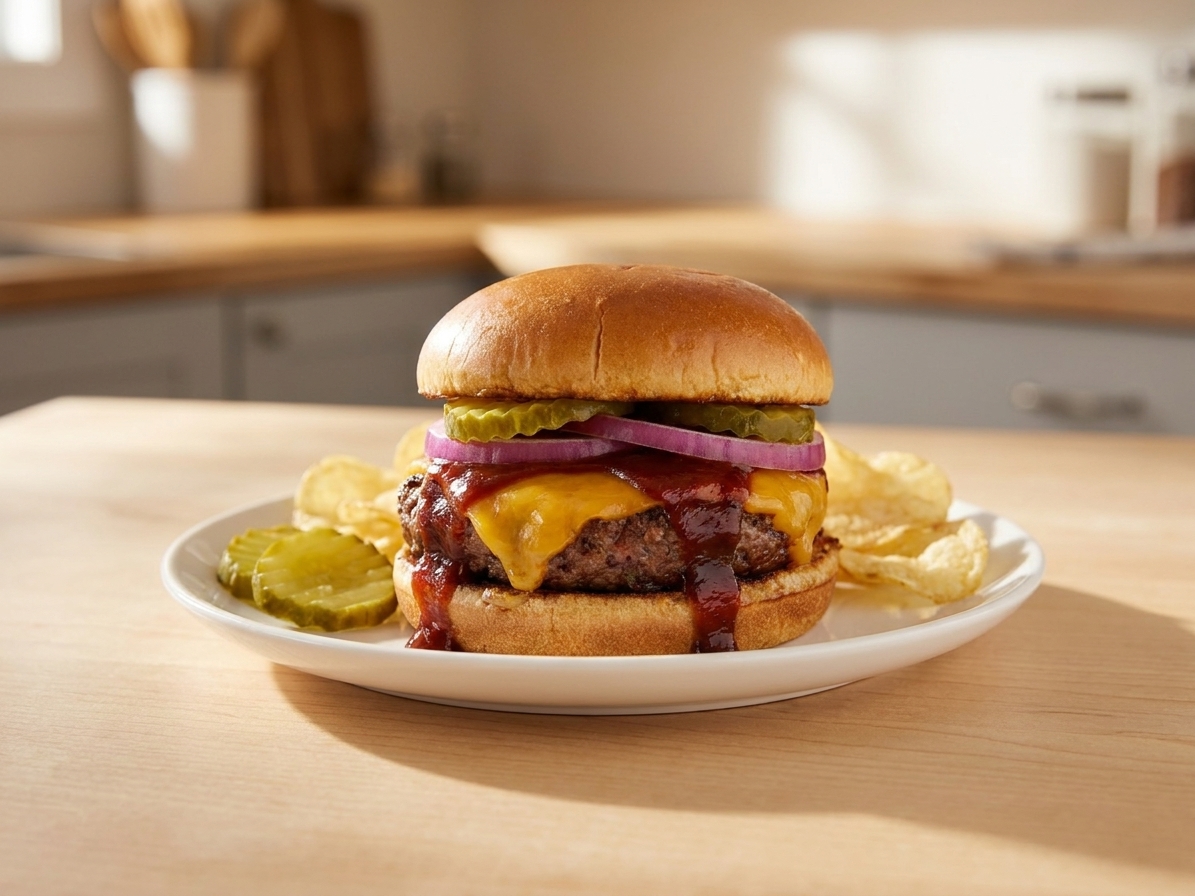
Spread sauce on the bottom bun, add lettuce, then your double patty stack, then onion and pickles. Add tomato if using. Sauce on the top bun if you’re feeling extra. Press gently, then eat while it’s still loud and crispy.