Mom's Best Recipes
Recipe

Homemade Chili Con Carne

Fresh, vibrant chili with beef, beans, and a bright lime finish. Cozy, bold, and weeknight friendly.

Author By Matt Campbell
4.8
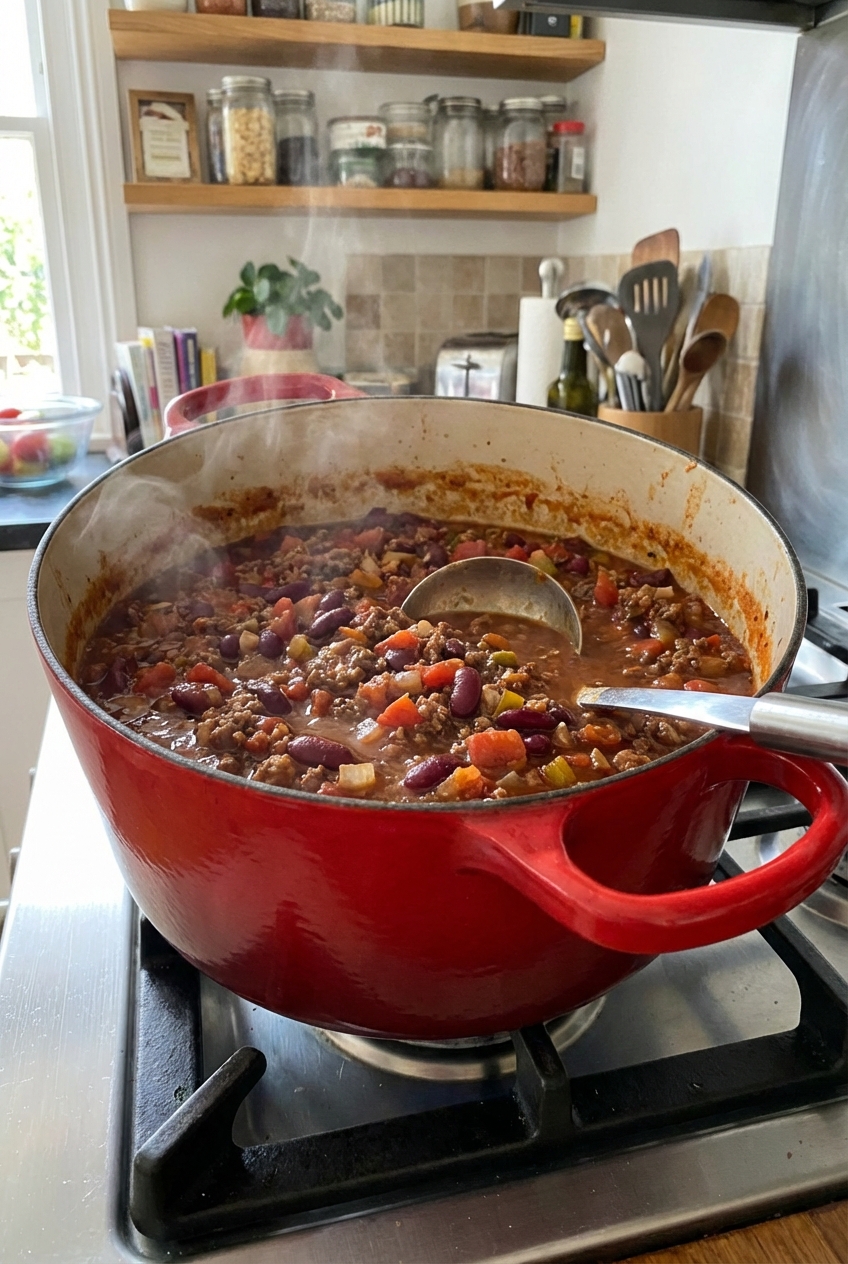
A pot of homemade chili con carne simmering on a stovetop with visible beans, ground beef, tomatoes, and a ladle resting inside

Chili con carne is one of those meals that can be either a flat, brown pot of disappointment or a rich, lively bowl that tastes like it took all day. We are going for option two, without making you babysit the stove.

This homemade chili is built on a few simple moves that stack flavor fast: browning the beef until it actually gets those crisp edges, blooming the spices in hot fat, and finishing with a little brightness so the whole pot tastes fresh and vibrant, not heavy. It is cozy, yes. But it also has lift.

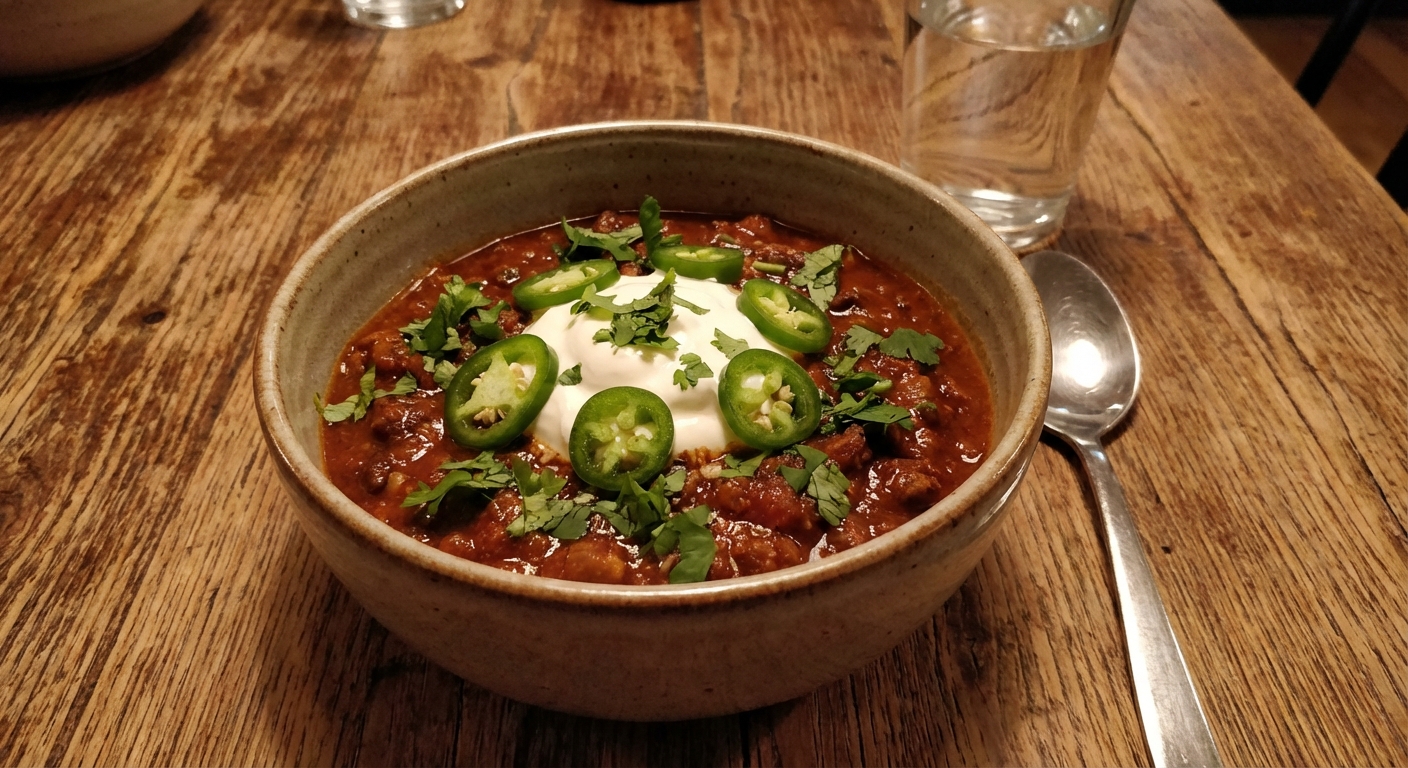
A bowl of chili con carne topped with sour cream, sliced jalapenos, and chopped cilantro on a wooden table

Why It Works

  • Deep, savory base: Browning the beef well plus a spoon of tomato paste gives you that roasty, “this is serious” flavor.
  • Spices that actually taste like something: Blooming chili powder, cumin, and smoked paprika in the pot wakes them up fast.
  • Fresh and vibrant finish: Lime juice and a small splash of vinegar at the end brightens the whole bowl without making it taste sour.
  • Thick, spoon-coating texture: A short simmer plus a quick mash of some beans makes it hearty without needing flour or odd tricks.
  • Flexible ingredients: Use what is accessible. Swap beans, adjust heat, and make it your own.

Pairs Well With

Storage Tips

Chili is the gift that keeps on giving, especially on day two.

To refrigerate

  • Cool the chili quickly, then transfer to airtight containers. For faster cooling, spread it in a shallow container before sealing.
  • Refrigerate up to 4 days.

To freeze

  • Freeze in portioned containers or freezer bags (lay bags flat for easy stacking).
  • Freeze up to 3 months.

To reheat

  • Stovetop: Reheat over medium-low with a splash of broth or water, stirring occasionally.
  • Microwave: Cover loosely and stir once or twice as it heats.

Texture tip: Chili thickens as it sits. That is normal. Loosen with a little broth, then re-taste for salt and lime.

Common Questions

Is chili con carne supposed to have beans?

It depends on the style. In Texas-style chili con carne, beans are usually a no. In plenty of home and regional versions, beans are very much a yes. This recipe uses beans because they add great texture, stretch the pot, and make it extra weeknight friendly. If you are anti-bean, leave them out and add an extra 1/2 pound of beef or an extra bell pepper.

How spicy is this?

With a standard American chili powder blend, this lands at medium heat if you use the jalapeño, and closer to mild-medium if you skip it. For mild, use a mild chili powder and omit the jalapeño and cayenne. For hot, add the cayenne or a pinch more, and bring hot sauce to the table.

How do I make it thicker without simmering forever?

Mash about 1/2 cup of the beans against the side of the pot, then stir them back in. You can also simmer uncovered for 10 to 15 minutes. Avoid adding lots of extra tomato paste late in the game because it can taste harsh if it does not cook out.

What chili powder should I use?

Use a standard American chili powder blend (not pure ground chile). If yours is mild, add a pinch of cayenne. If yours is very spicy, start with 2 tablespoons and build up.

Can I make this in a slow cooker?

Yes. Brown the beef and sauté the onion, garlic, spices, and tomato paste first. If your pot has a lot of fat after browning, spoon off the excess. Transfer to a slow cooker with the crushed tomatoes, beans, and 1 1/2 cups broth (slow cookers do not reduce much). Cook on low 6 to 8 hours or high 3 to 4 hours. Finish with lime and vinegar at the end.

How can I make it less spicy for kids?

Skip the jalapeño, use a mild chili powder, and keep cayenne out. Put hot sauce on the table for anyone who wants extra heat.

The first time I tried to make chili on my own, I treated it like a dump-and-stir situation. It was fine, technically. But it tasted like every ingredient was doing its own thing in the pot, like a group project with no leader.

Now I make chili the way I actually cook: brown hard, season with confidence, then finish with something bright. Lime at the end feels almost unfair, like a cheat code. Suddenly the same cozy bowl tastes awake. And if you accidentally simmer it longer because you got distracted, congratulations. You just made it better.