How do I know my crème fraîche is ready?
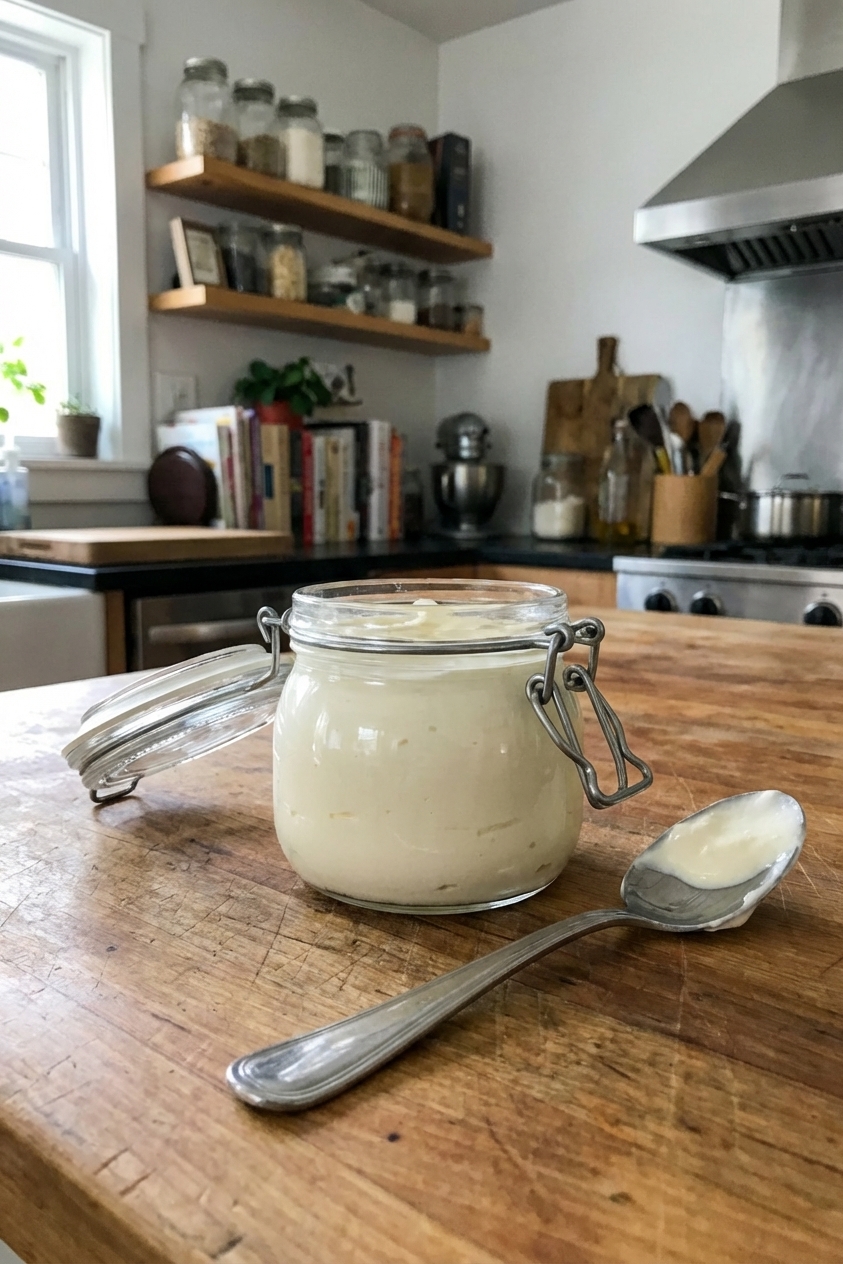
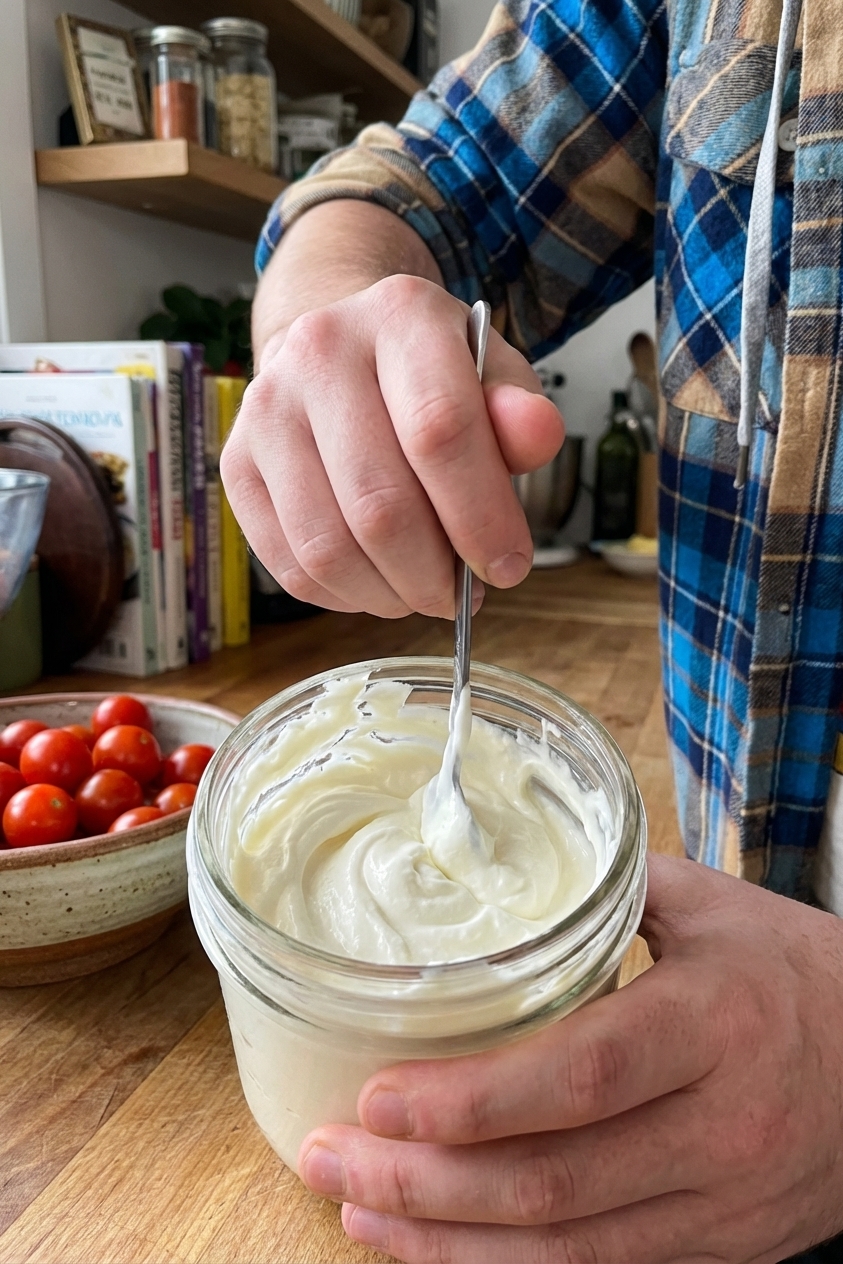
It should look like loose sour cream or thick yogurt. When you tilt the jar, it should move slowly as one mass instead of sloshing like cream. It will smell pleasantly tangy, kind of like mild yogurt, not funky, fizzy, or sharp.
How long does it take to culture?
Typically 18 to 24 hours at a warm room temperature (aim for about 70 to 75°F / 21 to 24°C). Cooler kitchens can take closer to 30 hours. If your kitchen is very warm (above about 78°F / 26°C), check it sooner.
Do I have to use buttermilk?
For this simple method, yes. You want cultured buttermilk because it contains the live cultures that thicken and acidify the cream safely. Other starters can work (like a spoonful of plain yogurt or an existing crème fraîche), but they can vary brand to brand.
What if it is still runny after 24 hours?
Give it more time and a slightly warmer spot. Sometimes it just needs another 6 to 12 hours. Also double-check that your buttermilk is cultured and lists live, active cultures.
Can I use ultra-pasteurized heavy cream?
Sometimes. Most grocery store heavy cream is ultra-pasteurized and it can work, but it can be slower and less reliable to set. For the most foolproof results, use regular pasteurized heavy cream if you can find it.
Is crème fraîche the same as sour cream?
They are cousins, not twins. Crème fraîche is usually higher fat and a little less tangy. That higher fat also helps it behave better in warm sauces and soups.
Can I bake with it as a substitute for sour cream?
Yes. Use a 1:1 swap in most baking recipes that call for sour cream. It adds moisture and tenderness, especially in cakes and quick breads.
How do I know if it went bad?
When in doubt, toss it. Discard if you see mold, pink or orange discoloration, or it smells unpleasantly yeasty, “off,” or carbonated.