Common Questions
Do I need a pasta machine?
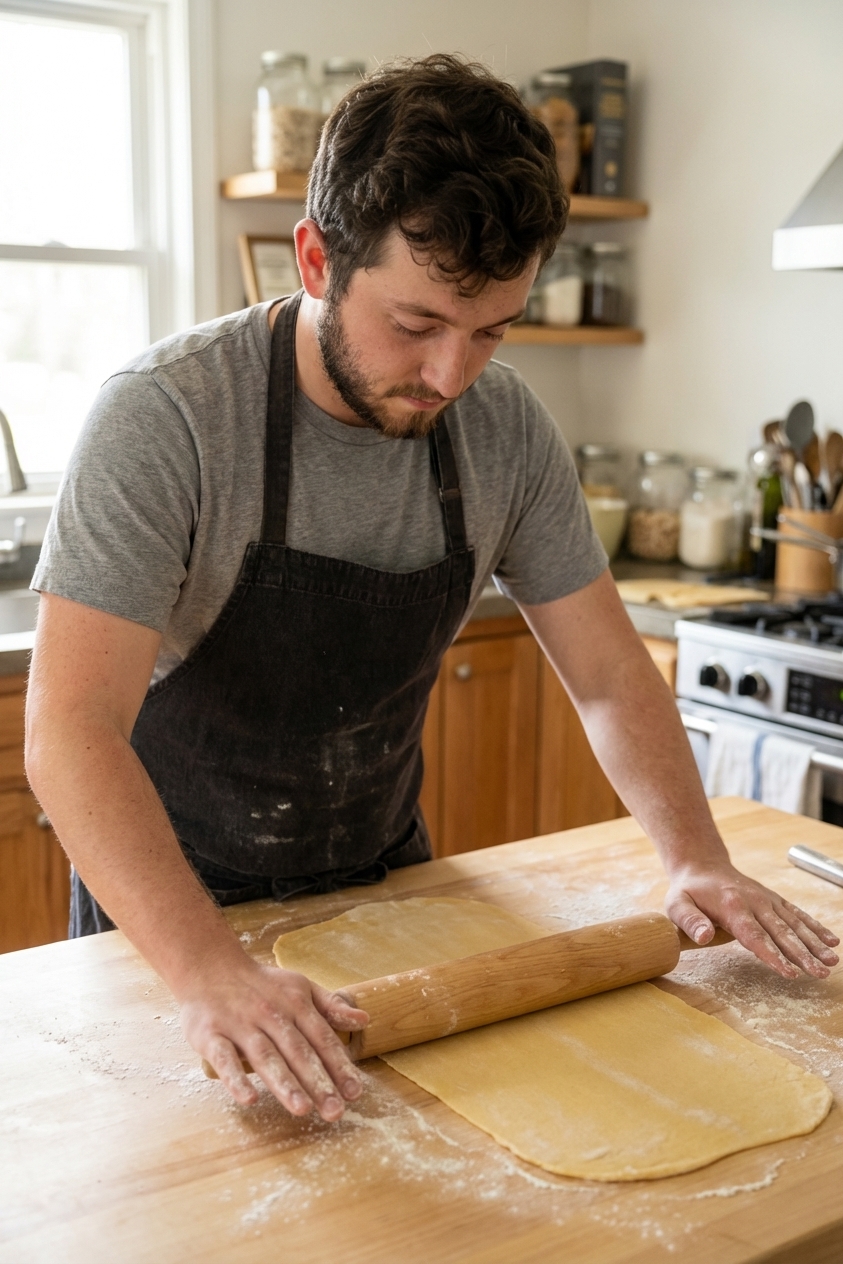
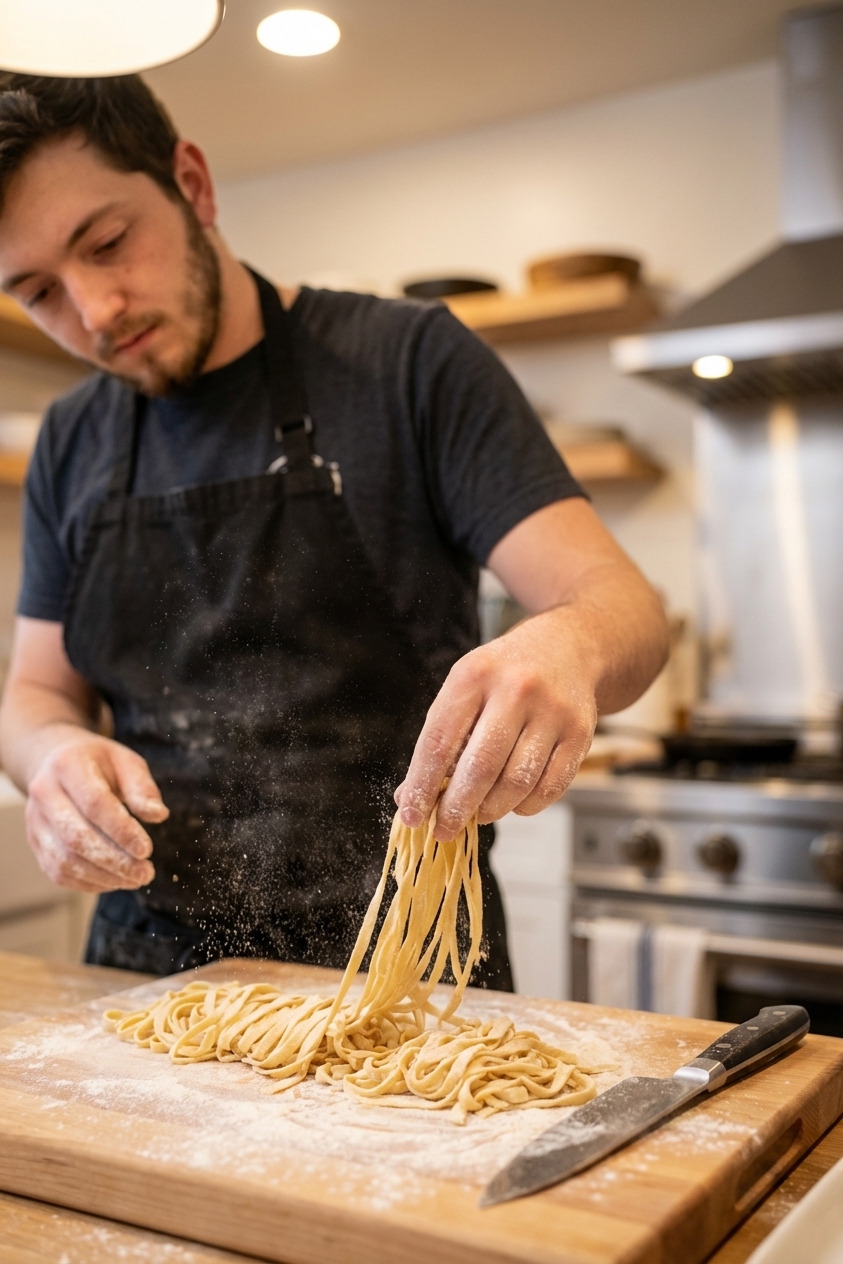
No. A rolling pin and a knife work great. The noodles will be a little more rustic, which is kind of the point.
How thin should I roll the dough?
Go by feel and light more than a ruler. For soup noodles, roll it quite thin, until you can see a faint shadow of your hand through the dough. For stroganoff or buttered noodles, leave it a little thicker for a heartier bite. If you like numbers, that’s roughly 1/16 inch for thin and closer to 1/8 inch for thicker noodles.
Why is my dough tough or springy when I roll it?
It usually just needs a rest. Cover it and let it sit 10 to 15 more minutes so the gluten relaxes, then try again.
Why is my dough cracking at the edges?
It’s too dry. Wet your fingertips and knead in a few drops of water at a time. The dough should feel firm but pliable, like smooth Play-Doh.
How long do fresh egg noodles take to cook?
Usually 2 to 5 minutes. Thin noodles cook faster. Start tasting at 2 minutes and pull them when they’re tender but not mushy. You’ll also notice they look a bit plumper and more buoyant as they cook, but taste is the real boss here.
Can I cook the noodles from frozen?
Yes. Add them straight from the freezer into boiling water. Don’t thaw. They’ll usually need about 1 to 2 extra minutes, depending on thickness.
Can I dry these completely like store-bought noodles?
You can, but home drying is humidity-dependent and should be done with care. For reliable results, I recommend freezing if you want to store longer than a day or two. If you do dry fully, make sure they’re brittle-dry before storing and keep them in an airtight container. Longer drying is best in a clean, low-humidity spot, and you’ll want to keep an eye on it for freshness and sanitation.
Can I use bread flour or whole wheat flour?
Bread flour works and makes a slightly chewier noodle. Whole wheat can work too, but start by swapping only 25 to 50 percent, since it absorbs more water and can make the noodles heavier.