Mom's Best Recipes
Recipe

Homemade Egg Noodles

Tender, chewy egg noodles made from scratch with pantry staples. Perfect for soup, buttered noodles, or anything with gravy.

Author By Matt Campbell
4.8
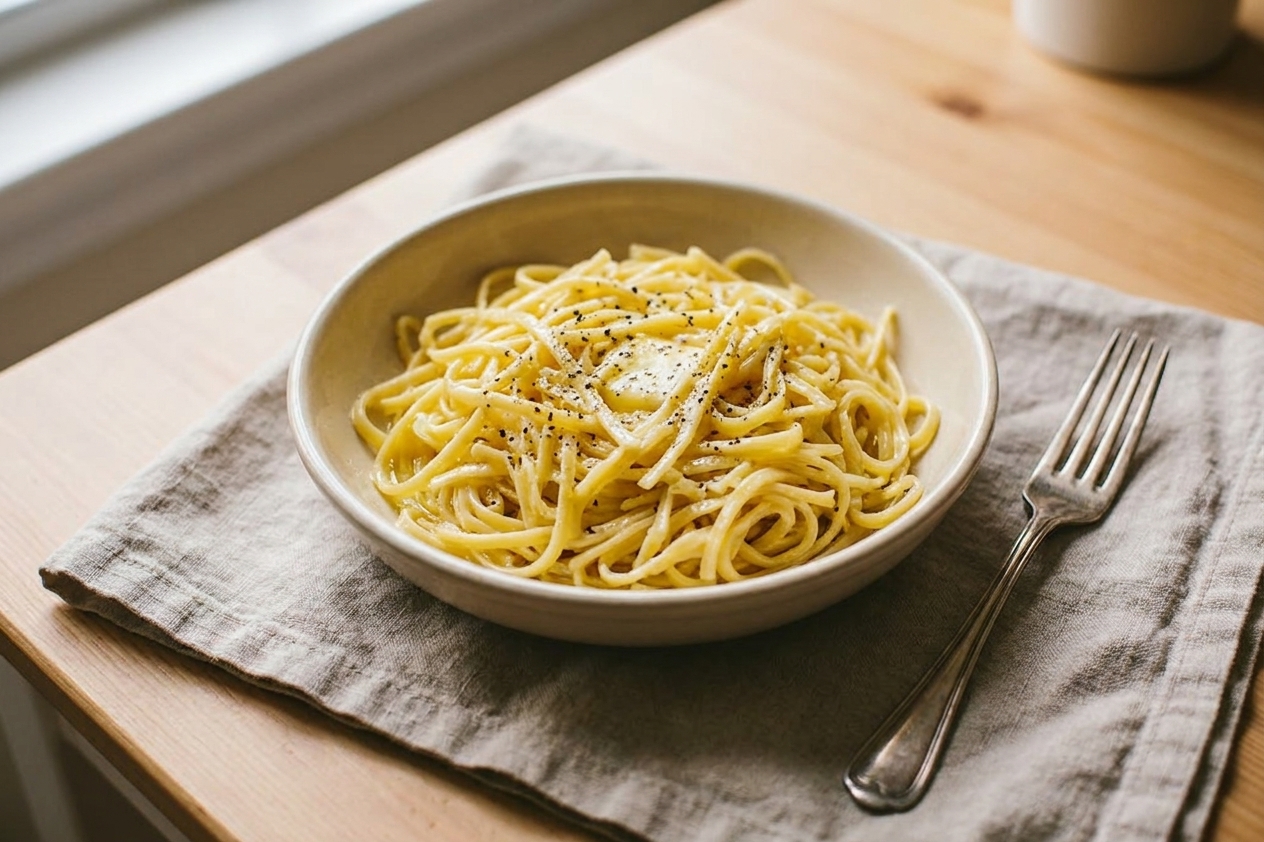
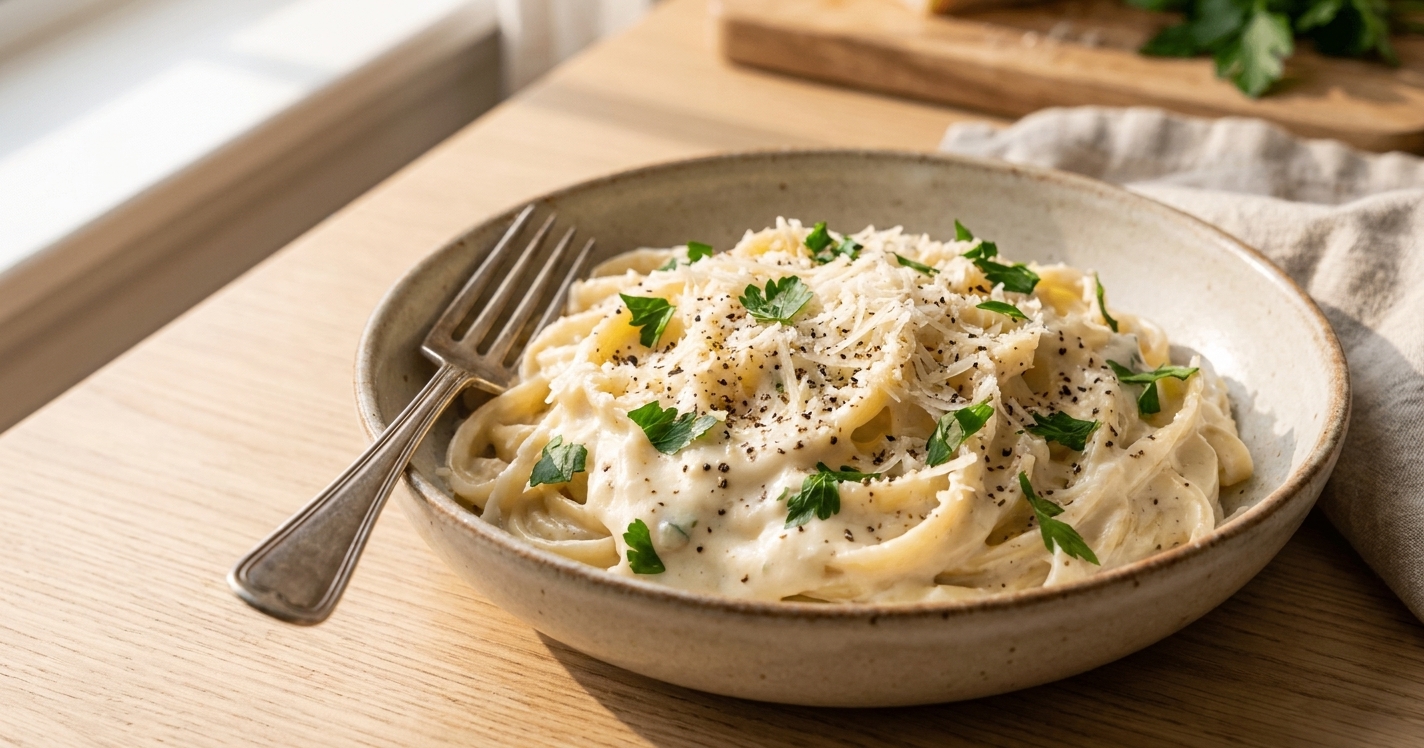
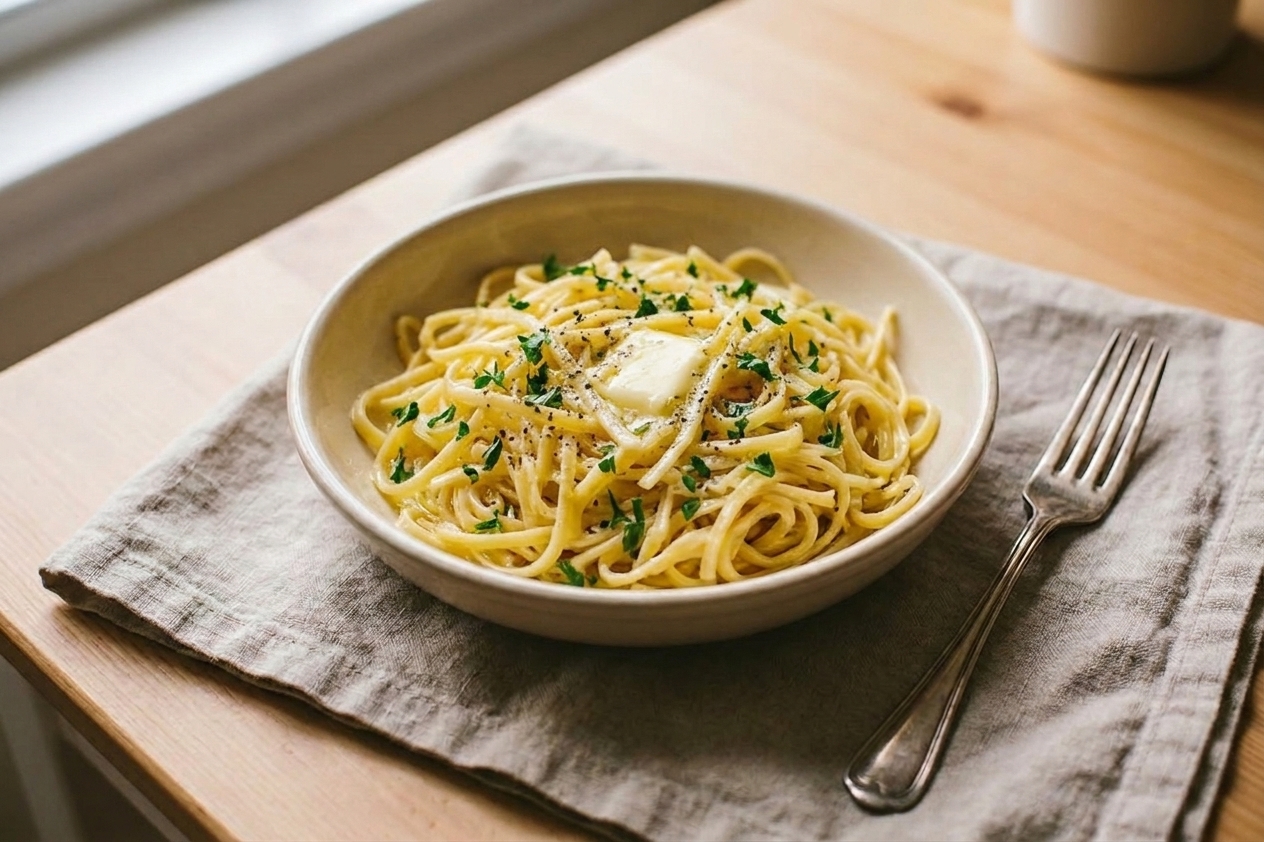
A warm bowl of homemade egg noodles tossed with butter and black pepper on a neutral linen napkin, with a fork resting beside the bowl on a light kitchen table

Homemade noodles are one of those kitchen projects that sounds like a Saturday-only situation, but it is actually shockingly doable on a regular weeknight. Flour, eggs, salt, and a little rolling. That is it. No special noodle machine required, no mysterious ingredients, and no need to be precious about perfection.

These are old-school egg noodles, the kind that go from “dinner” to “wow, you made this?” in one bite. They are tender but still have that satisfying chew, with slightly rustic edges that love holding onto butter, broth, or gravy. If you can roll out dough for cookies, you can make noodles.

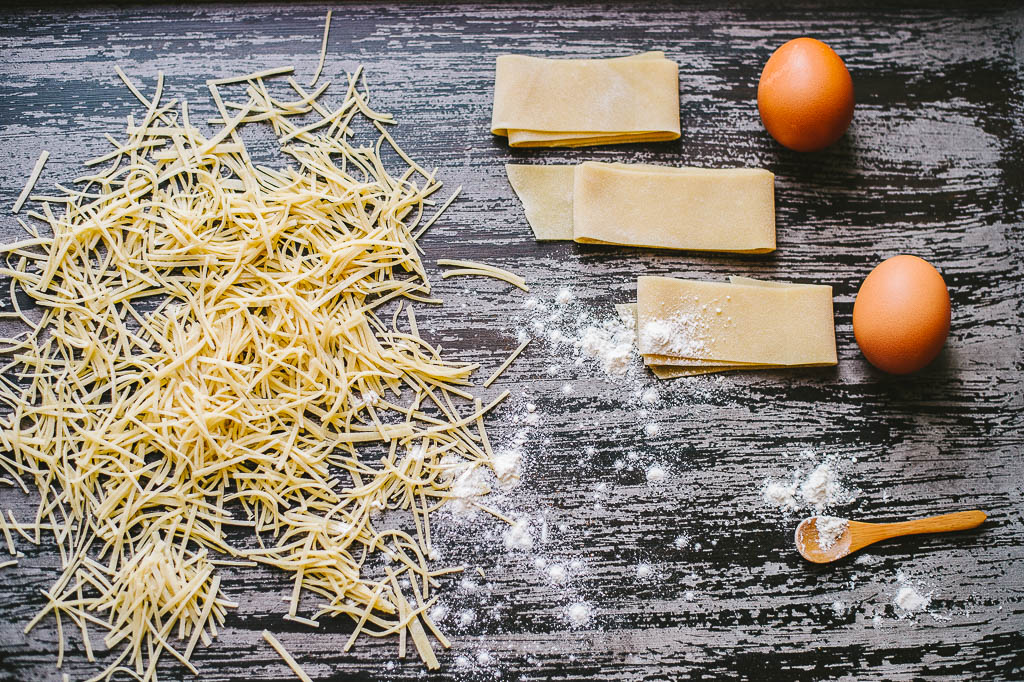
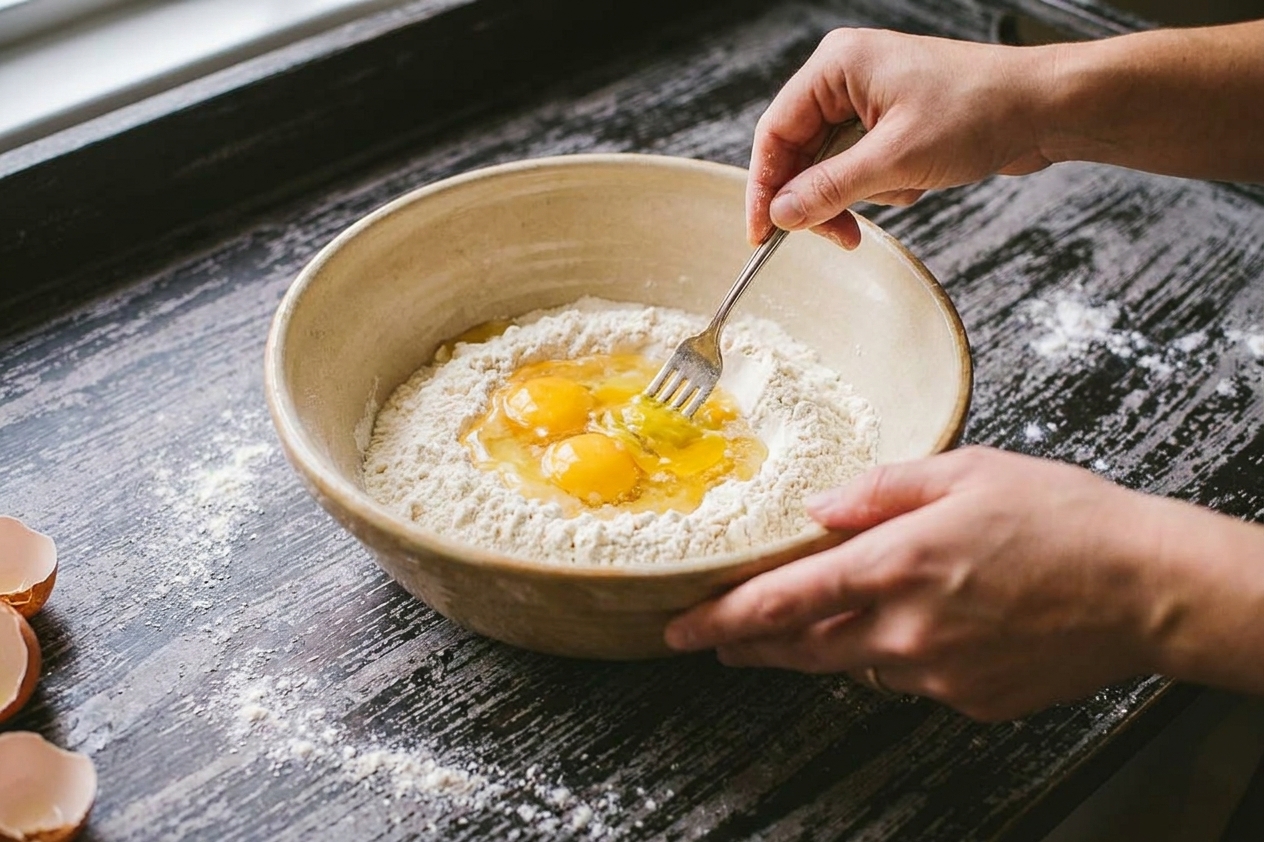
Flour, eggs, salt, and a small bowl of water arranged on a clean kitchen counter with a wooden rolling pin nearby

Why It Works

  • Big comfort payoff for small effort: a handful of pantry staples turn into a full pot of cozy noodles.
  • Forgiving dough: if it feels sticky, add flour; if it feels dry, add a few drops of water. You are in charge.
  • Great texture: egg-rich dough cooks up tender with a pleasant chew and those crisp little edges when you sauté leftovers.
  • Flexible: cut them thick for chicken noodle soup, medium for buttered noodles, or thin for a lighter bite (thicker noodles usually need a bit more cook time).

Pairs Well With

Storage Tips

Storing Fresh or Cooked Noodles

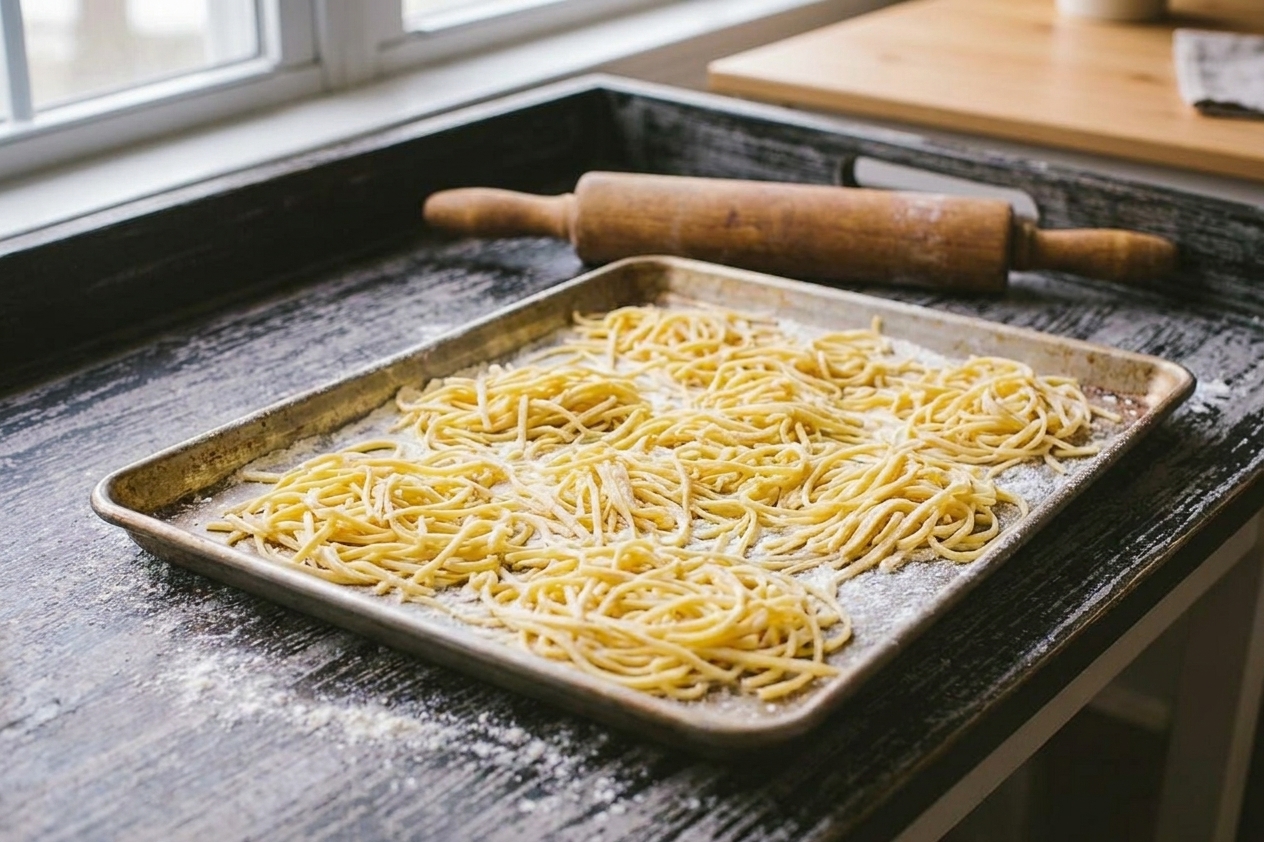
Fresh, uncooked noodles: Spread in a single layer on a floured sheet pan and let them dry for 20 to 30 minutes so they do not clump. Then:

  • Refrigerate: Store in an airtight container up to 2 days. Dust with a little flour and gently toss before cooking.
  • Freeze: Freeze on the sheet pan until firm, then transfer to a freezer bag. Use within 1 to 3 months for best quality. Cook from frozen, adding about 1 to 2 minutes, and start checking early depending on thickness.

Cooked noodles: Toss with a teaspoon of butter or oil so they do not glue themselves together. Refrigerate up to 4 days. Reheat in a skillet with a splash of broth (or reserved noodle water), or warm gently in soup.

Freshly cut egg noodles spread in a single layer on a floured sheet pan on a bright kitchen counter

Common Questions

Common Questions

Do I need a pasta machine?

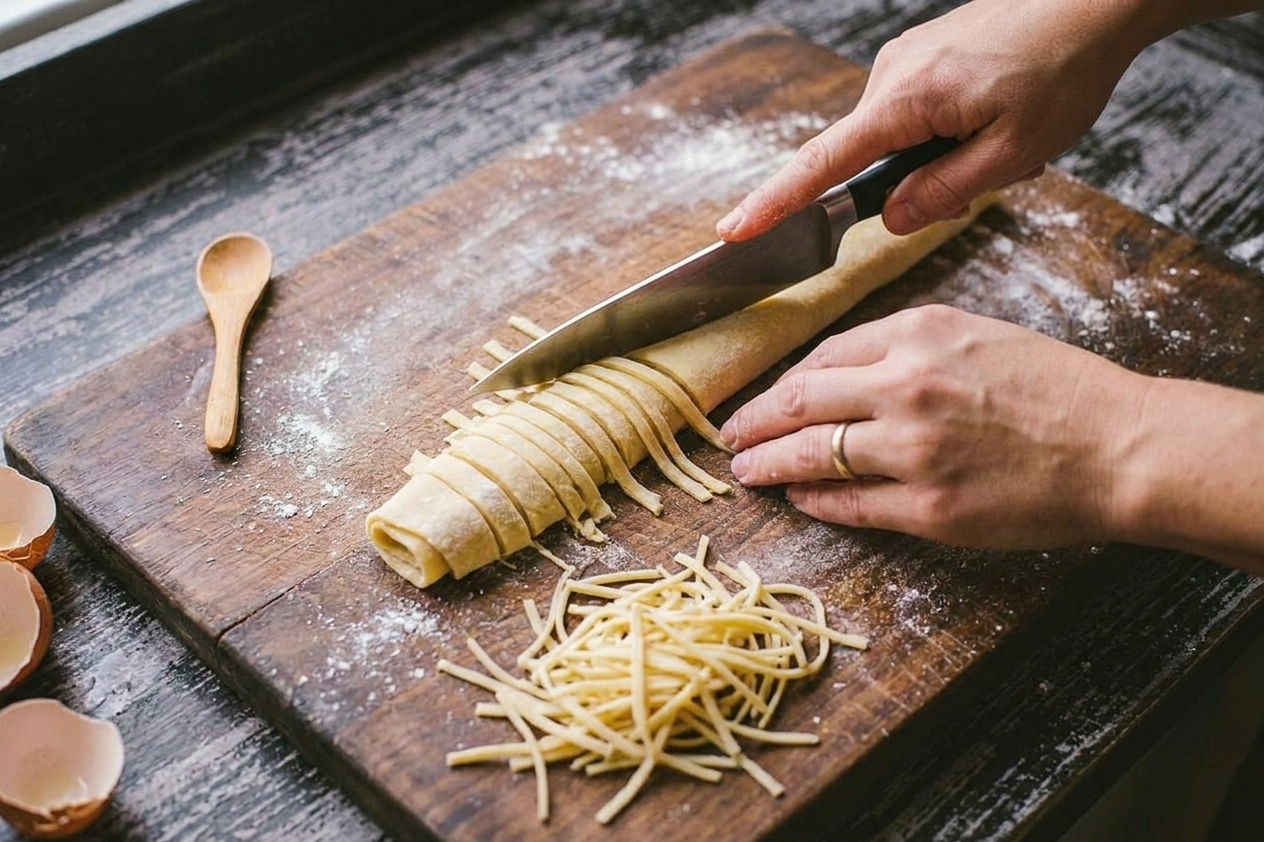
Nope. A rolling pin, a sharp knife, and a little patience will get you great noodles. A pasta machine is fun, but not required.

Why is my dough cracking when I roll it?

It is too dry. Wet your fingertips and knead in a few drops of water at a time, or let the dough rest 10 more minutes so the flour fully hydrates.

Why is my dough sticky?

Usually it just needs more flour, especially if your kitchen is humid. Dust the counter and the dough lightly and keep rolling. Sticky is fixable.

How thick should I roll egg noodle dough?

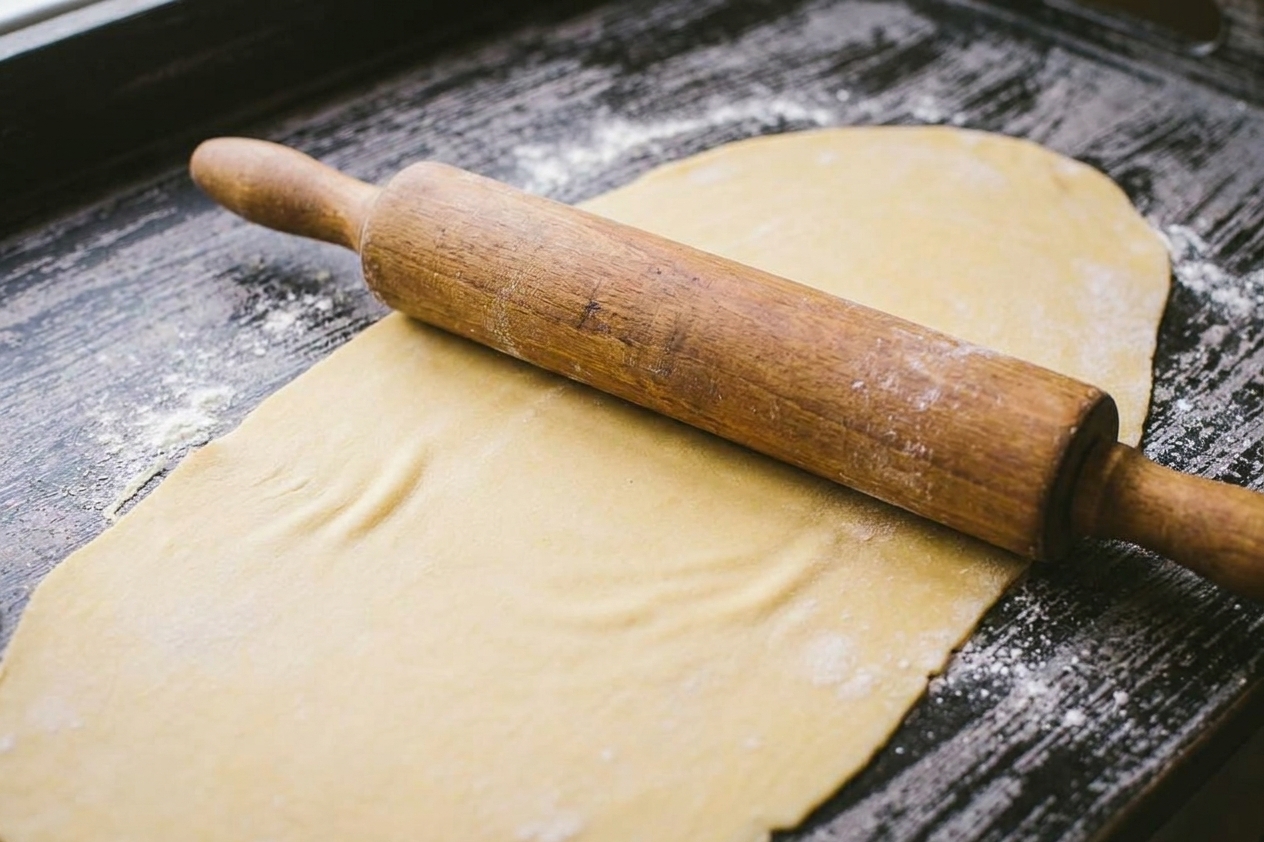
For classic comfort noodles, aim for about 1/16 to 1/8 inch. Thicker noodles are extra cozy in soup, thinner noodles feel a little more delicate.

How long do homemade egg noodles take to cook?

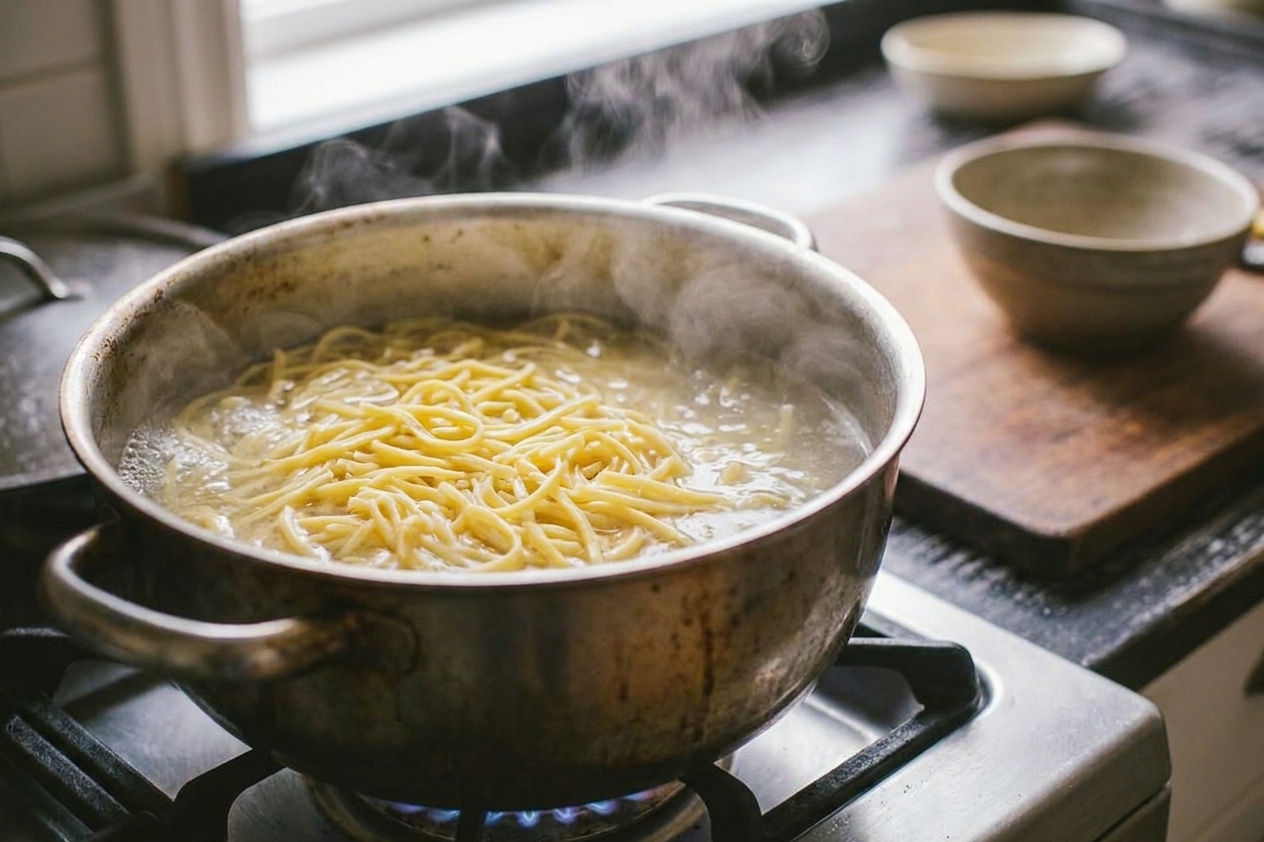
Usually 2 to 6 minutes in gently boiling salted water, depending on thickness and how long they have been drying. Start checking at 2 minutes. They go from “not done” to “perfect” fast.

Can I make these for chicken noodle soup?

Absolutely. I actually prefer cooking them in the soup for maximum comfort, but keep the simmer gentle so they stay tender, not mushy.

Why does my dough feel different every time?

Flour measuring and humidity change everything. If you scoop flour straight from the bag, you can pack in more than you meant to and the dough will feel dry. If you can, spoon and level your flour. Either way, trust the feel: if it cracks, add a few drops of water; if it sticks, dust with flour.

Do I have to rest the dough?

At least 10 minutes helps a lot. If you have time, 20 to 30 minutes makes rolling even easier.

I chased “culinary school” for a minute in my head, but the real skills I lean on came from cooking with regular tools in regular kitchens. Egg noodles are exactly that kind of recipe. No gadgets, just your hands, a counter, and the moment when you lift a tangle of noodles from the pot and realize you just made dinner from flour and eggs. It feels a little chaotic in the best way, and it tastes like you meant to do something special.