Mom's Best Recipes
Recipe

Homemade Potato Chips

Thin, crisp, salty potato chips with a real snap, made at home with either a quick fry or an oven bake.

Author By Pip
4.7
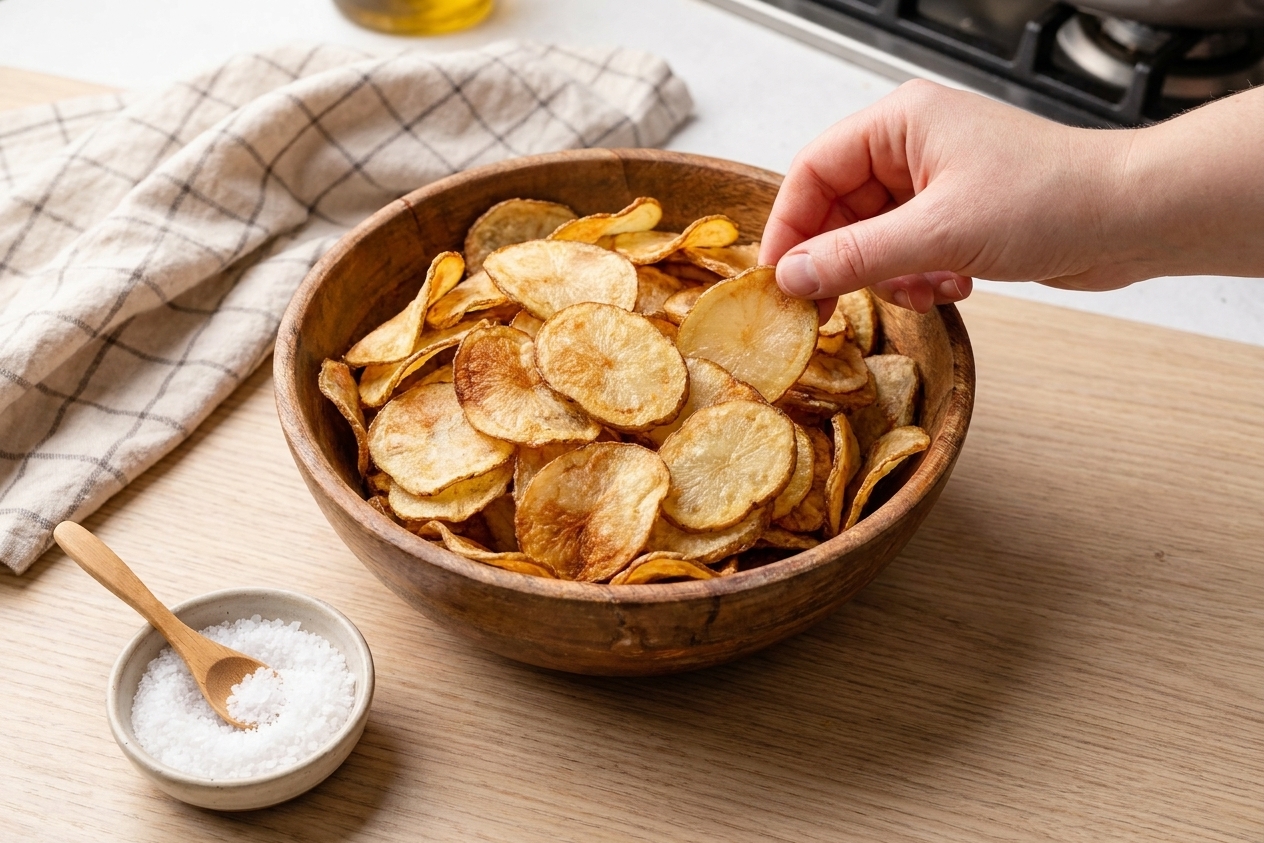
A bowl piled high with thin, golden homemade potato chips on a wooden table with a small dish of flaky salt nearby

Pull up a chair. Our little hedgehog host Pip is here to help you turn a few humble potatoes into thin, crackly homemade potato chips that actually snap when you bite them.

The three big secrets are simple: slice them very thin, give them a quick soak to rinse off excess starch, and cook them at the right temperature so they crisp instead of turning bendy or spotty brown. Choose the frying method for the most classic crunch, or use the oven method when you want less splatter and fewer oily paper towels in your life.
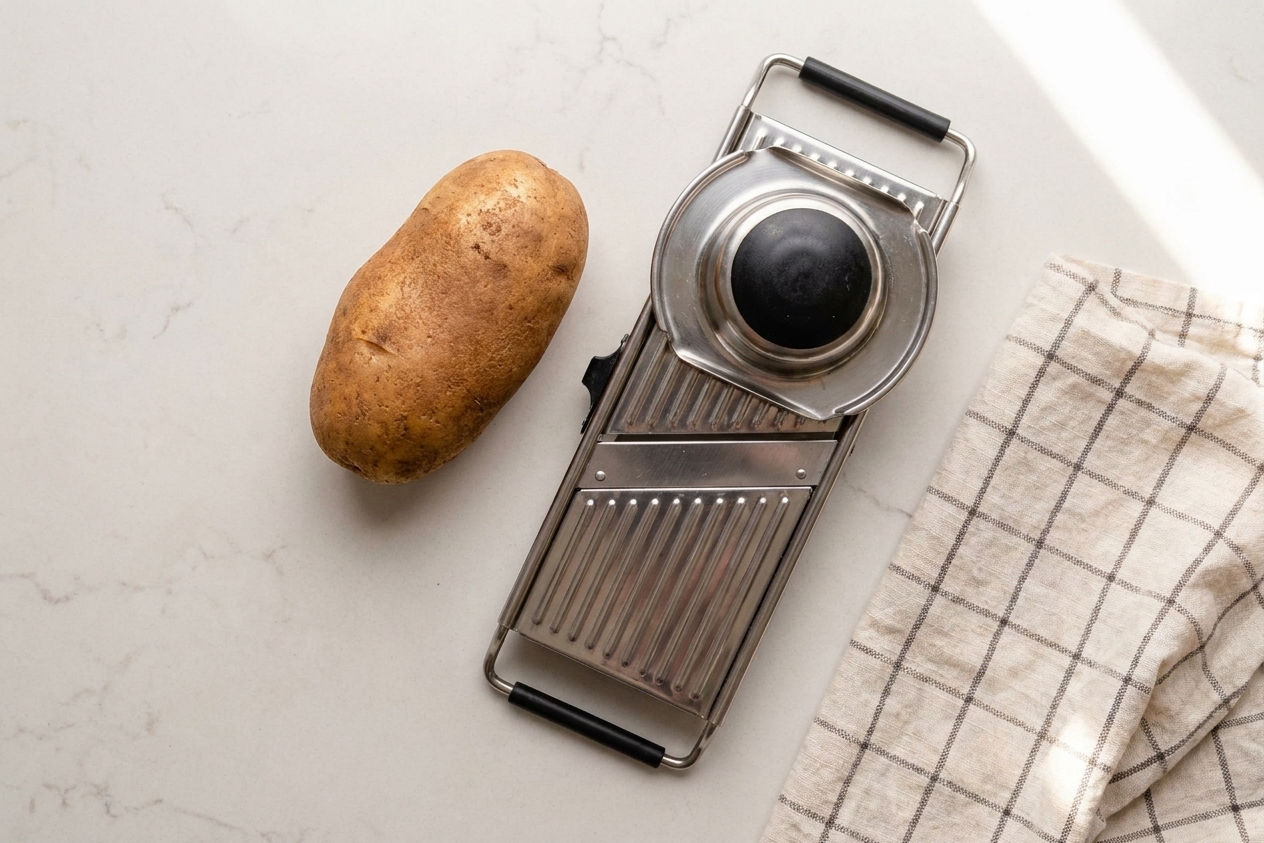
Whole russet potatoes and a mandoline slicer on a clean kitchen counter, ready for prepping chips

Slice thickness and why it matters

For that thin, shattery chip texture, aim for 1/16 inch thick slices, about 1.5 mm. A mandoline makes this easy and consistent, which also helps them brown evenly.

  • Too thick: chips take longer, can brown before they crisp, and end up more like crunchy rounds than chips.
  • Too thin: they cook very fast and can go from pale to overdone quickly, especially when frying. Still delicious, just watch closely.

The soak (do not skip if you want even browning)

Soaking pulls off surface starch that can glue slices together and cause patchy browning. It also helps chips fry up cleaner and crisper.

  • Soak time: 20 to 30 minutes in cold water.
  • Optional boost: add 1 tablespoon vinegar per quart of water. It can help reduce browning for a paler chip, especially in the oven. It is optional, not magic.

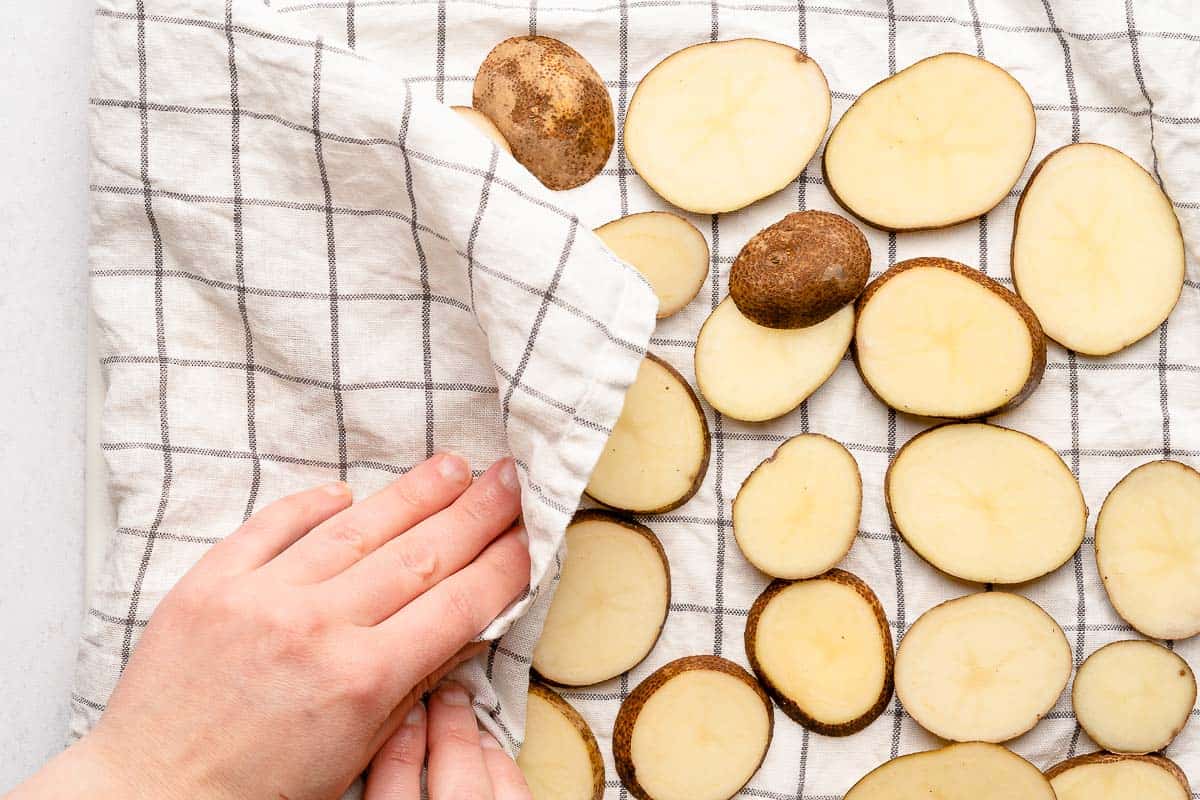
After soaking, rinse once more, then dry extremely well. Wet slices equal oil splatters when frying and steam-softened chips in the oven.
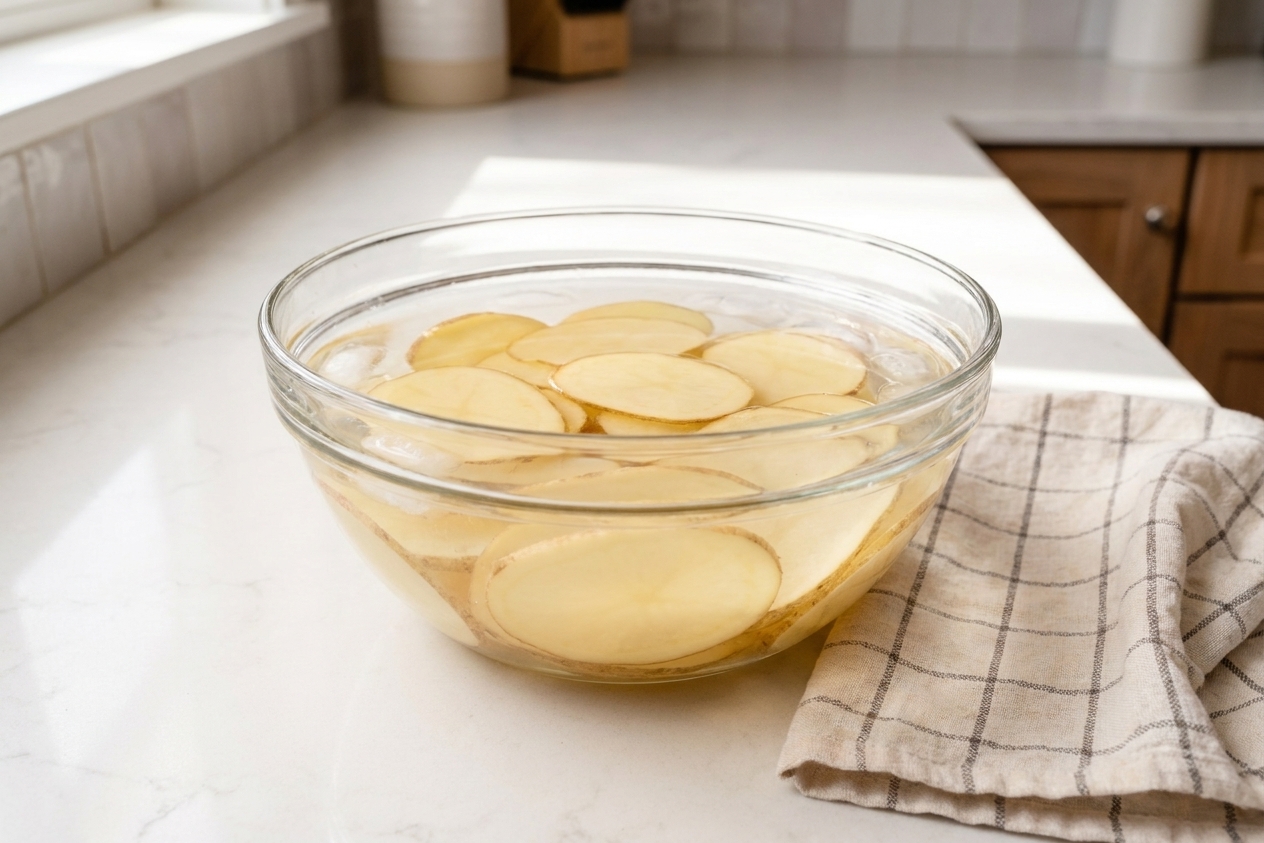
Thin potato slices submerged in a clear bowl of cold water on a kitchen counter

Fry or oven bake?

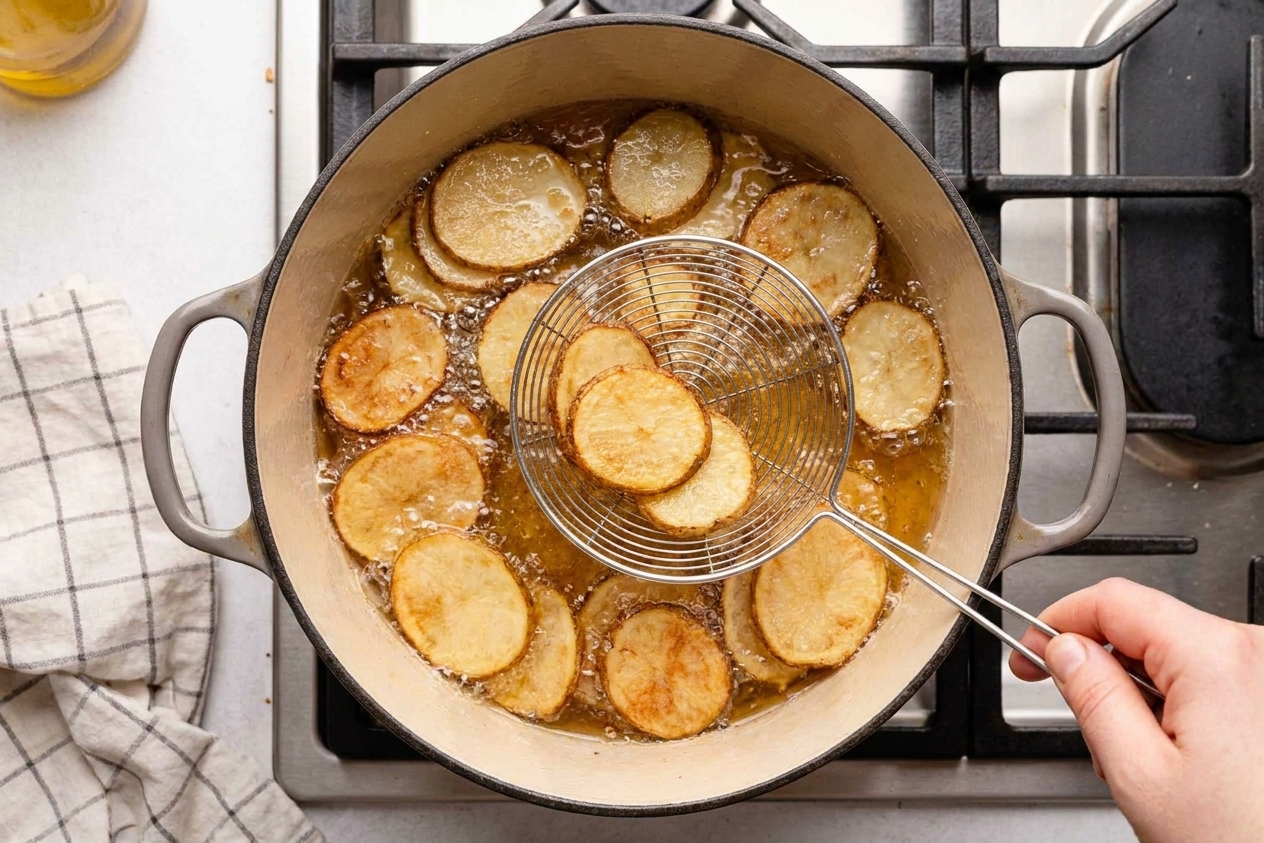
Frying gives the most classic chip texture: light, crisp, and evenly blistered.

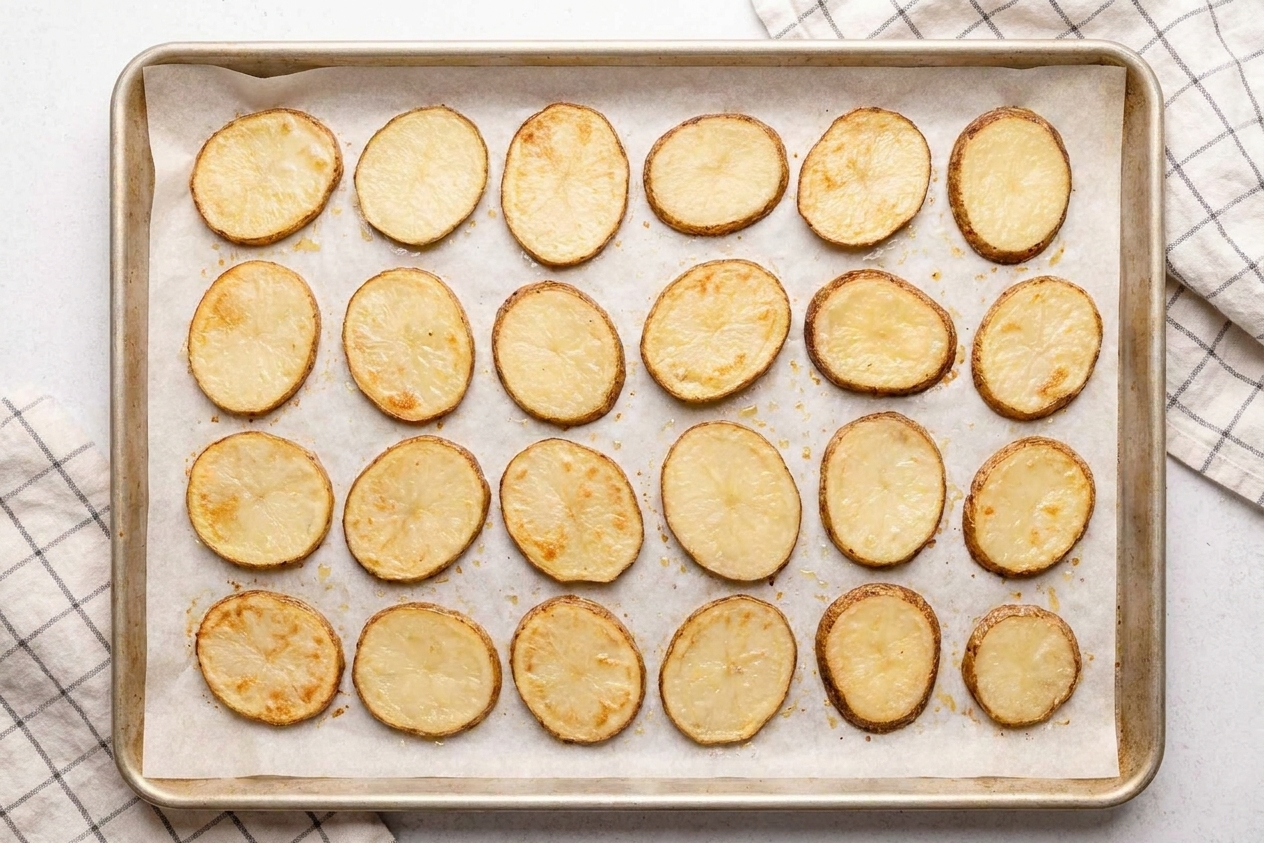
Oven baking is a little less hands-on and less messy, but you must slice evenly and flip for best results.
Why It Works

  • Crisp snap: ultra-thin slices plus the soak and a hot cook temperature help the chips dry out fast and turn crunchy, not leathery.
  • Even color: rinsing off starch, drying well, and cooking in small batches prevent those random dark spots.
  • Perfect seasoning: salting at the right time helps it stick without turning the chips soggy.

Pairs Well With

Storage Tips

Homemade potato chips are at their best the same day. If you have leftovers, here is how to keep them crunchy as long as possible.

Cool completely first

Warm chips trap steam, and steam is basically a crunchy chip’s natural enemy. Cool them fully on a wire rack before storing.

Best same-day storage

  • Container: a paper bag, or a bowl loosely covered with a clean kitchen towel for a few hours.
  • For longer same-day crunch: store in an airtight container with a folded paper towel in the bottom, then add chips, then another paper towel on top before closing.

What not to do

  • Avoid the fridge: refrigerator humidity and condensation can soften chips fast.
  • No sealing while warm: you will soften them.

Quick re-crisp if they soften

Spread on a baking sheet and warm at 350°F for 3 to 5 minutes. Cool for a couple minutes before eating. They crisp as they cool.

Common Questions

Why do my homemade chips brown unevenly?

Uneven browning usually comes from a mix of slice thickness differences, excess surface starch, overcrowding, or oil that is not at the right temperature. Use a mandoline set to 1/16 inch, soak and rinse, dry very well, and cook in small batches. For frying, keep oil close to 350°F.

When should I salt potato chips?

For fried chips: salt immediately after they come out of the oil, while the surface still has a light sheen. For baked chips: salt right after baking, or very lightly before baking. If you salt heavily and let the slices sit before they go in the oven, salt can pull a little moisture to the surface and dull the crunch.

What potatoes make the crispiest chips?

Russet potatoes are a great choice for crisp chips because they are higher in starch and lower in moisture. Yukon Gold also works and tastes a bit more buttery, but watch them closely since they can brown faster.

Can I make potato chips without a mandoline?

Yes, but it is harder to keep slices consistent. Use your sharpest knife and aim for about 1/16 inch. If some slices are thicker, pull the thinner ones out earlier so they do not over-brown.

Why are my chips not crispy?

The usual culprits are not drying the slices well enough, oil that is too cool, or baking at too low a temperature. Also, chips crisp as they cool. Give them 3 to 5 minutes on a rack before judging.

Is it better to bake at 400°F or 425°F?

425°F tends to produce a better snap for thin chips, as long as you rotate the pan and flip once. If your oven runs hot or the chips are browning too fast, drop to 400°F. If you are using convection, try reducing the temperature by about 25°F.

Pip, our kitchen companion, calls potato chips “the loudest snack in the house” because the goal is a real crunch you can hear. The funny part is that the path to that big crunch is mostly quiet kitchen habits: a calm soak, careful drying, and not crowding the pan. Do those three things, and the chips practically behave themselves.