Is homemade kimchi safe to ferment at room temperature?
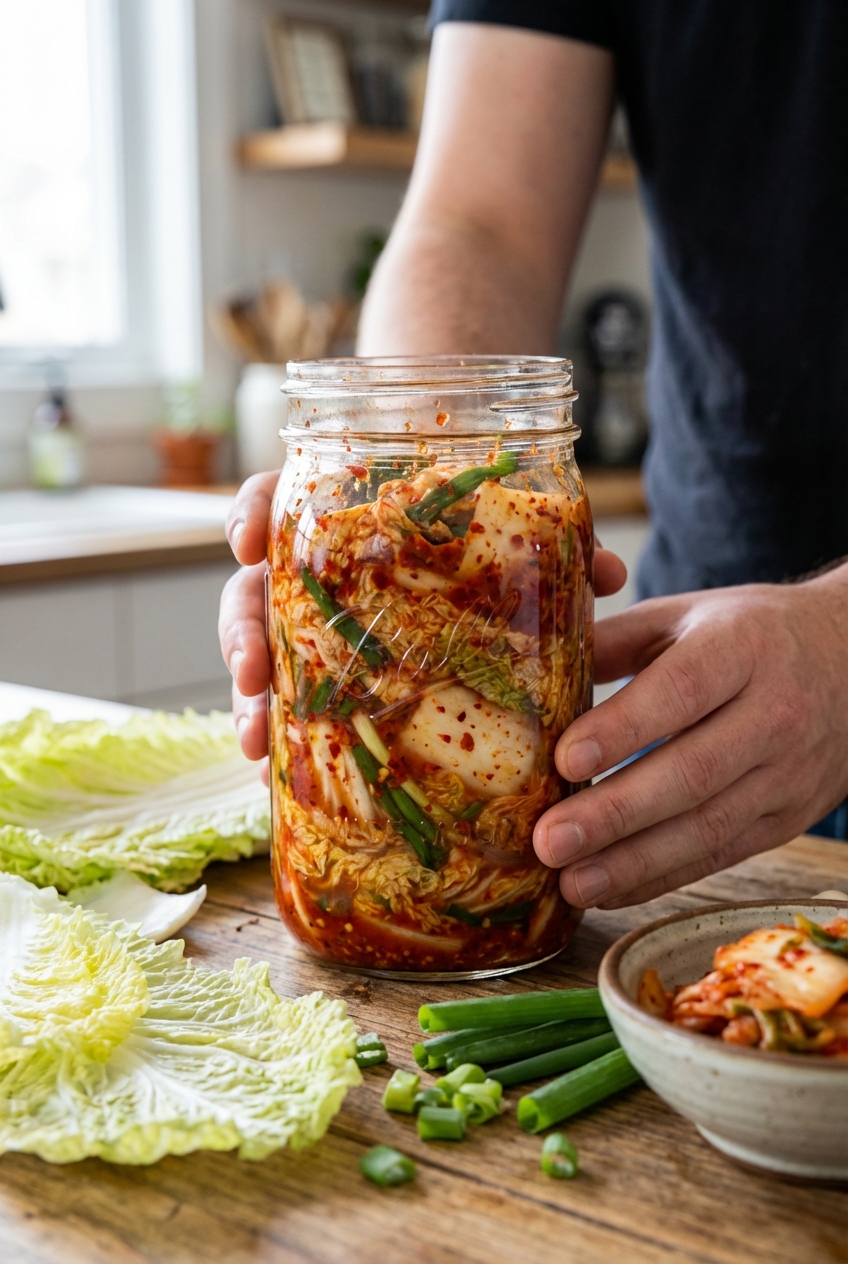
Yes, when you use enough salt and keep the vegetables pressed under their own liquid, kimchi is a safe, common fermentation. You are encouraging lactic acid bacteria, which lower the pH and help preserve the vegetables. If you see fuzzy mold, or it smells rotten instead of tangy, toss it and start over.
What is gochugaru, and can I substitute something else?
Gochugaru is Korean red pepper flakes. It is fruity, medium-hot, and essential for classic kimchi flavor. If you cannot find it, the closest option is a mix of mild chili flakes plus a little paprika for color, but the flavor will not be exactly the same. If you plan to make kimchi more than once, gochugaru is worth buying.
Do I have to use fish sauce or shrimp paste?
No. Traditional kimchi often uses fish sauce and sometimes salted shrimp for savory depth, but you can make a delicious vegan version. Use soy sauce or tamari plus a little extra salt to taste.
How long should I ferment it?
It depends on your kitchen temperature and how tangy you like it. In a warm kitchen, it can taste lively in 24 to 48 hours. In a cooler kitchen, it may take 2 to 5 days. Start checking daily after day 1. When it smells pleasantly tangy and tastes bright (sometimes with a tiny fizz), move it to the fridge.
Why is my kimchi too salty or not salty enough?
Too salty usually means the salt was measured with a denser brand (or table salt) and not adjusted, or the cabbage did not get rinsed well after salting. Not salty enough can slow fermentation and taste flat. After rinsing and draining, the cabbage should taste pleasantly seasoned, not like seawater.
What if there is not enough liquid in the jar?
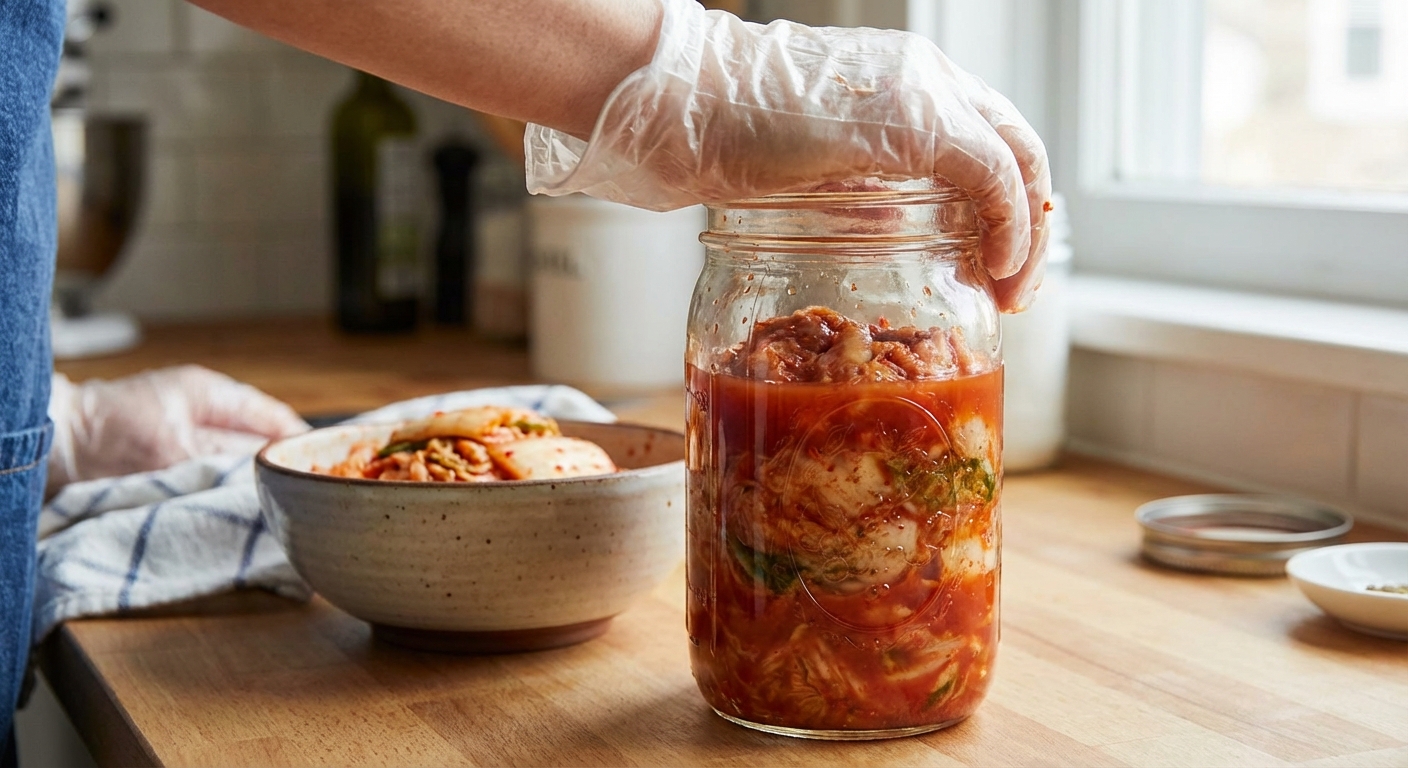
As it sits, the cabbage releases more liquid. Press it down a few times during the first day. If it still seems dry, top it with a little cooled salt water (about 1 teaspoon fine salt per 1 cup water) just to help keep the vegetables mostly under liquid.