Mom's Best Recipes
Recipe

Creamy Homestyle Dinner Rolls

Soft, buttery, and brushed with a creamy finish for that cozy, pull-apart magic. Easy enough for weeknights, special enough for holidays.

Author By Matt Campbell
4.8
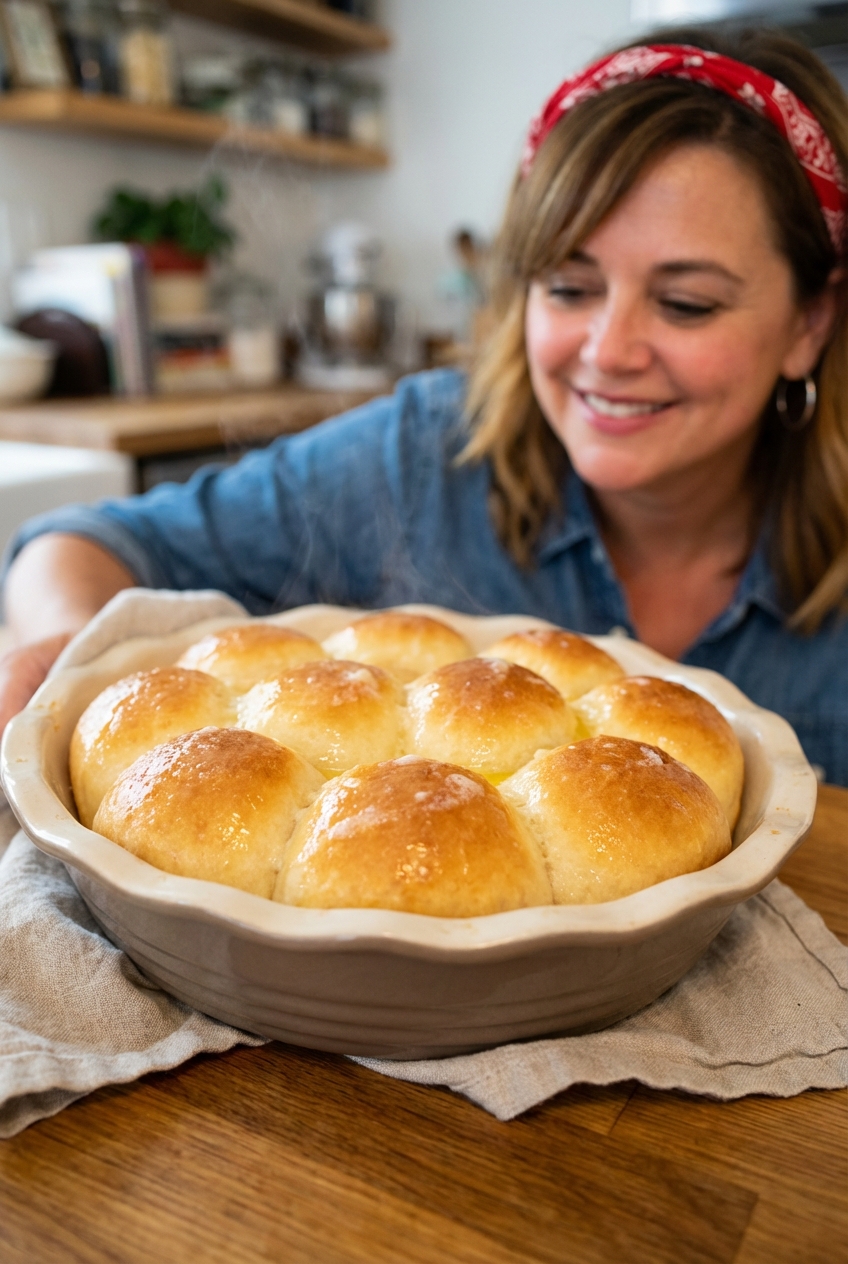
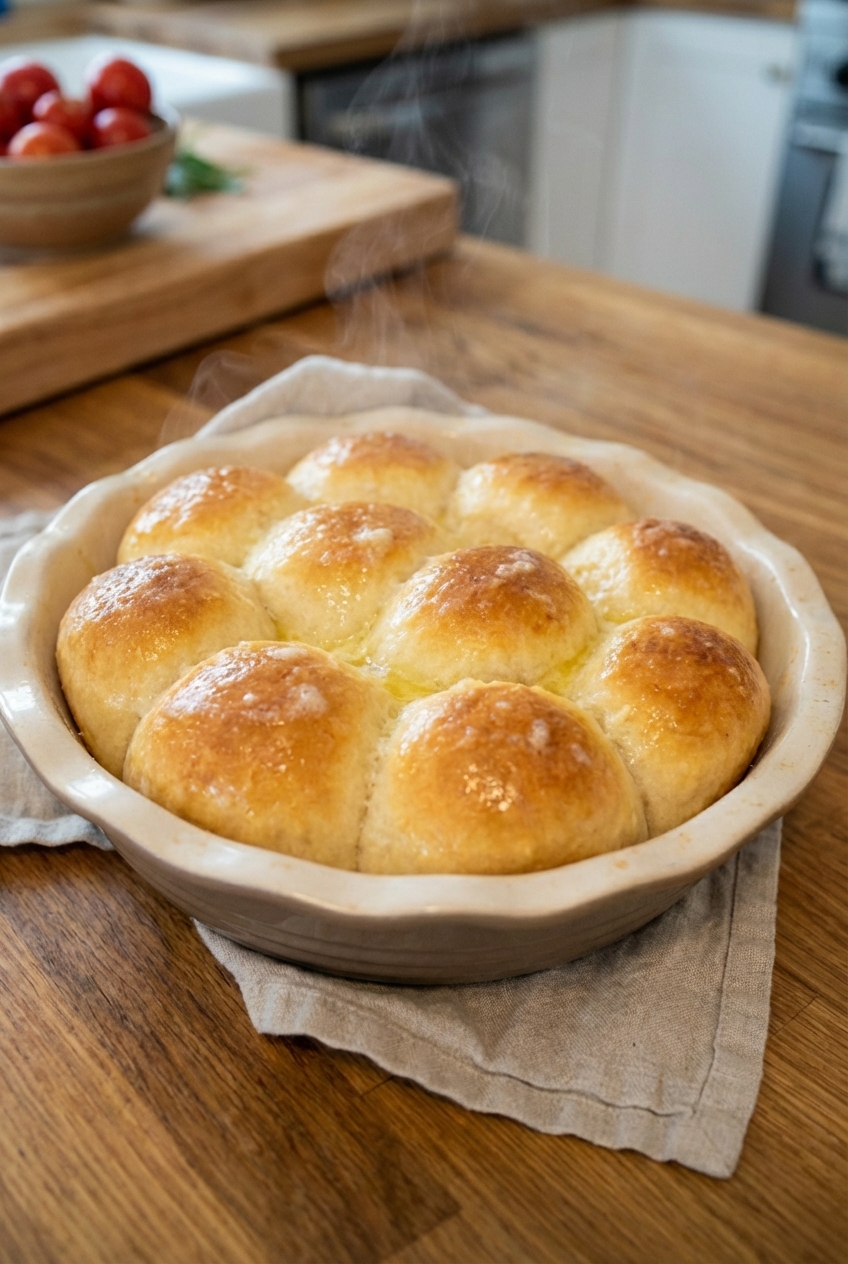
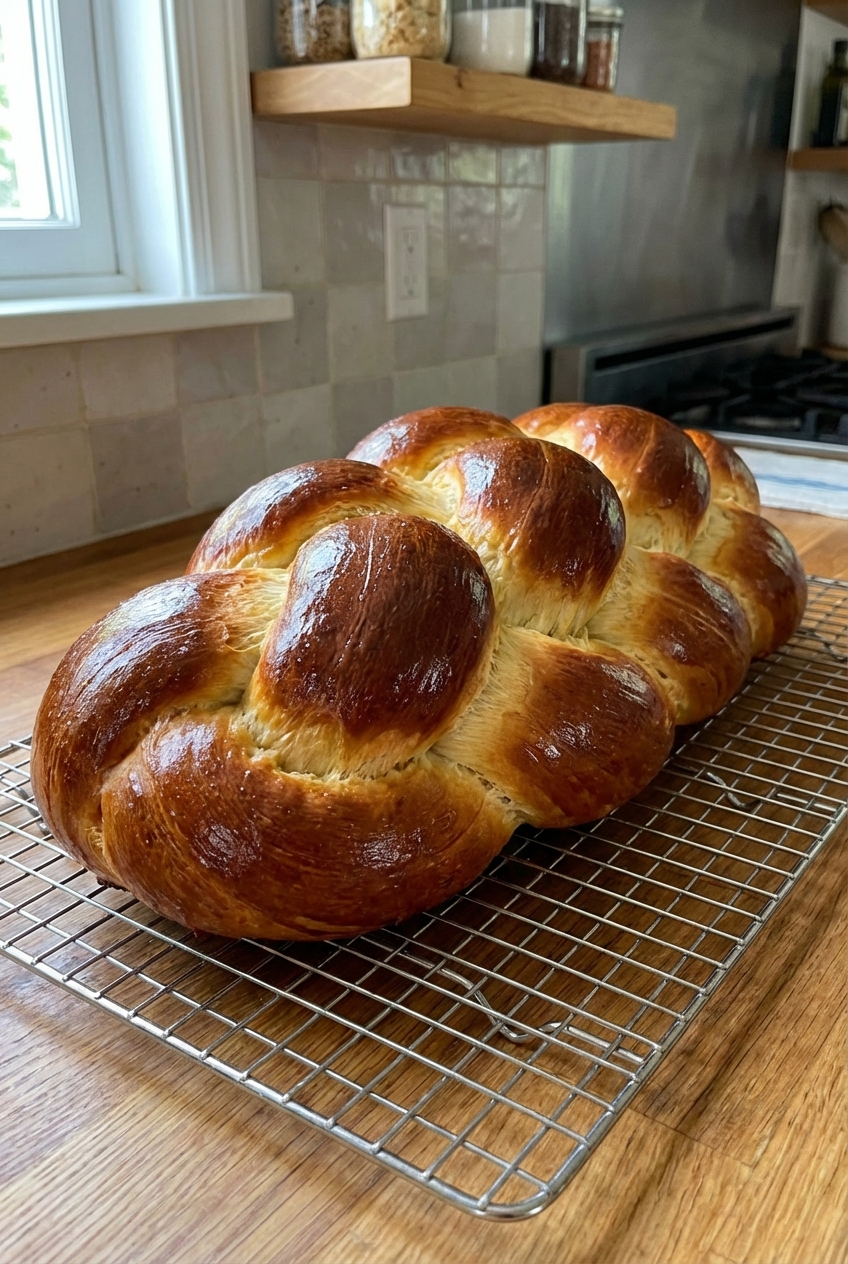
A pan of golden homestyle dinner rolls with a glossy buttery top, served warm on a wooden table

Some recipes are pure comfort. Dinner rolls are one of them. Not the dry, sad ones that make you reach for more butter to fix the situation. I mean pillowy, steamy, golden rolls with soft centers and those slightly crisp edges where the dough kisses the pan.

This is my go-to homestyle dinner rolls recipe with one extra trick that makes them feel a little special: a creamy warm-milk dough and a final brush of butter mixed with a splash of cream. The result is tender, rich, and the kind of roll that disappears faster than the main dish.
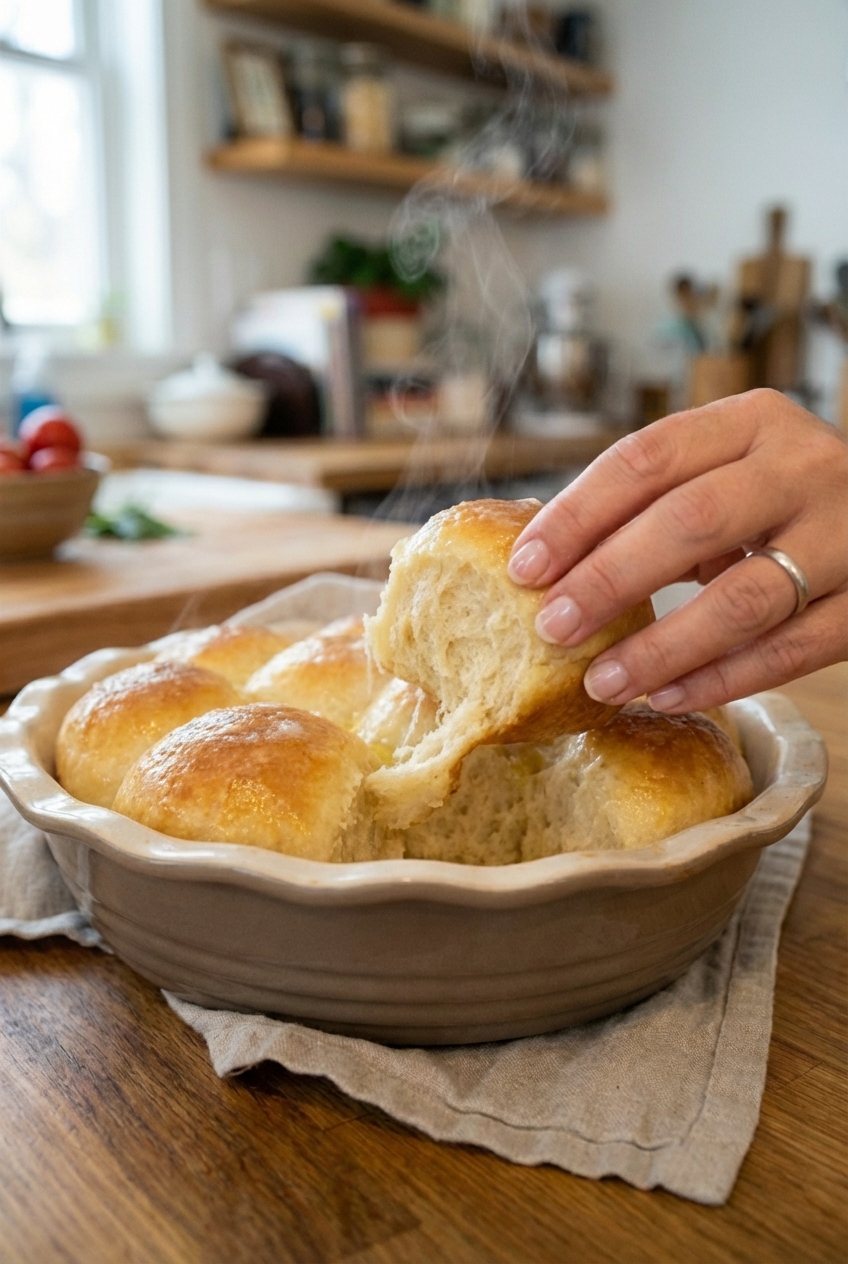
A hand pulling apart a warm dinner roll, showing a fluffy, steamy interior

You do not need fancy flour or bakery equipment. You just need a bowl, a little patience while the dough rises, and permission to be slightly imperfect. Rolls are forgiving. Your kitchen is allowed to look like a floury snow globe for an hour.
Why It Works

  • Soft and tender: Warm milk and a touch of fat keep the crumb plush, not bready.
  • Reliable rise: Clear visual cues so you know when the dough is ready, even if your kitchen runs warm or cool.
  • Creamy finish: A quick butter and cream brush gives you that bakery-style sheen and a melt-in-your-mouth top.
  • Make-ahead friendly: You can chill the shaped rolls overnight and bake the next day.

Pairs Well With

Storage Tips

Room temperature: Let rolls cool completely, then store in an airtight container or zip-top bag for up to 2 days. Add a paper towel in the container if your kitchen is humid.

Refrigerator: I only do this if I have to. The fridge dries bread out. If you refrigerate, use within 4 days, but expect a little quality drop. Warm before serving.

Freezer: Freeze fully cooled rolls in a freezer bag for up to 2 months. Thaw at room temp, then rewarm.

Reheating: Wrap rolls in foil and warm at 325°F for 10 to 15 minutes, or microwave individual rolls for 10 to 15 seconds. Do not overdo the microwave or they can turn chewy. Finish with a quick butter swipe if you feel like being extra.

Timing note: Total time can vary a lot depending on kitchen temperature and yeast activity. If your dough needs a little longer to get puffy, let it take the time it needs.

Common Questions

Can I make these rolls without a stand mixer?

Yes. Mix with a sturdy spoon, then knead by hand on a lightly floured counter for 8 to 10 minutes until the dough is smooth and elastic. If it feels sticky, pause and oil your hands instead of dumping in lots of flour.

How do I know the dough is kneaded enough?

Do the windowpane test. Pinch off a small piece and stretch it gently. If it stretches into a thin, slightly translucent sheet before tearing, you are in great shape.

My kitchen is cold. How can I help the dough rise?

Turn your oven on for 2 minutes, then turn it off. Put the covered bowl inside with the oven light on. It creates a cozy, draft-free proofing spot.

Can I use instant yeast instead of active dry yeast?

Yes. The same amount works, and you can mix it right into the dry ingredients. If you want, you can also use a little less (about 2 teaspoons) since instant yeast is often more efficient. Either way, the rise may move faster, so follow the dough size cues more than the clock.

Do I have to bloom the yeast if I use instant yeast?

Nope. You can skip the blooming step and mix the instant yeast into the flour with the salt and sugar, then add the warm milk, egg, and butter. I still like to bloom if I am unsure how fresh my yeast is.

Why did my rolls turn out dense?

Usually it is one of three things: the yeast was old, the milk was too hot and stressed the yeast, or the dough needed more rising time. Rolls want to feel airy before they hit the oven.

Can I make them ahead for a holiday?

Absolutely. Shape the rolls, cover tightly, and refrigerate overnight right away so they do not overproof. The next day, let them sit at room temp until puffy and touching. Depending on how cold your fridge runs, this can take 60 to 120 minutes. Then bake.

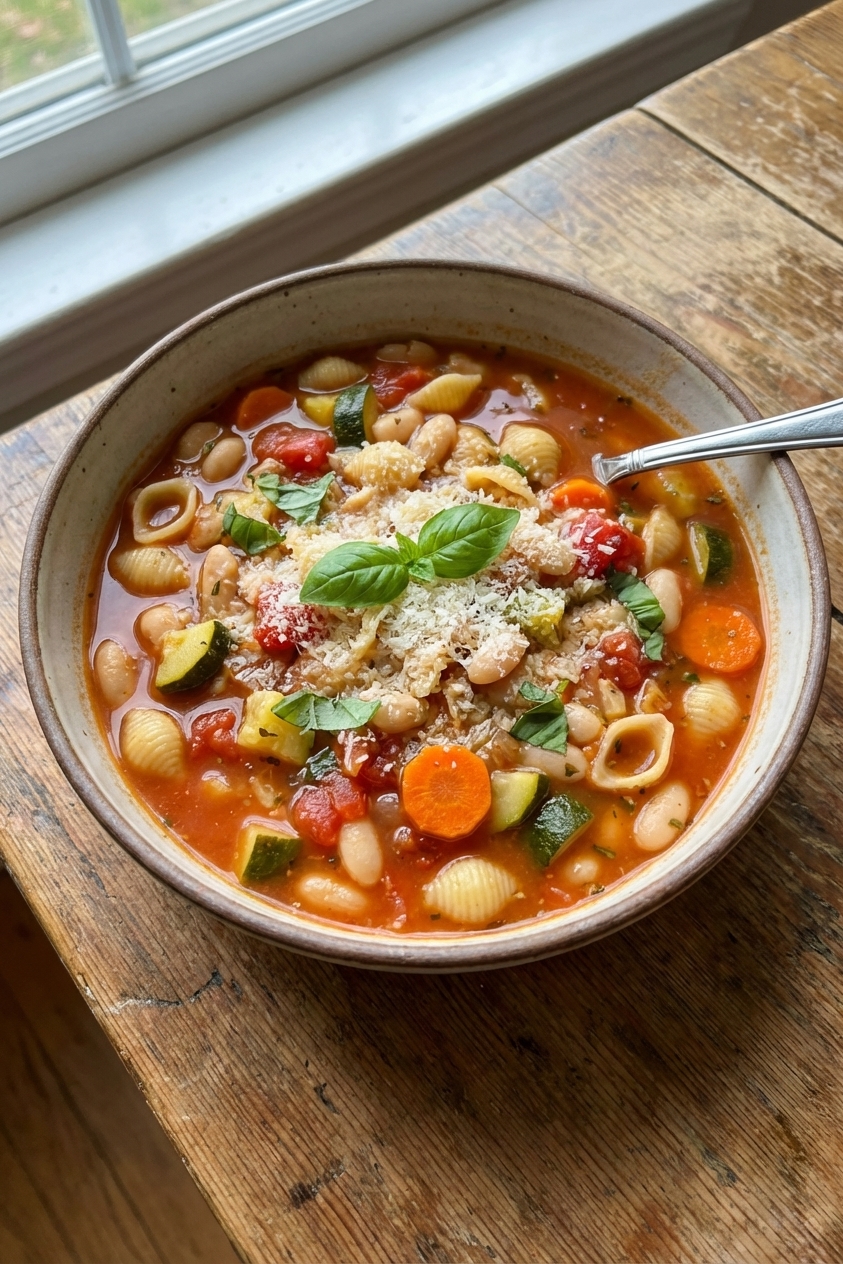
I started making dinner rolls because I wanted that restaurant basket feeling at home, the one where you swear you will only eat one, then you are suddenly negotiating with yourself over the last roll. The first batch I ever made was a little lopsided, and I over-browned the tops because I got distracted by a pot of soup. Still, my family tore through them like they were famous.

Now I make these when I want dinner to feel like a hug. The creamy brush at the end is my favorite part. It is a tiny extra step that makes the tops soft and glossy, like you actually planned ahead and had your life together, even if you absolutely did not.