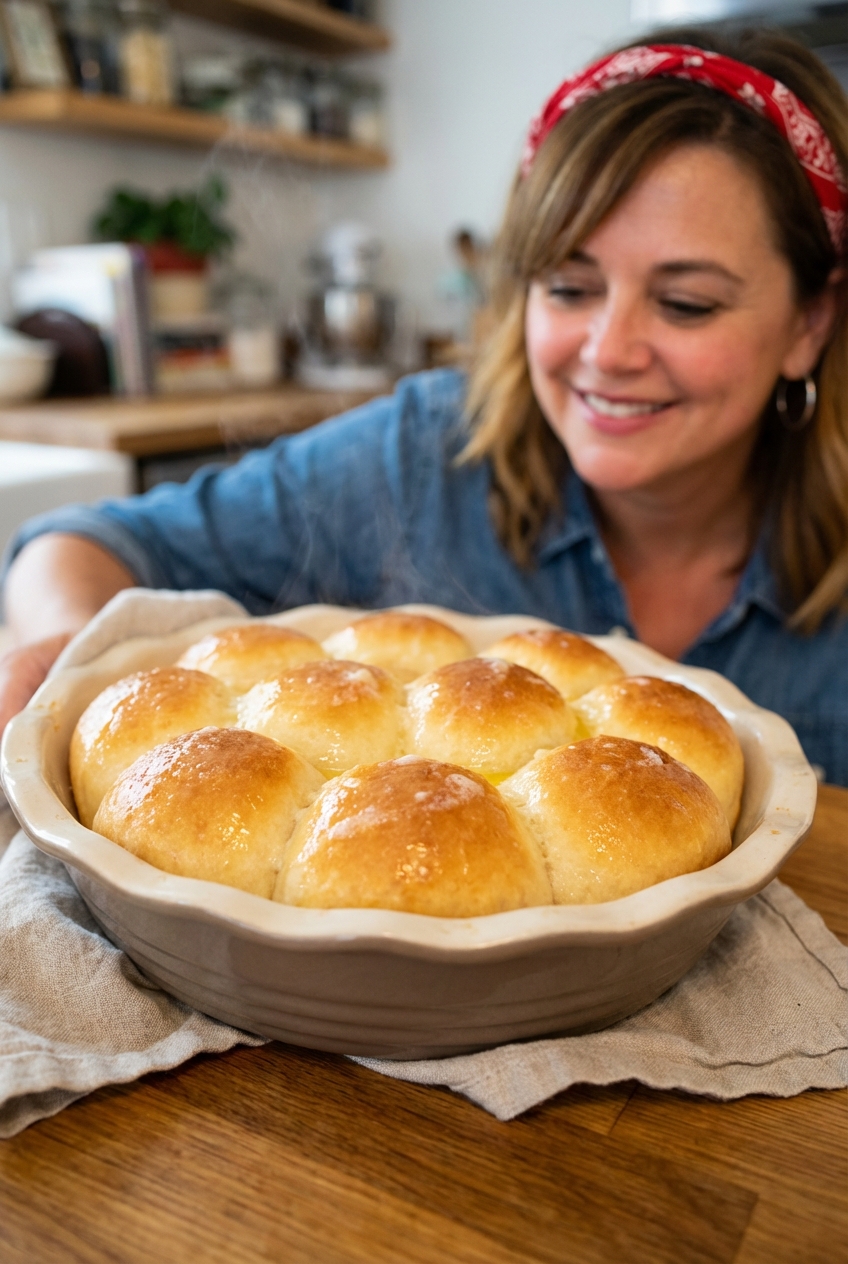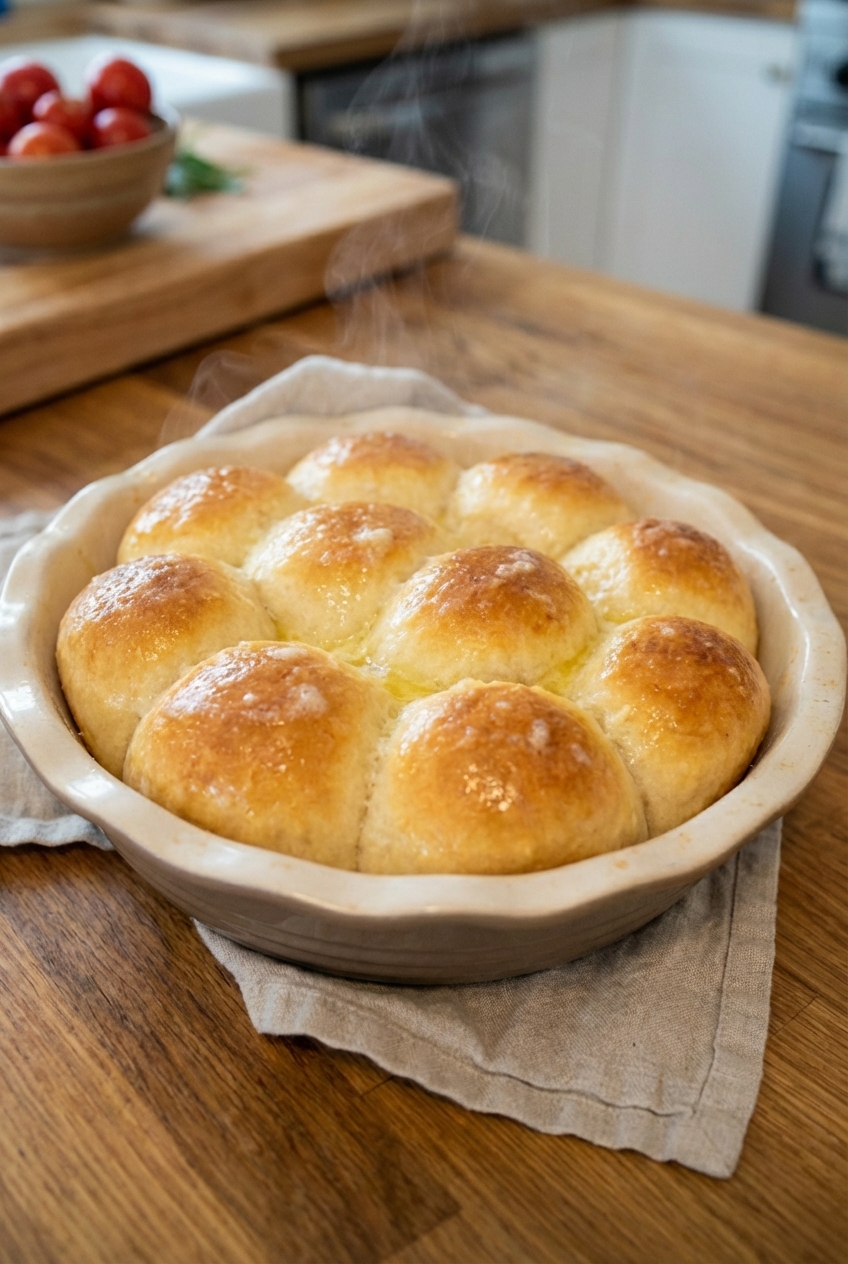
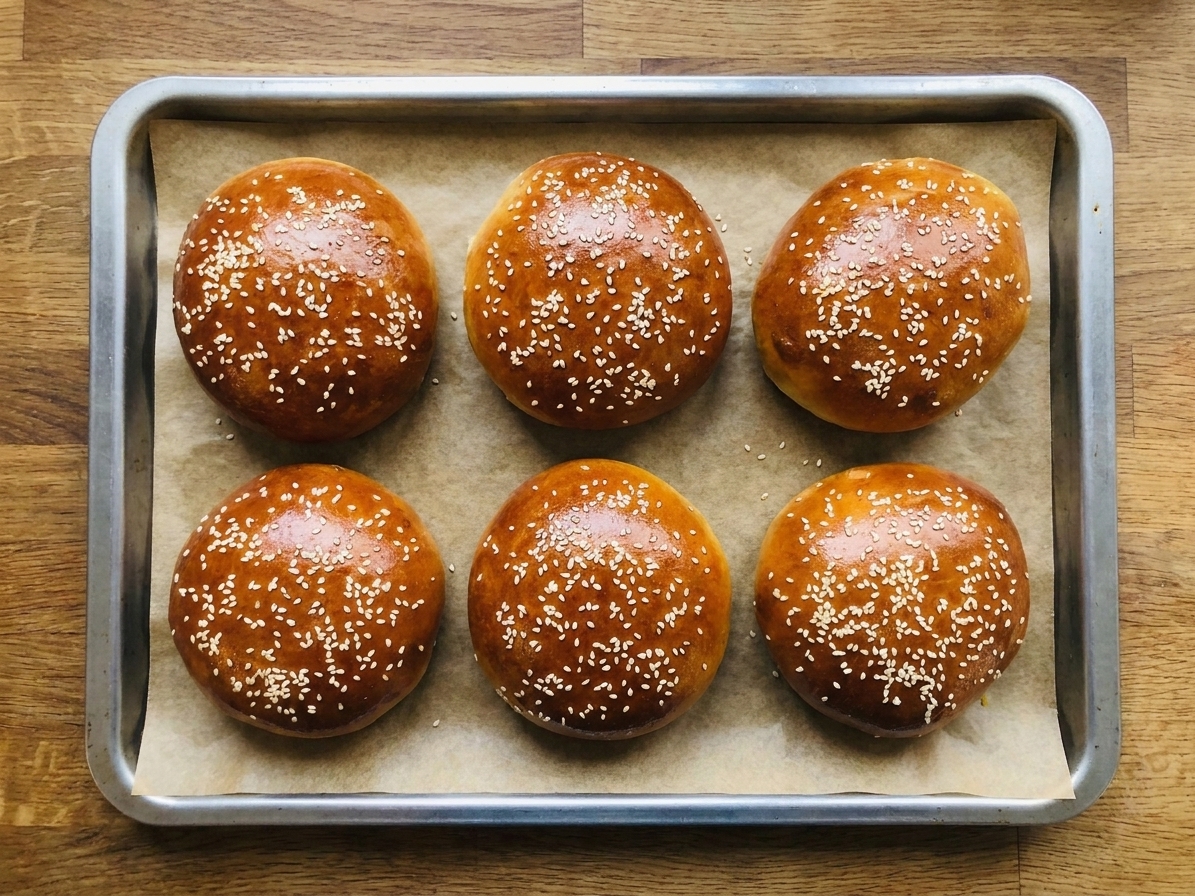
These hamburger rolls bake up fluffy with a lightly sweet, buttery flavor and enough structure to hold any burger. Includes make-ahead, freezing, and trouble...
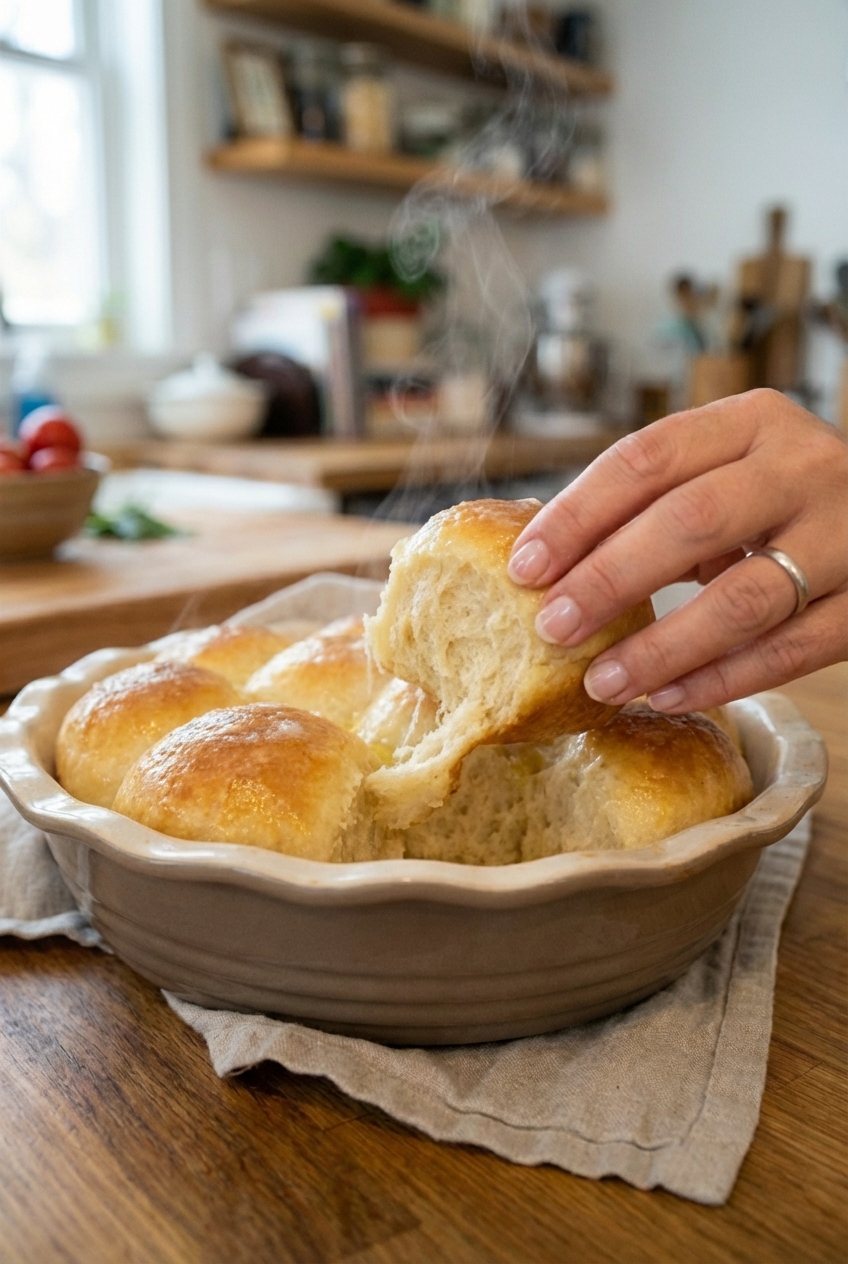
Some recipes are pure comfort. Dinner rolls are one of them. Not the dry, sad ones that make you reach for more butter to fix the situation. I mean pillowy, steamy, golden rolls with soft centers and those slightly crisp edges where the dough kisses the pan.
This is my go-to homestyle dinner rolls recipe with one extra trick that makes them feel a little special: a creamy warm-milk dough and a final brush of butter mixed with a splash of cream. The result is tender, rich, and the kind of roll that disappears faster than the main dish.
You do not need fancy flour or bakery equipment. You just need a bowl, a little patience while the dough rises, and permission to be slightly imperfect. Rolls are forgiving. Your kitchen is allowed to look like a floury snow globe for an hour.