
Mom's Best Recipes
Recipe

Honey Garlic Pork Chops

Juicy skillet pork chops glazed in a sticky honey garlic soy sauce with a hint of ginger. Big flavor, weeknight timing, and no dry chops allowed.

Author By Matt Campbell
4.8
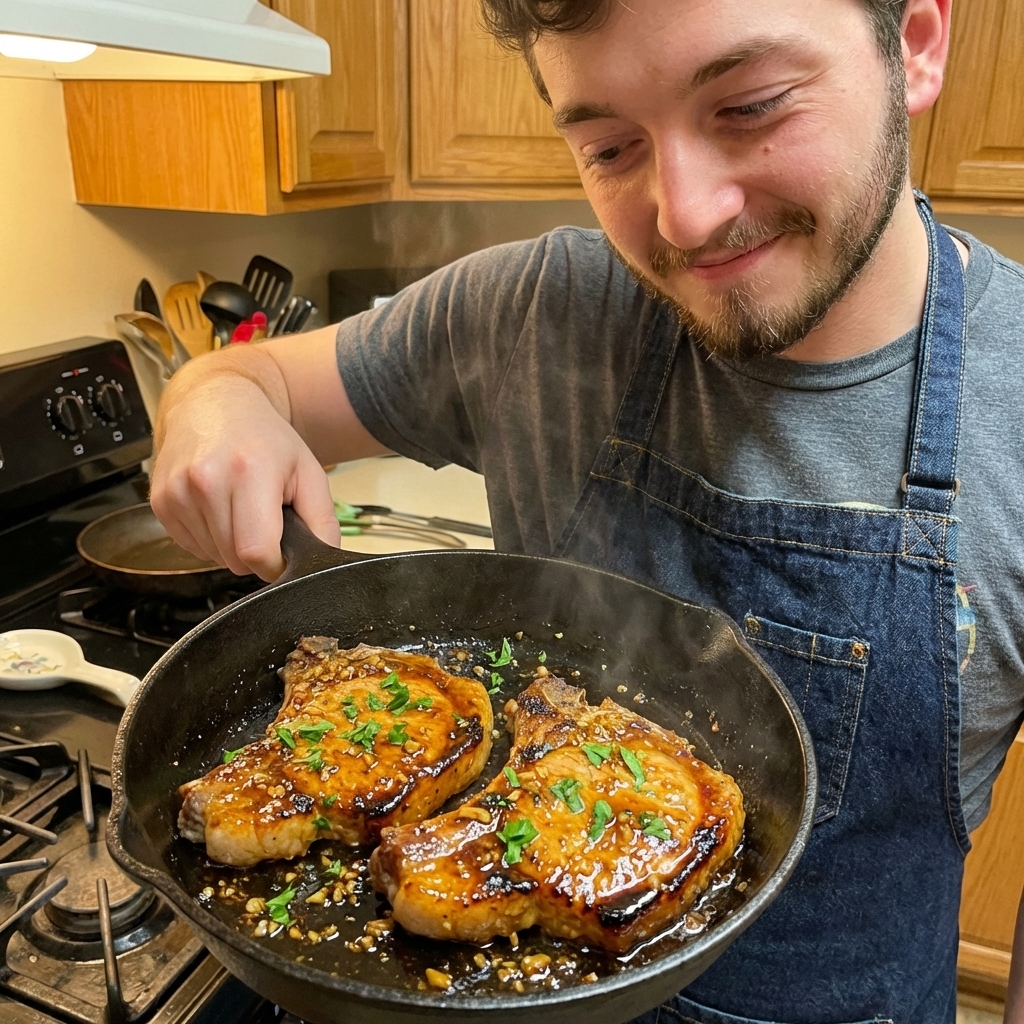
A cast iron skillet on a stovetop holding two pan-seared pork chops coated in a glossy honey garlic glaze, with caramelized edges, minced garlic visible in the sauce, and chopped parsley sprinkled on top, warm kitchen lighting, photorealistic food photography

These honey garlic pork chops are the kind of dinner that makes you feel like you really did something, even though you were basically just standing there in sweatpants with a skillet and a spoon. You get crisp, browned edges on the pork, then you hit it with a quick honey garlic glaze that turns sticky and shiny and clings to everything like it has a job.

The sauce is simple on purpose: honey for that caramelized finish, soy sauce for salty depth, lots of garlic, and a small hit of ginger to keep it bright. It is fast enough for a weeknight, but it tastes like you had a plan.

My promise: we are not sacrificing juiciness for speed. Below you will find the little steps that keep pork chops tender, plus exactly when to pull them so they land at a safe 145°F after resting under that glaze.
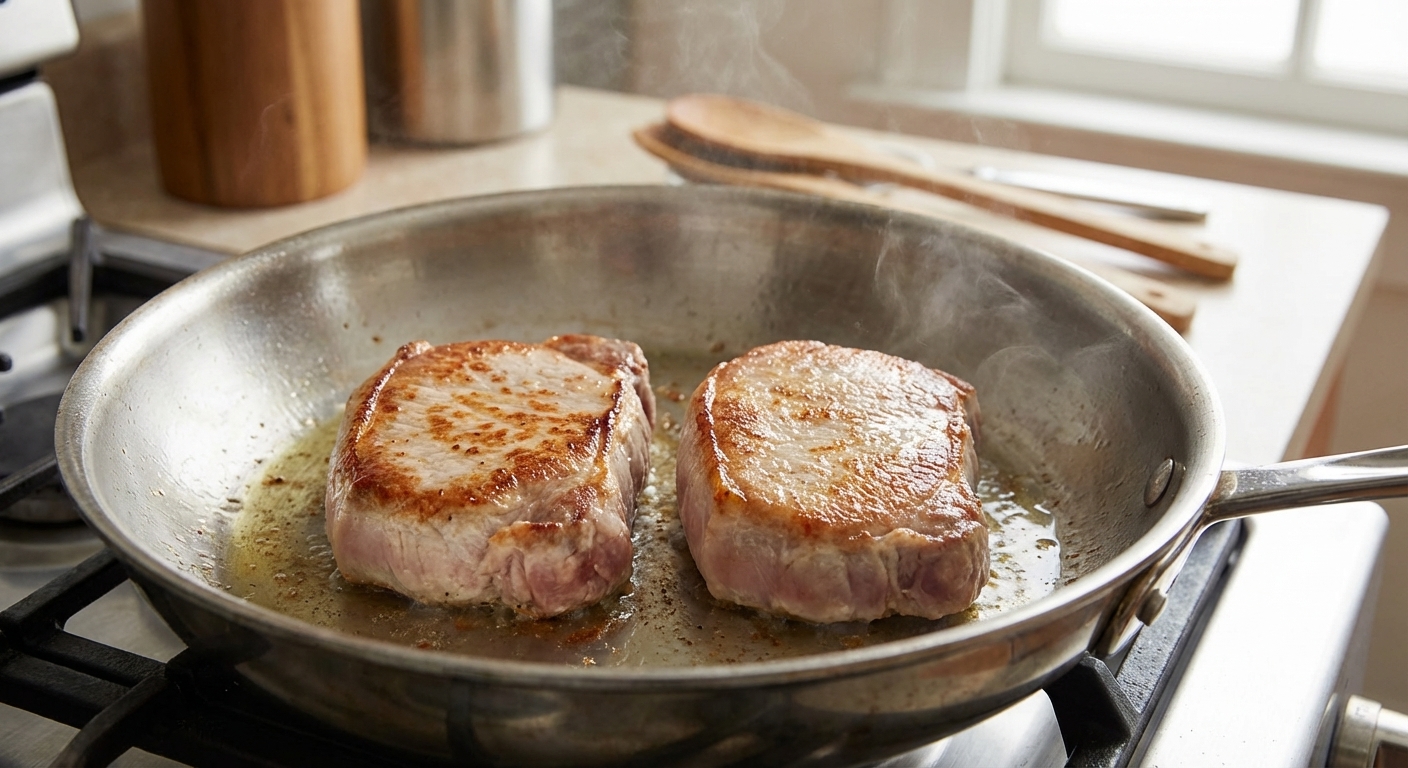
Two boneless pork chops searing in a stainless steel skillet with a light sheen of oil, browned crust forming on the underside, steam rising, close-up angle, photorealistic food photography

Why It Works

  • Quick caramelized glaze: Honey and soy reduce fast into a glossy sauce that coats the chops without needing flour or cornstarch.
  • Real sear first: Browning the chops before the sauce builds flavor and keeps the glaze from tasting flat or overly sweet.
  • Juicy pork: A short rest plus a temperature target keeps the center tender instead of chalky.
  • One skillet energy: The sauce picks up all those browned bits from the pan, which is basically free flavor.

Pairs Well With

Storage Tips

Fridge: Store pork chops with a spoonful of sauce in an airtight container for up to 3 days. Keeping them in sauce helps protect against drying out.

Reheat (best method): Warm gently in a covered skillet over low heat with a splash of water or chicken broth to loosen the glaze. Flip once, just until heated through.

Microwave method: Slice the chop first, add sauce on top, cover loosely, and heat in short bursts. Pork goes from juicy to tough fast if you blast it.

Freezer: You can freeze cooked chops with sauce for up to 2 months. Thaw overnight in the fridge before reheating gently.

Common Questions

How do I keep pork chops from drying out?

Two things matter most: do not overcook them and do not skip the rest. For the juiciest chops, pull them around 140 to 142°F, then rest 3 to 5 minutes so carryover heat brings them to a safe 145°F. (Carryover depends on thickness and pan heat, so use your thermometer as the final word.) Also, choose chops that are at least 1 inch thick if you can.

What kind of pork chops work best?

Center-cut pork loin chops (boneless or bone-in) are ideal here because they cook quickly and stay tender. Shoulder or blade chops have more connective tissue and can be tougher with a fast cook, so save those for braising or slower methods.

Can I use bone-in pork chops?

Yes. Bone-in chops are usually even juicier, but they take a few minutes longer. Sear the same way, then expect a slightly longer gentle simmer after you add the sauce. Use a thermometer for best results.

Do I need to marinate these?

Nope. The sauce is a quick glaze, not a long marinade, and it is designed to build flavor in the pan. If you want to prep ahead, you can mix the sauce ingredients and keep them in a sealed container in the fridge for up to 3 days. (Garlic and ginger mellow a bit over time, but it still works great.)

Can I make the sauce less sweet?

Absolutely. Start with 3 tablespoons honey instead of 1/4 cup, then taste. You can also add a squeeze of lemon or an extra splash of rice vinegar or apple cider vinegar at the end to sharpen it up.

Why did my sauce burn?

Honey can go from caramelized to scorched quickly. Lower the heat before adding the sauce and keep it moving. If your pan is very hot from searing, pull it off the heat for 30 seconds, then add the sauce.

I started making honey garlic anything during my “I have 20 minutes and zero patience” era, which honestly is most weeknights. Pork chops used to stress me out because they have a reputation for going dry if you blink at the stove too long. The fix was simple: cook them like you mean it, then stop before they go past juicy.

This skillet version became my go-to because it hits all my favorite notes: crisp edges, cozy pan sauce, and that sweet salty glaze that makes you want to drag a piece of bread through the skillet like it is your job.