Do I have to temper the chocolate?
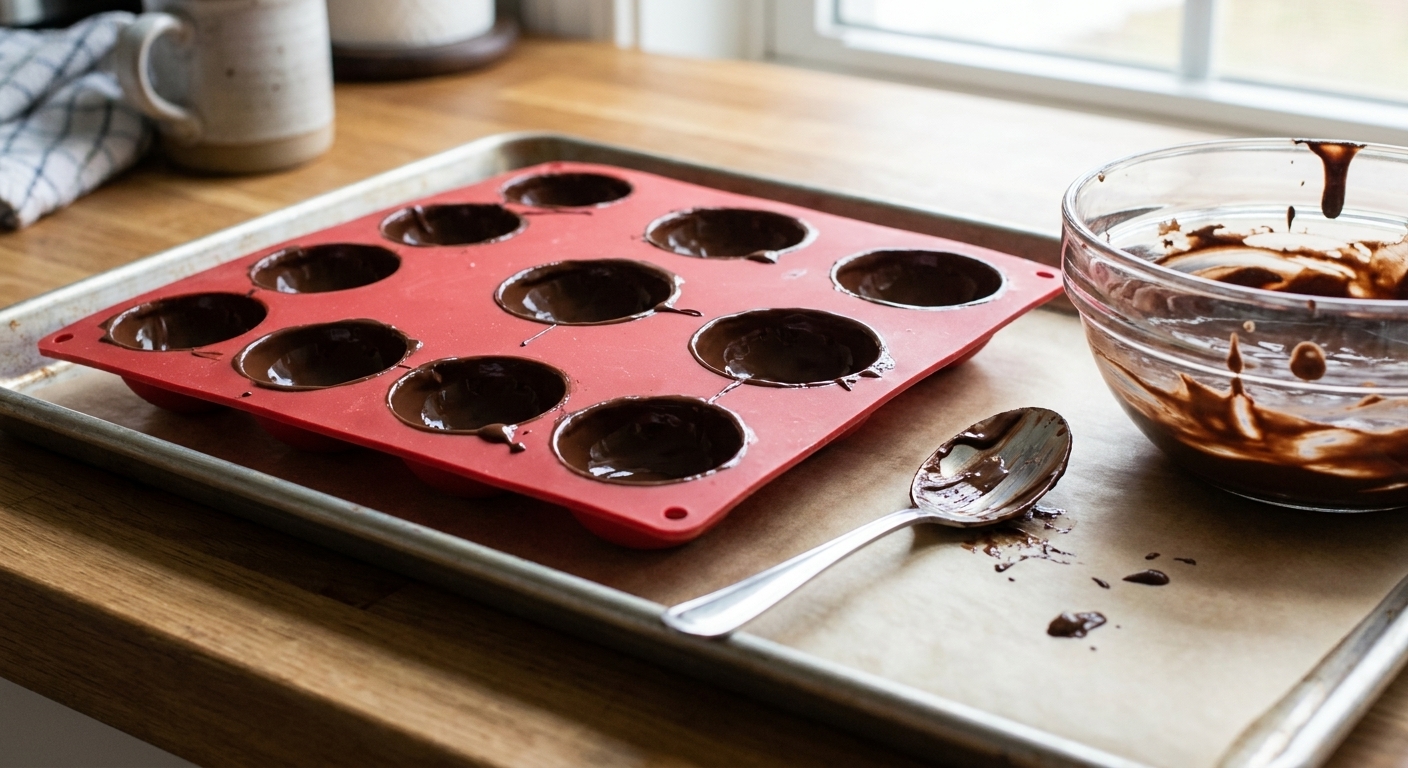
No. For most home cooks, melting with a tiny bit of refined coconut oil and letting the shells set fully is plenty. Tempering gives you a shinier finish and firmer snap, especially if you're gifting or your house is warm.
Why are my shells dull or streaky?
That is usually fat bloom from chocolate getting too hot, cooling too slowly, or temperature swings (like fridge condensation). Use good-quality chocolate, avoid water contact, and let shells set at a steady cool room temp if possible.
My spheres crack when I unmold them. What happened?
Most common reason is too thin a coating. Do a second coat and make sure the rim has good coverage. Also, unmold only when fully set and firm.
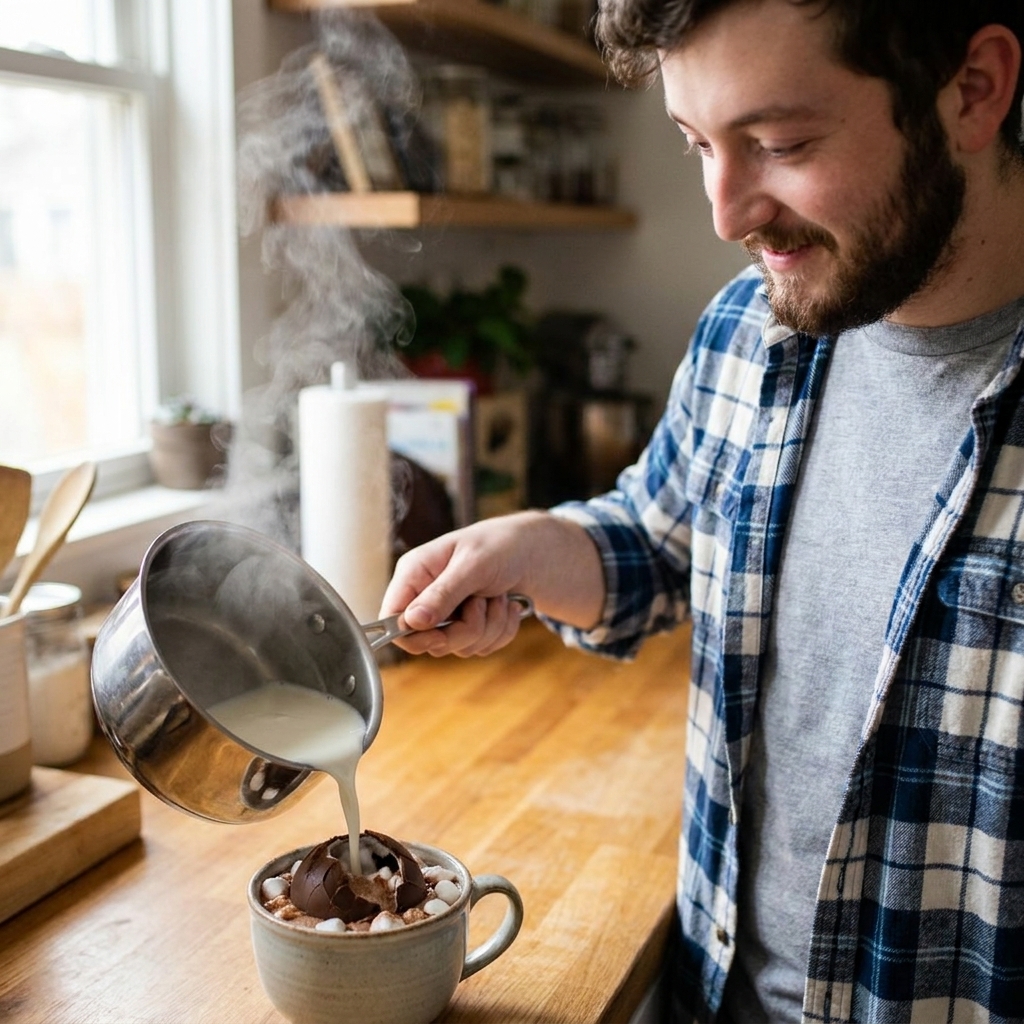
How hot should the milk be to melt a bomb?
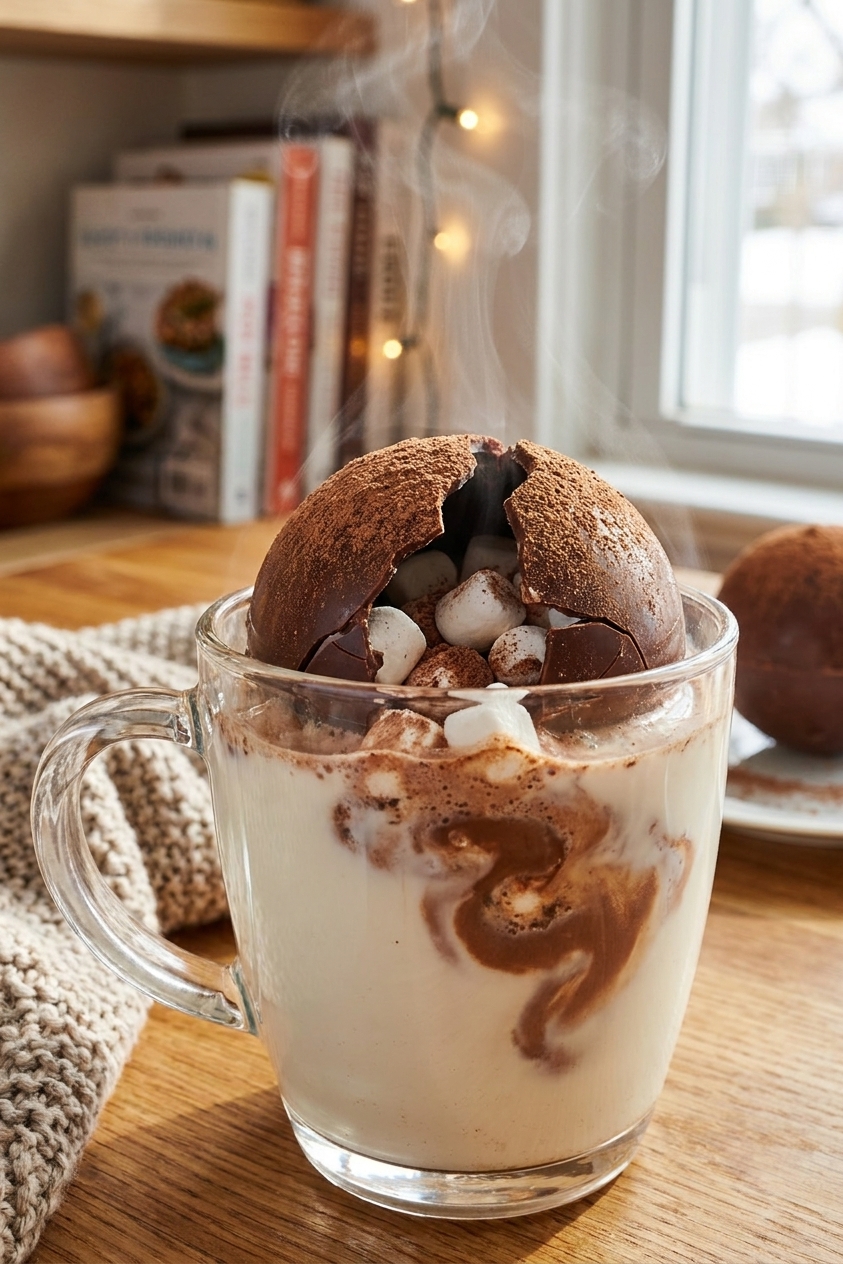
Aim for steaming hot, about 170°F to 180°F for the most reliable crack and melt. 160°F can work, but thicker shells may take longer. If you do not have a thermometer, heat until you see lots of steam and tiny bubbles around the edge, but not a full rolling boil.
Can I use water instead of milk?
You can, but it'll taste thinner. If you want a dairy-free option, use oat milk (extra creamy) or coconut milk beverage.
How much milk per bomb?
8 to 10 ounces per bomb is the sweet spot. Use less for extra rich cocoa, more if your bomb is heavily filled.
My rims will not seal. What do I do?
Usually the plate is not warm enough or the chocolate is too cold. Re-warm the plate for 10 seconds, then try again. You only need a quick kiss of heat. If you get a gap or small crack, dab on a little melted chocolate like glue, then chill for 5 minutes to set.