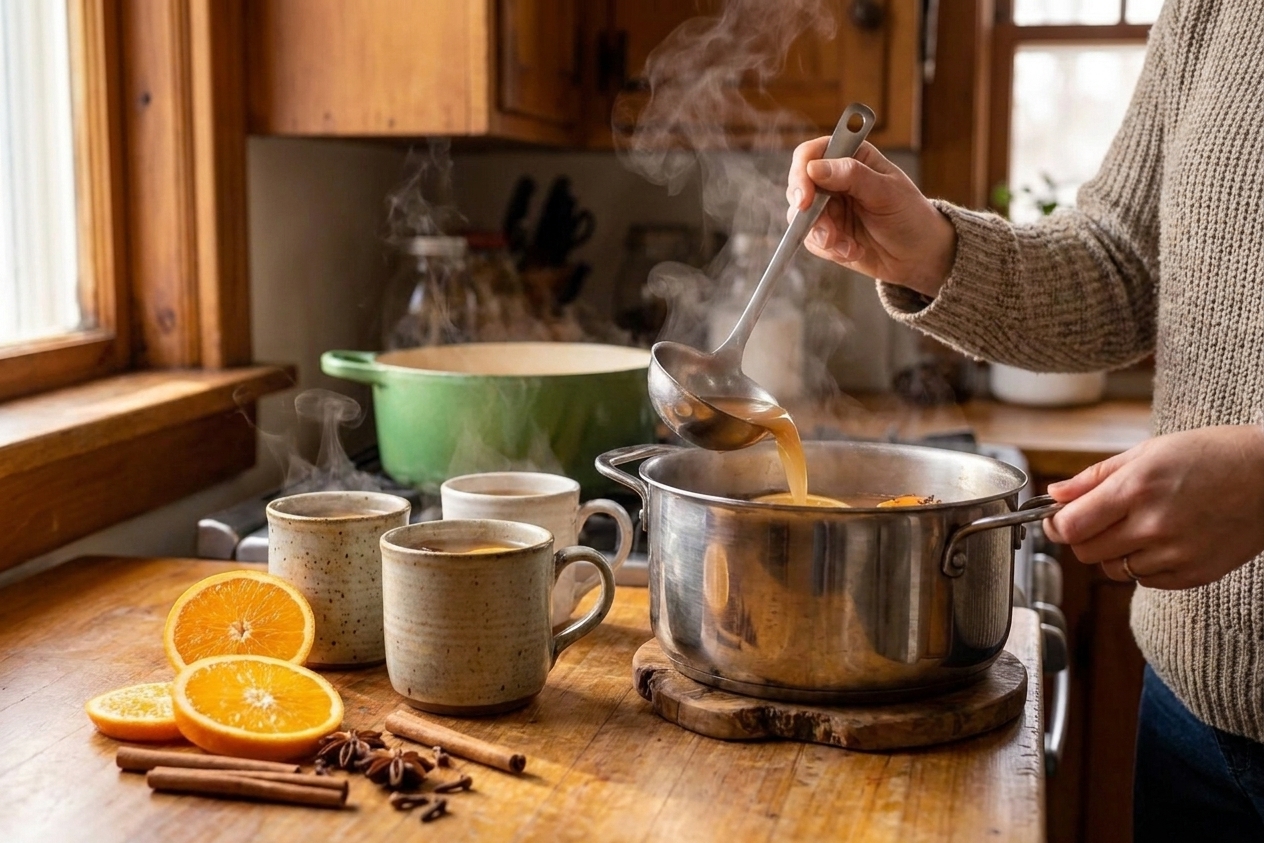
Is apple juice the same as apple cider?
Not quite. In most U.S. grocery stores, apple cider is usually less filtered and tastes more like fresh apples, with a deeper color and body. Apple juice is clearer and often a bit sweeter. (In some countries, “cider” can mean alcoholic cider, so check the label.) If all you have is juice, you can still make this, just use less sweetener and lean on the citrus to keep it lively.
Do I need to add sugar?
Nope. Some ciders are already sweet. Simmer first, taste, then decide. If it needs help, start with 1 tablespoon maple syrup or brown sugar at a time.
Why can my cider taste bitter?
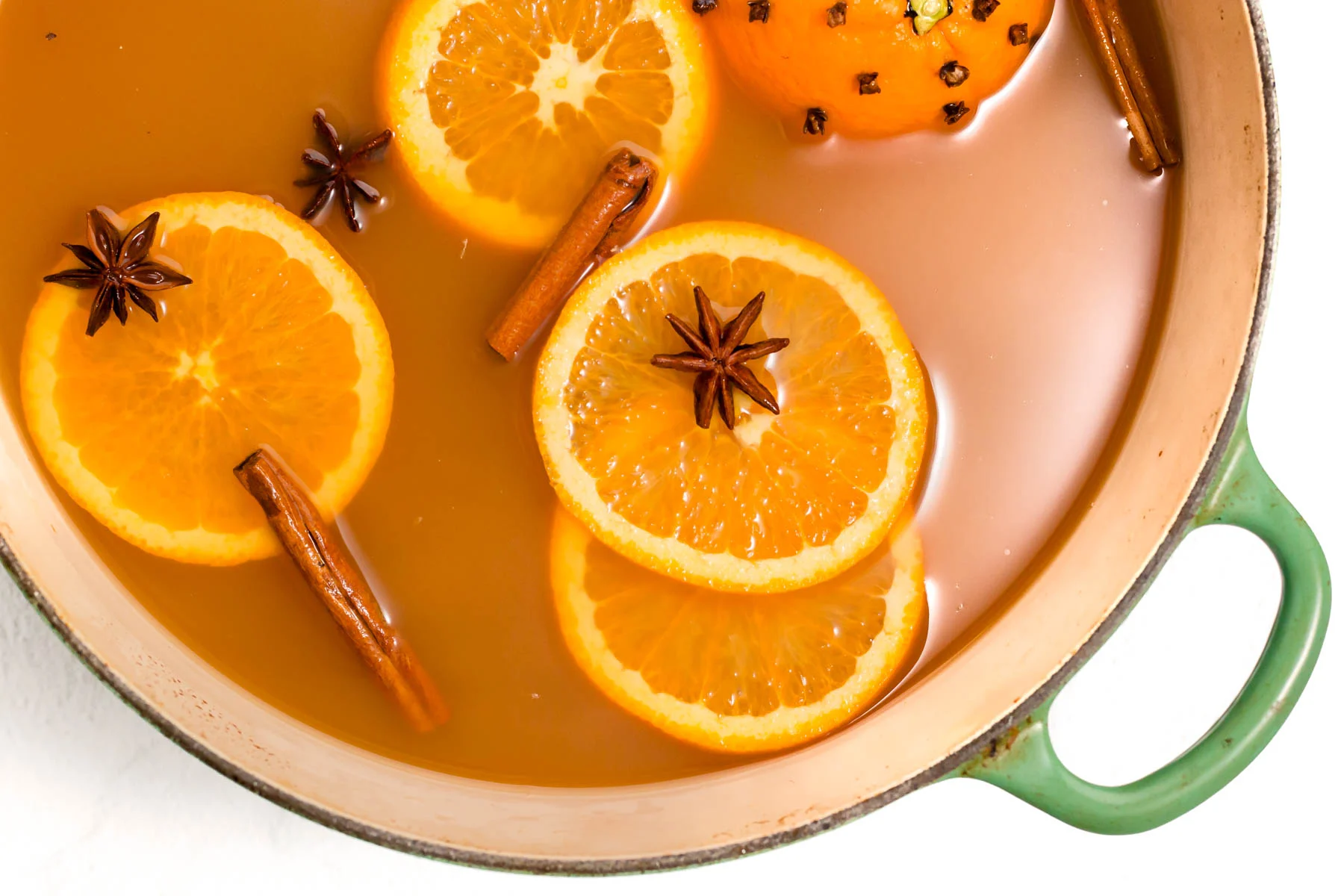
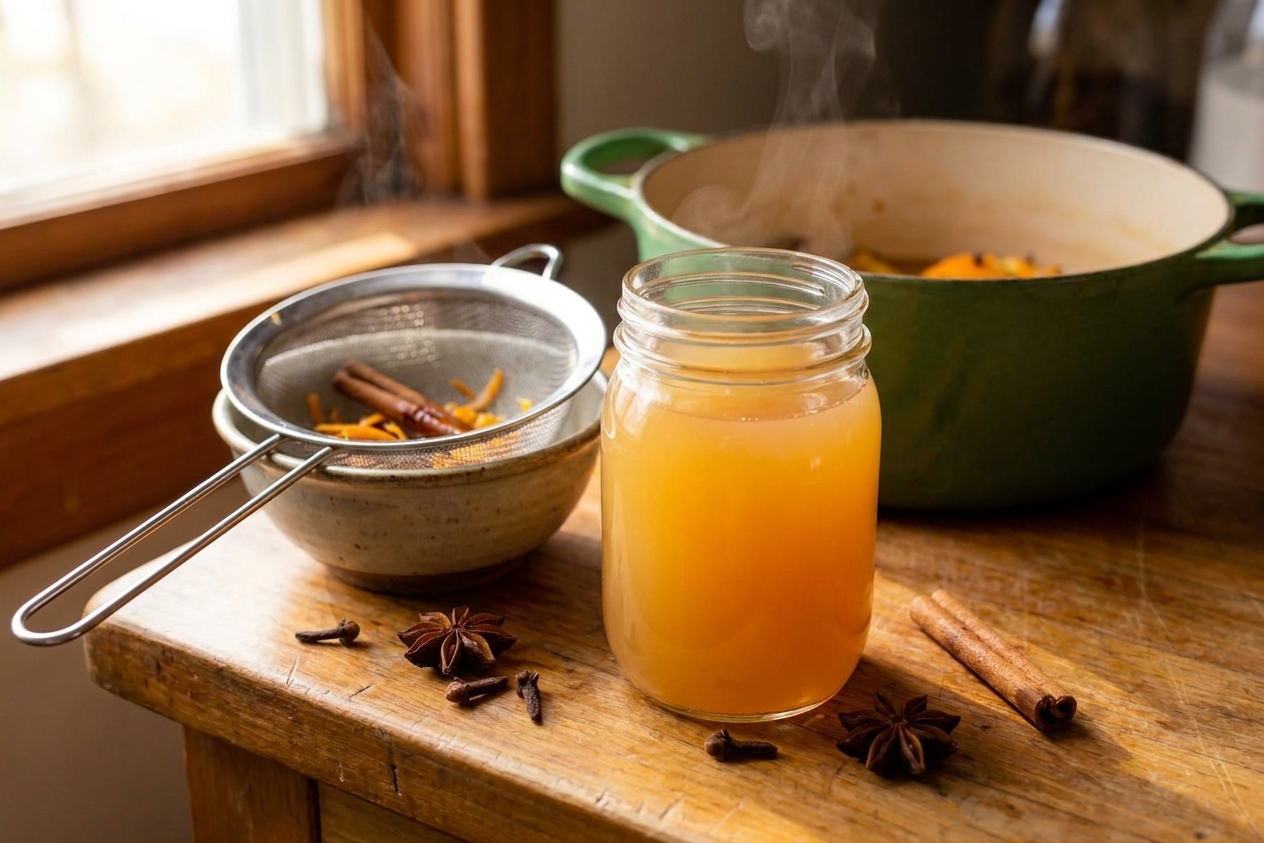
A few usual suspects: boiling too hard, over-steeping the orange peel (especially lots of white pith), or letting strong spices like cloves and star anise sit too long until they turn medicinal. Keep it at a gentle simmer and strain within 30 to 45 minutes. If you slice the orange, avoid pith-heavy end pieces and remove any seeds.
Can I make hot cider in a slow cooker?
Yes. Add everything to the slow cooker and cook on LOW for 2 to 3 hours (or HIGH for about 1 hour), then switch to WARM. Strain when it tastes right.
What spices can I swap?
Cinnamon and cloves are the classic backbone. From there, you can riff: a slice of fresh ginger, a few cardamom pods, or a pinch of allspice. If you use ground spices, keep them tiny and strain well.
Can I spike it?
Absolutely. Add alcohol off the heat or straight into each mug. Try bourbon, dark rum, or brandy, about 1 to 2 ounces per mug, depending on your vibe.
How do I scale this for a crowd?
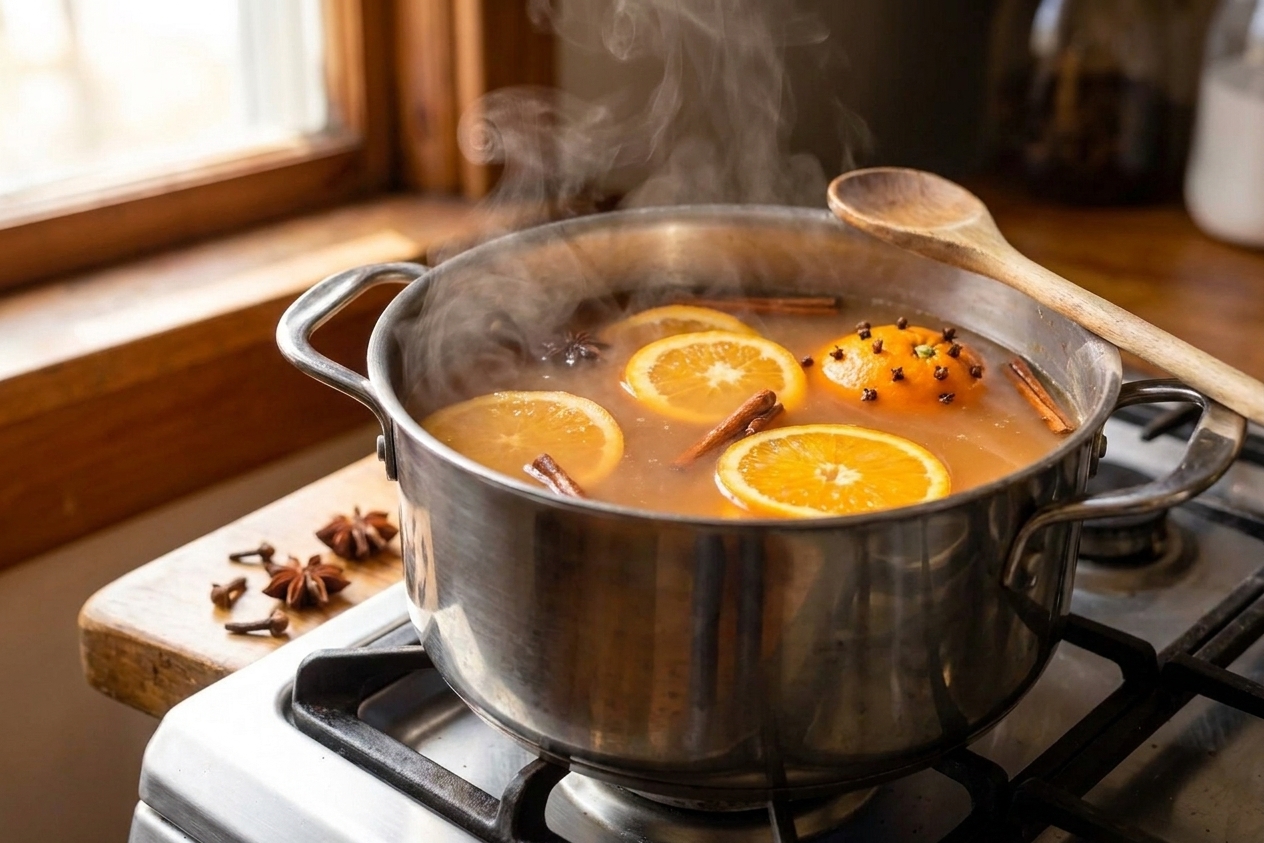
Easy: double everything for about 16 cups. Use a 6 to 8 quart pot (or a slow cooker) so it has room to heat without flirting with a boil.