The quick answer (then the important fine print)
Prime rib cook time is usually discussed in minutes per pound, but the most reliable way to nail doneness is to use a thermometer and treat time as an estimate.
As a planning range, most home cooks use these:
- Low and slow at 250°F to 275°F: about 20 to 30 minutes per pound
- Moderate roast at 325°F: about 15 to 20 minutes per pound
Why the range? Bone-in vs boneless, roast thickness, starting temperature, and oven accuracy all change the timeline.
One key fine print: minutes per pound is not perfectly linear. Bigger, thicker roasts often take a little longer than the simple math suggests. Use the charts below to plan your meal, then cook to temperature.
Prime rib pull temperatures (doneness chart)
This is the part I want you to circle with a sticky note. Prime rib keeps cooking after it leaves the oven, so you pull it early and let carryover do the last bit of work.
Typical carryover cooking: the internal temperature often rises about 5°F to 10°F while resting. Larger roasts, especially if you finish with a high-heat blast, can climb closer to 10°F to 15°F.
| Doneness | Pull from oven at | Final after resting |
|---|---|---|
| Rare | 115°F to 120°F | 120°F to 125°F |
| Medium-rare | 125°F to 130°F | 130°F to 135°F |
| Medium | 135°F to 140°F | 140°F to 145°F |
| Medium-well | 145°F to 150°F | 150°F to 155°F |
| Well-done | 155°F+ | 160°F+ |
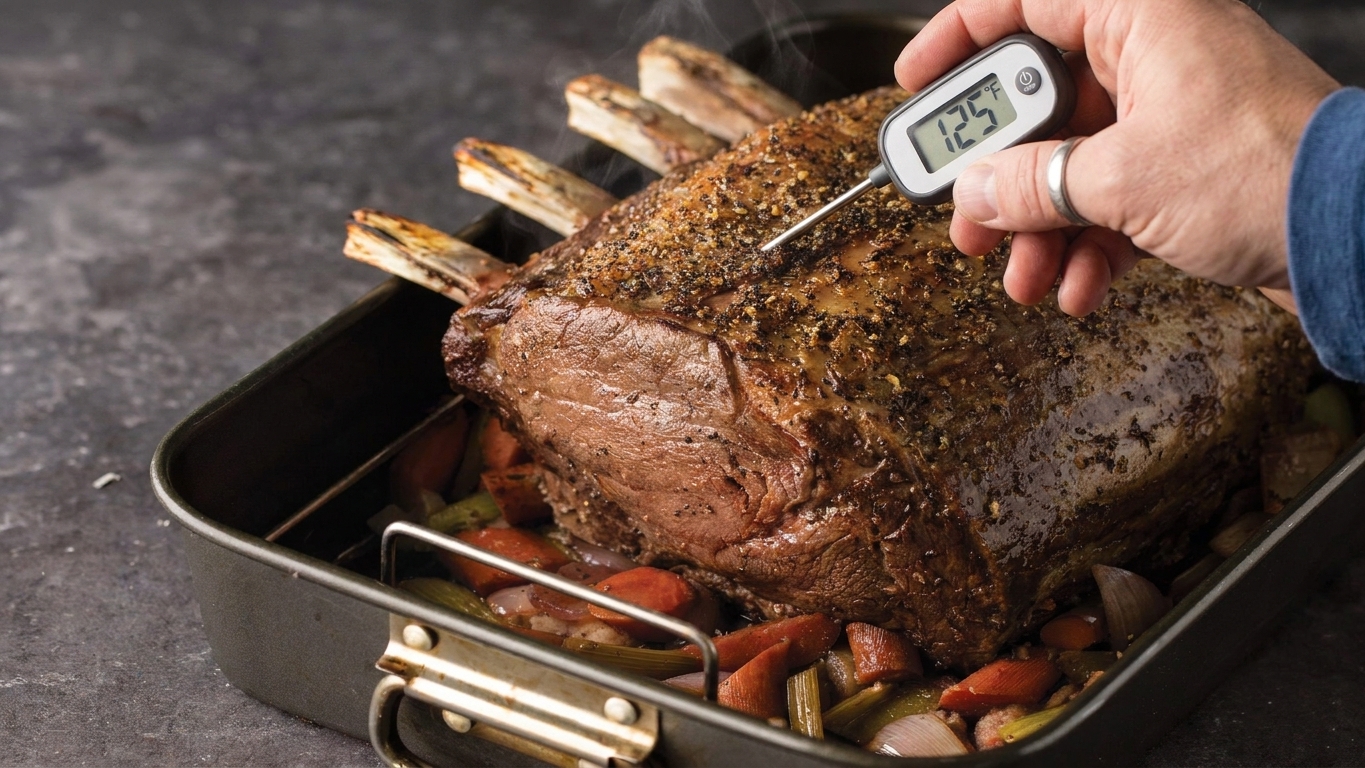
Where to temp it: insert the thermometer into the thickest center of the roast, avoiding bone and avoiding pockets of fat.
Food safety note: Many official guidelines (including USDA advice) recommend cooking whole cuts of beef to 145°F and resting 3 minutes. Prime rib is commonly served below that. Decide what you are comfortable with and cook accordingly.
Cook time per pound by oven temperature
Pick the approach that fits your day. Lower temperatures cook more evenly edge-to-edge and give you a bigger doneness sweet spot. Higher temperatures finish faster but can produce a thicker well-done band near the surface.
At 250°F (low and slow)
- Estimated time: about 22 to 30 minutes per pound
- Best for: even doneness, relaxed timing, very juicy slices
At 275°F (low and slow, a touch faster)
- Estimated time: about 20 to 28 minutes per pound
- Best for: even doneness with a slightly shorter cook
At 325°F (classic roast temperature)
- Estimated time: about 15 to 20 minutes per pound
- Best for: familiar timing, dependable results, quicker dinner plans
Crust note: Many cooks use a high-heat blast at the beginning or the end for browning. If you do that, the total time can shift. The thermometer still wins.
High-heat crust option
If you want a deeper crust without overcooking the center, you have two common paths. Either works. The main trick is to keep your target doneness based on internal temperature, not the clock.
Option 1: Sear at the end
- Roast at your chosen temperature (250°F, 275°F, or 325°F) until you are about 10°F to 15°F below your desired final temperature.
- Turn the oven up to 450°F to 500°F and brown for 8 to 15 minutes, watching closely.
- Carryover can be higher with this method, so do not pull late.
Option 2: Sear at the start
- Blast at 450°F to 500°F for 10 to 15 minutes to jump-start browning.
- Reduce oven to your roasting temperature and cook to your pull temp.
Time chart by roast weight (planning estimates)
Below are approximate ranges for a prime rib roast cooked to about medium-rare (pulled around 125°F to 130°F) at common oven temperatures. Your roast may be faster or slower, so treat these as scheduling help, not a promise from the universe.
Assumptions for these charts: roast starts fridge-cold, is roasted uncovered, and sits on a rack so air can circulate. Shape matters. A thick, compact roast can take longer than a flatter one.
At 250°F
| Roast weight | Approximate time |
|---|---|
| 3 lb | 1 hr 10 min to 1 hr 30 min |
| 4 lb | 1 hr 30 min to 2 hr |
| 5 lb | 1 hr 50 min to 2 hr 30 min |
| 6 lb | 2 hr 10 min to 3 hr |
| 7 lb | 2 hr 35 min to 3 hr 30 min |
| 8 lb | 3 hr to 4 hr |
| 9 lb | 3 hr 20 min to 4 hr 30 min |
| 10 lb | 3 hr 40 min to 5 hr |
At 275°F
| Roast weight | Approximate time |
|---|---|
| 3 lb | 1 hr to 1 hr 25 min |
| 4 lb | 1 hr 20 min to 1 hr 55 min |
| 5 lb | 1 hr 40 min to 2 hr 20 min |
| 6 lb | 2 hr to 2 hr 50 min |
| 7 lb | 2 hr 20 min to 3 hr 15 min |
| 8 lb | 2 hr 40 min to 3 hr 45 min |
| 9 lb | 3 hr to 4 hr 10 min |
| 10 lb | 3 hr 20 min to 4 hr 40 min |
At 325°F
| Roast weight | Approximate time |
|---|---|
| 3 lb | 45 min to 1 hr |
| 4 lb | 1 hr to 1 hr 20 min |
| 5 lb | 1 hr 15 min to 1 hr 40 min |
| 6 lb | 1 hr 30 min to 2 hr |
| 7 lb | 1 hr 45 min to 2 hr 20 min |
| 8 lb | 2 hr to 2 hr 40 min |
| 9 lb | 2 hr 15 min to 3 hr |
| 10 lb | 2 hr 30 min to 3 hr 20 min |
Scheduling tip from a small, practical hedgehog: Plan for the longer end of the range, plus resting time. If it finishes early, it can rest a bit longer and still slice beautifully.
Bone-in vs boneless
A little, yes, but not always in the direction people expect.
- Bone-in prime rib: The bone can act like a heat shield in spots, and bone-in roasts are often thicker. They can take slightly longer than a boneless roast of the same weight, but the difference is usually modest.
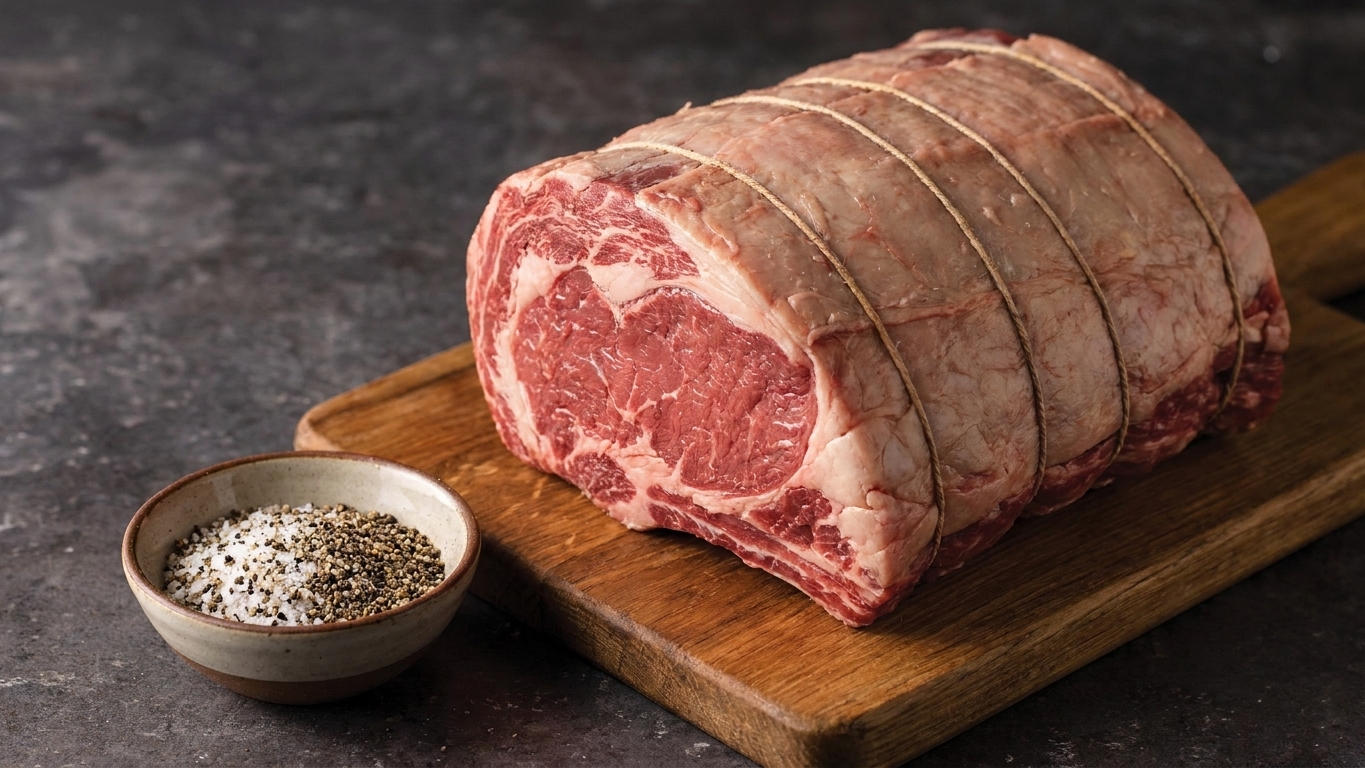
- Boneless prime rib: Often cooks a bit faster and more evenly because it is a more uniform cylinder once tied.
Best practice: Use the same charts to plan, then start checking internal temperature earlier if your roast is boneless or flatter.
Seasoning timing (dry brine help)
This will not dramatically change your cook time, but it can absolutely change how juicy the roast eats and how good the crust tastes.
- Best timing: Salt the roast and leave it uncovered in the fridge for 12 to 24 hours. This is a simple dry brine.
- If you are short on time: Salt at least 1 to 2 hours ahead if you can. If not, season right before roasting and call it a win anyway.
- What to use: kosher salt and black pepper are enough. Add garlic and herbs if you love them.
Carryover cooking and resting time
Prime rib needs a rest so the juices settle and the temperature finishes rising gently.
- Rest time: plan on 20 to 30 minutes for most roasts.
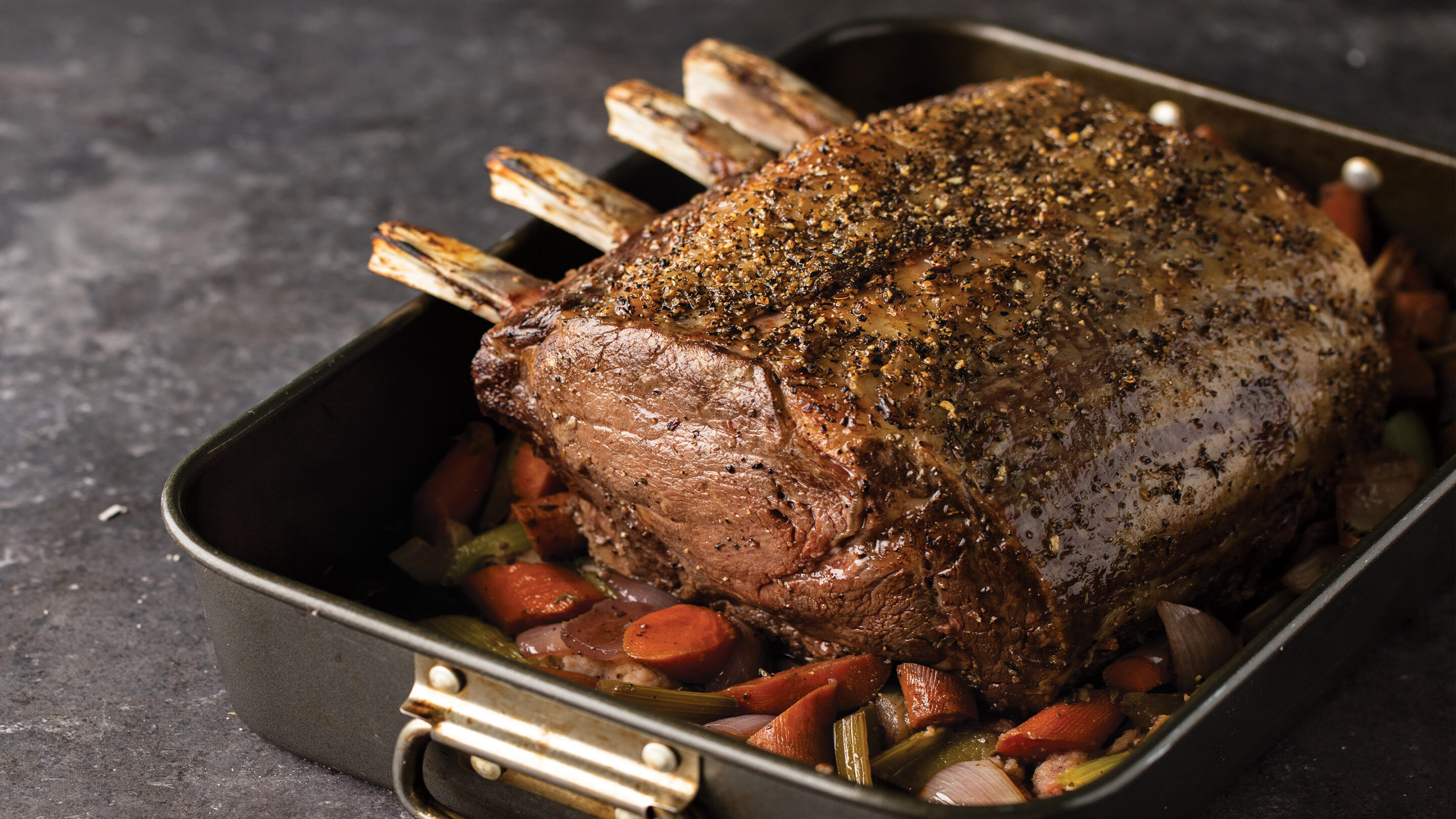
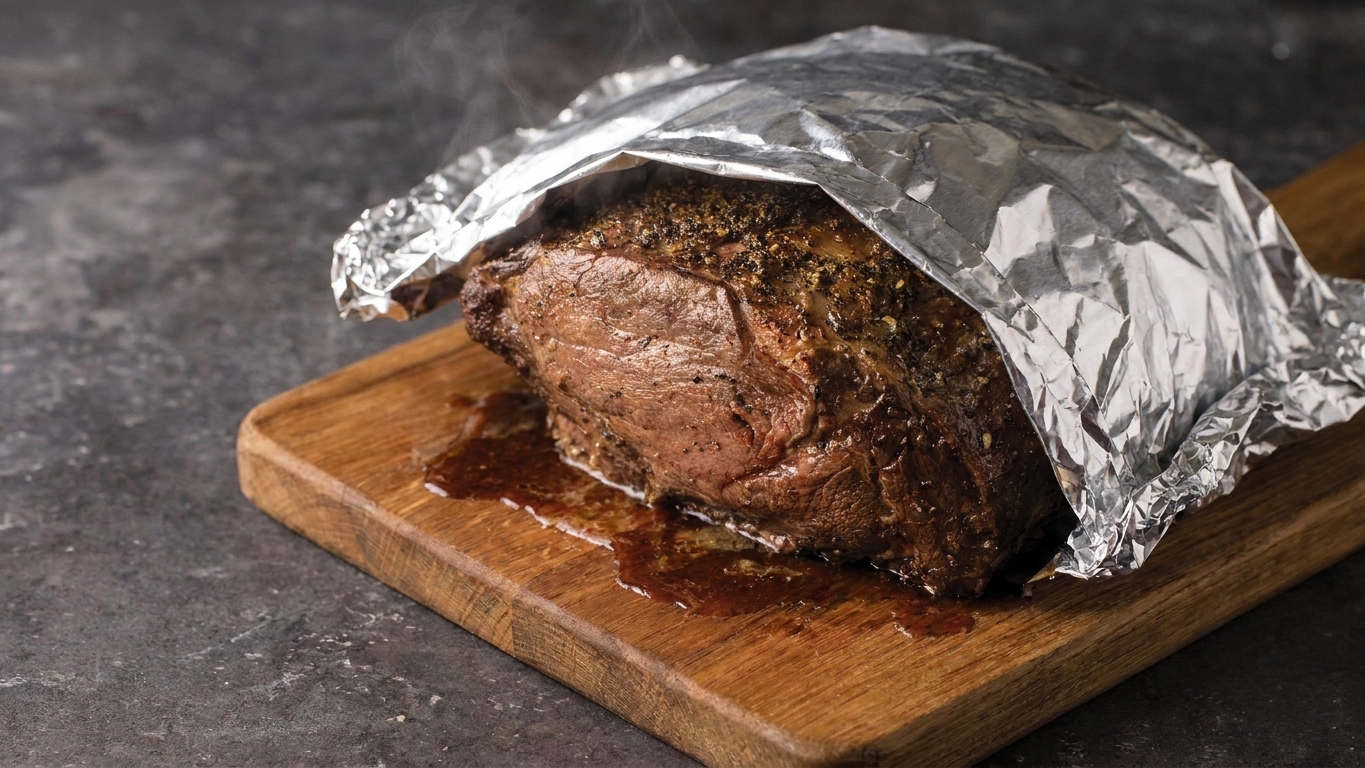
- How to rest: place the roast on a cutting board or back on the rack (even better for airflow) and tent loosely with foil. Tight wrapping can soften the crust.
- Carryover rise: often 5°F to 10°F, and sometimes 10°F to 15°F for larger roasts or after a high-heat finish.
If you need extra breathing room for side dishes, a roast can often rest a bit longer. Just keep in mind the crust will slowly soften as it sits.
Starting temperature
This question pops up every time a prime rib hits the shopping cart: do you start it cold, or let it sit out?
Starting from the fridge
If your roast goes into the oven straight from the fridge, it will generally take a little longer to reach your target internal temperature. The timeline can shift more with bigger roasts.
Letting it sit out briefly
Letting a roast sit out can reduce the chill on the surface, but it does not magically make the center warm quickly. If you do set it out, keep it to a reasonable time and focus on thermometer accuracy rather than chasing a perfect starting temp.
My cozy-planning suggestion: whichever method you use, build in a buffer and start checking internal temp early. Prime rib is a celebration roast, not a sprint.
How to check doneness
- Use an instant-read thermometer or a probe thermometer.
- Measure the center of the thickest part.
- Avoid bone and fat seams, which can throw off the reading.
- Start checking early: begin temping when you are about 30 to 45 minutes away from the low end of the time range in the chart. For extra-thick roasts, start even earlier.
Troubleshooting timing
- Oven runs cool or hot: common in home ovens. An oven thermometer helps.
- Roast shape: a long, thin roast cooks faster than a compact, thick one.
- Bone-in thickness: bone-in roasts are often thicker cuts.
- Opening the oven door: every peek drops heat and adds time.
- Pan and rack setup: a roast on a rack gets better air flow and more even cooking than sitting directly in a deep pan.
- High-heat finishing: a final blast for crust can bump carryover, so pull earlier and rest.
FAQ
Is prime rib the same as ribeye roast?
They come from the same section. Prime rib is often marketed as a classic roast (frequently bone-in), while ribeye roast is often marketed as boneless, but either label can show up either way. Cook to temperature.
How many pounds per person?
A common planning rule is about 1 pound per person for bone-in (because bone adds weight) and about 1/2 to 3/4 pound per person for boneless, depending on appetites and side dishes.
Can I cook prime rib at 350°F?
You can, but the per-pound timing gets tighter and the outer layers can cook faster than the center. If you roast hotter, start checking temperature early and rely on pull temps plus resting.
What if I pulled it too early?
If it is under your target after resting, you can return it to the oven briefly. Keep the heat moderate and check often so you do not overshoot.
What if it is done early?
Let it rest longer, tented loosely. If it needs to wait quite a while, keep it in a warm spot and slice right before serving.