Small paws, big appetite, and a soft spot for comfort food. In my house that usually means someone short (and furry) is posted up near the oven, hoping for a crumb. And if there is one comfort-food heartbreak I never want you to experience, it is a gorgeous pie filling sitting on top of a pale, soggy crust. Blind baking is the cozy little trick that keeps your bottom crust crisp and your pie edges neat.
What blind baking means (and when you need it)
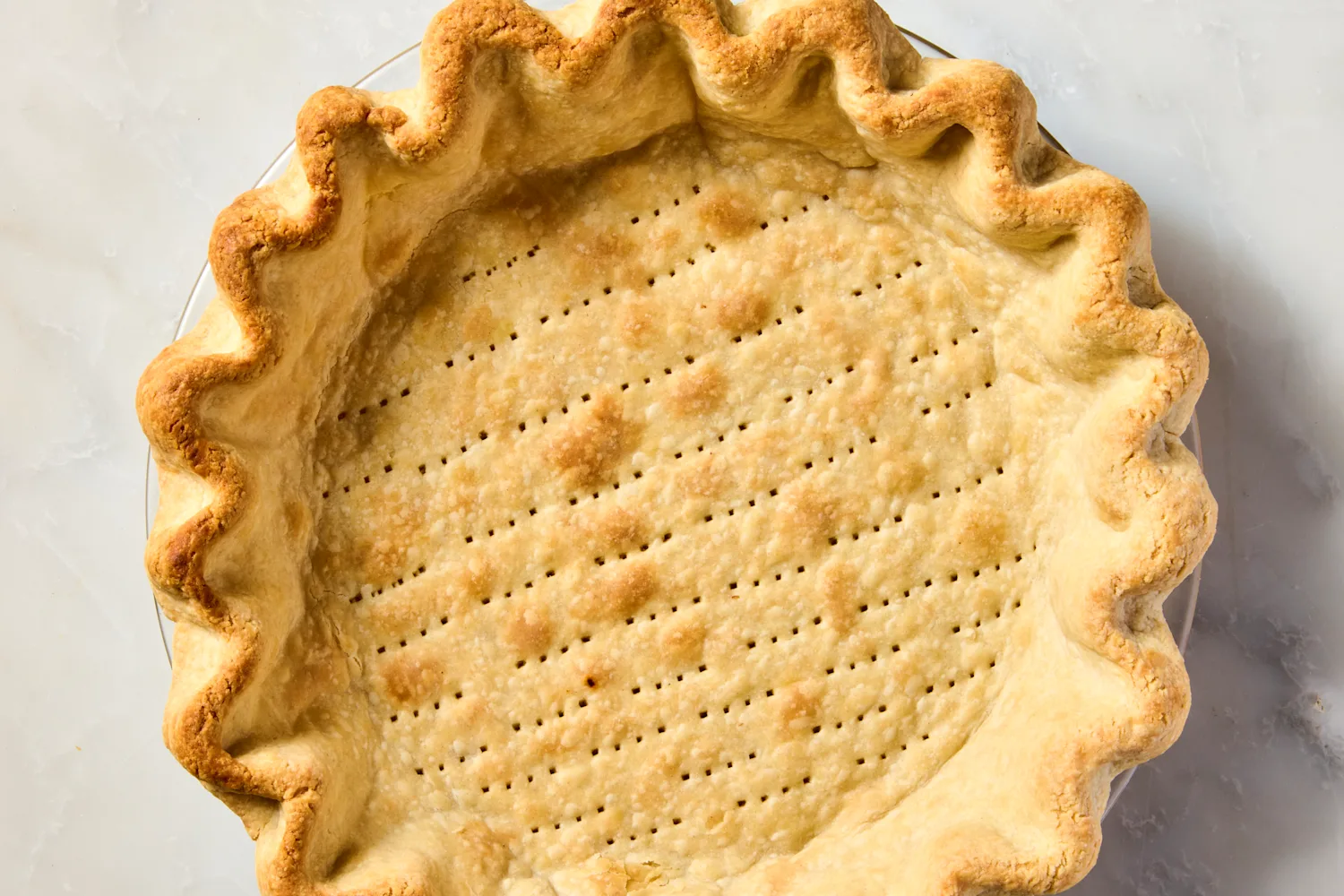
Blind baking means baking a pie crust before the filling goes in. Sometimes you bake it partway and finish baking with the filling. Other times you bake it all the way for no-bake or quick-set fillings.
Blind bake for these pies
- No-bake fillings: chocolate cream, pudding-style pies, icebox pies, fresh fruit pies with pastry cream
- Custard pies that can sog the crust: pumpkin, pecan, sweet potato, some quiches (often benefit from partial blind baking)
- Any filling with a short bake time: if the filling sets quickly, the crust may not get enough oven time to crisp
You usually do not need it for
- Double-crust pies like apple or cherry (the long bake time typically cooks the bottom through)
- Pies baked a long time with a thick fruit filling (still, some bakers prefer a short pre-bake for extra crispness)
Tools you need (plus easy substitutes)
You do not need fancy gear, but you do need a way to keep the crust from puffing up and sliding down.
- Pie dish: glass, ceramic, or metal
- Parchment paper (or aluminum foil)
- Pie weights (or substitutes below)
- Fork for docking (optional, depending on method)
Pie weight alternatives
If you do not have ceramic pie weights, these work well:
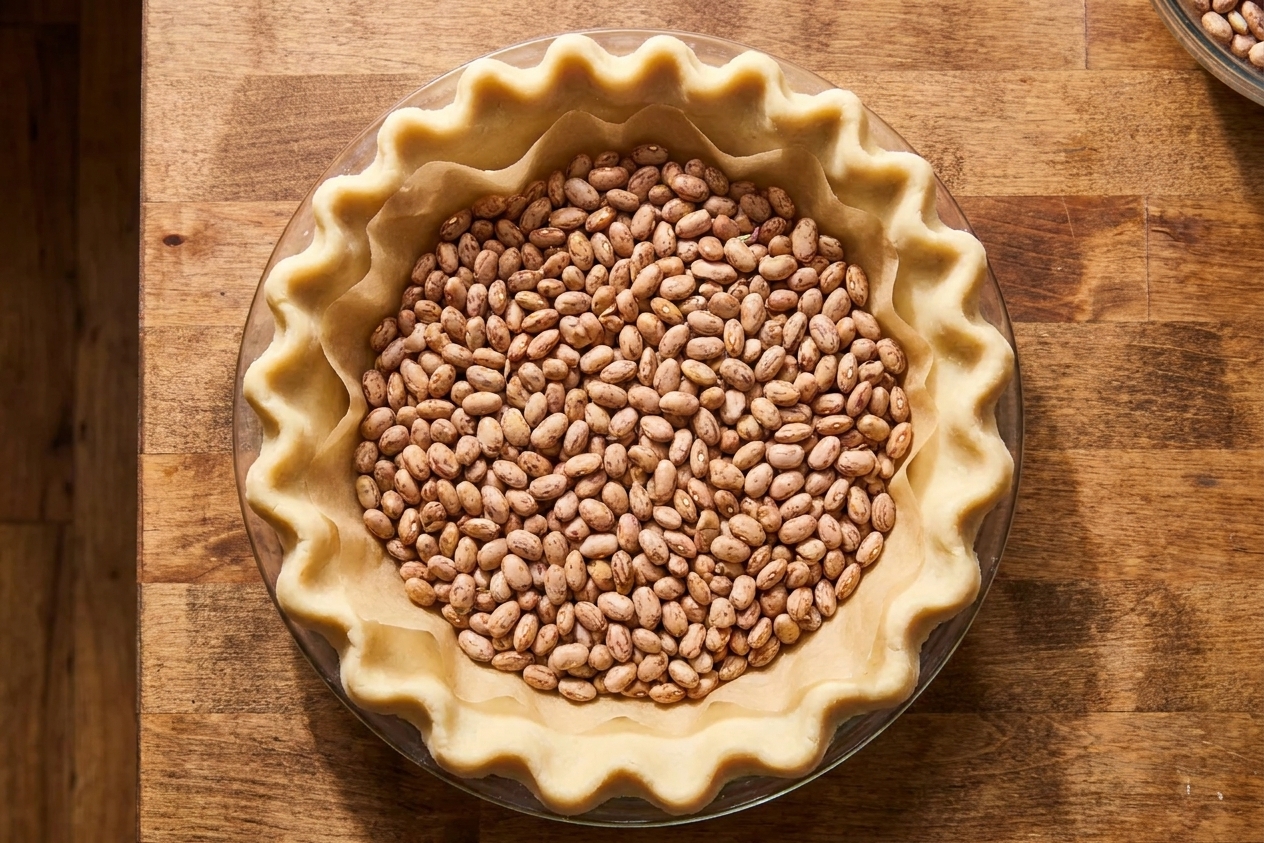
- Dried beans (best all-purpose substitute)
- Dried rice
- Granulated sugar (excellent coverage and heat conduction; it will toast lightly, and it is best reused in baking like cookies, quick breads, or muffins)
Tip: If using beans or rice as weights, consider them “pie weights only” afterward. They will toast and may not cook up nicely for dinner.
Before you bake: set your crust up for success
1) Fit the dough into the pan without stretching
Stretching is the sneaky reason crusts shrink. Instead, gently lift and settle the dough into the dish, then press it into the corners.
- Leave a little overhang.
- Trim and crimp the edge.
- If you are doing a sharp crimp, make it a bit sturdier than you think. It relaxes slightly as it bakes.
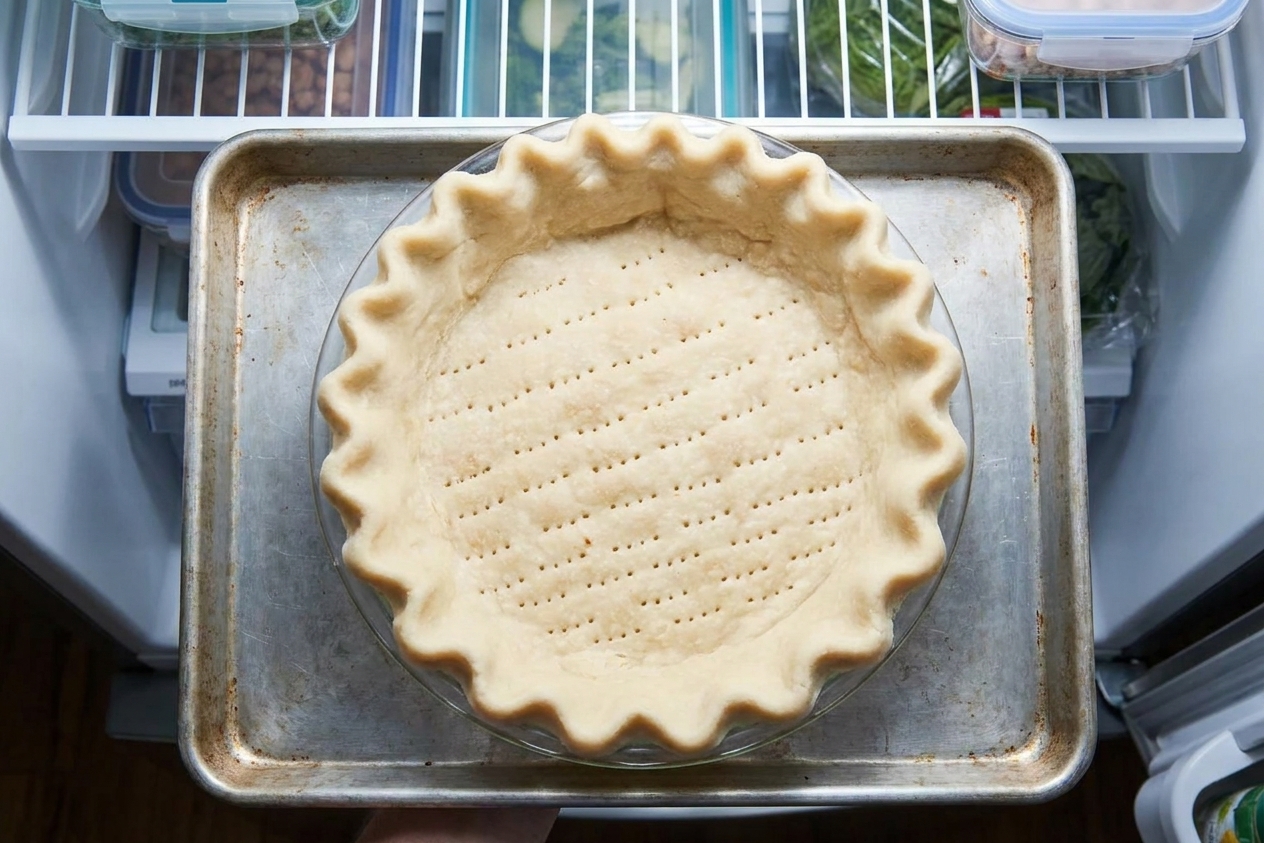
2) Chill, chill, chill
Cold dough is calm dough. Chilling helps the butter stay solid longer so the crust keeps its shape and turns flaky instead of slumpy.
- Minimum: 30 minutes in the refrigerator
- Even better: 15 minutes in the freezer after chilling in the fridge
Tip: If your kitchen is warm, chill the shaped crust while the oven preheats.
3) Preheat the oven fully
A fully preheated oven helps set the crust structure quickly. Aim for the temperature your pie recipe calls for. When in doubt for blind baking, 375°F to 400°F is a reliable range for most standard pie crusts.
Quick pan note: metal pie plates tend to brown faster, while glass often browns slower and may need a few extra minutes to get that truly golden bottom.
Docking vs pie weights (which one should you use?)
Both docking and weights help prevent puffing, but they work differently.
Docking
Docking means pricking the bottom (and sometimes the sides) with a fork to let steam escape.
- Best for: crusts that will bake fully without a wet filling, like tart shells or some pre-baked pie shells
- Not ideal for: very juicy or custardy fillings, because holes can let filling seep into the crust
Pie weights
Weights press the crust in place while the butter melts and the structure sets.
- Best for: most pies, especially anything prone to sogginess
- Bonus: helps keep the sides from sliding down
My cozy rule: If the filling is wet, use weights. If you are unsure, use weights. If you want the neatest edges, use weights.
How to blind bake, step by step
This method works for both partial and fully baked crusts. The only difference is how long you bake after removing the weights.
Step 1: Line the crust
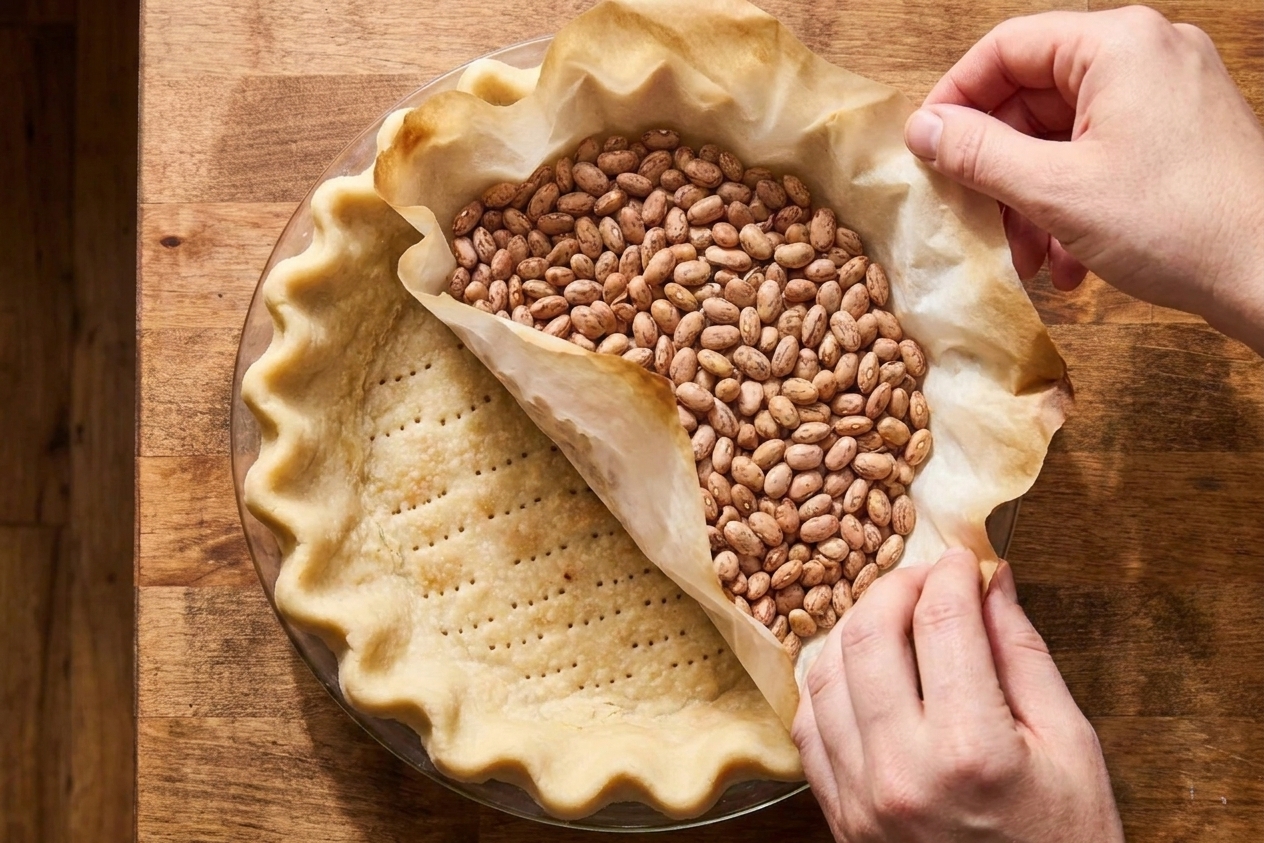
Take your chilled crust from the fridge. Line it with parchment or foil.
- Crinkle first: Wad the parchment into a ball, then open it up and press it into the crust. Crinkles help it sit snugly against the corners.
- Make sure the lining comes up higher than the edges so you can lift it out safely.
Step 2: Fill with weights
Pour in your weights and push them gently up the sides. This is the part that helps prevent slumping.
Step 3: Bake with weights
Bake on a middle-lower rack if you can. It encourages the bottom crust to set and brown without putting the rim too close to bottom heat.
As a starting point for a standard 9-inch crust at 375°F, bake 15 to 20 minutes with weights, until the edges look set.
Step 4: Remove weights and finish baking
Lift out the parchment and weights carefully. Then return the crust to the oven to finish baking based on whether you are doing a partial or full blind bake.
If the bottom bubbles up: gently press it down with the back of a spoon (carefully, it is hot), or prick the bubble once or twice with a fork, then keep baking.
Timing and temperatures: partial vs full blind bake
Exact timing depends on your pan, your crust thickness, and your oven’s personality. Use these as dependable starting points for a standard 9-inch pie crust.
Partial blind bake (for custard and baked fillings)
- Oven: 375°F
- Bake with weights: 15 to 20 minutes, until edges look set and just barely turning pale gold
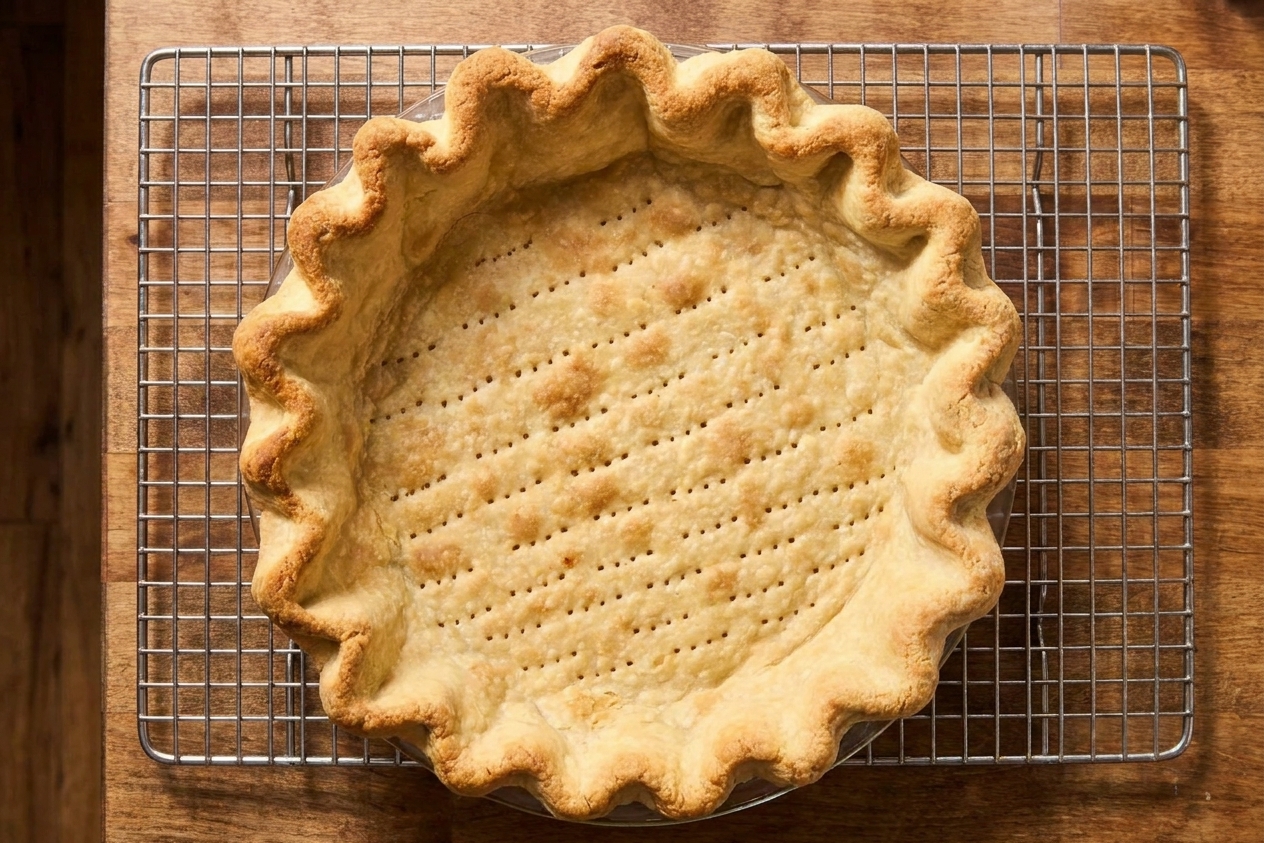
- Remove weights, bake again: 5 to 10 minutes, until the bottom looks dry (not shiny) and lightly colored
Quiche note: for quiche, I usually lean toward the longer end of that second bake. A drier bottom means less sogginess once the custard goes in.
Fully blind bake (for no-bake fillings)
- Oven: 375°F
- Bake with weights: 15 to 20 minutes
- Remove weights, bake again: 12 to 18 minutes, until the bottom is golden and the whole crust is cooked through
Visual cues matter: You are looking for a crust that is matte and set for partial bakes, and evenly golden for full bakes.
Egg wash sealing for custard pies (my favorite soggy-bottom insurance)
If you are baking a custard pie like pumpkin, pecan, or a creamy chess-style filling, a quick egg wash can help seal the crust so it stays crisp longer.
How to do it
- When the crust is partially baked and you have removed the weights, whisk 1 egg white (or a whole egg) with a tiny splash of water.
- Brush a thin layer over the bottom and sides.
- Return the crust to the oven for 2 to 4 minutes, just until the egg looks set and no longer wet.
- Add filling and continue with your pie recipe.
Tip: Egg white is my go-to here because it seals without adding much flavor or extra browning. Keep the layer thin so it does not turn patchy.
How to prevent a soggy bottom (even after blind baking)
Blind baking does a lot, but these extra habits stack the odds in your favor.
- Bake on a middle-lower rack: More direct heat to the bottom crust, without parking it on the oven floor.
- Use a metal sheet pan: Put the pie dish on a preheating sheet pan so the bottom gets a head start.
- Let the crust dry out a bit: That post-weights bake time matters. If the bottom still looks shiny, give it another couple minutes.
- Shield the rim if needed: If the edges brown faster than the bottom, use a pie shield or loosely tent foil around the rim.
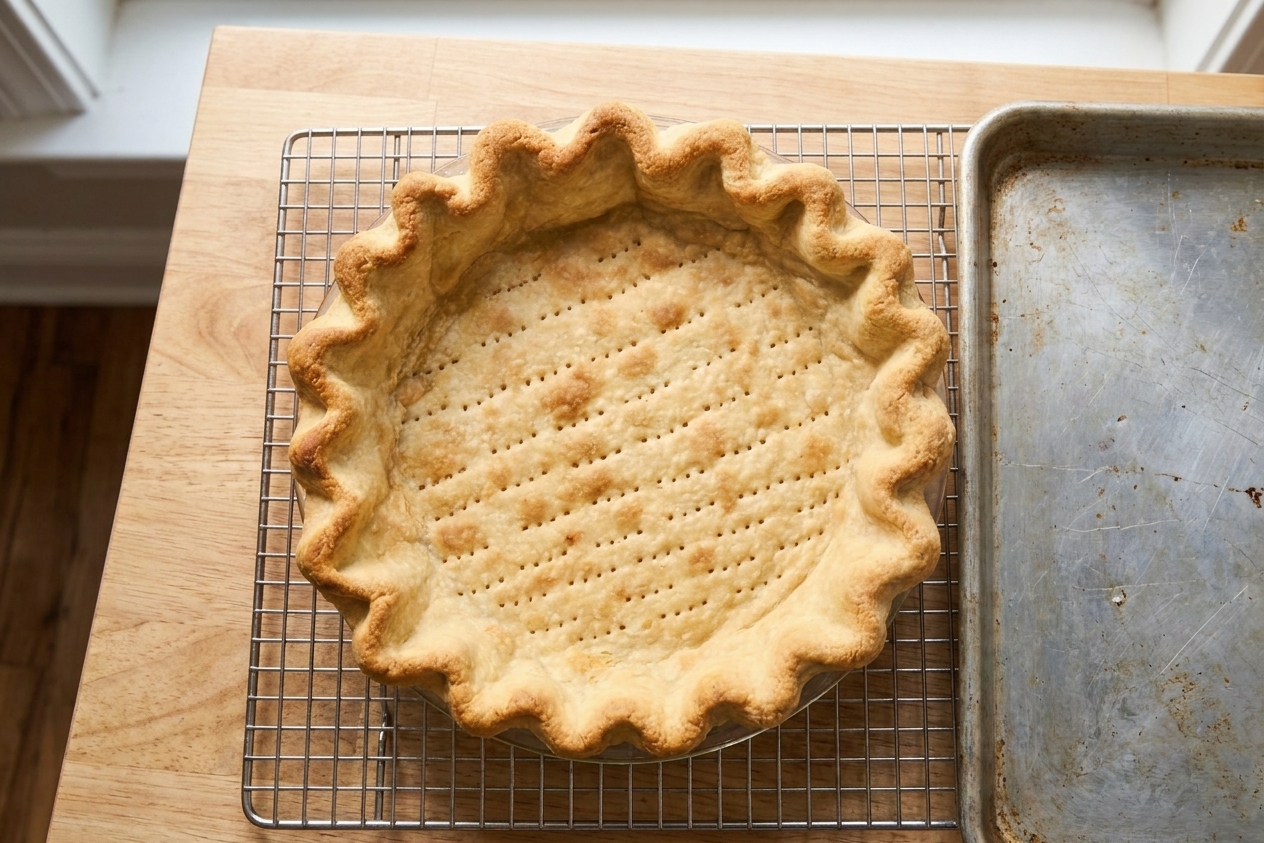
- Cool smartly: For a fully baked shell, cool on a rack so steam does not get trapped underneath.
- Consider a barrier: For some pies, a thin layer of melted chocolate or jam brushed onto a fully baked shell can help block moisture after it cools.
Troubleshooting: the usual blind baking drama
My crust shrank
- Cause: dough was stretched in the pan, or not chilled enough
- Fix next time: fit without stretching and chill at least 30 minutes
- Extra help: press weights firmly up the sides during the first bake
The bottom puffed up
- Cause: not enough weights, or lining did not press into the corners
- Fix: use more weights and crumple parchment so it hugs the crust
- If it happens after weights are removed: press down gently with the back of a spoon or prick once or twice with a fork, then continue baking
The edges browned too fast
- Cause: hot spots, thin edges, or long bake time
- Fix: use a pie shield or loosely tent foil around the rim after the first 10 to 15 minutes
The crust stuck to the parchment
- Cause: steam and butter can make the lining cling a bit
- Fix: lift slowly. If needed, pause and let it cool 2 minutes, then try again.
The bottom is still pale
- Cause: not enough time after weights, or a glass dish that browns more slowly
- Fix: bake a few minutes longer. A fully baked shell should be nicely golden, not beige.
Quick reference: blind bake checklist
- Fit dough into pan without stretching
- Chill at least 30 minutes
- Preheat oven fully (often 375°F)
- Line with crumpled parchment or foil
- Fill with weights, press weights up the sides
- Bake until edges are set
- Remove weights, bake until bottom is dry (partial) or golden (full)
- Optional: brush with a thin egg white wash and bake 2 to 4 minutes for custard pies
- Shield the rim if it browns faster than the bottom
FAQ
Do I have to dock the crust if I use pie weights?
Nope. If you are using weights, docking is optional. Many bakers skip docking to avoid holes that could let wet filling seep through.
Can I blind bake without parchment paper?
You can use aluminum foil instead. Press it gently into the corners and fill with weights. Parchment is often easier to lift out, but both work.
Should I blind bake a crust for pumpkin pie?
It is a good idea. Pumpkin filling is wet and can lead to a soft bottom crust. A partial blind bake plus a thin egg white wash is a great combo.
Do store-bought crusts need blind baking?
Yes, when the pie calls for it. Store-bought crusts can brown a bit faster than some homemade doughs, so start checking on the early side and use the visual cues (set edges, matte bottom, golden color) more than the clock.
Do I cool a fully blind baked crust before adding filling?
For no-bake fillings, yes. Let it cool completely so the filling sets properly and you do not trap steam. For baked fillings, follow your recipe. Many custard pies go into a warm, partially baked crust.