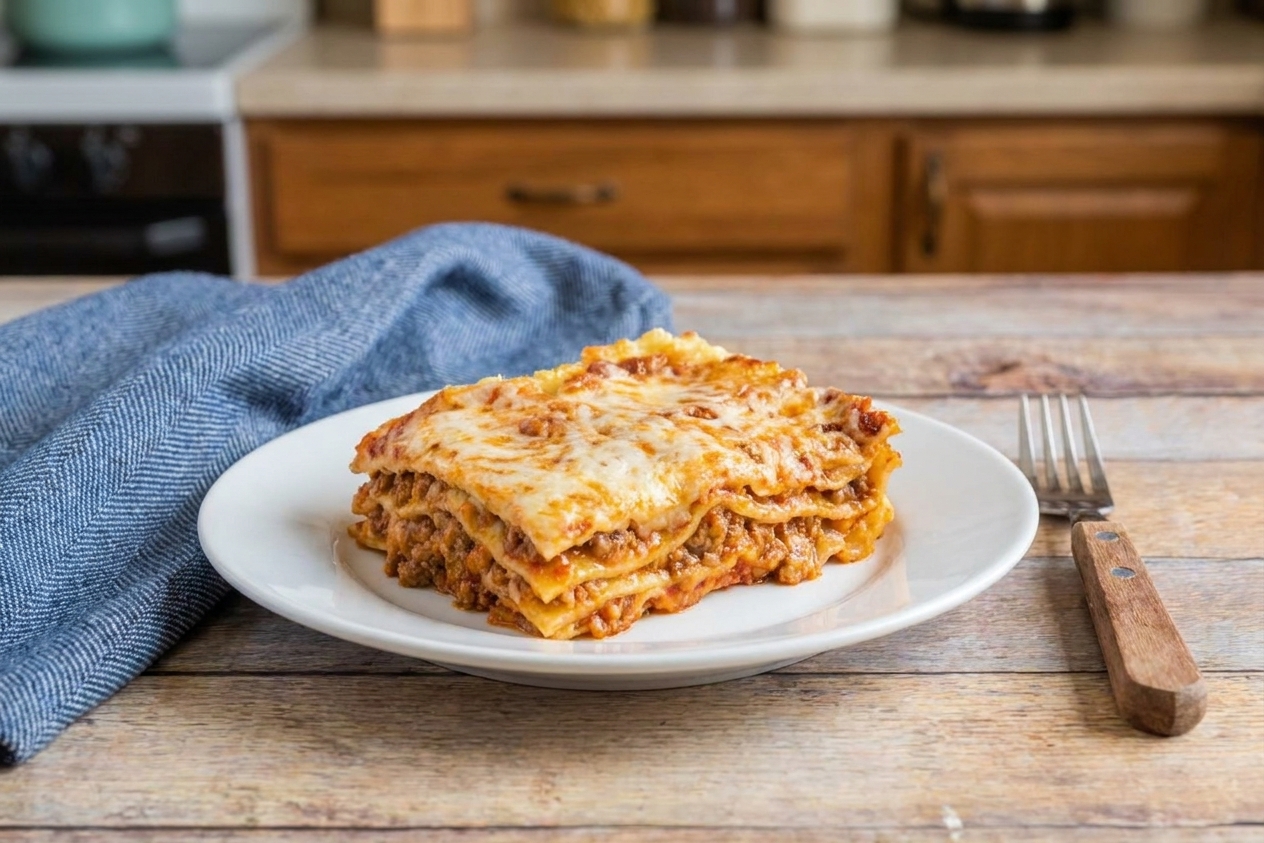
Lasagna is one of those magical comfort foods that somehow tastes like you worked all day, even when you did most of the work last month and tucked it into the freezer. The trick is freezing it the right way so it comes back tender, saucy, and gloriously cheesy, not dried out around the edges or watery in the middle.
Let’s walk through both routes, freezing unbaked lasagna (assemble now, bake later) and freezing baked lasagna (cook now, reheat later), plus pans, wrapping, labeling, thawing, and the best way to handle individual portions.
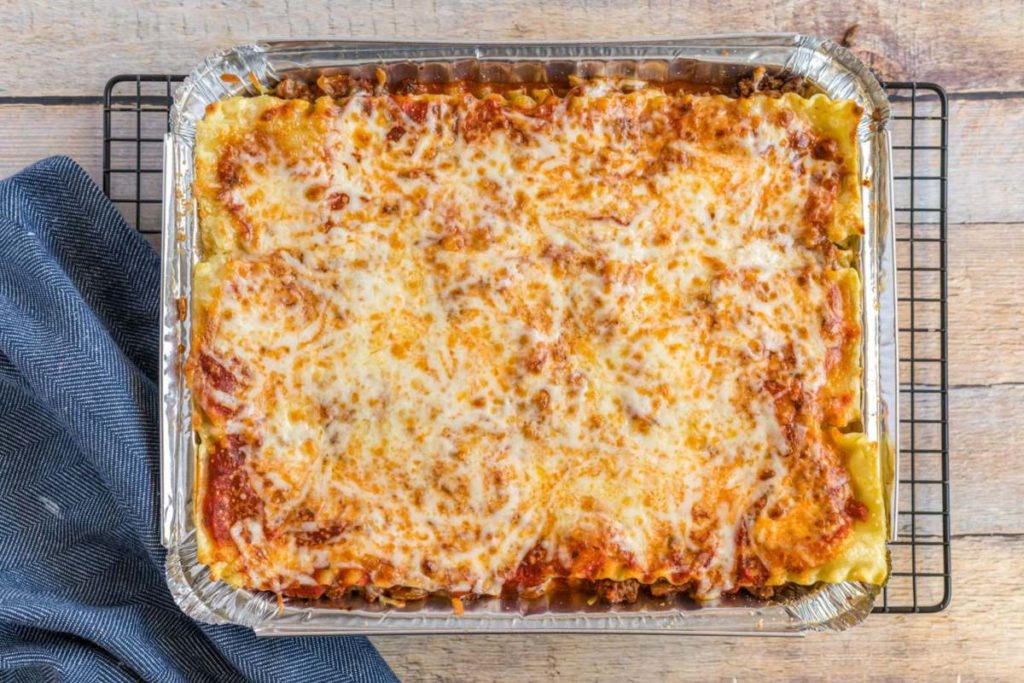
Baked vs unbaked: which freezes better?
Both work wonderfully. Your best choice depends on what you want on dinner day.
Freeze unbaked lasagna for the freshest baked texture
- Best for: make-ahead dinners, holidays, bringing a meal to someone.
- Why it’s great: it bakes up like a just-made lasagna, with a more “fresh from the oven” feel.
- One caution: it takes longer to bake, especially if you bake from frozen.
Freeze baked lasagna for the fastest reheat
- Best for: easy weeknights, lunches, quick single servings.
- Why it’s great: you are reheating, not fully cooking, so dinner is simpler.
- One caution: if it is not wrapped well, baked lasagna can dry out more easily in the freezer.
If I had to pick one for pure convenience: baked. If I had to pick one for the very best “just baked” payoff later: unbaked.
Best pans and containers for freezing lasagna
Your pan choice matters because lasagna is heavy, holds heat, and can crack glass if you rush it.
Foil pans (disposable)
- Pros: lightweight, freezer-friendly, easy to give away, no worries about glass cracking.
- Cons: can bend, and edges can dry out if wrapping is loose.
Metal pans (aluminum or stainless)
- Pros: sturdy, great heat transfer, bakes evenly.
- Cons: you tie up your pan until you bake it, unless you freeze then pop it out (more on that below).
Glass or ceramic casserole dishes
- Pros: classic for serving, holds heat well.
- Cons: can crack with sudden temperature changes. If using glass, avoid moving it directly from freezer to hot oven unless the manufacturer states it is safe for that.
Freezer-to-oven baking dishes with fitted lids
If you have one, it can be wonderfully tidy. Still, press something close to the surface first (more on that next) to help prevent freezer burn.
How to freeze an unbaked, assembled lasagna
Freezing unbaked lasagna is all about preventing ice crystals and keeping the top from drying out.
Quick note on pan size: The bake times below are written with a typical 9x13-inch, standard-depth lasagna in mind. If you are freezing an 8x8 or a shallower pan, start checking earlier.
Step-by-step
Assemble and cool any hot components first. If your meat sauce is warm, let it cool down so it does not create steam inside the wrap, which becomes frost later.
Line the pan if you want to reuse it quickly (optional). You can line a metal pan with heavy-duty foil, assemble the lasagna, freeze until solid, then lift it out and store it as a foil-wrapped “brick.” Slide your pan back into service.
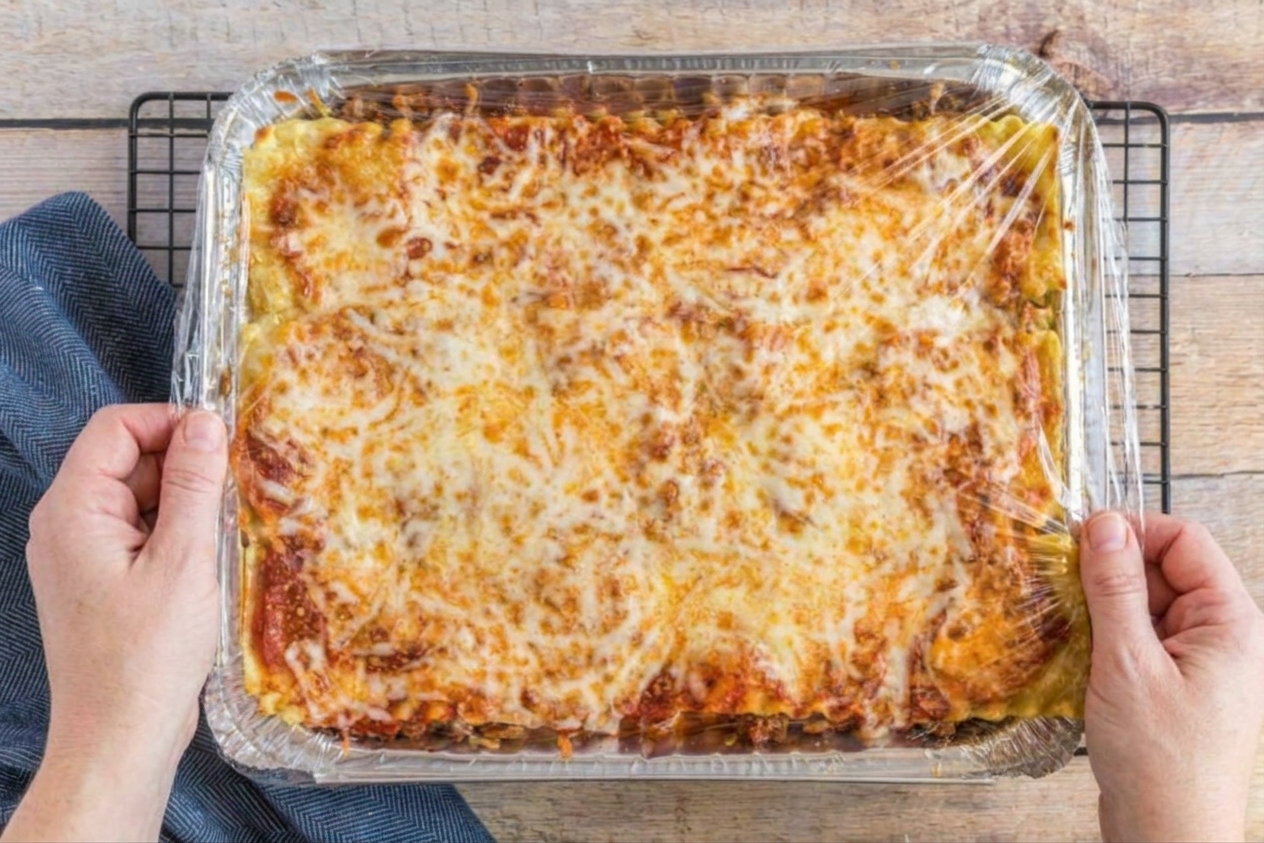
Press a layer close to the surface. This is your best defense against freezer burn. Use freezer-safe plastic wrap pressed directly onto the top of the lasagna, or press parchment against the surface first, then wrap over it if you prefer a non-plastic layer touching the food.
Seal it tightly. Wrap the whole pan with another layer of plastic wrap, then a layer of heavy-duty foil. If you have a lid, you can still add foil over the top for extra protection.
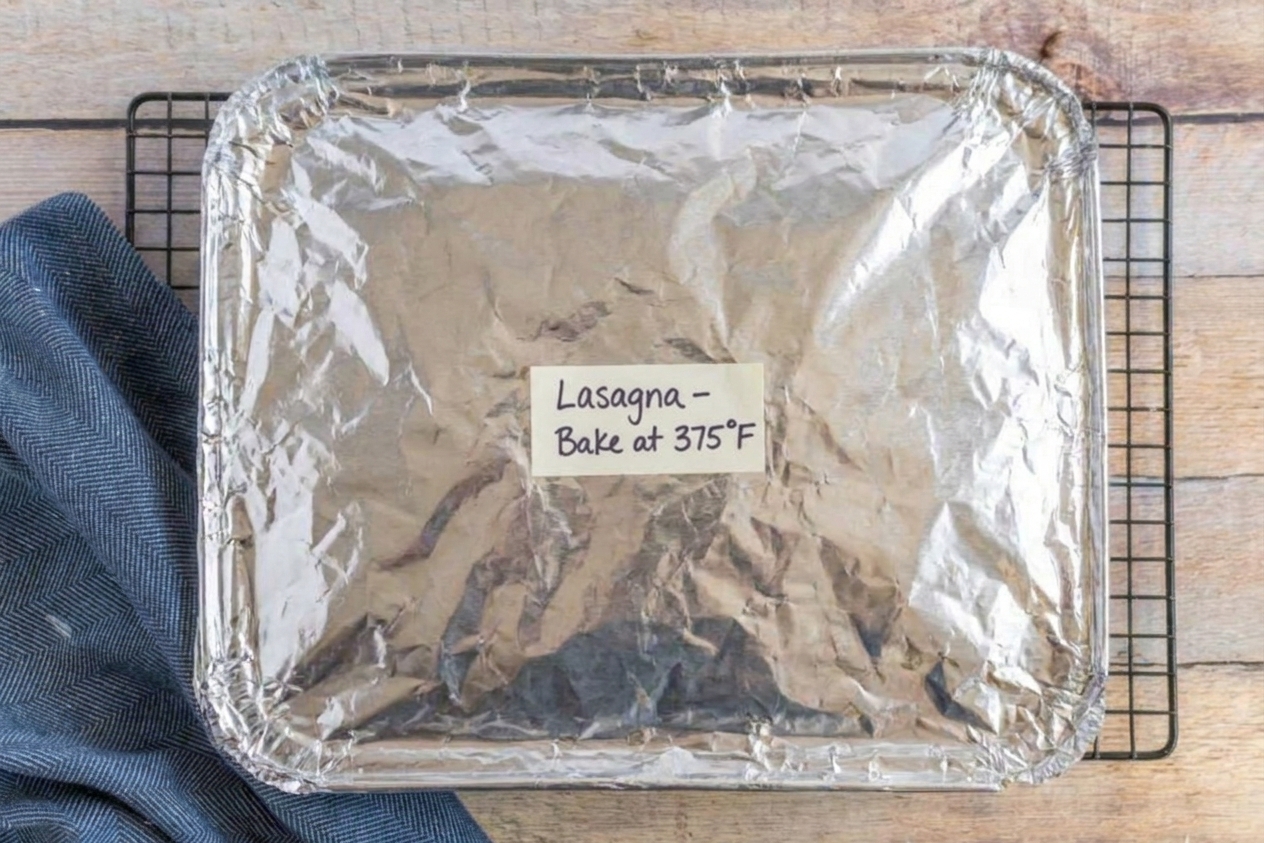
Label it clearly. Include what it is, the date, and baking instructions if you are gifting it to Future You.
Freeze flat, then store smart. Set it on a sheet pan or sturdy cutting board so it freezes level. Once it is frozen solid, you can move it off the sheet pan and store it however it fits best.
Label ideas that actually help later
- “Unbaked lasagna, date”
- “Bake covered 375°F until hot, then uncover to brown”
- “Contains: beef, dairy” (helpful if you share food)
How to freeze baked lasagna
Baked lasagna freezes best when it is cooled properly and wrapped like you mean it.
Step-by-step
Cool safely. Let the lasagna cool on the counter briefly, then refrigerate until fully cold. As a general food-safety rule, do not leave perishable food out at room temperature for more than 2 hours (or 1 hour if the room is very warm).
Portion or keep whole. If you want grab-and-go meals, slice it once chilled and freeze individual pieces (instructions below). For a full pan, keep it intact.
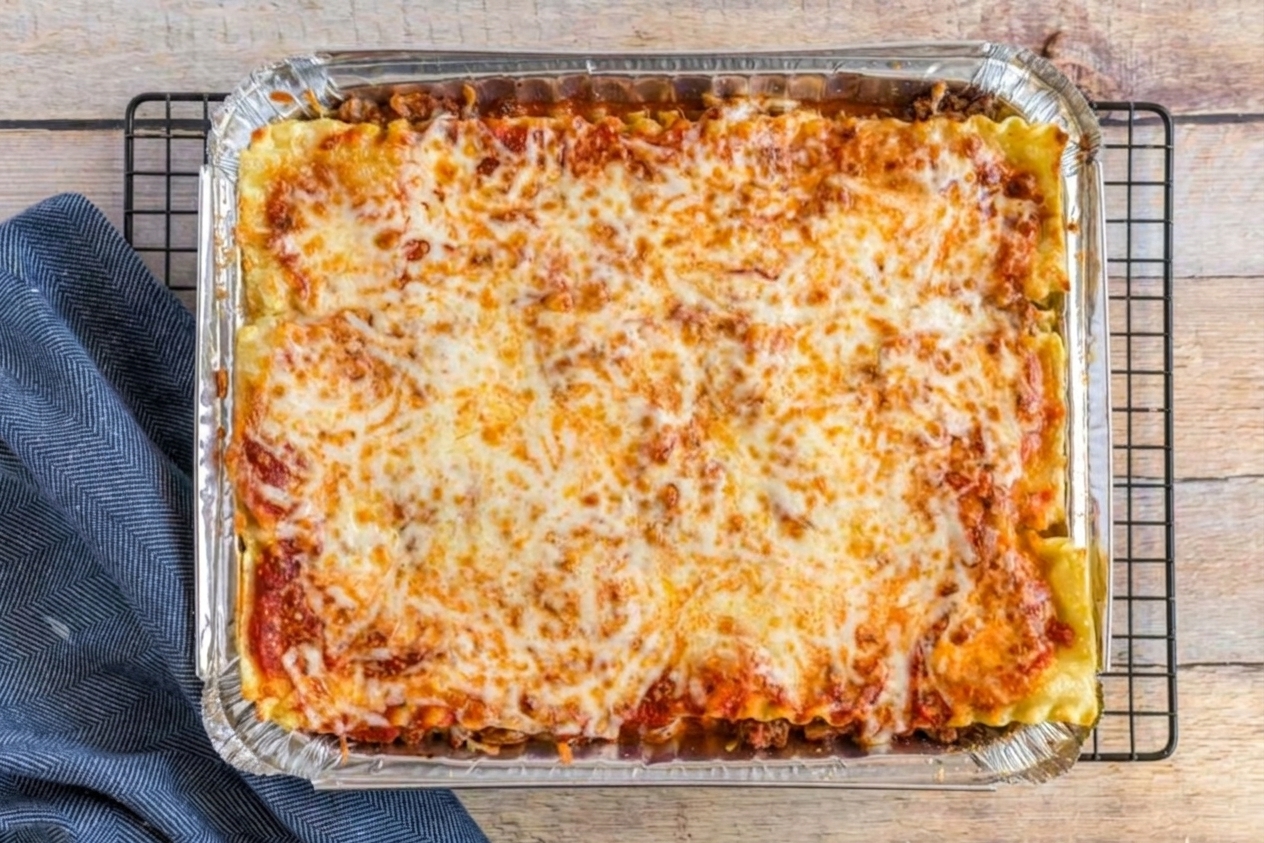
Press-wrap the surface. Press freezer-safe plastic wrap directly on the top surface to prevent dry, freezer-bitten cheese. If you prefer, press parchment on the surface first, then wrap over it.
Double wrap. Add another tight layer of plastic wrap, then heavy-duty foil. If you have a manual-defrost freezer, or a freezer that tends to build up ice, a second foil layer helps.
Label and freeze. Freeze flat for best shape, then store wherever it fits once solid.
Extra tip: If you like a crispier top later, freeze baked lasagna without adding extra cheese on top, then add fresh mozzarella or parmesan during reheating.
Wrapping rules (so you do not taste the freezer)
Freezer burn happens when air reaches the food. Lasagna has lots of edges and corners, so tight wrapping is your best friend.
- Press-wrap first: plastic wrap (or parchment plus wrap) directly on the surface helps more than you would think.
- Then seal the whole pan: another wrap layer plus heavy-duty foil.
- Protect corners: corners are the first to dry out. Make sure foil is snug there.
- Consider a freezer bag for slices: fewer air pockets than stacking in a container.
How long does frozen lasagna last?
Frozen foods stay safe longer than they stay tasty. For best flavor and texture:
- Best quality: 2 to 3 months
- After that: quality often declines (drier edges, softer noodles, more watery sauce), but it can remain safe if it stays continuously frozen.
If your lasagna has lots of watery vegetables (zucchini, spinach, mushrooms), aim for the shorter end of that range.
Thawing options: refrigerator, counter, or straight from frozen
Best method: thaw in the fridge
For a full pan, plan 24 to 48 hours in the refrigerator, depending on thickness and pan material.
- Pros: most even baking, less risk of a cold center.
- Cons: you have to think ahead, which is not always my strongest skill.
Can you thaw lasagna on the counter?
For food safety, it is best not to thaw a whole pan at room temperature. The outer layers can warm too much while the center is still icy.
Can you bake lasagna from frozen?
Yes. It just takes longer, and you need to keep it covered for most of the bake so the top does not overbrown before the middle heats through.
How to bake frozen unbaked lasagna
Because ingredients and pan sizes vary, time is always a range. Your real goal is a hot center.
If thawed overnight in the fridge
- Oven temp: 375°F
- Covered bake: 45 to 60 minutes
- Uncovered bake: 10 to 20 minutes to brown
- Rest: 10 to 15 minutes before slicing
If baking straight from frozen
- Oven temp: 375°F
- Covered bake: 75 to 95 minutes
- Uncovered bake: 10 to 20 minutes
- Rest: 15 minutes
Doneness check: A thermometer is the least guessy way. Aim for 165°F in the center. You also want to see bubbling at the edges and sauce that looks actively hot, not just warm.
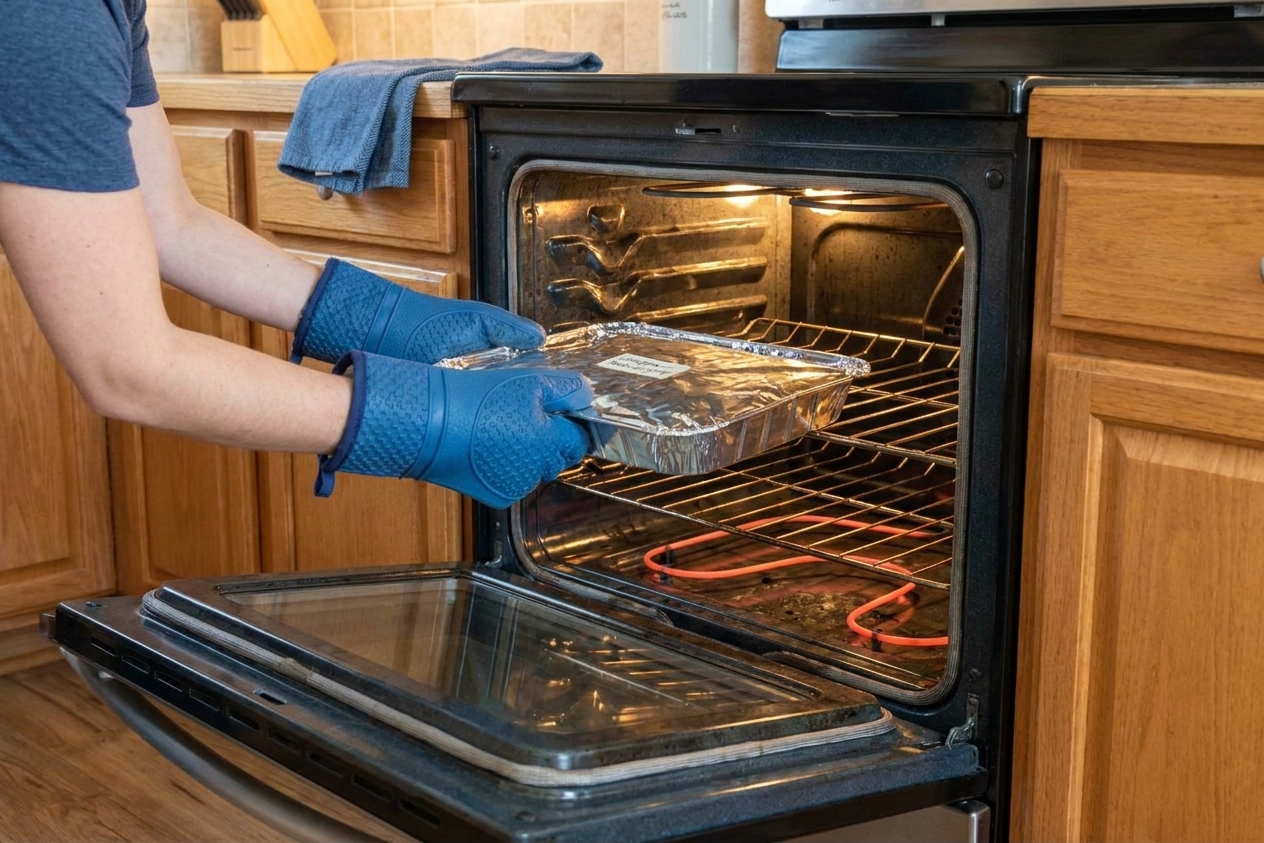
Important: Remove plastic wrap before baking. Foil is fine to bake with.
How to reheat frozen baked lasagna
Reheating baked lasagna is gentler than baking from raw, but you still want the middle piping hot.
Reheat a full pan (best results)
- Thaw in fridge if possible: 24 hours
- Oven temp: 350°F
- Covered: 30 to 45 minutes (longer if still partly frozen)
- Uncovered: 10 to 15 minutes to re-melt and brown the top
For food safety and best texture, aim for 165°F in the center when reheating leftovers.
Reheat from frozen (no thaw)
- Oven temp: 350°F
- Covered: 60 to 90 minutes
- Uncovered: 10 to 15 minutes
If the top is browning too fast, keep it covered longer.
Freezing and reheating individual portions
Single servings freeze faster, thaw faster, and are less likely to get icy and dry. This is my favorite way to stash lasagna for busy days.
How to freeze slices
Chill first. Cold lasagna slices cleanly and holds its layers.
Cut into portions. Use a sharp knife and wipe between cuts if things get messy.
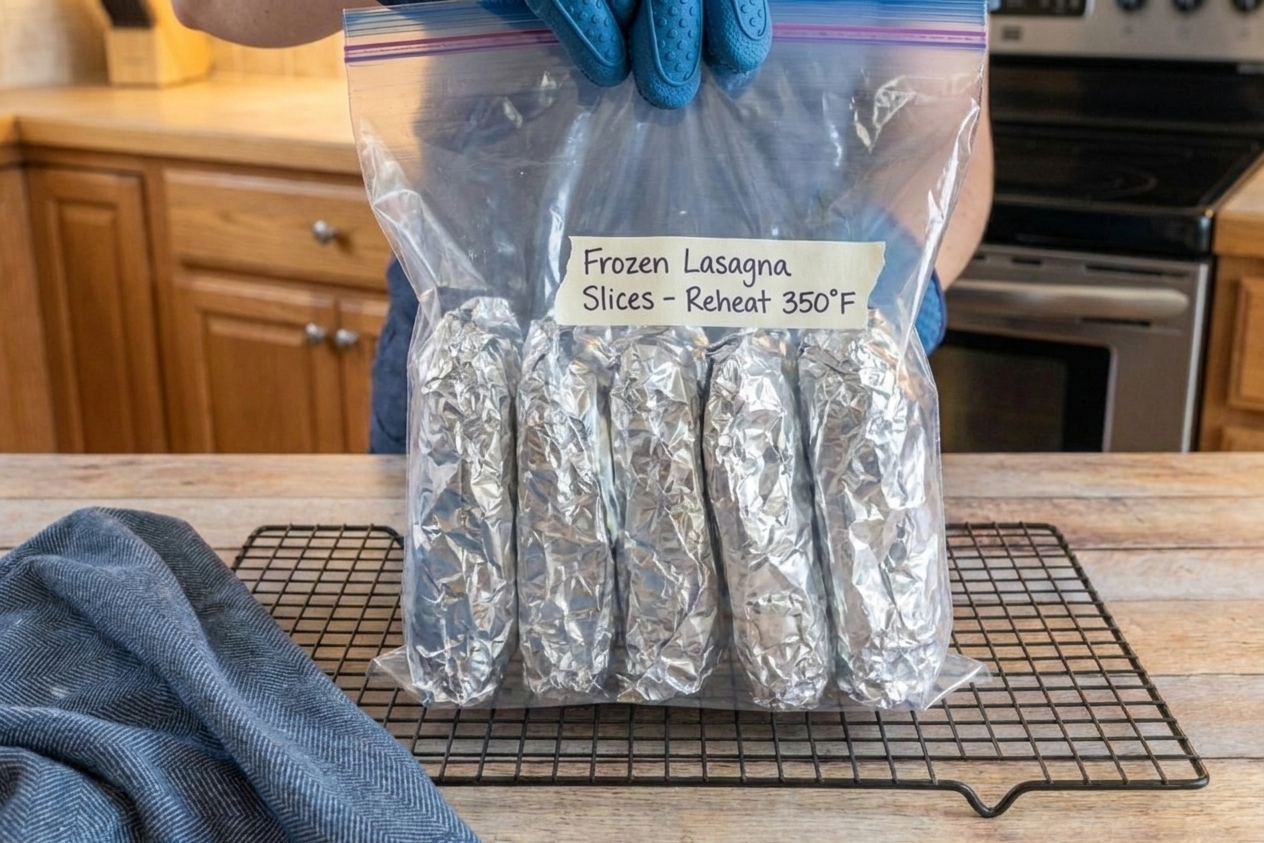
Wrap each piece. Wrap tightly in plastic wrap (or parchment plus wrap), then foil, or place wrapped slices into a freezer bag.
Label the bag. Date and number of portions.
How to reheat a slice
Oven or toaster oven (best texture):
- Place in a small baking dish. Add a spoonful of sauce or a splash of water around it if it looks dry.
- Cover with foil.
- Heat at 350°F for 25 to 40 minutes (from frozen), uncover for the last 5 minutes.
Microwave (fastest):
- Microwave on medium power in 2 to 3 minute bursts, loosely covered, until hot throughout.
- Let it sit 1 to 2 minutes before eating. The center keeps heating.
Common freezing problems (and fixes)
Watery lasagna after thawing
- Drain cooked meat well.
- Simmer sauce to thicken slightly before assembling.
- Thaw in the fridge so excess moisture stays controlled.
Dry edges
- Press plastic wrap (or parchment plus wrap) onto the surface before the outer wrap layers.
- Reheat covered most of the time.
- Add a little extra sauce around the edges before reheating.
Stuck to the pan
- For baked lasagna, cooling and chilling first helps it set and lift cleanly.
- For unbaked lasagna, lining with foil can make removal easier if you want to pop it out after freezing solid.
Glass dish cracking
- Avoid extreme temperature changes.
- Thaw in the fridge before baking when using glass or ceramic.
Quick label instructions
Unbaked, frozen: “Bake covered 375°F 75 to 95 min, uncover 10 to 20 min, rest 15 min. Heat to 165°F.”
Baked, frozen: “Reheat covered 350°F 60 to 90 min, uncover 10 to 15 min. Heat to 165°F.”
FAQ
Should I freeze lasagna with ricotta?
Yes. Ricotta freezes well in lasagna. You may notice a slightly softer texture after thawing, but once it is hot and bubbly, it is still wonderfully cozy.
Can I freeze lasagna made with no-boil noodles?
Yes. No-boil noodles are freezer-friendly. Just make sure your sauce is not too thick, since those noodles need moisture to soften during baking.
Do I need to cook lasagna noodles before freezing?
It depends on the noodles you use. Follow the package directions. If you are using regular noodles and you do cook them, undercook them slightly so they do not turn mushy after freezing and baking.
What is the safest internal temperature for reheated lasagna?
165°F in the center is a solid, conservative target for reheating leftovers and for baking-from-frozen casseroles.
Cozy bottom line
If you want lasagna that feels like it just came out of the oven, freeze it unbaked. If you want weeknight speed and easy portions, freeze it baked. Either way, tight wrapping, clear labeling, and heating it to 165°F are the secret handshake.
Now if you will excuse me, I have a date with my freezer and a suspiciously empty spot where a lasagna should be.